

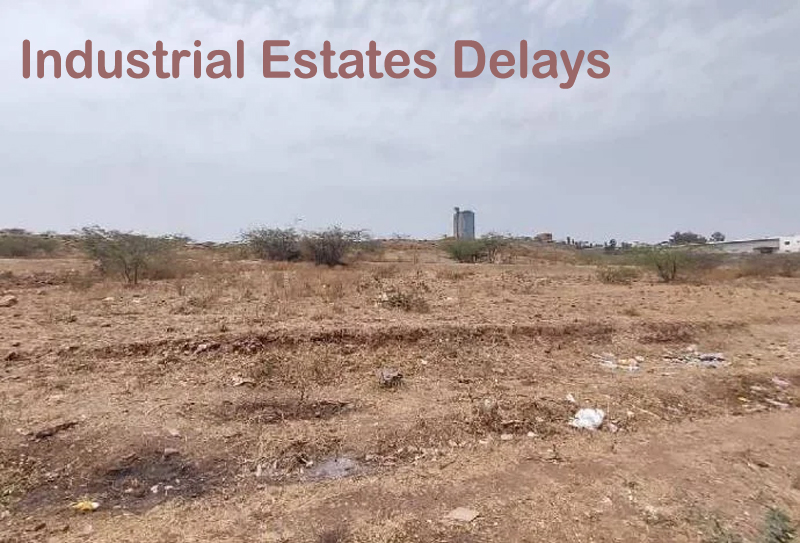
The prolonged delay in the development of 46 new industrial estates in J&K reflects a deeper structural challenge in the Union Territory’s economic transition. Nearly two years after the announcement, not a single estate is fully operational, exposing serious gaps between policy intent and on-ground execution. At a time when industrial growth is being projected as the backbone of employment generation and economic stability, such inertia risks derailing the larger vision of transforming the region into a viable investment destination. It is an undeniable reality that Jammu and Kashmir remains far from being an industrial hub. Historical constraints have played a decisive role in shaping this outcome. Decades of terrorism created a persistent environment of uncertainty, discouraging long-term investments, particularly in the Kashmir Valley. Simultaneously, the region’s geographical remoteness and logistical bottlenecks have added to the cost of doing business, making it less competitive compared to other states. As a result, industrial development remained confined largely to pockets such as Kathua, Samba, Jammu and Udhampur. The early advantages that regions like Srinagar and other parts of Kashmir once enjoyed were eroded over the years of instability. Industrial stagnation, combined with an over-reliance on government employment, created a fragile economic structure. Recognising this imbalance, the government in recent years made concerted efforts to revive industrial activity through a special industrial policy tailored for the UT. The response from investors was encouraging, even overwhelming at times, with proposals exceeding available allocations.
However, the failure to extend this special industrial policy has introduced fresh uncertainty. In such a scenario, the urgency to create robust industrial infrastructure becomes even more critical. Industrial estates are not merely parcels of land-they are ecosystems requiring integrated development, including road connectivity, water supply, power infrastructure, and logistical support. Without these foundational elements, investment proposals remain only on paper. The current status of the 46 proposed industrial estates is far from reassuring. While work has been allotted for 19 estates, the absence of firm deadlines reflects a lack of administrative urgency. Of these, only a handful have reached around 60 per cent completion, while others lag further behind or remain entangled in litigation and procedural hurdles. The remaining 25 estates are still awaiting finalisation of executing agencies, with no clarity on timelines. This drift underscores a systemic failure in project management and accountability.
What is particularly concerning is the asymmetry in regulatory expectations. Entrepreneurs are bound by strict timelines-failure to establish and operationalise units within a stipulated period leads to cancellation of allotments. In contrast, there appears to be little accountability for delays on the part of implementing agencies. Each delay translates into lost economic opportunities. Competing states like Punjab and Himachal Pradesh are quick to capitalise on investor interest, offering ready infrastructure and policy stability. For Jammu and Kashmir, which is already battling a higher-than-average unemployment rate and limited avenues in the government sector, such missed opportunities carry high socio-economic costs.
Moreover, the absence of ready industrial infrastructure weakens the case for seeking further incentives or policy extensions from the Central Government. Without demonstrating the capacity to operationalise existing plans, any push for renewed industrial packages risks losing credibility. The importance of the 46 proposed industrial estates lies not only in their number but also in their geographic spread. Several of these estates are planned in under-represented regions, offering a chance to decentralise industrial growth and reduce regional disparities. This approach could stimulate local economies, promote region-specific industries based on local resources, and reduce migration pressures.
However, achieving this requires a decisive shift from a fragmented, “patchwork” approach to a coordinated, mission-mode execution. Bottlenecks-whether related to land disputes, clearances, or contractor inefficiencies-must be identified and resolved through time-bound interventions. Clear accountability mechanisms need to be established, with defined milestones and consequences for delays. Private industry remains the most viable pathway for sustainable job creation. The stakes are high, and the cost of inaction is even higher. A focused, time-bound push to complete these estates can restore investor confidence and revive momentum in the industrial sector. The sooner the government moves to bridge the gap between intent and execution, the better positioned the UT will be to harness its economic potential.
 Follow our WhatsApp channel
