

Project may be completed in Feb 2028
Irfan Tramboo
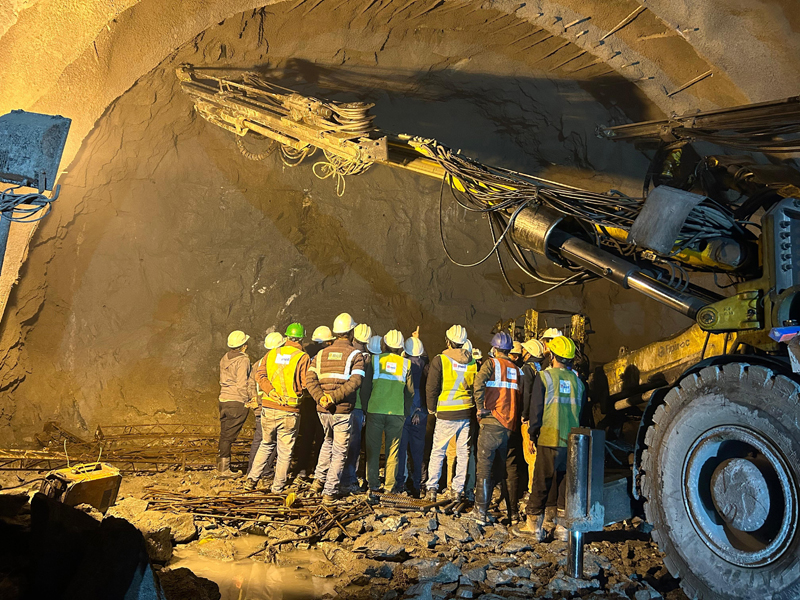
Srinagar, June 2: The much-awaited breakthrough of the Zojila Tunnel is expected on June 9, bringing the all-weather connectivity project between Kashmir and Ladakh a step closer to completion, officials said today.
Union Minister for Road Transport and Highways Nitin Gadkari is expected to attend the breakthrough ceremony, which will mark the meeting of the tunnel’s two ends after years of excavation beneath the Zojila Pass.
Follow the Daily Excelsior channel on WhatsApp
Preparations for the event are underway. “The breakthrough is likely on June 9 and all arrangements for the event are being made,” an official associated with the project said.
The development comes nearly a month after engineers reported that only 210 metres of excavation remained before the tunnel’s two ends could be connected.
The 13.15-km tunnel, being built at an estimated cost of Rs 4,500 crore, is expected to become Asia’s longest bi-directional road tunnel once completed.
The breakthrough will mark a significant step towards ensuring year-round connectivity between Kashmir and Ladakh by overcoming the prolonged winter closures of the Zojila Pass, which remains cut off by heavy snowfall for nearly five to six months every year.
Officials said the tunnel will substantially improve the movement of people and goods, boost tourism and economic activity, and ensure uninterrupted access to essential and emergency services.
The project also carries considerable strategic importance, enabling faster movement of troops, equipment and supplies to border areas.
The Megha Engineering & Infrastructures Limited that is executing the project has employed more than 1,400 personnel, including engineers, supervisors, foremen and labourers, who are currently engaged in construction, with nearly 79 per cent of the workforce drawn from local areas.
Over 400 machines and equipment units are being deployed to support round-the-clock operations.
Although the breakthrough is expected this month, completion of the entire project has been extended to February 2028 from the earlier target of September 2026.
Officials said work at the eastern portal has been particularly challenging due to difficult geological conditions, persistent water ingress and extreme weather, with winter temperatures in the area dropping to between minus 35 and minus 45 degrees Celsius.
Despite these challenges, engineers have continued excavation using advanced construction techniques, including the New Austrian Tunnelling Method.
The tunnel has a horseshoe-shaped profile, measuring 9.5 metres in width and 7.57 metres in height, and is designed to accommodate two-way traffic.
 Follow our WhatsApp channel
