

MOSCOW, April 20: Iran on Monday said that the war launched by the United States and Israel achieved none of their objectives, warning that Washington should not expect to succeed at the negotiating table where it failed on the battlefield.
In an interview with the Russian newspaper Vedomosti, Iran’s ambassador to Russia, Kazem Jalali, said the campaign against Iran fell short on every front. He dismissed claims by US and Israel that they could rapidly defeat Iran militarily and force regime change, arguing that none of those goals were realised.
“They said they could take over Iran in a matter of days,” Jalali noted in an interview with Al Jazeera questioning the outcome. “In which of their objectives did they succeed None. The attacks by the United States and Israel have failed.”
In a satire, Jalali said US aims have been shrinking since the war began, from sweeping political change to strategic concerns such as securing the Strait of Hormuz. He argued that even those ambitions of US were not achieved.
“At first, they wanted regime change, but they got to the point where they only wanted to open the Strait of Hormuz. It fails. And the naval blockade he announced does not make any sense, because we have an iron will for further actions”.
He also rejected the effectiveness of the US naval blockade, describing it as futile effort against what he called Iran’s “iron will.” Jalali said that the conflict ultimately strengthened Iran’s resolve rather than weakening it.
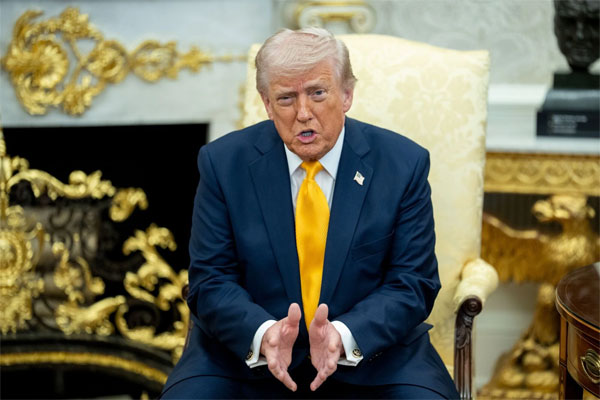
Speaking regardingthe negotiations with US, the ambassador stressed that Tehran would not accept a one-sided deal under pressure. He argued that US President Donald Trump won’t be able to secure through negotiations what he failed to accomplish militarily.
“What was not achieved during the war will not be achieved at the negotiating table,” Jalali said, adding that any agreement must be based on a balanced, “win-win” compromise.
His remarks come as a two-week ceasefire between Tehran and Washington is set to expire on April 22. Earlier talks in Islamabad ended without progress, with both sides deadlocked over control of the Strait of Hormuz and Iran’s nuclear program.
With the ceasefire nearing its end, diplomats view the stalled negotiations as a critical moment. While the US maintains that a “fair and reasonable” agreement remains possible, Iran’s refusal to negotiate under what it calls coercive conditions suggests the risk of renewed escalation remains high. (UNI)
 Follow our WhatsApp channel
