

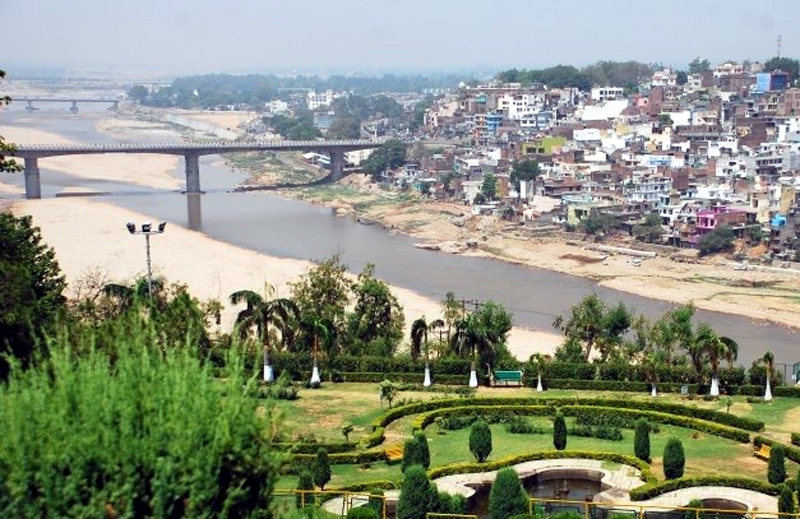
The inauguration of Phase I of the Tawi Riverfront Project on Baisakhi was more than a ribbon-cutting ceremony. It was a moment of collective exhale for Jammu – a city that has long ached for breathing room within its increasingly congested urban fabric. That tens of thousands turned out for the first Baisakhi Mela at the riverfront, queuing for boat rides, thronging the swings, and standing transfixed before the replica Tawi Aarti modelled on Haridwar’s celebrated ritual, was a testament not merely to civic pride but to a genuine hunger for open, purposeful public space. Developed at a cost of Rs 156 crore by Jammu Smart City Limited, the project has delivered promenades along both banks and the central island, a dedicated ghat area, and the promise of a kilometre-long green spine along the left bank’s upper promenade. The Lieutenant Governor’s announcement of a four-lane connecting bridge linking Bhagwati Nagar rotary to Jewel Chowk is equally welcome: traffic decongestion on this stretch has long been overdue, and the alternative connectivity will provide tangible daily relief to commuters.
The vision articulated at the launch of extending the riverfront from Bikram Chowk Bridge to Har Ki Paudi under the Urban Challenge Fund is ambitious and worth pursuing. Once realised, it would reshape the character of this side riverbank as decisively as Phase I has transformed the other stretches. Infrastructure augmentation of this kind is, by nature, an iterative and incremental undertaking, and patience from the public is both necessary and reasonable. The outcome, when complete, will justify the wait. Yet enthusiasm must not obscure an inconvenient truth. The Tawi, for all its spiritual and cultural resonance, continues to receive raw sewage from multiple city nullahs that drain directly into the river. No amount of promenades, ghats, or decorative lighting can compensate for this fundamental failure of urban sanitation. Jammu Smart City Limited and the JMC must, as a matter of urgency, treat the treatment of these sewage outflows as inseparable from the riverfront project itself. A beautified embankment beside a polluted river is, ultimately, theatre, not transformation.
The administrative intent is visible and commendable. The public response to Baisakhi confirmed that Jammu’s citizens will embrace and cherish well-conceived urban infrastructure. But the project’s long-term legitimacy – environmental, civic, and symbolic – depends on whether the administration has the resolve to complete the unglamorous half of this work. That half, too, must not be left to wait.
 Follow our WhatsApp channel
