

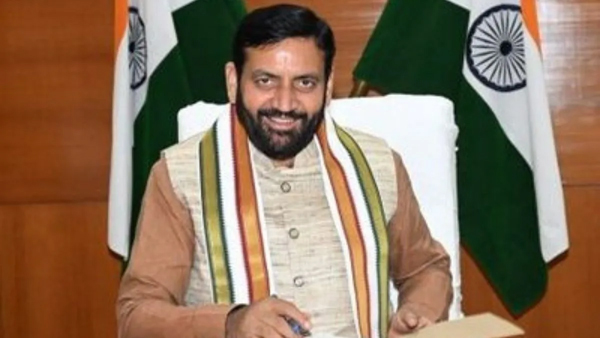
CHANDIGARH, Apr 30 : Chief Minister Nayab Singh Saini on Thursday said that ‘Swasth Haryana’ is the foundation of ‘Viksit Haryana’, emphasising that strengthening public healthcare remains a top priority of the state government.
He said that the government is consistently undertaking focused and result-oriented measures to expand and modernise healthcare infrastructure and services across the State.
The chief minister said that in the current financial year, a provision of approximately Rs 14,000 crore has been made for the health sector, registering an increase of 32.89 per cent over the previous year.
He said this reflects the government’s firm commitment to ensuring accessible, affordable and quality healthcare for all citizens.
He further shared that the state’s health budget has increased from Rs 2,646 crore in 2014 to Rs 10,500 crore in 2025-26, marking a rise of nearly 298 per cent.
Addressing a gathering at an event here after Union Health Minister J P Nadda inaugurated the 10th National Summit on Innovation and Inclusivity: Best Practices Shaping India’s Health Future, Saini described the two-day event as a significant milestone.
He said it would contribute meaningfully towards shaping the future of India’s public health system.
The chief minister said that best practices and innovative initiatives from across the country are being deliberated upon during the two-day event.
He expressed confidence that the conference would serve as an effective platform for knowledge-sharing and the dissemination of successful healthcare models.
During the event, several key initiatives were launched, including the Best Practice Compendium on replicable innovations under NHM, the 17th Common Review Mission (CRM) Report, the Swasth Bharat Portal, the JANANI Portal, the Integrated Training Module for Primary Healthcare Teams, and Rashtriya Bal Swasthya Karyakram (RBSK) 2.0, along with a guidance document on diabetes in children and adolescents.
Speaking on the occasion, Union Health Secretary Punya Salila Srivastava stated that the compendium of Best Practices serves as a key reference document showcasing evidence-based, context-specific solutions aligned with national priorities.
She highlighted the transformative role of technology under the Ayushman Bharat Digital Mission, enabling integration of ABHA IDs across platforms like HMIS, JANANI, and eSanjeevani, thereby improving efficiency and supporting data-driven decision-making.
She also noted that the Swasth Bharat Portal marks a major step towards convergence by integrating multiple health programmes into a single interoperable platform, while the JANANI platform strengthens maternal and child healthcare through real-time tracking and digital integration.
Highlighting the 17th Common Review Mission report, she said it provides valuable insights for States to strengthen implementation and “Jan Bhagidari”.
She also emphasised the importance of addressing rising non-communicable diseases, noting that RBSK 2.0 and the diabetes guidance for children will support early detection and continuity of care.
Citing findings from the 80th round of the National Statistical Office (NSO) survey, she noted that the median out-of-pocket expenditure for outpatient care in public health facilities is now zero, reflecting the government’s commitment to ensuring free and accessible healthcare services for a large section of the population.
Common Review Mission (CRM) is an annual monitoring activity of the Ministry of Health and Family Welfare (MoHFW), which is held annually for review and assessment of implementation of National Health Mission (NHM) and related programmes.
This year, the 17th round of the CRM was undertaken across seventeen States – Andhra Pradesh, Assam, Bihar, Chhattisgarh, Kerala, Madhya Pradesh, Maharashtra, Meghalaya, Nagaland, Odisha, Punjab, Rajasthan, Sikkim, Tamil Nadu, Telangana, Uttar Pradesh, and Uttarakhand.
This extensive exercise reflects the inclusivity of the CRM process, ensuring diverse contexts are represented, and innovation in monitoring is captured across the country, according to a statement.
By engaging multiple states and UTs simultaneously, the mission strengthens accountability, fosters cross-learning, and reinforces the collective commitment to evidence-based health system strengthening. (PTI)
 Follow our WhatsApp channel
