

Pooja Devi
poojamanhap273@gamil.com
At 6:00 a.m., the mist still hung low over the fields of Dyala Chak in Kathua, Jammu & Kashmir. The air was cool, filled with the distant calls of mynahs and crows. For the past two years, I had walked this stretch every week, my eyes trained to the skies and the treetops, hoping to catch sight of the vultures that once dominated this landscape. The Dayala Chak to Galak road passes through the Shivalik Hills, also known as the Outer Himalayan Ranges.
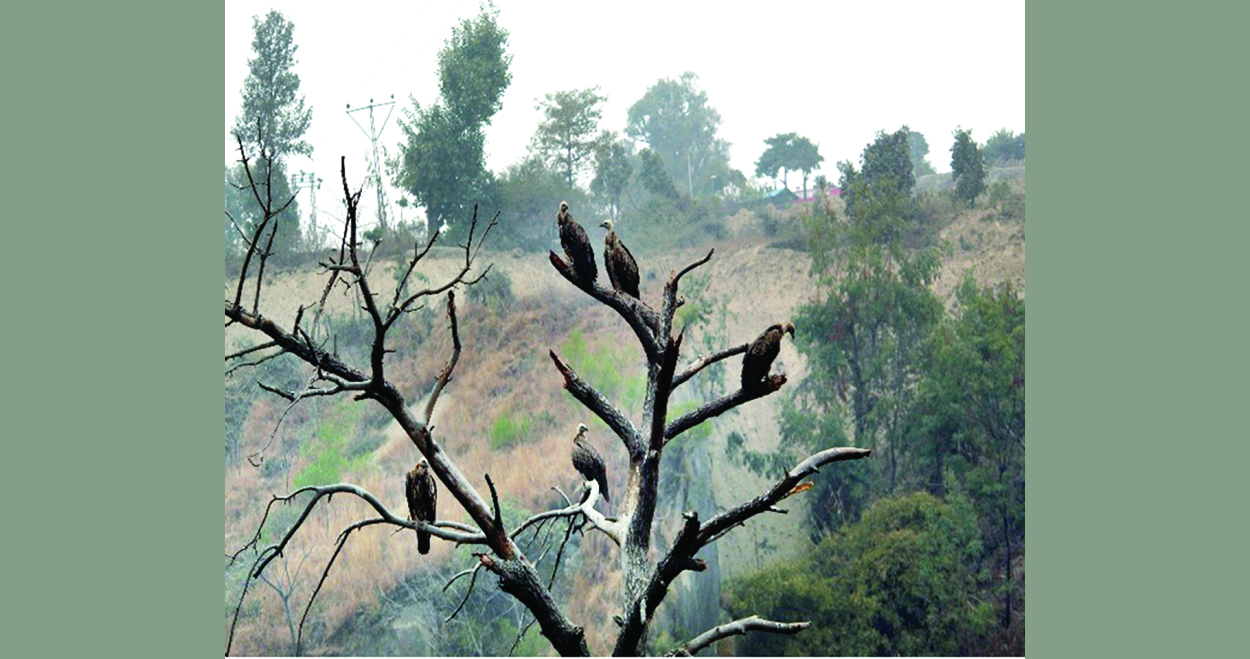
According to Bird Life International’s assessments, the Himalayan Griffon Vulture (Gyps himalayensis) species is experiencing a decline in population due to habitat loss and food scarcity. Conservation efforts are needed to monitor and protect its habitats. Before the construction of the new road connecting Dyala Chak to Bani, these scavengers were a common sight, their wide wings casting long shadows on the ground. They circled high above the fields, patiently waiting to descend on carcasses of cattle left at the edges of the village. But now, the skies seem eerily empty.
The First Signs of Decline
The decline was gradual at first. I recall seeing fewer nests in the tall trees that lined the old road. Then, over time, carcasses that once attracted dozens of vultures were now visited by only a handful of birds, if any at all. On some mornings, I found dead vultures lying by the roadside, their wings spread helplessly against the dust. It was a disturbing sight-one that left me questioning what was happening to them.
The new road brought with it heavy vehicular movement, noise, and frequent disturbances to their nesting trees. Many trees were cut down to make way for construction, removing their primary roosting sites. Piles of construction debris blocked their access to traditional feeding areas.
My Observations
For two years, I observed the area diligently. I noted the behaviour of the vultures that remained. They seemed restless, flying lower and farther in search of food. Often, I saw them competing with dogs, crows, and even jackals for carcasses. Their dominance in the scavenger hierarchy was slipping. On several occasions, I noticed vultures feeding close to traffic and being hit by passing vehicles-a tragedy born from shrinking safe spaces.The road also meant that carcasses were removed faster to prevent accidents, leaving vultures with less food. Additionally, unmonitored use of veterinary drugs such as diclofenac in cattle-deadly to vultures-could not be ruled out.
An Overlooked Crisis
Unlike tigers or elephants, vultures rarely make headlines. Few people noticed their disappearance, and fewer still seemed to care. Yet these birds play a critical ecological role. By efficiently disposing of animal carcasses, they prevent the spread of diseases to humans and livestock. Their decline has ripple effects-more feral dogs, more disease vectors, and disrupted ecological balance. I often shared my concerns with locals, but most dismissed them as “just birds.” But to me, they were sentinels of our ecosystem’s health.
Witnessing Death
The most heartbreaking moment came one evening when I watched a vulture collapse after feeding on a carcass. Its movements slowed, wings trembling as it fell to the ground. Despite my presence, it didn’t attempt to flee. I stayed by its side until its last breath, feeling utterly helpless. That night, I vowed to document and share what I had witnessed.
Connecting the Dots
Through my observations, I understood that the decline in vultures here was linked to:
l Loss of nesting trees due to road construction.
l Disturbance from increased traffic and human activity.
l Reduced food availability from carcass removal and changing livestock practices.
l Possible poisoning from veterinary drugs like diclofenac.
The Need for Awareness
This is not just a local problem-it mirrors the larger crisis of vulture populations across India. Conservation requires not only laws but also local awareness and education. Roads and development projects must include provisions for protecting nearby wildlife. Safe zones, alternative nesting sites, and strict monitoring of drug use in livestock are essential.
For two years, I have watched the skies over Dyala Chak grow quieter. But I will continue my observations, speak to forest officials, and raise awareness wherever I can. These birds may be vanishing, but they are not forgotten-not while I continue to walk this road, morning and evening, waiting for the day when the vultures return.
(The author is a Ph.D scholar, University of Jammu)
 Follow our WhatsApp channel
