

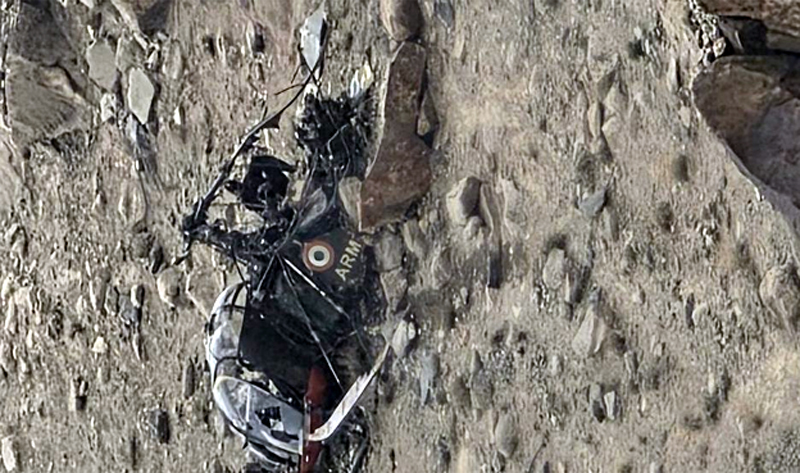
The sight of Major General and two fellow Army officers posing composedly amid the wreckage of their Cheetah helicopter in the rugged Tangtse sector of eastern Ladakh is, without question, one of the most stirring images to emerge from India’s northern frontiers in recent memory. The viral selfie – one officer flashing a victory sign, the aircraft twisted and scattered across the rocky mountainside behind them – has rightly drawn widespread admiration. It is a portrait of grit, resilience and the unshakeable spirit that defines the Indian Army. That spirit deserves every commendation it receives.
But courage, however extraordinary, cannot be allowed to paper over a systemic failure that is becoming dangerously routine. The Cheetah helicopter crash on May 20 near Leh is not an isolated incident. Over the past decade, more than 15 accidents involving the Indian armed forces’ ageing Chetak and Cheetah fleet have been recorded. These are not statistics to be glossed over. Each crash represents a near-miss with catastrophe, a life placed unnecessarily at risk, and a stark operational vulnerability in one of the world’s most strategically sensitive theatres. The Cheetah and its sibling, the Chetak – licence-built derivatives of French designs now approximately five decades old – have served India with extraordinary fidelity. They remain the backbone of high-altitude reconnaissance, logistics, casualty evacuation and forward troop support in Ladakh, the Siachen Glacier and the Northeast. Their contribution is beyond dispute.
Yet age is an adversary that no amount of maintenance can indefinitely defeat. Airframes that have logged decades of service in extreme weather, punishing altitudes and unforgiving terrain inevitably accumulate stress, fatigue and risk. The armed forces have themselves acknowledged that serviceability challenges have grown. The writing on the mountainside, quite literally, could not be clearer. The Army has rightly ordered a Court of inquiry. That inquiry must be thorough, transparent and unsparing. Preliminary assessments are not enough. What caused this crash – whether mechanical failure, environmental factors or procedural gaps – is unknown, and corrective action must follow without delay. The phased induction of HAL’s indigenously developed Light Utility Helicopter must move from scheduled commitment to urgent operational priority. The replacement of this ageing fleet cannot remain a bureaucratic timeline on paper.
 Follow our WhatsApp channel
