

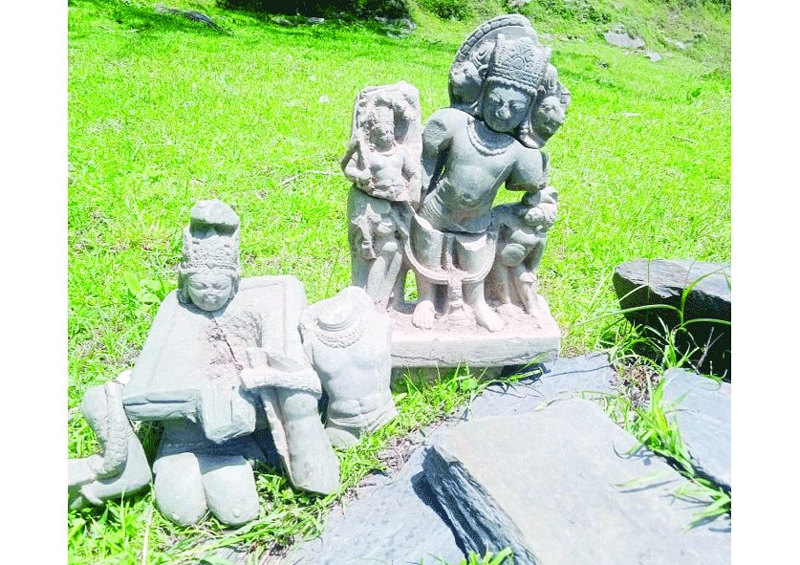
Deep within the rugged folds of the Ramban district, stone speaks where history has long been silent. The recent discovery of ancient Vishnu idols in the Bhajmasta-Sumbar and Ukhral regions is far more than an archaeological curiosity – it is a crack of light into a chamber of civilisation that time had almost sealed shut. Such discoveries deserve not just acknowledgement but serious, sustained attention. Ramban’s historical identity has traditionally been shaped by horseman stone sculptures, the enigmatic Pakkhars, and deeply rooted Naga worship traditions. Against this backdrop, the emergence of standing Vishnu sculptures – bearing the Chakra, the Shankha, a serpent hood of six cobra hoods, and remarkably refined iconographic detail – fundamentally reshapes our understanding of the region’s spiritual past. Every chisel mark on those weathered stones represents a moment in time when someone believed, worshipped, and built meaning around these forms.
What makes these findings particularly compelling is the chronological puzzle they illuminate. Between the decline of Huna influence around 600 CE and the Rajput migrations that carried Naga traditions around 1000 CE, there was a significant gap – a period when Vaishnavism flourished across Kashmir under the Karkota dynasty. The possibility that this religious current flowed southward across the Pir Panjal into Ramban’s hills is now no longer merely speculative.
Religion has never been static. Buddhism, Shaivism, Vaishnavism, and the Naga cult did not exist in isolation but competed, blended, transformed, and sometimes vanished into each other across centuries. Understanding why communities shifted allegiances – why Vaishnav traditions may have receded as Naga-centred customs took root – is as much a study of human psychology and political power as it is of theology. These are valid, urgent questions. The folk memory of Molmola Devta, locally identified as a Vishnu incarnation, suggests that even forgotten traditions leave fingerprints on living culture.
Each such discovery is also an invitation for tourism rooted in heritage and meaning. Ancient civilisations fascinate precisely because they mirror our own restless search for identity and transcendence. Ramban’s mountains hold that mirror still. However, discovery without preservation is negligence. The theft of the original Molmola idol forty years ago stands as a painful warning. The Government must treat every such find as irreplaceable national heritage – funding systematic excavations, scientific dating, iconographic documentation, and secure preservation of sites.
 Follow our WhatsApp channel
