

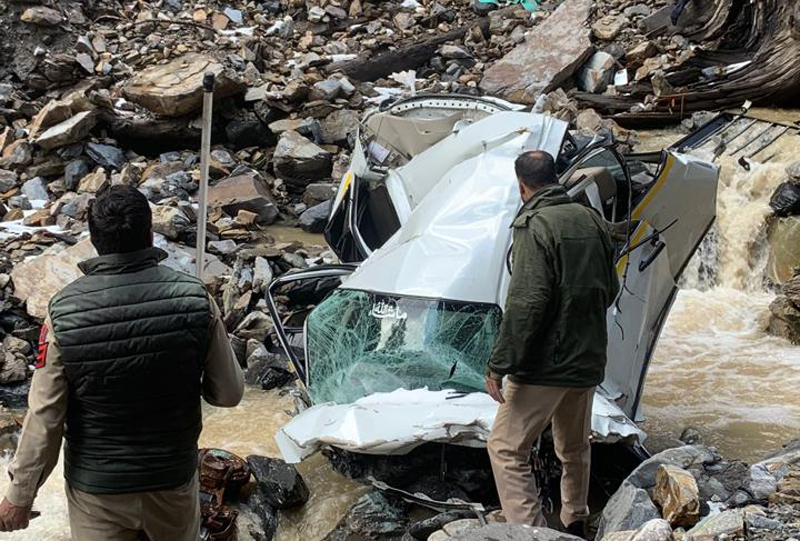
Jammu and Kashmir’s roads have once again become the backdrop for a familiar script: a spate of fatal accidents, followed swiftly by an emergency meeting, stern directives, and solemn assurances that this time, things will be different. The high-level committee that has now mandated road safety audit reports from NHAI, NHIDCL, BRO, PMGSY and the Roads and Buildings Department by month’s end is, in intent, commendable. In context, however, it is deeply dispiriting. This is not the first such committee. It will, in all likelihood, not be the last. Over the years, J&K has witnessed successive waves of enquiry panels, High Court-monitored oversight mechanisms and district-level committees – each armed with the same toolkit of road safety audits, black spot identification, signage reviews and infrastructure assessments. Each has produced recommendations. Each has dissolved into the bureaucratic ether, leaving the underlying problems intact and the body count rising. The chronic fault lines are well known and stubbornly persistent: a fragmented highway network administered by multiple agencies with overlapping jurisdictions and divergent accountability structures; chronic under-funding of remedial works; a near-total absence of enforceable timelines; and a culture in which recommendations are filed, not actioned. The High Court itself, through its monitored committee, had traversed precisely this terrain – and yet the black spots remain black, the crash barriers uninstalled, and the signage inadequate.
Against this backdrop, the current initiative offers a sliver of genuine promise. The one-month deadline to identify vulnerable stretches is specific and time-bound. The instruction to Deputy Commissioners to personally inspect and initiate remedial measures injects a degree of local accountability that has previously been absent. If these steps are pursued in earnest – not as a performance of concern but as a binding operational commitment – they could meaningfully address one category of highway hazard.
But infrastructure alone will not arrest J&K’s road fatalities. Unroadworthy vehicles continue to ply highways with impunity. Drivers with multiple serious violations remain behind the wheel, their licences uncancelled and their records unscrutinised. The proposed driver training programmes and automated enforcement mechanisms are still months away from materialising. Intelligent traffic management, for now, exists only in the capital cities. Road safety is not a problem that yields to committees. It yields to cohesion – between agencies, between enforcement and engineering, and between intent and implementation. Until accountability is structural and not episodic, innocent passengers will continue to pay with their lives for the institutional inertia.
 Follow our WhatsApp channel
