

CHANDIGARH, April 24: The Punjab administration conducted a comprehensive state-wide exercise on Friday to evaluate the emergency response capabilities of its districts in the event of a potential wartime scenario.
As part of the preparedness drive, a 15-minute blackout was observed across various districts between 8:00 PM and 8:15 PM, requiring residents and establishments to switch off all lights to simulate wartime conditions.
The exercise, however, faced a brief administrative hiccup in Mohali, where lights were switched off prematurely, ahead of the designated siren. Mohali Deputy Commissioner Komal Mittal took immediate cognizance of the lapse and reprimanded the concerned officials.
Following the correction, the lights were restored briefly, and the blackout was subsequently executed in adherence to the proper protocol, following the activation of the sirens.
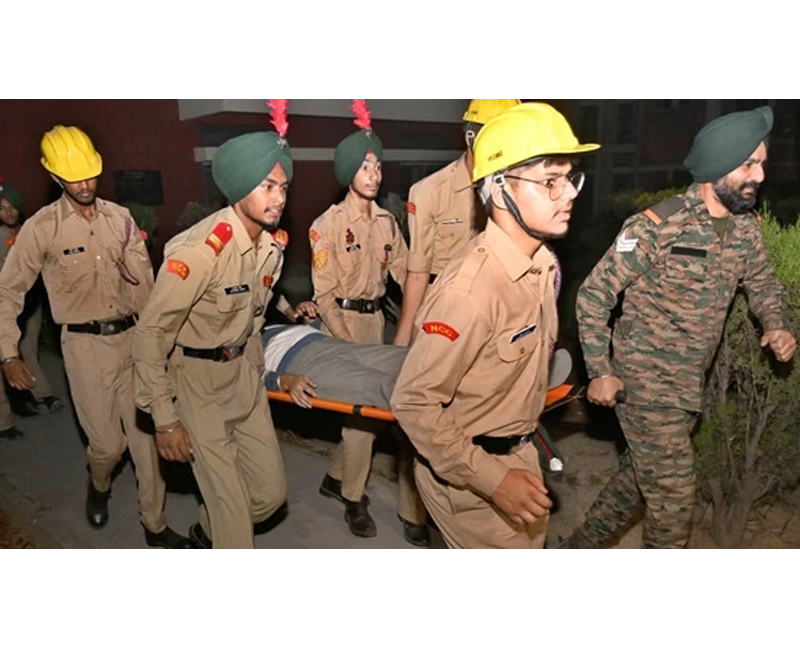
Beyond the blackout, the administration orchestrated large-scale mock drills in major cities, including Ludhiana, Jalandhar, Amritsar, Pathankot, and Mohali. These drills were designed to simulate various emergencies, ranging from fire-fighting operations and high-rise rescue missions to the extraction of trapped civilians and the medical management of casualties during combat conditions.
The operations saw coordinated efforts between civil administration teams, the National Disaster Response Force (NDRF), Civil Defence personnel, and NCC cadets.
A spokesperson for the Punjab government urged the public to remain calm, emphasizing that the activities were strictly part of a planned mock exercise, and requested continued cooperation from the citizens.
This state-wide drill is part of a recurring security strategy; similar measures were previously implemented in May of the preceding year following reports of potential cross-border escalation after the Indian security forces initiated ‘Operation Sindoor’.
The administration reiterated that such exercises are vital for maintaining high levels of vigilance and ensuring that public safety protocols remain robust in the face of evolving security challenges.
(UNI)
 Follow our WhatsApp channel
