

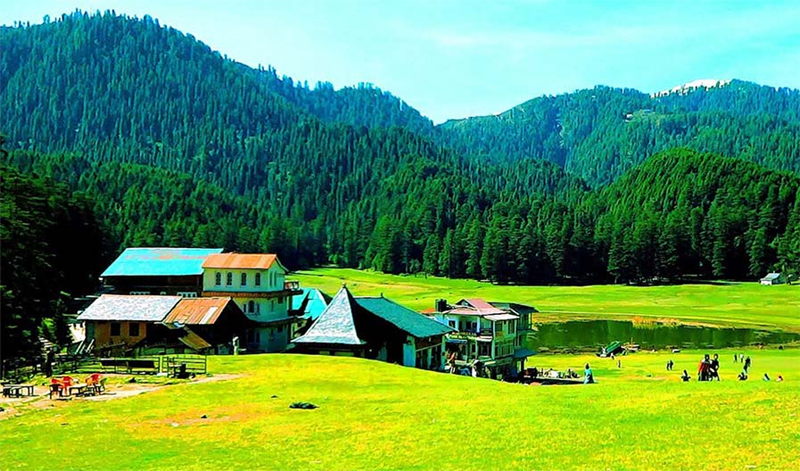
There is something deeply dispiriting about watching a destination destroy itself not through catastrophe, but through indifference. Patnitop, perched magnificently in the Himalayan foothills above Jammu and gifted with pine-scented meadows, a temperate climate, and proximity to jewels such as Sanasar Lake and the Tulip Garden, is doing precisely that – fading not because nature has abandoned it, but because governance has. Its climate rivals, and in many respects surpasses, that of several celebrated hill stations across India. The surrounding landscape offers genuine Himalayan grandeur without the extreme altitude discomfort of more northerly destinations. Nathatop, Sanasar, and Sudh Mahadev lie within easy reach. A Convention Centre has been approved by the Supreme Court itself. A ropeway promises spectacular vistas. Snowfall in winter draws spontaneous crowds from across the country. On paper, Patnitop should be thriving. In reality, it is languishing – and the reasons are entirely man-made.
The most corrosive factor is institutional paralysis. Decades ago, the Supreme Court imposed construction restrictions on a specific radius around Patnitop to restore ecological and environmental balance. That purpose, by most credible assessments, has long been achieved. Yet successive Governments have made no concerted effort to return to court with updated facts, scientific data, and an ecological audit that could reasonably prompt a reconsideration of those restrictions. Worse still, areas of Patnitop that fall entirely outside the restricted zone are being treated as though the construction ban applies to them as well – a bureaucratic confusion that has effectively frozen the entire hill station in time.
The PDA’s Building Operations Controlling Authority (BOCA) meetings – the very body empowered to approve construction, repair, and renovation permits – are routinely deferred for months at a stretch. The revised Master Plan for Patnitop, which would provide the legal and developmental framework for growth, has been stuck in procedural limbo. The Convention Centre has not seen a single brick laid. More strikingly, the PDA regularly surrenders its sanctioned budget – money that an infrastructure-starved destination desperately needs – back to the exchequer. If that is not a statement of institutional disinterest, it is difficult to imagine what would be.
The consequences for the ordinary visitor are immediate and unpleasant. During peak season and weekends, the internal roads of Patnitop collapse under the weight of vehicles, trapping tourists in hour-long traffic snarls on narrow lanes with no relief in sight. Sanitation remains inadequate. Parking is woefully insufficient. In winter, when snowfall draws excited crowds, road-clearance machinery is unreliable and electricity supply erratic. These experiences – miserable queues, freezing vehicles, and dysfunctional basics – are captured on smartphones, amplified on social media reels, and translate into reputational damage that no tourist brochure can undo.
Unfortunately, the Chenani-Nashri Tunnel, a genuine engineering achievement, has rerouted traffic away from the hill station. Railway expansion to the Kashmir Valley, rightly celebrated, has further diminished Patnitop’s position on travellers’ itineraries. The destination has been bypassed by road and rail alike. Without a deliberate strategy to compensate for this loss of natural footfall, the hill station becomes an afterthought.
The path forward is neither complicated nor particularly expensive – it requires political will more than financial outlay. The Government must urgently commission a credible ecological study and pursue the Supreme Court case with concrete data, seeking a measured relaxation of construction restrictions commensurate with the restoration of environmental health. Construction permissions in unrestricted areas must be fast-tracked without further delay. The Convention Centre must move from blueprint to bricks immediately. Beyond regulatory reform, Patnitop needs practical interventions. Regular, affordable tourist bus services from the railway station would open the hill station to budget travellers while reducing private vehicle congestion. A dedicated, properly surfaced Patnitop-Sanasar road – long overdue – would unlock the region’s circuit potential. A homestay promotion would distribute economic benefits to local families whilst offering cost-effective options that attract visitors from distant states whose residents already undertake annual religious tourism to the region and could readily include Patnitop on their itineraries.
Jammu cannot afford to lose Patnitop from the national tourism map. The hill station does not need sympathy; it needs a functioning master plan, cleared permissions, and officials who treat budget allocations as resources to be spent rather than returned. Nature has already done its part. The rest is up to governance.
 Follow our WhatsApp channel
