

Excelsior Correspondent
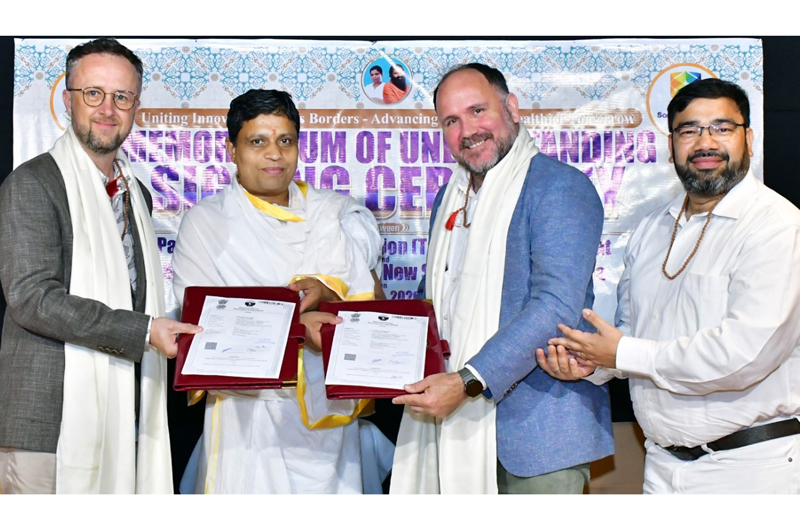
HARIDWAR, May 1: Patanjali Research Foundation inked a Memorandum of Understanding (MoU) with Southern Cross University of Australia.
The MoU signifies a strategic effort to cultivate enduring, impact-oriented and evidence-based collaborations between the two entities facilitating the integration of traditional knowledge systems with contemporary scientific progress on international scale.
On this occasion, Acharya Balkrishna highlighted that Patanjali has been at the forefront towards integrating Ayurveda, naturopathy and modern scientific research. He noted that the collaboration will unite the expertise of both institutions and create a strong foundation for addressing global health challenges.
Balkrishna also highlighted that Ayurveda is not merely a treatment system but a holistic science of life and its impact increases significantly when combined with modern scientific research.
Professor Ben Roche, Pro-Vice-Chancellor (Research & Education Impact), Southern Cross University, stated that the main objective of this agreement is to foster collaboration in research, teaching and student exchange.
Professor Jon Wardle, Foundation Director of the National Centre for Naturopathic Medicine, further explained that under this agreement both institutions will jointly develop research initiatives, seek competitive and Government funding and foster international research publications.
On this occasion, Patanjali’s lead scientist, Dr. Anurag Varshney stated that presenting traditional knowledge with scientific evidence is the need of the hour.
“This MoU marks an inspiring step towards global collaboration, innovation and sustainable development,” he maintained adding: “It sets a powerful example for the world, demonstrating how integrating diverse knowledge systems and cultures can help build a healthier, more prosperous, as well as inclusive future.”
 Follow our WhatsApp channel
