

KABUL, Apr 15: Heavily-armed Taliban suicide bombers today unleashed a wave of coordinated attacks in Afghanistan with several explosions and gunfire rocking the diplomatic area and Parliament in Kabul and three other cities but no Indian target was attacked.
According to India’s Ambassador to Afghanistan Gautam Mukhopadhyay, all Indians were safe.
ITBP Director General Ranjit Sinha said there was no threat to the Indian embassy as it was located three to four km away from the scene of the attack this afternoon by the Taliban gunmen who came from different directions in perhaps an unprecedented assault of this nature.
Taliban claimed responsibility for around a dozen attacks by the gunmen in central Kabul, which has stunned Afghan authorities. Any casualty is still unknown but Kabul police chief Mohammad Ayoubi Salangi was quoted as having said one attacker had been killed near the Parliament.
The militants attacked five-star Kabul Star Hotel in Wazir Akhbar Khan area of the capital and some tried to enter the Afghan parliament firing rockets but were engaged by security forces and driven back, officials said.
An unknown number of Taliban men armed with light and heavy weapons targeted Afghan governmental and International offices in three different areas of Kabul, police said.
A number of Taliban militants took positions at a newly-build building at the Shahr-e-Naw, a neighborhood of Kabul. They battled with Afghan forces for several hours after the militants began assaulting Western embassies.
The building is located close to American embassy, Turkey embassy, presidential palace, Iranian embassy, ISAF’s headquarters, German embassy, UK embassy and different other diplomatic offices.
“I am on the spot and hearing the gunfire being traded between the suicide bombers and Afghan forces. Until now I heard several explosions,” a reporter reported from the scene of attack.
In a text message to the reporters, Taliban spokesman Zabihullah Mujahed said: “Today, afternoon, at 1 pm, suicide bombings are happening by our Mujaheddeen at the ISAF headquarters, Parliament building, and other diplomatic offices in Kabul, and our enemies got many casualties.”
The militants also struck at an airport in Jalalabad, Logar and Paktia.
A few others Taliban militants armed with heavy weapons positioned at a newly-build building are targeting Afghan parliament at the Darul Aman area of Kabul. The battle is ongoing between Afghan and Taliban militant forces, Afghan private tv, Tolo Tv, said today.
Another group of militants are targeting an ISAF’s base, Turkish military base, and a training camp of Afghan National Army at Pule Charkhi area of Kabul. They are targeting them from a building, which they took under their control.
According to the eyewitness, suicide bombers had taken over the newly built five-star hotel in Kabul, which was reportedly on fire.
Outside Kabul, two suicide bombers blew themselves up at the gates to Jalalabad airport in eastern city of Nangarhar province, wounding several people, police said.
Four bombers tried to enter the airport and two detonated their explosives when they were stopped at the gate, officials said. Two others were wounded and arrested.
Taliban militants also attacked ISAF’s Provincial Reconstruction Team, Or PRT, in Jalalabad. “The battle is going on,” Tolo tv said.
“In Jalalabad, several mujahidin attacked airport and PRT compound. The fighting is going on and our mujahidin are showing very strong resistance,” the Taliban spokesman said.
According to reports, Taliban also attacked Military Academy Compound in Jalalabad road, District No 9 of Kabul.
In Logar province, Taliban militants attacked a Police compound, PRT Compound and provincial Intelligence Department.
In Paktia province also, Taliban attacked police Regional Zone Compound, airport, police headquarters and Intelligence Department. “The fighting is going on in all the provinces,” Mujahed said.
“Our mujahidin are equipped with small and heavy weapons and also suicide vests,” Mujahed said, adding “this attack was planned very well.”
“Mujahidin attacked Afghanistan Parliament compound and still the fighting is going on and we don’t have casualties reports until now,” the Taliban spokesman said.(PTI)
Taliban attack Kabul, 3 cities
Azad visiting on April 17, 18
Excelsior Correspondent
JAMMU, Apr 15: Union Minister for Health and Family Welfare Ghulam Nabi Azad is visiting Jammu and Kashmir on a two day’s visit to the State on April 17 and 18.
Mr Azad would fly to Srinagar on April 17 from New Delhi and join death anniversary celebration of former Union Minister of State for Home Maqbool Dar in Anantnag.
He would fly to Banihal and attend a meeting of the Congress in the afternoon. He would have a night halt at Patnitop.
Mr Azad would address a public meeting at Phinter in Billawar tehsil of Kathua district in the afternoon on April 18. The meeting has been organized by Minister of State for Cooperative Dr Manohar Lal Sharma, MLA Billawar and would be attended by top Congress leaders of the State including many Ministers.
He was scheduled to return to New Delhi in the evening of April 18.
He would address a meeting of Backward Classes Union at Sidhra Byepass on April 18 afternoon.
Mild quake in Ladakh
Excelsior Correspondent
SRINAGAR, Apr 15: An earthquake of magnitude 4.1 occurred in the Ladakh region in the early hours here today.
Aamir Ali, Coordinator, Divisional Disaster Management Authority, Kashmir said that the epicentre of the earthquake was at Kashmir (Ladakh)-Xizang (China) border. He said the coordinates of the earthquake were 34.24N, 79.85E located at 209 kilometres east of Leh.
Protests in Pampore after arrests
Excelsior Correspondent
SRINAGAR, Apr 15: Normal life was paralyzed in the saffron rich town of Pampore today following stone pelting by a group of youth on the police after the latter carried out nocturnal raids in the town during the past two days. The people carried out protests on the Srinagar-Jammu national highway only to be dispersed by police and security forces.
At least two youth have been arrested during the raids and one of the arrested persons has been injured due to beating up by the police. Most of the shops remained closed in the town for some hours and situation became normal only late in the day.
Reports reaching here said that the police raided many houses in Pampore while searching for the youth who were involved in different incidents of stone pelting during 2008 and 2010. The youth being looked for by the police have been arrested for stone pelting incidents and since then they have been released as well.
On last Friday evening a contingent of police personnel of police station Pampore raided many houses in some of the localities of the town. The police personnel barged into these houses and ransacked the belongings of the people living in the area. The locals raised their protest against the raids and condemned the police action.
One youth was arrested during these raids and he was sent to police remand. The youth has been beaten to pulp and he suffered grievous injuries in the beating up incident. He has been taken to SKIMS-Soura for treatment where his condition is stated to be stable.
The police action on Friday led to resentment among the locals and they converged on the main road while raising slogans against the police personnel. On Saturday night the police cops raided yet another house and arrested Tauseef Ahmad, who runs a readymade garments shop in the area.
Tauseef was a stone pelter and was arrested by police for his role in fomenting trouble in the Pampore area during the 2010 summer agitation. However, after his release from the jail he got busy with his own business and was not involved in any further anti-state activities. His arrest led to further trouble in the Pampore area today and people most youth came out in the morning and raised protest against his arrest.
The protesters reached the Srinagar-Jammu national highway and carried out protest demonstrations there as well. Before this they forced closure of the shops located in the different localities of the Pampore town. The situation turned volatile and in no time reinforcements of police and CRPF were rushed to the area.
The police and security forces personnel swooped on the protesters resulting into the dispersal of the protesters. However, before this there were pitched battles between the two sides. The ding-dong battles carried out for some hours and the situation turned normal late in the day.
In the evening police personnel sealed the garments shop of Tauseef. His uncle’s mobile phone has also been seized by the police and people term this action as an act of victimization by the police.
Farooq pays obeisance at Golden Temple
AMRITSAR, Apr 15: Union Minister Dr Farooq Abdullah today paid obeisance at Golden Temple here.
After paying the homage, Abdullah visited langar (community kitchen) and inspected the solar heating plant and solar energy plant here.
“Recently installed solar energy plant was operating successfully and producing 25 megawatt electricity for the Golden Temple,” said the Union minister for new and renewable energy.
One more plant was also being installed by the Union Government, which would produce electricity in bulk and would enable the Temple to meet demand of electricity up to good extent, he said. (PTI)
Lochan heads Guru Ravi Dass Sabha
Excelsior Correspondent
JAMMU, Apr 15: Vijay Lochan was today elected as president of Shri Guru Ravi Dass Sabha.
The election was held in Guru Ravi Dass Sabha premises at Krishna Nagar.
Official sources said the election was conducted in the presence of Magistrate and police on court orders. District Magistrate, Jammu, Sanjeev Verma, supervised the election.
There had been dispute over the Sabha election between two parties.
When contacted, Mr Verma said the election was conducted on court orders. A Magistrate had been deployed for the election, which passed off peacefully in police presence.
Despite hectic lobbying, Govt in no hurry to fill up PSC posts
‘Men of integrity not henchmen of politicians should be choice’
By Mohinder Verma
JAMMU, Apr 15: Notwithstanding hectic lobbying by the henchmen of the politicians during the past nearly one year, the Government seems to be in no hurry to fill-up the vacant posts of the members of Public Service Commission and is still searching for the men of highest integrity so that impression goes to the public that Commission is no more meant for the rehabilitation of the blue-eyed bureaucrats.
The Commission, which was set-up as per the rules framed under Section 128 of the J&K Constitution, was actually having sanctioned strength of six (one Chairman and five members) but with the passage of time the strength of the Commission was increased to nine (one Chairman and eight members) in order to rehabilitate henchmen of the politicians.
Following the retirement of Dr Tara Singh, retired Principal of Government Dental College, Srinagar in December 2009 and Manzoor Bhat, B L Bharti and Dr H L Goswami in May 2011, the henchmen of some Ministers and politicians again started hectic lobbying for getting appointed to vacant four posts.
“Though names of several blue-eyed bureaucrats are making rounds in the political circles since May 2011 yet the Government seems to be treading very cautiously the path of making appointments to the Public Service Commission as consideration of henchmen of politicians and Ministers at the cost of men of integrity would dent the image of this autonomous body, which has improved up to certain extent during the past some years”, official sources said.
“The another reason behind Government going slow in making selections against the vacant four posts is considerable reduction in the work-load on the Commission due to clearance of huge back-log during the past two and half years”, sources further said while disclosing that keeping in view the clearance of back-log Chairman of the Commission, Dr S L Bhat, in a communication addressed to the Chief Minister, Omar Abdullah, last year, had suggested that Government may stick to the constitutionally sanctioned strength.
However, the Government is committed to fill up the vacant posts in order to provide adequate representation to the Jammu region in the Commission, which is responsible for making Gazetted level appointments, and a search for the men of highest integrity is still going on, they said, adding “as soon as the clean imaged and morally strong incumbents are found, the Government will fill up the vacant posts”.
In response to a question, they said, “only those persons should be the choice of the Government who would be of immense help in further improving the image of the Public Service Commission instead of down-grading the same as the image formation of the Commission is imperative for good governance”.
About the functioning of the PSC, sources said, “presently the Commission is on the road to reforms and transparency”, adding “after every quarter, a detailed bulletin is being released containing the details vis-à-vis latest position of posts lying with the Commission for appointment, number of interviews conducted in the preceding quarter, number of fresh posts referred for appointments and the number of appointments held up due to court cases”.
“The improvement in the functioning of the Commission can be gauged from the fact that for the first time in the history KAS examinations are being conducted regularly during the past three years”, they said, adding “in order to ensure transparency in the KAS selection, full Commission takes the interview. Similarly, for non-administrative posts, weightage is given to the evaluation of the experts in order to reduce the intervention of the members”.
Sources hoped that image formation of the PSC would be the priority of the Government instead of appeasing the Ministers and politicians, who are only bothered about rehabilitation of their henchmen, who have the track record of remaining at the beck and call of their political bosses.
Coalition not interested in Municipal polls: Mufti
Excelsior Correspondent
KATHUA, Apr 15: Expressing his serious concern over arrogant attitude of the National Conference led coalition regime for not delegating powers to the Panchayats, patron of the Peoples Democratic Party (PDP) Mufti Mohammad Sayed today ridiculed demand of Congress leaders to extend 73rd and 74th amendments of the Indian Constitution in the State.
“Congress leaders have been demanding extension of these two amendments in Jammu and Kashmir to strengthen Panchayati Raj Institutions but party (Congress), which is part of the Government, has failed to even convince its coalition partner to conduct elections of Block and District Samities of Panchayati Raj Institutions”, Mr Sayeed said while addressing one day convention of party workers at Kathua under state law.
He said that delay in constituting Block and District Committees was a clear indication that this regime, with “dictatorial mindset,” was not interested in strengthening democratic institutions in the State.
“Almost one year has been passed after completion of the Panchayat elections but Block and District Committees are yet to be constituted because the Government was not interested to empower and strengthen Panchayati Raj Institutions in the State”, he said, adding, “I do not know at which capacity the Congress leaders have been demanding extension of 73rd and 74th amendments because they are equally responsible for eroding sanctity of Panchayati Raj Institutions in the State”, the former Chief Minister said.
Coming down heavily on coalition regime for undermining all democratic institutions, Mufti reminded that civic bodies elections, which were due in the month of February 2010, have been delayed with one or other excuse. “The Government, even in the Governor’s Address this year, had promised to complete the process of civic bodies elections by the end of April this year but it has renegade the promise”, he pointed out and added that during the last three years this regime has eroded and undermined all prestigious democratic institutions be it Assembly, local bodies or Panchayati Raj Institutions.
“With its assiduous efforts, the PDP had restored peoples’ faith in the democracy but the present Government headed by NC is brazenly trying to undermine the democratic institutions”, Mr Sayeed said and cautioned that such “authoritarian attitude” adopted by the coalition regime would be proved disastrous for the State. He reminded that infamous 1987 rigged Assembly elections had badly shattered peoples’ faith in the democratic system.
The PDP patron while hailing recent decisions of India and Pakistan to dismantle all trade barriers and ease visa restrictions, Mufti said that Indo-Pak bonhomie at Wagha border was result of the pro-peace policies being initiated by the PDP.
He said that PDP has pioneered a political and economic agenda to establish sustainable peace in the subcontinent. “Establishing lasting peace and to consolidate the reconciliation process is on the top of the agenda of PDP “, Mr Sayeed said, adding, “Our party, through its pro-peace policies, has consolidated reconciliation process and facilitated the efforts of establishing peace in this region.
While reminding party workers about the historic rally on former Prime Minister Atal Bihari Vajpayee at Srinagar on April 18, 2003 where he (Vajpayee) had extended hands of friendship towards Pakistan despite tension on border, Mr Sayeed said that historic event was the beginning of the era of peace in this region and credit for this goes the PDP.
“Beginning of cross-LoC trade, the opening of Srinagar-Muzaffarabad and Poonch-Rawalakote roads are noticeable achievements of PDP”, he said and added that present UPA regime headed by Dr Manmohan Singh has also supported the pro-peace policies of PDP. He further mentioned that prevailing peace all along the borders from Kathua to Kargil was result of the reconciliatory policy pioneered and propagated by the PDP.
He asserted that biggest achievements of PDP was that it has created conducive atmosphere for initiating peace process and taking the Confidence Building Measures (CBMs) to normalize relations between India and Pakistan.
Responding to the demands raised by party workers, PDP patron assured that their demands would be effectively taken up by the party.
Trilok Singh Bajwa, Daman Bhasin, Hussain Ali Wafa, Falail Singh, Suresh Sharma, Nizam-ud -din Khatana, Surinder Singh, Abjeet Jasrotia, Narinder Singh Raina, Digvijay Singh, Vinod Gupta, Guru Parshad, Nirmal Kishore, Jodh Singh, Jagdish Singh, Doulat Ram, Mohammed Rafi, Joginder Singh, Manohar Singh, Randeep Jasrotia, Pradeep Sambyal, Rouf, Swarandeep Singh, Neeraj Sharma and others also addressed the meeting.
NIA wants to quiz Headley’s estranged wife
NEW DELHI, Apr 15:
India has sent a formal request to Morocco for examination and recording of statement of Faiza Outalha, Pakistani-American terrorist David Headley’s estranged wife, to get more evidence against him as well as LeT founder Hafiz Saeed.
The Letters Rogatory was sent recently to Indian Mission in Rabat, the Moroccan capital city, which was passed on to Moroccan Foreign and Cooperation Ministry requesting access to Outalha to record her statement, official sources said.
The sources said Outalha, the estranged wife of Headley, could give crucial evidence in nailing the lies of Saeed, the Lashker-e-Taiba (LeT) boss who has been attempting to throw a veil over his terror activities under the garb of being associated with humanitarian activities of Jamaat-ul-Dawa(JuD).
The request was passed following approval of a plea of National Investigation Agency for seeking cooperation of Moroccan authorities in recording her statement, which was also likely to be annexed with the production warrant for Headley to be sent soon as the special court of H S Sharma has sought his appearance on May 31.
The sources said while it was unlikely that Headley would be brought to India, the statement of Outulha would bring out the role played by Saeed in 26/11 attack in Mumbai that left over 160 people including foreigners dead.
Outalha, during her stay in Pakistan, had met Saeed and complained about Headley to him and besides that she had also gone to the US Embassy in Islamabad to complain against the American-born terrorist and his role with terror groups like LeT and Harkat-ul-Jehadi Islami, the sources said, adding her statement would be recorded as a witness.
Outalha, who married 50-year-old Headley in February 2007 and divorced a year later, had been able to give security agencies an insight into the personal life of Headley which included connections he had in Mumbai, including with some socialites.
She had flown to Mumbai from Karachi and crossed over through Wagah border into India the second time. She had come for the first time in 2007 and stayed with the terror suspect in Taj Mahal Hotel and later in Oberoi-Trident.
Both the luxury hotels were targeted by the terrorists during the Mumbai terror attack in November 2008. She had again come in May 2008 via Wagah and went straight to Manali where she was on a holiday near a Jewish house and later toured some areas of Shimla including nearby Kufri, a popular tourist destination.
While she claimed that she had since been divorced as Headley was allegedly having relations with several women, the investigators also got information from her about his alleged links with some upcoming Bollywood actors, prominent party-hoppers of Mumbai and socialites. (PTI)
PC to present security report on J&K based on Apr 10 visit
Omar to oppose NCTC provision, bat for removal of CRPF bunkers
By Sanjeev Pargal
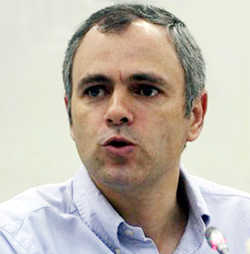
JAMMU, Apr 15: As internal security comes under a major review with Prime Minister Dr Manmohan Singh chairing a conference of the Chief Ministers’ in New Delhi tomorrow, Union Home Minister P Chidambaram, who had recently undertaken a detailed review of the situation here on April 10 will be briefing the meeting about security scenario in Jammu and Kashmir while Chief Minister Omar Abdullah will have his separate presentation on the situation.
Official sources said Mr Chidambaram would brief the Chief Minister’s conference about his assessment of situation on Jammu and Kashmir, which he gathered from Governor NN Vohra, Chief Minister Omar Abdullah, top brass of civil and police administration, Central Police Forces and Intelligence agencies during his one day meeting in winter capital of the State on April 10.
Sources said the conference would deliberate on how India is being affected due to its troubled neighbourhood and its obvious consequences in the country like cross border terrorism, covert support to insurgents, arms smuggling, circulation of fake Indian currency, inflow of refugees and immigration.
“Active terror infrastructure in Pakistan, growing nexus between the Naxals and anti-India forces both within the country as well as abroad, better Intelligence sharing among security forces, Crime and Criminal Tracking Network and System (CCTNS), border management, coastal security and other Centre-State issues will also figure prominently at the meeting”, sources said.
Official sources told the Excelsior that Chief Minister Omar Abdullah in his nearly 15 to 20 minutes presentation in the Chief Ministers’ conference on internal security would toe the line of most of the non-Congress Chief Ministers on setting up of National Centre for Terrorism Control (NCTC) and amendments in Border Security Force (BSF) Act.
Sources said Omar would strongly oppose a provision of NCTC that enable it to carry out suo moto operations in any State.
The Chief Minister wouldn’t oppose other major provisions of NCTC including Intelligence gathering and Intelligence analysis of the State by the Central agencies.
The non-Congress Chief Ministers including some of the UPA-II allies including West Bengal Chief Minister Mamata Banerjee was opposing NCTC provisions in entirety. Many other Chief Ministers have also voiced concern over NCTC.
Sources said Omar Abdullah wouldn’t oppose NCTC in toto but voice his strong reservations over one of its provision that gave the NCTC powers to carry out suo moto operations in any State. He would apprise the conference of the Chief Ministers that this clause of the NCTC was not acceptable to Jammu and Kashmir at any cost.
They pointed out that the Chief Minister would tell the conference that Jammu and Kashmir already has Standing Operating Procedure (SOP) under which all security agencies coordinate their efforts for conducting searches and sharing Intelligence inputs on militancy and other activities.
Sources said Omar was likely to bat for partial withdrawal of Armed Forces Special Powers Act (AFSPA) from five districts—Jammu, Samba, Kathua, Srinagar and Badgam giving facts and figures and logic that no major incident has taken place in the five districts for past quite sometime.
The Chief Minister would support three amendments in AFSPA Act proposed by the Union Home Ministry, which were pending discussion before Cabinet Committee on Security (CCS).
The amendments proposed by the MHA in AFSPA included making it mandatory for armed forces to take arrest warrants in advance before conducting searches for arrests of any person, taking away the power of the armed forces to open firing causing deaths and setting up of a Grievance Redressal Cell. Defence Ministry and Army have strong objections to first two amendments.
Backed by strong facts and figures on reduction of militancy in entire State including five districts, the Chief Minister would call for withdrawal of AFSPA from there on the ground that it was no more required there.
He would also stress for removal of more bunkers of Central Reserve Police Force (CRPF) from Srinagar City before onset of summer.
The Chief Minister would apprise the conference that the State Government has taken a major initiative for withdrawal of cases against youth involved in summer unrest of 2010, which would give relief to nearly 5000 youth.
Many other issues pertaining to internal security could be discussed in the meeting.
Sources said Mr Chidambaram, who had paid a visit to Jammu, the winter capital of the State on April 10, was scheduled to present a report on security situation in Jammu and Kashmir and North East in the Chief Minister’s meeting.
Security scenario in Jammu and Kashmir, which has witnessed relative peace in recent times, will be discussed intensively in the meeting, which would devise a strategy on hot to meet the challenge of maintaining peace for longer period in the sensitive State.
Mr Chidambaram had held a high level security review meeting with top brass of J&K’s civil administration and police, senior officers of all para-military forces and Intelligence agencies operating in the State during his one day visit here on April 10.
K Skandan, Joint Secretary (Kashmir) in Ministry of Home Affairs, Additional Director, Intelligence Bureau, Rajeev Kapoor and BN Ramesh, Officer on Special Duty (OSD) to Union Home Minister had also joined the meeting along with top brass of police and civil administration, Central Police Forces and Intelligence agencies.
Governor NN Vohra and Chief Minister Omar Abdullah had given a detailed briefing to the Union Home Minister on the situation.
The meeting had discussed measures to ensure a peaceful summer in Kashmir in 2012 like 2011 when the Valley and other parts of the State were abuzz with tourists and pilgrim tourism. It had discussed in detail the steps required to ensure that 2010 like situation didn’t erupt in Kashmir this summer when over 100 people were killed in incidents of firing etc.
Sources said the Home Minister had gathered Intelligence and other inputs with top brass of police, para-military, Intelligence and other agencies on Jammu and Kashmir, which he would share in tomorrow’s meeting.
Mr Chidambaram was reportedly satisfied with security scenario in the State, which had undergone improvement since 2010 summer. He could apprise the meeting that Jammu and Kashmir was far better placed now as compared to 2010 or previous years.
According to sources, the Home Minister was expected to direct all States to vigorously pursue the cases of terror funding and go all out for the hawala operators, who were fast becoming a potential threat in the country for all form of terrorism. The Home Minister has already directed all agencies and Department including Income Tax, Enforcement Directorate, Central Police Forces, Intelligence, NIA and Jammu and Kashmir Police to block hawala channels through businessmen and banking transactions.
The Home Minister had stressed that cross border terrorism remained an issue of concern as there was still presence of a number of militants across the border and infrastructure of terrorist outfits like Lashkar-e-Toiba (LeT) and Hizbul Mujahideen was also intact. However, he expressed satisfaction over zero infiltration on the IB and improved security scenario including graph of militancy, which had gone to an all time low in both Jammu and Kashmir regions during past couple of years. He stressed for keeping up the momentum against the militancy.
PTI adds from New Delhi: All non-Congress chief ministers, barring Mamata Banerjee, who had come together to oppose the Centre on the proposed National Counter Terrorism Centre (NCTC) and other issues, will be attending tomorrow’s CMs’ conference on internal security called by the Government.
Strengthening of counter terror capabilities and intelligence apparatus, Maoist violence, police reforms and capacity building will be high on agenda at the meeting to be inaugurated by Prime Minister Manmohan Singh.
The Central Government has already conceded the demand of several non-Congress chief ministers, including ally Trinamool Congress chief Mamata Banerjee, to hold a special meeting of CMs to exclusively discuss on the controversial issue of NCTC on May 5 and so the matter is unlikely to figure prominently at the day-long meet.
Sources in Kolkata today said Banerjee will not attend tomorrow’s chief ministers’ meeting and Finance Minister Amit Mitra will represent West Bengal Government. However, she will take part in the CMs’ meeting on NCTC.
No reason has been assigned for the West Bengal Chief Minister’s decision.
The conference will also be attended by Tamil Nadu Chief Minister J Jayalalithaa, Odisha’s Naveen Patnaik, Bihar’s Nitish Kumar and their Gujarat counterpart Narendra Modi who have been vocal in their opposition to the NCTC.
The conference, originally scheduled for February 15, had to be postponed for two months due to the recent Assembly elections in five states and Budget Session of Parliament.
A separate session on Maoist violence will be held later in the day and will be attended by Chief Ministers of nine Maoist violence affected states.
Though the internal security situation has vastly improved during the last three years largely because of cooperation between the Centre and the state governments, Naxalism continues to remains a grave challenge which claimed nearly 600 lives in 2011, the sources said.
The country’s top leadership will review the two-pronged approach of development and police action to contain the Maoist problem and the future strategy to deal with it.
With communal violence becoming a major cause of concern for the government as 2,420 such incidents have reported from across the country in last three years where at least 427 people lost their lives, the issue is likely to be flagged by the Home Minister in the meeting since the sensitive matter needs urgent attention from all quarters.