

NEW DELHI, Apr 17: Mentha oil prices fell by Rs 20.20 to Rs 2,420.60 per kg in futures trading today as speculators indulged in profit-booking at prevailing higher levels, supported by sluggish demand in the spot market.
Increased arrivals from the major producing belt of Chandousi in Uttar Pradesh also influenced mentha oil prices at futures trade.
At the Multi Commodity Exchange, mentha oil for delivery in April declined by Rs 20.20, or 0.83 per cent, to Rs 2,420.60 per kg in business turnover of 387 lots.
Similarly, the oil for delivery in May contract lost Rs 19.30, or 0.78 per cent, to Rs 2,447 per kg in 156 lots.
The fall in mentha oil futures was mostly due to profit-booking by speculators amid a weak trend at spot market on sluggish demand, analysts said. (PTI)
Mentha oil futures fall 0.83 pc on profit-booking
Potato futures shed 1.48 pc on increased arrivals
NEW DELHI, Apr 17: Potato prices shed 1.48 per cent to Rs 1,086 per quintal in futures trade today, as speculators offloaded their positions, triggered by increased arrivals from producing regions at spot market.
At the Multi Commodity exchange, potato for delivery in May month fell by Rs 16.30, or 1.48 per cent, to Rs 1,086 per quintal in business turnover of 102 lots.
Likewise, the potato for delivery in April contract moved down by Rs 15.20, or 1.25 per cent, to Rs 1,204 per quintal in 57 lots.
Market analysts said speculators offloaded their positions on the back of increased arrivals from producing belts in the spot market mainly kept pressure on potato prices at futures market. (PTI)
Instanex Skindia GDR Index declines further
MUMBAI, Apr 17: The Instanex Skindia GDR Index declined further by 9.02 points, or 0.40 per cent, to 2,239.19 as on April 16 from 2,248.20 in the previous session.
However, the P/E ratio moved up to 21.75 as 21.63 in the previous session, an Instanex Capital release said here today.
The following are the GDR and ADR rates for April 16 in US dollars, with the difference vis-a-vis the previous level given as a percentage in brackets: Company: Price Percent chg Dr Reddy’s Labs (ADR) 33.66 (+1.11) Gail (GDR) 41.62 (-0.79) Grasim Industries (GDR) 50.38 (-1.83) ICICI Bank (ADR) 33.49 (+0.63) Infosys Tech (ADR) 47.49 (-3.38) ITC (GDR) 4.67 (+1.76) L&T (GDR) 25.25 (+1.90) Mahindra & Mahindra (GDR) 13.12 (-3.03) Ranbaxy Labs (GDR) 9.80 (+3.27) Reliance (GDR) 28.88 (-0.38) Satyam Computer (ADR) 2.64 (unch.) State Bank of India (GDR) 86.72 (-0.95) Sterlite Industries (ADR) 8.23 (-1.20) Tata Communication (ADR) 8.74 (unch) Tata Motors (ADR) 28.85 (-3.33) (PTI)
Cardamom futures gain 2.36 pc as demand picks up
NEW DELHI, Apr 17: Cardamom prices gained Rs 30.70 to Rs 1,331 per kg in futures trade today as speculators enlarged their positions, driven by rising demand for the ongoing marriage season in the spot market.
Less arrivals from Southern producing regions also supported the uptrend in cardamom prices at futures trade.
On the Multi Commodity Exchange, cardamom for delivery in June rose by Rs 30.70, or 2.36 per cent, to Rs 1,331 per kg in business turnover of 167 lots.
Similarly, the spice for delivery in May contract gained Rs 25.20, or 2.07 per cent, to Rs 1,244 per kg in 1,164 lots.
Traders said besides increased buying by speculators on the back of rising demand in the spot market, less arrivals from producing region mainly led to an upsurge in cardamom prices at futures trading. (PTI)
Clear headed statesmanship
Chief Minister’s summation of current security and administrative scenario in the state reflected in his address to the annual meeting of chief ministers on internal security in New Delhi entitles him to the ranks of indisputable statesmanship. One cannot imagine a better and more eloquent defence of his government’s views and actions during 2011. The effortless impression one gathers from his presentation is that he is in full control of things and is amazingly clear-headed about the principles and policy of his government, particularly on some of the issues that are baffling, complicated and sensitive. Omar Abdullah’s presentation has to be understood and analyzed in the background of more than two decades of externally abetted militancy and turmoil in the State. The State administration had virtually come to a grinding halt because of deep confusion and chaos which the adversaries and enemies of the people of the State had succeeded to create. Alienation of the people was viciously trumpeted, chance incidents of violation of human rights were blown out of proportion, canards were spread and security forces were demonized. Disinformation campaign was carried to international media and world platforms to paint India and State government in darkest possible colour. One can imagine the hurdles in the path of the elected coalition government if it meant to steer the ship of the State through turbulent storms.
The task of the Chief Minister was made more difficult by some intransigent elements working under negative emotions and impulses that led to disturbances in the State for two consecutive summers. But the young chief minister did not lose his cool and faced all these challenges whether on the ground or on public platform or on the floor of the legislative assembly counter-arguing, challenging and disarming the opposition at every step. He had to deal with a populace that had been misled and confused; he had to deal with administrative machinery some of whose clogs and nut and bolts had collected rust, and he had to deal with an opposition that often defied the fundamental principles of parliamentary opposition and behaved almost opportunistically. In trying to impress upon the stakeholders his vision of current and near future scenario of the State, he had to face a mood of reservation and apprehension. His insistence on withdrawing AFSPA from those areas where militancy has maximally come down and security forces have had not to get engaged in serious encounters with militants is in no way any aspersion on the armed forces rather he has lauded their contribution in curbing militancy. The fact is that the Chief Minister has to restore confidence of the masses of people in the efficacy of the civilian administration and remove all obstructions in the way of flow of justice and good governance. After all, sooner or later, the armed forces have to be withdrawn to barracks, and who is a better judge than the chief minister to decide whether their presence in the deployed areas should continue or not. In any case, the views of the Chief Minister on this issue are getting crystallized and there is serious thinking at the level of Home Ministry and other places of allowing the Chief Minister’s views to prevail. His point of view gets reinforced when in the hindsight we reassess the reaction of the people of the State to government’s initiative of holding panchayat elections successfully. Elections to urban rural bodies will follow and then to bloc and district level boards. This is the right process of bringing democratic dispensation to the grassroots level in the State. Therefore when at higher levels the question of withdrawal of Disturbed Areas Act from some of the districts with reduced or minimized militancy is taken up for discussion, the holding of successful panchayat elections and democratization process should be taken into account.
The Chief Minister has agreed that divergence of views or approaches can be overcome through dialogue. This is an indirect message to the separatists and secessionists in the State to understand the changing winds and adapt to the new ground reality in the region. Pakistan is no more in a position to provide its traditional “diplomatic, political and moral support” to militancy in Kashmir because its own survival is now hanging in balance. Those who claim to be fighting for the “aazadi” of Kashmiris have been exposed fully. One of them is languishing in a jail in the US. The separatists in Kashmir need to open their eyes and stop fantasying. Jammu and Kashmir is on the threshold of a big leap for development and progress. It needs peace to allow mega projects to reach completion and change the destiny of millions of people. Railway link, industrial expansion, opening of higher institutions of excellence, impact of democratic dispensation, all emanate clear and loud signals that the new era of modernity is about to usher in the State.
Discounting PPP mode
Union Health Minister has turned down the proposal of the State government to run six hospitals of the State in Public Private Partnership (PPP) mode for the simple reason that doing so would mean putting economically weaker sections of people to great financial hardship. The State government’s plea is those six hospitals, three in Jammu and three in Kashmir, are not running in a manner in which these should run, and hence should be given in PPP mode with free treatment to 25 % patients BPL. The fact is that ours is a backward and hilly state and a large percentage of population cannot afford the heavy cost on medical treatment in private hospitals. Experience has shown that patients from poorer segments receive scant attention in the hospitals because they are not in a position to pay for expensive medical services. The State government needs to reconsider its proposal and also keep in mind the limited financial capability of weaker sections of society in taking care of their health services. Almost everywhere governments provide medical services on subsidized financial implications. It is a requirement of a welfare state. The State government would better find a solution to the issue rather than shies away from it by believing that private sector will bale it out. The bailing out game, if at all it happens will assuredly be at the cost of the toiling masses only.
Higher Education – Challenges and solutions – Rural Universities to play a leadership role
By Professor R.N.K. Bamezai
India is the land of great thinkers and planners who from time to time have worked towards community up-liftment and generated ideas to kindle our lives with meaning and purpose. This has been true in the realm of higher education as well. We find Gandhi’s philosophy of Sarvodaya- development of all- reflected in the initial goal outlined by the Radhakrishanan Commission, on University Education set up by the Government of India in 1948-49. This First Commission in independent India echoed the philosophy of Sarvodaya by enunciating the goals of Higher Education in transforming education from mere learning to changing lives. It was pitched at fulfilling the needs and aspirations of the people and making it the powerful instrument of social, economic and cultural transformation to realize the national goals.”
Establishment of such higher educational institutions with the twin purpose of nurturing young minds with higher knowledge and skill-sets on one hand and inculcating motivation for community service on the other is of grater relevance today as it was at the time of independence. Shri Mata Vaishno Devi University set up in a rural setting at Kakriyal; Katra fulfills the same vision anticipated by the First Commission on University Education. It is a matter of pride that SMVD University and other associated institutions are living that vision by serving the society through education, extension and service.
Creating Learning Grid
Realizing how education at SMVDU could work in tandem with lives and aspirations of people in the region and bring in social, economic and Cultural Revolution, the need to harness the strengths of such an institution of higher learning becomes important today. We should look at extending these possibilities by creating mechanisms of network that institutions like SMVDU can spearhead with other institutions of higher learning to create a ‘learning grid’. This propels in motion a chain of linkages based on exchanging curricula, material, and learning experiences.
As an educationist, a researcher and now an administrator, my ‘mannan’ on higher education in the country has been an on-going ‘mind-game’, a process of continuous learning and de-learning. What is of utmost significance is of keeping the energetic youth of today engaged in a meaningful exercise of knowledge gain and information generation, through the process of learning to innovate, and become employment generators instead of just settling as job seekers. Equally binding would be imparting moral and ethical values which can be imbibed and readily accepted through involvement in community outreach services. Somehow our education today, despite the willingness to bring changes, has not been as successful in achieving the goals set by the First Commission on higher education. Focusing on the anticipated projections set by the commission would serve the primary purpose instead of devoting our energies in redefining or deviating from axioms of higher education in India.
Gross Enrolment Ratio : A chimera?
Despite keeping pace with times by creating world-class institutions with brand value, we have fallen short of producing innovators and retaining a competitive edge. Issues of equity, inclusion, level-playing field for all and non-discrimination between state and central institutions of higher learning are some new challenges confronting the higher education today. Our universities are expected to attain global parity in average enrolment, as a sub-critical component with optimum use of land and infrastructure, which could lead to a substantial higher intake and enrolment. The desire to increase the figure of 20 million learners to 30 million in the conventional system and 4.6 million to 6.6 million in distance mode could take us to a coverage of 30% GER, as suggested by Professor Ved Prakash, the Acting Chairman of UGC. As a marker for a wide and uniform coverage of education, GER has had a limited success so far. We could not achieve the set goal of 20% of gross enrolment ratio (GER) in XI Plan though we intend to take it to a new high of >30%. Not only does this deficit become a stark reality in comparison to the developed world, we also confront the challenge of overcoming lack of innovation and achieving excellence.
Yawning Gap in Filling Positions
Another significant area of concern is of acute faculty shortage that ranges from 30 to 40 % in IITs and up to 30 % in IIMs and the yawning gap is as high as 50 % of the teaching posts in the university system. Many new universities are operating from temporary campuses and offering limited courses because of faculty shortage and space. Concerns of quality and research output not matching up to international standards have been plaguing the higher education. An addition of four new IITs, 14 innovation universities and 374 model colleges, announced in the 11th plan will be carried forward into the new 12th plan. However, random additions of institutions without prior preparation amounts to ‘putting a cart before the horse’ which is likely to keep the problems festering. Same situation would persist even if proposals of GER by higher enrolment or conducting classes in off hours with a provision of additional resources, allocation of funds and raising of more universities with tags of ‘world class’, or even IITs, materializes.
We need to address certain basic issues and find appropriate answers. Invariably, despite a huge network of colleges and universities, we continue to fail in attracting good and knowledgeable faculty, a requirement fundamental to any educational institution. Apart from lack of innovations, absence of new discoveries and with least prevalence of a happiness index in almost all institutions of higher learning; the faculty, staff and students present themselves as fatigued who largely have a limited desire to earn their livelihood. Need for motivation and suggesting the principles of development to the students is alien to most mentors. There are exceptions and very good teachers in these institutions who grow as individuals without creating any potential influence on their non-performing colleagues. Absence of a supportive environment to deserving teachers, lacking in the system, acts as de-motivator for those who are performers. Motivation, therefore, is the casualty at last. No wonder that the knowledge base, the innovative thinking and the passion to do something different is lacking among the majority. Silver lining though, where one finds very bright from within the country and abroad hunting for jobs in India. What a paradox? Something is amiss, not in policies, but in perspectives and ground-level executions.
No one would discount the need for higher allocation in education, equity between central and state institutions, optimal utilizations of existing infrastructures and increase in number of institutions with higher GER. All these inputs, however, would not necessarily ensure quality and innovation. Since assumptions to resuscitate educational institutions through extra funding; more inductions or a single monitoring central body would still prove insufficient. Success as desired is not necessarily ensured by mere announcements of flexible academic framework, self development and acquisition of skills, free pursuit of knowledge and innovation, or inter-disciplinary approach to learning to match global standards and similar such measures. Shared heterogeneity of institutional framework and its human resource would render implementation of same set of instructions differently. Thus, there are certain fundamentals we need to address. In a network of >600 universities, >33,000 colleges, we need all pervasive and time to time updated databases of different sets of information. This would be essential for strategizing the effort against the background of principles set forth for achieving excellence in vocational, technical and professional higher education while maintaining the common goal of societal good. We need to quickly adjust our approach to accommodate some radical changes in the educational pedagogy with electronic and virtual approaches to incorporate uniformity, objectivity and equal accessibility of knowledge across the whole country.
Meeting Challenges and Working with Solutions:
Our primary challenge today is of establishment of strong fundamentals and adoption of an appropriate model of higher education and governance. The guiding principles for the higher education should include: provision of equal opportunities, equity and inclusiveness. Simultaneously, a gateway of opportunities for drop-outs and late-bloomers would enable them to catch up with others and acquire a competitive edge. Guiding and counseling should become the core and an inbuilt mechanism in the entire system. Excellence, knowledge generation and innovation for social good should become the new mantra. Morality, ethics and social consciousness which constitute the fundamental base should be nurtured right from the school education to the higher level.
In the prevailing system, the real talent of the child is neither supported nor channelized into a positive engagement. Parental and peer pressure guides the student in exploring avenues through professional and non-professional courses. For some it is like floating with the current and reaching a conventional and compromised position. Obviously, there is dearth of passion in what a student is involved in; and innovation becomes the biggest casualty. Higher education cannot be divorced from the education provided at the level of Schools and Colleges. Principles laid down above should become mandatory to build a generation of committed citizens and not just qualified individuals, who have no other defined purpose cut out beyond earning and living. The moot question then is which model to adopt for higher education in the country?
Monitoring Mechanisms and the Model
Any model not monitored with well defined evaluation indices to gauge institutional health would fail to serve the purpose. A general framework of indices could be: (i) vibrancy in its educational pedagogy, (ii) the happiness index of students, teachers and employees, (iii) the performance in curricular and extra-curricular activities at regular intervals, (iv) placement record of past students, (v) efficient governance in academic, administrative and financial sectors and similar such issues of relevance. However, for any alternative proposal to the present educational system at the national level, the model has to be pragmatic and appropriate for the needs of a pluralistic society living in diverse geographical cultures. In principle, it has to be a good blend of Gandhian-Nehruvian paradigm: Gandhian as an embodiment of development alternatives amalgamated into Nehruvian vision of Indian modern ethos. Gandhian in its perspective of novel philosophy of making local needs as the central point of focus , using local resources and innovation and blending with Nehruvian outlook of global competition, excellence and visibility.
Virtual Networks and linkages
Institutions like SMVDU can play a critical role in creating a virtual network amongst similarly placed rural universities in J&K and neighbouring states and establish linkages with State and Central universities / colleges and other research institutions in the state to create the desired critical balance between the proposed paradigms. Such a model would not require any cumbersome and capital intensive procedures of physical exchange, visits etc; but would link all institutions with the ‘learning-grid’ created for limitless exchange of knowledge and expertise through the process of sharing of resources in a virtual manner, available 24×7. This possibility seems feasible since it entails re-orientation in thinking at the institutional level and making use of facilities provided by the National Mission on Education through Information and Communication Technology (NMEICT) and National Knowledge Network (NKN) to give a wider platform to implement ICT in learning processes. The model further envisages the recognition and establishment of Rural Universities with programmes and course curricula relevant to the region in imparting vocational training and education. This is done to fulfill their needs through knowledge, awareness and professional approaches of using their skills in developing local entrepreneurial ventures besides the prospects of getting gainful employment. Establishing such linkages amongst all institutions of higher learning, R&D establishments and Industries would ensure creation of consistent sustainability. Formation of such ‘learning-grids’ at regional level (interconnected networks), connected to a Central grid, and with each other within the region would allow quick sharing, objective evaluation, maintenance of standards, and strengthening problem solving and solution providing capabilities.
Each grid could have ‘Knowledge Generation Centres’ for creation of modules of teaching, curricula development, virtual experimentation, virtual class rooms etc; ‘Evaluation and Coordination Centres’ and ‘Feed-Back and Distribution Centres’. Each regional grid would act as a facilitator for the universities and colleges of a given region. This model allows achieving a common goal despite multiple institutional administrative structures with uniform approaches and guidelines. The on-line system for examination and evaluation, accessible even in the remotest corner of a region, would further normalize the uneven standards of education and grading systems. The system would be a better combination of conventional and distance education to increase the GER beyond the projected percentage of 30%. An official decision to allow abridge courses for those who have taken vocational training and intend to pursue higher studies would increase the net catchment. A system of free movement from a Rural to a Central university or vice-versa for performers with excellent track record should be feasible. Excellence and established credibility should decide about the mobility either way of the students and teachers. Hubs and Grids would have curricula, syllabi, teaching modules, Hands on training modules available along with the virtual class room teaching and practical available to access at any time. The range of availability of subjects from humanities to social sciences and languages and literature to sciences and engineering would facilitate involvement of more numbers and less teachers. Indices for evaluation of institutions once meticulously worked out would make any other mode of evaluation redundant. The evaluation would be automated and electronic. Funds would be released according to the performances and the contributions expected of the institution based on the mandate. Mandates would have to be redefined for institutions which of course would be a mammoth exercise. Same would be true for generating the reading materials and virtual modules. Nevertheless, the model visualizes a transparent system of learning and evaluation which is uniform and inclusive.
E-learning is no longer a chimera or a distant dream since plethora of content is now available virtually. Providers of e-content and delivery platforms have joined hands to offer various material and courses 24X7 to defray any lag in enrollment through conventional educational route. Many young entrepreneurs have pegged their efforts in delivering e-learning in the form of videos, live classes and interactive videos through host of sevices in the form of online classes, discussion boards and student communities. The major area of work would be to deliver high quality e-material even in low bandwidth in India where access to such services is limited. In this task the work laid out for institutions is to endorse such efforts by providing linkages with district level educational systems.
Reshaping existing institutions on these lines would not only reduce duplications and reduce concerns of local versus global, creating a harmonious continuity between the two. Moreover, in this model an integrated approach to local area development i.e., villages, tehsils and districts, with other civic and social bodies and the Rural University is also envisaged. This would provide a cutting-edge to the essential sanitary, health and other community development programmes. There is no gain saying to suggest that it would lead to higher level of accountability, maintain single monitoring and adjudging system and serve the societal role of education at the doorsteps for the masses and empower them. The quality and social skills imparted through education becomes an essential ingredient of sustaining a healthy and progressive society. The requisite quantity of such a competent manpower helps fuel this healthy progress, visible at global level. India falls short of these essential requirements in its higher education system.
A sustainable and meaningful higher education requires meticulously worked out school educational system where cross-cultural and civilizational input / exposure is provided equally for all; which is scientific, with diverse non-extremist opinions, vetted and available uniformly. This allows people from different geographical and cultural domains to explore each other’s domains, leading to reduction in selection bias and encouraging experimentation. Controls desired would be at the level of governance and not knowledge acquisition. Regulatory frameworks need to be positioned but not at the cost of killing initial curiosities, questions and inquisitiveness of young minds. For science as well as non-science students, a well documented history of science natural, biological, environmental and spiritual and moral should be essential in the course curriculum.
Higher education institutions function at varying growth levels and funding mechanism. Governance accordingly differs. Categories of funding at Centre, State, and Private levels again add to the layer of differential governance patterns. Political, local influences and interferences make the governance mechanism still more complex. Inefficiency, diverse group dynamics within the institutions, disgruntled elements and their activities against the interest of the institution; and above all the indifference at various levels add to mis-governance. Rigid guidelines, average administrators and academicians who only like to stick to the lines written in rules and not in the spirit with a narrow vision of running day to day affairs, compromises the growth of educational institutions. The governing system purely with clinical approach to problems on day to day basis and absence of vision in developing an institution has been responsible for ills. Poor training of support staff, communication gaps between administration and rest adds to these problems.
The proposed model envisages providing a collective leadership through virtual interactions in real time, an opportunity to learn from each other and establish a healthy competition. The suggestions made also provide voice to voiceless, a step necessary for inclusive education and growth, involving one and all in the process of development of nation.[A major part of this was presented in the form of a convocation address at Pravara Institute of Medical Sciences, Loni, Ahmednagar, Maharashtra on 31st March, 2012]
(The author is Vice Chancellor, Shri Mata Vaishno Devi University,Kakriyal, Katra, Jammu, J&K)
Pepper futures up on spot demand
NEW DELHI, Apr 17: Pepper prices rose by Rs 150 to Rs 37,050 per quintal in futures trading today as speculators created fresh positions, supported by a rise in demand in the spot market.
At the National Commodity and Derivatives Exchange, pepper for delivery in April rose by Rs 150, or 0.41 per cent, to Rs 37,050 per quintal with an open interest of 1,357 lots.
Similarly, the spice for delivery in May contract moved up by Rs 115, or 0.30 per cent, to Rs 38,080 per quintal in 4,718 lots.
Analysts said fresh buying by speculators, driven by a rise in demand in the spot market, mainly led to rise in pepper futures prices. (PTI)
Siachen Barren and bloodiest battlefield
Col J P Singh, Retd

Siachen is called the highest and the coldest battlefield of the world where Indian and Pakistani armies have fought intermittent hand to hand battles since 1984. What prompted Indian Army to occupy the glacier was consequent to Pakistan allowing mountaineering expeditions to the glacier with Pak Army officers accompanying them. In1984 Pakistan gave permission to a Japanese expedition to attempt Peak Rimo which overlooks Eastern part of Aksai Chin. Such expedition would have established links between the Western route from Karakoram with the Eastern route from China; the ancient trade route. Hence the Indian Army, committed to the sovereignty of the nation, had to preempt such a move to defend the peaks and the passes of the glacier and guard national frontiers.
The Siachen Glacier is 72 Kms in length and is the second largest glacier in the world. It is located in the Eastern Karakoram Range of great Himalayas. Highest point of the glacier at Indira Col is 18,875 ft in altitude. This peak divides Southern and Central Asia. The lowest altitude at the terminus of glacier at Chinese border is 11,875 ft. The glacier lies immediately South of Himalayan watershed that separates the Eurasian Plate from the Indian Sub Continent in the extensively glaciated portion of Karakoram. The glacier lies between Saltoro Ridge to its West and main Karakoram to its East. The Saltoro Ridge originates from Sia Kangri peak on Chinese border. The major passes on these ridges are Sia La, Belafond La and Gyang La. The average temperature dips to – 50 and the average snow fall is 35 ft. The glacier is feeder of the Nubra River in Ladakh which enters into Shyok before flowing into Indus. Siachen is world’s greatest non-polar glacier and hence called ‘Third Pole’.
Siachen is beautiful to look at but arduous to live in. In spite of the severest climate, the word Siachen ironically means the land of plenty of roses. Sia in Balti means rose and Chun means in abundance. Watching from a distance, Siachen looks like a heaven but living there is like hell. Men live and sleep in ice coverings, Igloos or small Arctic Tents and breathe air so sparse of Oxygen that they feel breathlessness all the times. Fainting spells and pounding headaches are common among the troops. Frost bites chew its way through flesh and limbs. Despite wearing five layers of insulated warm clothing, they shiver and suffer the miseries of harsh cold. Cold kills more men than the bullets. The men often fall victims to loss of hearing, memory and despite putting on snow goggles, loss of vision. Many lose their eyes, hands, feet and many a times limbs to the frost bite. Hair fall is very common. Pulmonary Odema, a disease of lungs is so dangerous a ‘high altitude disease’ that it persists as a life long slow poison. Prolonged mountain sickness depresses and demoralizes soldiers. For a soldier this is a real sight of mythical hell often referred to in religious discourse. It is 72 Kms long sea of slow moving ice surrounded by stupendous towers of snow. They see snow, snow and snow 24X7. How does an 18 years adolescent soldier cope with the climate and combat which is feared even by the veterans for its random application of death and destruction on the glacier. The sudden blizzards can bury field fortifications and its occupants in seconds. While some soldiers fall to enemy fire, far more perish in avalanches and crevasses. Tragic death of 150 officers and men of Northern Light Infantry in an avalanche which slammed into Pakistan army base in Siachen at 5.45 AM on 7th April 2012 is an example of this stark reality. This avalanche hit Pak Battalion HQ at Gyari in Siachen base when the men were fast asleep, leaving no survivors. Indian army has also lived through such disasters in the past and taken them in the stride. Undeterred by such calamities, the brave soldiers are always ready and wait to battle on the roof of the world and once there, they remain engaged in endless battle with the enemy and the nature.
Tinned, pre cooked and vacuum packed meals are issued to the troops for ease in cooking and eating. But an average soldier coming from rural background does not cherish such meals. He is used to normal peace time langar food which is akin to his family and regional delicacy. Wanted dishes are not only difficult but nearly impossible to cook to taste on small stoves in sub zero temperature. Hence he starts ignoring meals consequently losing his appetite, weight and strength.
At Siachen the drinking water is made by melting ice on small kerosene stoves. Bathing and washing are out of question. Men are generally issued 14 pairs of thermal socks which are worn in layers. They sweat during movements and marches. Once removed, the sweat freezes in them and when worn again they re-sweat causing abrasive wounds and lasting damages. Hot water bottles freeze immediately.
Indian Army is maintaining its troops at Siachen at a prohibitive cost. Most of the maintenance and transportation is by choppers. Smaller quantities of loads are ferried on each sortie due to high altitude constraints. Transportation cost of a can of Kerosene oil on which the survival of the soldiers depends is roughly $1000 and a cooked Chapatti would roughly cost Rs 1000 each. Certain stores from the dropping areas / landing areas are moved with the help of snow scooters and pulley systems. Porters, ponies and Yaks are also employed for carriage of stores, rations and medicines up to certain points. But their load carrying capacities are very less. Wastages in stores, medicines and rations are enormous due to avalanches, snow storms and blizzards. Igloos and bunkers where the men live are made up of fibre glass panels which are imported from Russia, Siberia and Mangolia. All the casualties are evacuated by choppers. A chopper landing in Siachen can neither switch off its engine, nor can it stay there longer. The rough maintenance cost of the troops in Siachen per day is between $ 300,000 to 500,000. Five to six soldiers live and sleep under a small and congested roof. Solar panels are affixed to some Igloos. In either case the kerosene stove is the companion of the soldiers around which his survival exists. The black soot of the stoves colours everything black including his lungs. Sometimes soldiers have to live and sleep in tunnels gouged out in the frozen ice with a pickaxe. Hardly any one sleeps at night because of insomnia and for the fear of enemy sneaking in. Sentry duties and patrolling are difficult to perform. Normal tenure in the glacier heights is 90 days at one stretch. Units which serve in the glacier are sent to good peace stations. Soldiers are given Glacier Allowance and rewarded with gallantry medals, good postings and faster promotions after their successful tenures in the Siachen Battlefields. They live closer to the God and are cared by the Almighty. Some emotional anecdotes expressed below may give an idea of spiritual belief in soldering:-
The soldier stood and faced the God
With shinning shoes and bright brass.
Step forward you smart soldier
How shall I deal with you my dear.
God, I did my duty on the highest battle field
I am violent b’coz the world was awful and rude.
Many times I was shaken with fears
God, forgive me I have wept unmanly tears.
That I never took a penny extra for the job
Whatever was given was my genuine reward.
Step forward happily, you Soldier
Walk peacefully on Heaven’s streets
For having done well in Siachen hell.
Let us express our gratitude to military personnel who have served their country in times of peace and war in hostile and unlivable habitat and to their families for supporting them. I hope the govt fast tracks, whatever it can, to improve living conditions and fighting capability of troops deployed in Siachen particularly after disastrous avalanche of 7th April and Army Chief’s revelations of chinks in defence preparedness. It is high time the govt got serious about strengthening Army’s fighting ability in the highest, coldest, barren and bloodiest battlefield of India.
Career in Indian Air Force
Gauri Chhabra
To be in Air Force is about the thrill of seeing 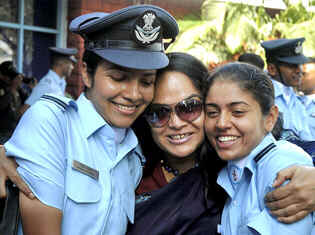
Whether you are a graduate or you have finished your schooling or you have passed your class tenth, Air Force has an exciting career opportunity for you.
As an officer in the Indian Air Force you strategize, lead and manage. Trained in diversified fields and environments you are ready for all the challenges that the fast paced life in the Air Force has in store for you. Be it flying the most advanced combat aircraft or providing technical support, your mission is to always give your best.
Join as an Officer
Career after Intermediate
You can join the Air Force in the flying, technical or the ground branches. You can literally touch the sky by joining the Air Force, not to mention that you’ll be inside a supersonic jet, going at an incredible speed while doing that. Apart from the thrill and adventure, Air Force offers a fulfilling career for life to you.
Selection Process
Candidates, short-listed for Air Force after the initial selection procedure, go through a rigorous three-year training regimen at the National Defence Academy, followed by specialised training at the Air Force Academy. Thereafter, they are commissioned as officers and posted as pilots at any of the Air Force Stations.
To be in the National Defence Academy
You can join NDA by taking the exam conducted by Union Public Service Commission (UPSC). This exam is conducted twice a year in all major cities throughout India.
Eligibility Criteria
To join the NDA you need to fulfil the following requirements:
Age:16 ½ to 19 years
Educational Qualifications: 10+2 with Physics and Mathematics
Advertisement Schedule: March and October every year.
Join as an Airman
SELECTION PROCEDURE
The recruitment of Personnel Below Officer Rank (PBOR) as an Airman in the IAF is conducted through All India Selection Tests and Recruitment Rallies. All India Selection Tests are conducted at the Airmen Selection Centres (ASCs) located all over India as per schedule whereas the Recruitment Rallies are conducted from time to time in selected areas/regions of particular States/Union Territories of the country.
Written Test is conducted for test in English, Physics & Mathematics for Group ‘X’ (Technical) trades and in English & Reasoning and General Awareness (RGA) for all Group ‘Y’ trades.
Written Test is objective type and question paper is bilingual (English & Hindi), except English paper. Written test is based on CBSE syllabus of AISSCE. Candidates for Group ‘Z’ (Musician) trade are tested in English dictation and proficiency to play the musical instrument applied for. You will have to qualify in each paper/test separately.
Physical Fitness Test (PFT): Candidates passing the written tests are to undergo Physical Fitness Test(PFT). The PFT for all trades excluding Indian Air Force (Police) & Indian Air Force (Security) trades consists of a 1.6 Km run to be completed within specified time. The PFT for Indian Air Force (Police) & Indian Air Force (Security) trades includes a 5 Km run & 2.4 Km run to be completed in 30 minutes & 15 minutes respectively. Candidates completing PFT earlier will be awarded additional marks on a sliding scale.
Interview: Candidates passsing PFT will be interviewed by a team of Officers & Warrant ranks. Interview is normally conducted in English. Working knowledge of English is thus essential.
Trade Allocation Test (TAT) : Candidates of Group ‘X’ (Technical) trades who qualify in interview are to undergo Trade Allocation Test for bifurcation into Mechanical and Electronics stream. Specific trade allotment within these streams will be carried out at Basic Training Institute (BTI), Air Force (Belgaum).
Medical Examination: Candidates who are recommended in the interview will be medically examined by the Recruitment Medical Team as per Indian Air Force medical standards. Medical certificates/certificates of fitness from other doctors will not be admissible except for dioptres power as stated in Medical Standards given in detail on this site.
Enrolment is for an initial period of 20 years and extendable up to the age of 57 years. The candidates on enrolment are routed to Basic Training Institute (BTI), Belgaum and Karnataka to undergo Joint Basic Phase Training (JBPT) for a period of 12 weeks. On successful completion of JBPT, candidates will be allocated trades and sent for trade training of specified duration. After successful completion of training, the airmen will be deployed on ground based jobs as per their allotted trades.
The ranks of airmen in the IAF is
Aircraftsman – AC
Leading Aircraftsman – LAC
Corporal – CPL
Sergeant – SGT
Junior Warrant Officer – JWO
Warrant Officer – WO
Master Warrant Officer – MWO
AGE AND EDUCATIONAL QUALIFICATION CRITERIA
One can join rank and file of Indian Air Force as an airman in the category of Personnel Below Officer Rank(PBOR) if he possess following eligibility criteria:-
There are three groups wherein an airman is recruited into namely GP X and Y where age limit is 17-22 yrs except 3 three years more is relaxed in case of GP Y fro musical trade. The education qualification for GP X is 10+2 with Maths and physics with min 50%. For technical trades in this Gp requires 3yrs diploma in engineering (Mechanical/Electrical/Electronics/auto/computer science/IT. For Gp Y eligibility is 10+2 any stream including equivalent vocational courses with 50% marks. For Musician trade min qualification is 10th Pass.
MEDICAL STANDARDS
To get selected as an Airman, the candidate must be physically and mentally FIT to perform duties in any part of the world, climate and terrain. Medical Standards to become an Airman are as follows:-
Minimum height required is 152.5 cm for GP X & Y. However for Auto Technician it is 165cm. For other police and security it is 175/172 cm. The common minimum visual standards acceptable 6/36 for each eye. Indian Air Force (Police) & Indian Air Force (Security) trades require 6/6 vision for each eye unaided and CP-II i.e. no use of spectacles permissible for these trades.
PAY AND ALLOWANCES
PAY & ALLOWANCES. During training a stipend of Rs. 5,700/-pm will be paid. On completion of training, one is placed in the emoluments as under. Promotion to next Pay Band is as per the policy in vogue. The pay scale of Airman is pay band of Rs 5200-20200 with Grade Pay of Rs 2000-2800. Also an allowance of Rs2000 pm as MSP is paid. Various other allowances like Dearness Allowance (calculated on Pay Band + Grade Pay + MSP), Transport Allowance, Composite Personal Maintenance Allowance, High Altitude Allowance; Field Area/Modified Field Area Allowance etc are also admissible as applicable. Perks such as Ration, Clothing, Medical facilities, Accommodation, Educational concession to children, recreational facilities, free transport for school going children and Leave Travel Concession are also provided as per the existing rules. Post retirement benefits include pension, gratuity and leave encashment. Notwithstanding the above, Group Insurance Cover of Rs. 15,00,000/- at nominal premium of Rs. 960/- pm, is covered for all airmen and facility of Group Housing Scheme is also extended. Other facilities by Air Force Wives Welfare Association are also extended for family of airmen.
The initial period of engagement in the IAF is 20 years, which can be extended up to the age of 57 years. Promotion up to the rank of Master Warrant Officer exists to the deserving airmen. Provision for grant of Honorary Commission to the deserving Warrant Officers and Master Warrant Officer. Opportunities to become a Commissioned Officer also exist for the deserving personnel.
Of Marriage Act and Amendment
Amit Kushari
The Government of India has recently made some 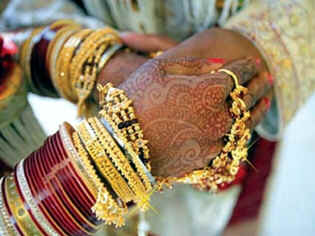
A lot of water has flowed down the Ganges since 1956. The Western countries and their progressive ideas have left indelible impressions on Indian society– which does not look the same anymore. Frequent breakdown in marriages is a stark reality in today’s India. In 1961 only 1% of Hindu marriages ended in divorce. Now 6% of Hindu marriages end in divorce. Men and women exposed to western education now have very little patience in marital matters and they rush to courts for divorce for matters which would have appeared trivial a few decades ago. The divorce rate is still far, far lower than in Western countries which is usually around 60%. New situations are developing in Indian society because of western influence. Men and women have started living together without the bonds of marriage to avoid the hassles of marriage and divorce and the trauma in courts regarding compensation, divisions in property and family business. Although the society frowns on it and parents do not approve of it, many young boys and girls secretly live together. Under Indian law, living together is not an offence because consensual sex between an adult man and an adult woman is not a crime if both are unmarried.
In India Hindus and Sikhs and Jains form 85% of the population and all the new laws are applicable to them only. These are not applicable to Muslims and Christians who have their own codes of conduct in marriage and divorce matters.
The new law made by the Government of India recently has given the divorced woman rights on her husbands property and bank accounts. Divorce has also been made much easier and now if a woman seeks divorce it should be possible to get it in 3 months time provided, ofcourse, if the husband consents to it. Earlier it used to take years.
The Muslims had a relatively quicker system of divorce as an amount was fixed before marriage as compensation if divorce occurs. However, even in Muslim society, divorce is taken as a highly undesirable incident. It is believed that among all the legal things in the world, “Talaq” was the most disliked happening by God.
The Government of India is now giving some legal recognition to the concept of living together. A woman who has lived together for quite a few years has been given partial rights of a wife. She may even claim a part of the property if she can prove through witnesses and circumstantial evidences the number of years they have lived together. This is a revolutionary change in Hindu society. Such changes would be considered appalling by the Muslims who form 13% of the population. For them living together is nothing better than “Zina”. In the Quran God forbids men to have sex with a woman with whom a legal nikah has not been done.
With these new revolutioary laws coming into existence, Hindu men may feel increasingly diffident while entering into a matrimonial alliance. The fear of giving property to a divorced wife may discourage him from marriage. His parents will also be wary of arranging their son’s marriage. Even the irreligious act of living together may not give the boy any relief because after a few years the same problem may arise. Many families have started considering having a legal document ready before marriage spelling out how property could be divided in case of divorce.
(The author is former Financial Commissioner, J&K and the feedback to the writer can be given at 09748635185 or amitkus@hotmail.com or twitter.com/amitkushari)