

NEW YORK, June 5: Former US President Bill Clinton has warned Americans that picking up Mitt Romney would be “calamitous” for the country and the world as he derided the Republicans’ policies and strongly endorsed Barack Obama for a re-election this year.
Clinton, who occupied the White House from 1993 to 2001, said that the incumbent president has the right economic policies and political approach.
“I think that he (Obama) has got the right economic policies and the right political approach, and I think their (Republican) economics are wrongheaded and their politics are worse,” Clinton said at campaign event here as he lashed out at the policies of the presumptive Republican presidential nominee, Romney.
Clinton said Europe current economic woes were one of the main reasons why things have slowed up, but that is something which is beyond US control.
“The other is that the Republican Congress and their nominee for President, Governor Romney, have adopted Europe’s economic policy.
“Who would have ever thought that the Republicans who made a living for decades deriding ‘old Europe’ would embrace their economic policy? But that’s what they’ve done,” said the former US President.
Describing the politics of the Republicans as “wrong” and their economics as “crazy”, Clinton said Romney would be “calamitous” for the United States and the world.
“Their economic policy is austerity and unemployment now, and then a long-term budget that will explode the debt when the economy recovers so that interest rates will be so high nobody will be able to do anything,” he said.
On the other hand, he said, Obama was pursuing a policy for job growth now, and a long-term budget restraint.
“If you look at the budgets, their budgets, every one of them, all the congressional budgets and Governor Romney’s add USD 1 or USD 2 trillion to the trajectory of the debt that we’re on right now. His (Obama’s) budget takes it down.
“And if you look at their politics, it’s constant conflict,” he said.
Clinton said Obama deserves to be re-elected on the merit of his policies and a “good record” and the fact that he has made the best out of a very challenging situation.
“And I know I don’t have to say that I think he’s done an extraordinary job with the national security responsibilities of the country, both making it safer and building a world with more partners.
“He has a pretty good Secretary of State, too,” Clinton said, tongue-in-cheek, referring to his wife Hillary. (PTI)
Romney would be calamitous for the world: Bill Clinton
Guatemalan cardinal who helped peace talks dies
GUATEMALA CITY, June 5: Guatemalan Roman Catholic Cardinal Rodolfo Quezada, who helped broker an end to the Central American nation’s bloody civil war, died He was 80 years old.
Local church officials said Quezada died yesterday in the morning at a private hospital in Guatemala City as a result of an intestinal obstruction.
Guatemalan President Otto Perez declared three days of national mourning and ordered flags to fly at half mast as a mark of respect for Quezada.
“He was a great fighter for peace and reconciliation in Guatemala,” said Perez, who this year became the first military man to assume the presidency in Guatemala since the war ended.
Quezada lent his negotiating skills to two organizations that tried to reconcile the bitter adversaries in the war, one of the most destructive to ravage Latin America.
Starting his work at the head of the Commission for National Reconciliation in 1987, he also later chaired the Assembly of Civil Society, whose work helped to bring about a peace accord in 1996 – 36 years after the conflict began.
The war pitted leftist guerillas against the state and led to the death or disappearance of a quarter of a million people.
A United Nations-backed “truth commission” found that the vast majority of abuses were committed by the army, which ruled Guatemala for most of the civil war.
Quezada’s colleague in the peace process, Bishop Juan Gerardi, was murdered in 1998 shortly after Church-backed findings on abuses in the civil war were published.
Quezada became a bishop in 1972 and was appointed Archbishop of Guatemala City by Pope John Paul II in 2001. Two years later, he became a cardinal. (AGENCIES)
US lawyer sentenced to record 12 yrs for insider trading
NEW YORK, June 5: A US lawyer who worked for some of the country’s most prestigious firms was sentenced to a record 12 years jail for an insider trading scheme which lasted 17 years and netted more than 37 million dollar between 1994 and 2011.
Matthew Kluger’s sentence is the longest ever handed down in an insider trading case and is one year longer than the 11 year jail term imposed last year on Galleon Group hedge fund founder Raj Rajaratnam for insider trading charges.
Kluger was sentenced by US District Judge Katharine Hayden of Newark federal court. Hayden also sentenced stock trader Garrett Bauer to nine-years jail for his role in the scheme and a third person, Kenneth Robinson, is scheduled to be sentenced today.
“The severe sentences imposed today are a warning to anyone trying to game the financial markets for their own enrichment,” said New Jersey US Attorney Paul Fishman in a statement yesterday.
An attorney for Kluger said he planned to appeal against the sentence. “It is unduly harsh and fails to reflect that Mr Kluger received only a fraction of the proceeds from the offense,” said attorney Alan Zegas.
An attorney for Bauer did not return a call seeking comment.
Federal prosecutors and securities regulators accused the trio of trading on inside information ahead of at least 11 corporate deals.
(AGENCIES)
China state papers warn US strategy risks rifts
BEIJING, June 5: China’s top newspapers warned today that the United States’ plans to bolster its naval presence in the Asia-Pacific region threaten to widen rifts between the two big powers.
The warnings came in the People’s Daily – the main newspaper of China’s ruling Communist Party – and Liberation Army Daily – the main paper of the nation’s military, and amplified milder comments from the Foreign Ministry yesterday.
US Defense Secretary Leon Panetta said on Saturday that the Pentagon will reposition its naval forces so that 60 percent of its battleships are in the Asia-Pacific region by the end of the decade, up from about 50 percent now.
Echoing reassurances from other Obama administration officials, Panetta said the plan was not aimed at containing China, whose fast-modernising navy has kindled worries among neighbours. But the People’s Daily did not buy that.
“Opinion across the Asia-Pacific generally does not believe that the United States’ strategy of returning to the Asia-Pacific is not aimed at China; it’s there plain for all to see,” said a commentary in the paper, which reflects currents of official thinking in Beijing.
“The United States verbally denies it is containing China’s rise, but while establishing a new security array across the Asia-Pacific, it has invariably made China its target,” it said.
“This strategy is riven with contradictions and undoubtedly will magnify the complexities of Asia-Pacific security arrangements, and could even create schisms.”
The People’s Daily commentary was blunter than the Chinese Foreign Ministry spokesman Liu Weimin, who responded to Panetta’s announcement by saying China hopes the United States will respect its regional interests, and by calling the Pentagon’s steps “out of keeping with the times.”
(AGENCIES)
Obama campaign attacks Romney for hypocrisy
WASHINGTON, June 5: US President Barack Obama’s re-election campaign has sharply attacked his Republican rival Mitt Romney, accusing him of employing double standards and “breathtaking hypocrisy” in comparing the economic records of the two candidates.
Obama’s senior campaign strategist David Axelrod doubted whether Romney’s record as Massachusetts Governor could be touted as that of a ‘job creator’.
“By almost every measure, Governor Romney’s jobs record in Massachusetts was undistinguished, and yet he positions himself as a job creator. And yesterday his team was all over television, and with a kind of breathtaking hypocrisy..,” Axelrod told reporters during a conference call.
“.. The question really is are they kidding, and do they expect people to take this seriously? The fact is that Governor Romney as usual wants to be judged by two sets of rules. He thinks there should be rules for him and rules for everyone else, and that he should be held to a different standard.
“But were not gonna hold him to a different standard, were going to hold him to the same standard they’ve held us,” Axelrod said.
Romney, he said, has pitched his entire campaign on a “savage” and “often distorted” attack on Obama’s economic record and the other on a “inflated” claim of being a job creator.
“Over his four years in Massachusetts, as we’ve said before, the state was 47th in job creation, fourth from the bottom,” he said.
Describing his record of job creation in Massachusetts as rather “unimpressive”, Axelrod said during the period manufacturing jobs fled at twice the national rate.
“And I would note to you that at the time he left, his numbers in Massachusetts were so poor, his personal political numbers, polling numbers, that the speculation was that he would have had a hard time winning re-election,” Axelrod said.
He pointed out that the former Massachusetts governor was trailing Obama by as much as 25 points in his home state.
“He is not even contesting his home state in this election. I’m not sure there’s a historical precedent for that.
“And I think that part of the reason is that those who know him best have rendered a judgement on his representation, his self-representation as some sort of economic guru and job creator,” he said. (PTI)
Most Australians against Uranium sale to India: survey
MELBOURNE, June 5: The Australian government might have overturned a ban on uranium sale to India but a majority of people in the country still appear opposed to the idea of selling the mineral to New Delhi.
In a new survey, a majority of Australians were found to be against the recent Labor party decision of lifting ban on Uranium sale to India with 61 per cent opposing it.
“More than 60 per cent of Australians say they are against ‘Australia selling uranium to India’, with 39 per cent saying they are ‘strongly against’,” according to the eight annual Lowy Institute poll 2012.
In December 2011, the Australian Labor Party had overturned a ban on the sale of uranium to India following a heated national conference debate.
The results were published by the Lowy institute Poll after a nationally representative opinion survey of 1,005 Australian adults was done.
Key issues covered in the poll included uranium sale to India, relations with Fiji, the Bali bombings, climate change, the war in Afghanistan, migration, US Presidential elections, US military bases, and attitudes towards democracy and human rights.
The poll also included questions of migration, a perennially controversial topic.
It revealed that Australians recognised the need for short-term migration to address worker shortages with 62 per cent saying they were in favour of ‘the government allowing in extra workers from foreign countries’ when ‘there are shortages of workers in Australia and companies in Australia cannot find enough skilled workers’.
However, it was found that there was major oppositiion against large-scale foreign investment.
The poll also included several new questions about Australia’s image and engagement with the neighbourhood.
It was found that Australians believe it was important to be liked by neighbours, with 68 per cent saying it was ‘very important’ for ‘Australia to be seen in a positive light by people from countries in region’, with another 26 per cent saying it is ‘somewhat important’.
They also supported government efforts to communicate with countries in the region.
Over 81 per cent said they were in favour of ‘the Australian government funding broadcast services or other programmes to communicate with people from countries in our region, with the aim of improving relations with those countries’, with 38 per cent saying they are ‘strongly in favour’.
In the context of Australia in the Asian Century White Paper, the poll presented Australians with six possible responses from the Australian government ‘as the Asian region grows and becomes more significant’.
There is strongest support for doing more to get ‘Australia included in Asian political forums’ with 37 per cent saying it was ‘very important’.
Only 24 per cent said the government should ‘increase the number of Australian diplomats sent to Asia, but there was less support for doing ‘more to attract Asian investment into Australia’ at 16 per cent or increasing ‘the number of migrants Australia accepts from Asia’ at 13 per cent.
In an open-ended question, on a query of which country ‘will be Australia’s most important security partner over the next 10 years’, 74 per cent of Australians picked the US.
Interestingly, 10 per cent said it will be China, the survey said.
The institute’s executive director, Michael Wesley, said the poll gives some indication of what Australians might think about the plan, and shows many people are worried about foreigners buying Australian assets.
“We found that 81 per cent of people we asked are against foreign companies buying Australian farmland,” Wesley said.
“Australians continue to be worried about the amount of Chinese investment the government is allowing in – 56 per cent think the government’s allowing too much Chinese investment into Australia.
“I think people are well aware that some of the big projects in Australian history like the Snowy Mountains scheme were built using skilled labour, because the labour wasn’t available from within the Australian population.
“So they’re aware that our prosperity and our progress as a nation does depend on allowing in people with the skills that we need.
“The survey has also found support for Australia’s alliance with the United States has reached its highest level since the poll began in 2005. But support for tough action on climate change has continued to fall, with 63 per cent of respondents opposed to the government’s carbon tax”. (PTI)
Top al Qaeda strategist likely killed in Pakistan
PESHAWAR/DERA ISMAIL KHAN, June 5: Abu Yahya al-Libi, one of al Qaeda’s top strategists and seen as the most prominent figure in the network after leader Ayman al Zawahri, may have been killed in a drone strike in northwest Pakistan, Pakistani intelligence officials said today.
If his death is confirmed it would be the biggest blow to al Qaeda since US special forces killed Osama bin Laden in a secret raid in Pakistan in May 2011.
US sources said Libi, a Libyan cleric with a degree in chemistry who has survived previous drone attacks, was a target of a strike early on Monday in the North Waziristan tribal region, home to some of the world’s most notorious militant groups.
Some US officials describe Libi, whose real name is Mohamed Hassan Qaid, as number two to al Zawahri, the former Egyptian doctor who took over al Qaeda after bin Laden’s death.
Pakistani intelligence officials told Reuters they believe Libi (which means Libyan in Arabic) may have been among seven foreign militants killed in Monday’s strike.
One of the officials said Pakistani authorities had intercepted telephone chatter about Libi, an al Qaeda theologian and expert on new media whose escape from a US-run prison in Afghanistan in 2005 made him famous in al Qaeda circles.
“We intercepted some conversations between militants. They were talking about the death of a ‘sheikh’,” one of the Pakistani intelligence officials said, referring to the title given to senior religious leaders.
“They did not name this person but we have checked with our sources in the area and believe they are referring to al-Libi.”
(AGENCIES)
Obama sees tough re-election fight ahead
NEW YORK, June 5: President Barack Obama enlisted Bill Clinton to campaign alongside him in New York tapping the popular ex-president’s star power to rake in cash for his re-election bid from Wall Street investors and show-business elite.
The two men yesterday teamed up for the first time since Clinton put Obama’s campaign on the defensive last week when he became the most prominent Democrat to disavow attacks on Republican challenger Mitt Romney’s record as a private equity executive.
But there was no sign of discord as Obama and Clinton put on a show of unity for a night of fundraising that included a reception with big-money donors, a gala at the Waldorf Astoria hotel, and a star-studded “Barack on Broadway” concert.
The events raised more than 3.5 million.
Although surrounded by supporters at events in the Big Apple, Obama has struggled to rekindle the enthusiasm of the Democratic base that swept him to victory last time.
He acknowledged that he faces a difficult path to re-election and warned his audiences that hundreds of millions in Republican super political action committee fundraising would fuel negative advertising aimed at feeding “all those fears, anxieties” and frustration with the economy.
“That’s basically the argument that the other side is making. They’re not offering anything new, they’re just saying, things are tough, it’s Obama’s fault,” he said.
At the first stop on the evening’s fundraising tour,
Clinton told a gathering at the Upper East Side home of billionaire hedge fund manager Marc Lasry that Obama must “win this election and win it unambiguously.”
“The alternative would be, in my opinion, calamitous for our country and the world,” Clinton said as he and Obama stood shoulder to shoulder amid donors who paid 40,000 dollar a head and sipped cocktails.
Clinton accused Romney of wanting to pursue “wrong-headed” economic policies and linked the Republican’s focus on budget austerity to crisis-hit Europe.
As Wall Street supporters sat on plush sofas, Obama avoided some of the anti-business rhetoric that his campaign has used against Romney and to blunt criticism over the sluggish economy.
Obama cast himself as a friend of free enterprise, but asserted that Republicans had adopted a policy of market “absolutism.”
BON JOVI and CLINTON ADMIRATION
Then moving to a packed Waldorf ballroom, rocker Jon Bon Jovi – a VIP guest on Air Force One from Washington – was the warm-up act for some 500 people who paid a minimum of $2,500 per ticket to cheer the two Democratic heavyweights.
With Clinton sitting to one side of the stage and occasionally stroking his chin, Obama said Romney’s “vision for moving America forward is, as Bill Clinton just said, the same agenda of the previous administration – except on steroids.”
Obama and Clinton have not always been on the same page. Their relationship has been strained at times since the ex-Illinois senator beat the former president’s wife, Hillary Clinton, now secretary of state, in a bitter race for the 2008 Democratic presidential nomination.
But Bill Clinton remains a figure admired by most Democrats, and Obama’s aides believe his support could be pivotal for pulling in campaign money and selling independent voters on the president’s economic plans.
Clinton oversaw one of the most prosperous economic periods in recent US history and was the last president to balance the federal budget, something Democrats are eager to remind Americans about before the Nov. 6 election. (AGENCIES)
India has institutional capacity to become world power: Blake
WASHINGTON, June 5: The US believes India has the required institutional capacity to become a global power and sees a growing strategic convergence between the two nations, a top administration official has said ahead of next week’s India-US strategic dialogue.
Robert Blake, Obama Administration’s point man for South and Central Asia, said the rapid strides made by the two sides in their ties over the last 10 years indicates that “sky is the limit” for the relationship between the two countries to grow.
“It (India) does has the institutional capacity… That’s why we invested so much of our time and energy to this relationship.
“The President has said this is going to be one of our defining partnerships of the 21st century and we believe that,” the Assistant Secretary of State for South and Central Asia, said.
Following his remarks on India-US relationship at an event organised jointly by the Asia Society, East West Center and India-US World Affairs Institute, Blake was responding to a question if the US believes that India has the institutional capacity to become a global power.
“We believe it because there is growing strategic convergence between our two countries. We are two great democracies. We are two great market economies… And perhaps most of all we have capacity for innovation,” Blake said.
Earlier in his remarks on ‘The United States and India: Continued Strategic Engagement’, Blake said: “There is perhaps no country in the world, with whom we have travelled faster and further than India over the last 10 years”.
The Indian American community, he noted, has played a crucial role in this.
“The common thread from the classrooms of Chennai to Charlottesville, from the boardrooms of Mumbai and Minneapolis is the passionate and committed Indian American community.
“All of you are committed to shape and guide one of the defining bilateral relationships of the 21st century,” he said, adding that the Indian American community is certainly one of the most energetic and successful diaspora groups in the United States.
Noting that fostering people to people exchanges is at the core of smart power, he said that the “Passport to India initiative” is one way to do this.
The goal of this initiative is to send more and more US students to India.
Over the last three years, he said, the two countries have expanded areas of cooperation to reflect 21st century needs, partnering across diverse areas such as education, clean-energy and defence.
“It is not an exaggeration to say that even the sky is the limit because we are talking about cooperation in space as well,” Blake said. (PTI)
Japan PM urged to be cautious about nuclear restarts
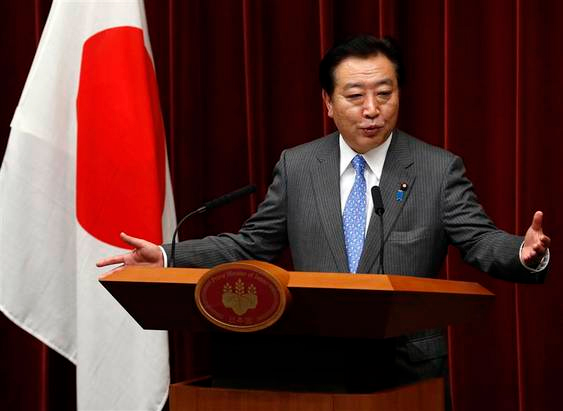
TOKYO, June 5: Nearly a third of Japan’s ruling party lawmakers are petitioning Prime Minister Yoshihiko Noda to be cautious about restarting nuclear reactors given safety concerns after last year’s earthquake and tsunami, an organiser said today.
Noda, keen to restart two reactors in western Japan before electricity demand peaks this summer, could decide as early as this week to reconnect them to the grid – despite the risk of a backlash that would weaken his already sagging voter ratings.
“It is clear from surveys that the majority of the people think that we can survive this summer by conserving energy and transferring electricity among regions,” said the petition, to be presented to Noda’s government later in the day.
“We urge you to consider the fact that there is insufficient agreement within the party and among the people and the feelings of the 160,000 victims of the disaster, and be all the more cautious about a decision to restart the reactors.”
Nuclear power supplied nearly 30 per cent of Japan’s electricity needs before last year’s earthquake and tsunami crippled the Fukushima plant in northeast Japan. But all of the country’s 50 reactors have since been taken offline for checks.
Noda yesterday stressed that restarting the idled reactors was vital not just to survive summer power shortages but also to avoid hurting the economy with higher electricity rates, a view commonly voiced by Japan’s struggling manufacturers.
But Satoshi Arai, an ex-national strategy minister sponsoring the petition, said Noda had failed to meet conditions for resuming operations at the two Kansai Electric Power Co reactors at its Ohi plant in Fukui, western Japan.
The government has been struggling to win support from local authorities for the restarts, but on Monday the governor of Fukui said the ball was in Noda’s court.
(AGENCIES)