

Thursday, April 23, 2026
E-Paper
Home Blog Page 84944

Antony accepts defence budget cut-but no compromise on preparedness

BANGALORE, Feb 6: Defence Minister A K Antony today asked the Armed Forces to be preapred for a cut in the defence budget for 2013-14 as the country was going through difficult times due to’ fiscal difficulties’ but this, he said, will not affect the operational preparedness of the Indian defence force.
Addressing newsmen after inaugurating the ninth edition of Aero India here, he said it was a painful question and his department certainly wants to get more fuinds.
‘The union government is going through fiscal difficulties and recession in the global economy has also affected the Indian economy as well.
‘We have to tighten our belts for better future. All departments have to do it and not just the defence department.
‘Government is doing everything to overcome the problem. But I can assure you that priority areas like operational preparedness will not suffer.
‘There will not be any slackness when it comes to this,’ he said.
According to reports, the Finance Minister is likely to affect a cut upwards of 15 per cent in the budgetary allocations for the defence forces.
During 2012-13 the defence budget stood at Rs 1,93,000 crore.
He said the government was fully aware of the threats the country faced and there will not be any compromise on the preparedness of the armed forces.
When it comes to modernisation of armed forces, there is no question of any slackness in it be there a cut in the defence budget or not as it is connected with geo-political question.
‘India also faces threat and we are in a volatile situation of some sorts.
‘National security is of primary importance. India’s speedy economic growth depends on peace prevailing in the country’, he said.
On China modernising its road and other infrastructure on the Eastern parts of India, Mr Antony said China was indeed modernising its infrastructure bordering India in a big way but India was not in a position to question it.
‘We cannot complain as they are doing it in their own rea.
‘India is also strengthening its infrastructure bordering China and strengthening it borders and putting more assets there. They are doing it and we will also do. This is not for a confrontation. But we have to prepared for any eventuality and it is the duty of our country,’ he said.

Mr Anthony expressed grave concern over Pakistan handing over one of its ports to China.
‘China is constructing the port on the request of Pakistan. It is a concern for us and I want to be very straight forward in this regard, he added.’
However, the Defence Minsiter welcomed the presence of a Chinese delegation at Aero India 2013.
‘They are most welcome as there should be cooperation between the two countries in the military space as well in the lines of the two countries forging close relationship in economic, social, cultural areas.
‘We have had border management agreements and recently the Defence Secretary had taken a delegation to Beijing.
‘So they are here because of an ‘improved’ situation.
‘They have come here for the first time, I welcome them,’ he said.
(UNI)
Modi meets PM, seeks parity in gas pricing

NEW DELHI, Feb 6:
Gujarat Chief Minister Narendra Modi today accused the Centre of disparity in gas pricing as he met Prime Minister Manmohan Singh and sought his intervention in resolving a number of critical issues pertaining to his state.
Modi, who met Singh for the first time after his third successive electoral victory in December last, expressed his unhappiness over the Centre’s refusal to provide gas to the state at the same price at which it is given to Mumbai and Delhi.
Demanding the same rates for gas supplied to Gujarat as to places like Delhi and Mumbai, Modi handed over a memorandum to the Prime Minister on various issues pending Centre’ action that had a huge bearing on the country’s economy.
“It was a very good meeting and we had a long discussion during which several different issues came up. The Prime Minister gave his good wishes for the development of Gujarat and the success of the new government. I gave an assurance that Gujarat will give full support to all measures taken for the welfare of the people,” he told reporters after the 45- minute meeting.
On the gas pricing issue, he said, “A legal battle is on between us and the Government of India. Gujarat is not given gas at the price at which Delhi and Mumbai get it. We had gone to court and won the case. Despite this the order was not implemented for six months and we filed a contempt petition.”
“Instead of accepting this order, the Government of India went to the Supreme Court to delay the process. I have expressed my unhappiness to the Prime Minister over this,” he said.
He also discussed the issue of raising the height of Sardar Sarovar dam to 138.68 meter and sought Singh’s intervention to get clearance for construction of spillway piers to full height, bridge and installation of gates at the dam site.
Modi said by raising the Full Reservoir Level (FRL) of the dam the storage capacity of the dam will get enhanced to 46.8 lakh acre feet (almost three times the present capacity) and would facilitate creation of an additional irrigation potential of 6.8 lakh ha and nearly 40 per cent additional power generation.
Modi urged the Prime Minister to facilitate clearance for the long-pending project as early as possible.
Raising the issue of desert development programme (DDP) areas facing severe water problems than areas covered under the drought prone areas programme (DPAP), he said the Centre was strangely not providing assistance under Accelerated Irrigation Benefit programme (AIBP), even though it provides 90 per cent assistance in DPAP areas.
The Chief Minister said Gujarat has very large areas in Saurashtra and Kutch under DDP which falls under command areas of Sardar Sarovar and the state has made all out efforts to bring water to these areas to improve the lives of people.
He noted that the Planning Commission chaired by Prime Minister supports the proposal to bring DDP areas at par with DPAP areas but the same has not been approved by the Government of India.
Modi also raised the issues of regulating BT cotton seed prices which adversely affected the farmers in Gujarat, flip – flop in allowing cotton export, non-payment of royalty on crude oil as per statutory provisions, coal allocation to Gujarat from nearer coal mines of Western Coal fields for power generation and complete waiver on custom duty in ship breaking industry.
He said most issues not only adversely affected the economic growth and development of the State but also put common people especially farmers and marginalized sections of society in very difficult and distressful conditions.
The Gujarat Chief Minister, who had called on President Pranab Mukherjee last month, wanted the Prime Minister to look into the demand for completion of the canal network on Narmada river to provide water to farmers.
“As per the Government of India norms Gujarat should get this. I requested him that Gujarat should get the same benefits that other states get,” he said. (PTI)

Bikaner baby girl bitten by father dies

JAIPUR, Feb 6:
A five-month-old-baby girl from Bikaner, whose father had bitten off parts of her lips, nose and cheek in a fit of rage, died at a Government hospital here today.
“The condition of the baby deteriorated last night after she was breastfed by her mother.The milk entered into her lungs following which some complications developed and she was put on ventilator support but she died,” Spokesperson of the Sawai Man Singh Government Hospital here said.
The girl was operated upon on February 1.
Police said the baby’s 36-year-old father Bahadur Singh will be charged with murder.
The father had allegedly bitten off parts of her nose, lips and cheek in a fit of rage leaving her face damaged in Bikaner last month.
The accused was drunk when he reached his house in Siyana village and had a verbal spat with his wife Santosh over some domestic issue.
During the quarrel, he had bitten off the upper lip, nose and cheek of the baby in a fit of rage, according to the police.
Deepak Kalra, Chairperson, Child Rights Commission said, “It is really very sad. She developed respiratory complications last night. She was put on ventilator and we were hoping that she would come out and fight like she was fighting for the last 10 days but unfortunately she succumbed to the complications.
“As you know the surgery was five-and-half hours long. There were three surgeries that were done at one go and then she had to undergo two more surgeries. The case was complicated and unfortunately she could not go through it,” she said. (PTI)

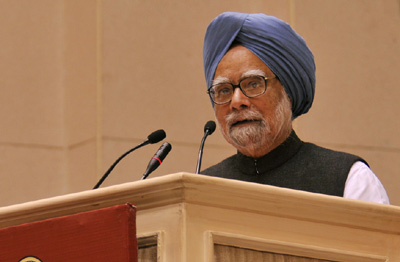
Prime Minister, Dr. Manmohan Singh addressing at the Golden Jubilee Celebrations of the Kendriya Vidyala Sangathan (KVS), in New Delhi on Wednesday.

Prime Minister, Dr. Manmohan Singh addressing at the Golden Jubilee Celebrations of the Kendriya Vidyala Sangathan (KVS), in New Delhi on Wednesday.

JGBs rise as rekindled eurozone fears sap risk appetite

TOKYO, Feb 5: Japanese government bonds rose on Tuesday, with the benchmark yield backing off a three-week high hit in the previous session amid fears about the impact of political woes in Italy and Spain.
Disappointing U.S. Factory orders data, a downward revision to a report on U.S. Business investment plans and a smooth sale of 10-year JGBs also bolstered the market.
The Ministry of Finance’s offering of 2.4 trillion yen ($26 billion) of 10-year notes garnered a lowest accepted price of 100.04. The sale reopened the current issue with a coupon of 0.8 percent.
The auction’s tail – the gap between the lowest and average prices – was 0.02, matching that of the previous sale, although the sale drew bids of only 2.75 times the amount offered, down from the previous sale’s bid-to-cover ratio of 3.52 times.
‘The sale was decent, though not spectacular, and there was some follow-through buying in the cash market in the afternoon,’ said a fixed-income fund manager at a Japanese trust bank.
The 10-year JGB yield slipped 1 basis point to 0.795 percent. The 10-year JGB futures contract ended up 0.22 point at 143.90, though it still remained shy of its 20-day moving average, now at 144.09.
Most market participants had expected that the 10-year sale would go smoothly, after the benchmark yield moved away from a six-week low of 0.720 percent hit on Jan. 25 to 0.805 percent on Monday, its highest level since Jan. 15.
But some investors were concerned about the slightly larger offering size. The ministry increased the monthly offering amount by 100 billion yen this month, and will do the same next month, to fund its supplementary budget.
‘We started recommending receiving the 10-year tenor in swaps,’ said Maki Shimizu, senior strategist at Citigroup Global Markets Japan.
Spanish and Italian bond yields rose after a corruption scandal prompted calls for Spanish Prime Minister Mariano Rajoy to resign and on news of a probe of alleged misconduct involving an Italian bank three weeks before national elections.
That hit risk appetite, helping to lift U.S. Treasuries and sending the Nikkei stock average skidding 1.9 percent off Monday’s 33-month closing high.
The 20-year bond yield shed half a basis point to 1.790 percent, while the 30-year bond yield lost 1 basis point to 1.995 percent.
The chairman of Japan’s Government Pension Investment Fund told Reuters in an interview on Monday that the fund would review its portfolio allocation model around April, as yields on 10-year JGBs were languishing at around 0.8 percent.
The GPIF is the world’s biggest public pension fund, with its assets of $1.2 trillion mostly held in JGBs. ($1 = 92.6950 Japanese yen)
(AGENCIES)

S Korea leader says North may stage multiple nuclear tests

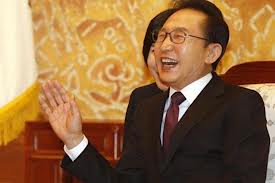
SEOUL, Feb 5: South Korean President Lee Myung-Bak believes North Korea could detonate multiple devices when it goes ahead with a nuclear test expected in the coming weeks or even days.
In an interview published today in the Chosun Ilbo daily, the outgoing president also acknowledged the huge challenge the international community faces in seeking to wean Pyongyang off its nuclear weapons programme.
The North has signalled that it will carry out a “higher level” nuclear test very soon, in a defiant response to UN sanctions imposed after its successful long-range rocket launch in December.
Lee said “higher-level” suggested Pyongyang might attempt to detonate several devices.
“North Korea is likely to carry out multiple nuclear tests at two places or more simultaneously” in order to maximise scientific gains from an event that will be globally condemned, Lee said.
Experts around the world are gearing up to analyse any test for what it might reveal about the current status of the North’s weaponisation programme.
Of particular interest will be any sign that its scientists have succeeded in developing a warhead that can be fitted onto a missile.
“If the North produces miniaturised weapons that can be used as warheads on missiles, it would really pose a threat,” Lee said. “That’s why the whole world is watching it so intensively.”
Lee has only a few weeks left in office at the end of a five-year term marked by an almost total freeze of contacts between North and South Korea.
In his interview, he suggested that diplomatic efforts would make little headway in bringing about a significant policy shift in Pyongyang.
“I think it is difficult to persuade the North regime to give up the nuclear path,” he said.
Some predict the test will come before the Lunar New Year on February 10, while others suggest it will be timed to coincide with the birthday of Kim Jong-Un’s father and late leader Kim Jong-Il on February 16. (AGENCIES)

Shifting of Bus Stand

Sir,
The shifting of Bus Stand (B C Road) to its new stand is demand of the hour. B C Road is quite busy due to a large fleet of buses present there. The city is experiencing peripheral expansion with smaller villages becoming part of the area under Jammu Municipality. As a consequences of it, more and more vehicles make their presence in the city limits.
The growing number is the cause of frequent traffic jams in the city. In case the intra Bus Stand is operated from its proposed State and Khanpur (Nagrota) Bus Stand also starts functioning, it certainly will decongest the city.
It has to be shifted today or tomorrow in view of the problems faced by people living in the city. Better today, than tomorrow. The Government has wherewithal with it, but it needs only political will to do so.
Yours etc….
Raju Gupta
Jammu

Decongesting Jammu

Sir,
Because of population increase, Jammu has largely enlarged in size and shape. The population in Jammu has risen to 11 millions. New colonies have come up in and around the city of Jammu while keeping in view the housing need of the people so good and so forth. The colonies raised by private agencies lack proper planning and structure.
It is also a fact that most interior parts of Jammu city are congested. The old infrastructure of roads and by lanes has remained the same to a large extent as it was in the past. Narrow roads have not seen widened. The movement of vehicles on these roads has become a nuisance. No foot paths are visible for the pedstrains on several roads which causes threat to their lives. Traffic jams have now become a regular phenomena in the city of temples.
The heritage busedings in and around Jammu have their old grandour and are very attractive even today. Jammu has also remained an entry gate not only to the Kashmir valley but also Rajouri, Poonch and Doda districts. The city has witnessed urban migration from rural areas, trouble parts of Jammu division as well as Kashmir valley. The city also witnesses influx of a floating population during the annual darbar move in winters.
The Govt. has to build infrastructure in the form of new roads by passes, flyovers, overbridges and new Colonies. Satellite towns close to the vicinity of the city is the need of the hour. Every Satellite town should be conceived with a vision to accommodate the ever increasing sing future population.
These habitations should have modern amenities in the form of local shopping Malls, schools, hospitals and other Govt. Offices. This will reduce the use of vehicles from comming to the main city for the daily needs. These satellite towns should be connected with main city by the services like Metro Rail. Another way by shifting the main Govt. Offices to the sub urban areas the city need to be decongested.
Yours etc….
S. N. Raina
Jammu

Scindia, state ministers discuss challenges in power sector

NEW DELHI, Feb 5: The government has begun talks with representatives of various states to streamline and remove hurdles in the power sector for higher generation.
Power Minister Jyotiraditya Scindia is holding a day-long meeting with the energy ministers and senior officials of various states to discuss the issues confronting the sector and measures to resolve them.
“We are here to deliberate upon the challenges in the power sector,” Scindia said while addressing a gathering of various stakeholders in the sector.
The central ministry along with the states will, among other things, discuss the issue of tariff revision, financial health of the electricity distribution companies and challenges in power transmission.
“Intra-state transmission, last year’s grid failure, financial restructuring package of discoms, among other issues, will be discussed today,” Power Secretary P Uma Shankar said.
The other diginatories attending the meeting include heads of the PSUs and state energy secretaries.
The ailing health of the state electricity boards is a cause of worry for the sector and will be a prominent area of discussion in today’s meet.
In September, last year, the Cabinet approved Rs 1.9 lakh crore debt restructuring package for the power discoms.
Under the scheme approved by the Cabinet Committee on Economic Affairs, 50 percent of the short-term outstanding liabilities would be taken over by state governments.
The balance 50 percent loans would be restructured by providing moratorium on principle and best possible terms for repayments.
As part of mandatory conditions, 50 percent of the outstanding liabilities up to March 31, 2012 is to be taken over by the state governments.
The liabilities shall be first converted into bonds to be issued by discoms to participating lenders, duly backed by the state government’s guarantee.
The deadline for the scheme has now been extended to March 31, 2013, from the earlier date of December 31, 2012. It is effective from the date of notification.
The support under the scheme will be available for all participating state-owned discoms on fulfilling short-term mandatory conditions.
Today’s meeting will also discuss last year’s grid failure which affected half of the country’s total population of 1.2 billion.
“The grid failure in July, last year, made headlines both in India and overseas. We will discuss how to avert these situations in the future,” Shankar said.
Northern, Eastern and North-eastern Grids tripped on July 31, leading to power failure in over 20 states of the country.
The then Power Minister M Veerappa Moily constituted a three-member panel headed by Central Electricity Authority (CEA) Chairperson A S Bakshi, to find out the reasons for the failure.
An initial investigation report said the failure occured due to overdrawals in parts of the grids. (PTI)

Sebi clears Diageo’s open offer for United Spirits

NEW DELHI, Feb 5: Moving closer to complete its Rs 11,167 crore takeover of majority stake in United Spirits, global liquor giant Diageo Plc has got market regulator Sebi’s clearance for an open offer to acquire 26 per cent stake from public shareholders of the UB group firm.
As part of the deal for purchase of 53.4 per cent stake in Vijay Mallya-led UB group’s United Spirits Ltd, Diageo has made a Rs 5,441 crore open offer for purchase of 26 per cent stake in the company from non-promoter shareholders.
The open offer, which was made about three months ago soon after the deal announcement on November 9, has been now cleared by Sebi (Securities and Exchange Board of India) after numerous clarifications sought by the regulator and the subsequent representations made to it in this regard.
The deal is, however, still awaiting a green signal from fair trade regulator CCI (Competition Commission of India), although the concerned parties (Diageo and UB group firms) have submitted certain clarifications sought from them.
Sebi issued its final observations on the open offer, which are necessary for the offer and the deal as a whole to go through, on January 31, 2013 and the same have been communicated to Diageo, United Spirits and the merchant banker JM Financial, a senior official said.
The regulator was earlier not comfortable with certain provisions of the proposed offer, including those related to preferential allotment of shares, as it feared that the minority shareholders might be at disadvantageous position under the existing terms of the deal.
However, some changes have been made to the satisfaction on the regulator as well as the companies to clear the deal.
As part of the deal, Diageo would acquire 27.4 per cent stake for Rs 5,725.4 crore through a combination of share purchase from existing promoters and preferential allotment of shares. In addition, it had offered to acquire an additional 26 per cent stake for Rs 5,441.07 crore through an open offer for public shareholders.
Any acquisition of 25 per cent or more stake in a listed company triggers a mandatory open offer for purchase of additional 26 per cent stake from the public shareholders and the same needs to be cleared by the market regulator.
The proposed open offer for an additional 26 per cent stake in USL entails purchase of about 3.8 crore shares at a price of Rs 1,440 per share, totalling to Rs 5,441 crore, by Relay BV, a wholly-owned subsidiary of Diageo.
The open offer was earlier scheduled to start on January 7, but it was postponed in absence of necessary approvals. An acquirer can go ahead with the open offer only after Sebi issues its “observations” on the same.
USL, the country’s largest spirits company, is part of Vijay Mallya-led UB Group, whose aviation venture Kingfisher Airlines has been going through turbulent times for many months now and its licence is currently suspended. (PTI)