

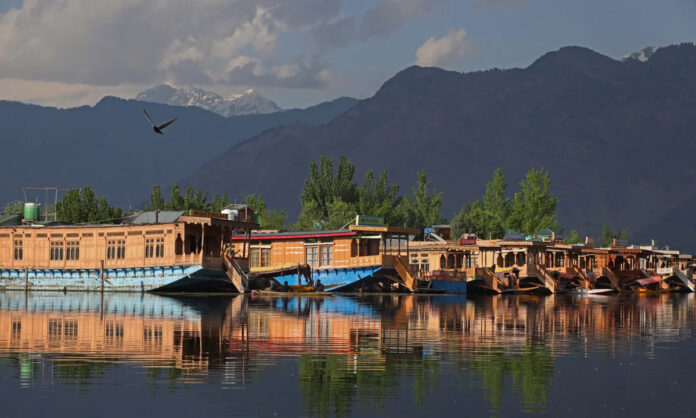
SRINAGAR, May 6: A tourist from the United States died on Wednesday after complaining of uneasiness during his stay in a house boat at Dal Lake here, officials said.
John David Anderson, who was on a visit to Kashmir with his wife Judith Anne McCarthy, fell ill in the middle of the night, they said.
The 83-year-old Anderson was rushed to a nearby private hospital where doctors declared him dead on arrival.
Police have taken cognizance of the incident and started proceedings to ascertain the exact cause of Anderson’s death. (Agencies)
J&K | US Tourist Passes Away During Stay In Dal Lake Houseboat
Blast Near Army Cantt Area In Amritsar, Hours After Explosion In Jalandhar
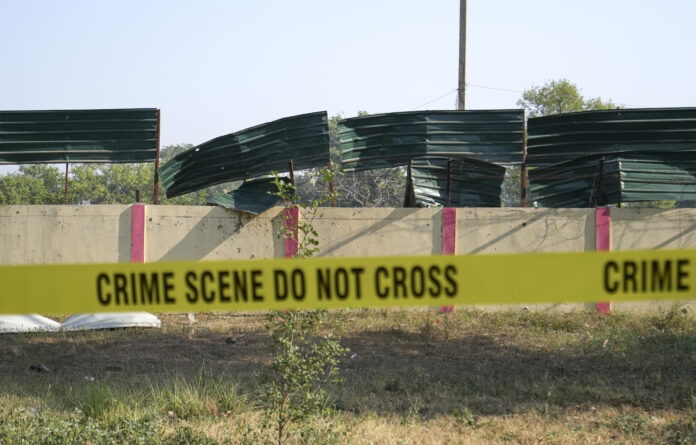
CHANDIGARH, May 6: Two back-to back explosions near security establishments shook Punjab on Tuesday night, triggering panic and drawing condemnation from opposition parties which called them efforts to “destabilise” the state.
The first explosion happened around 8 pm in Jalandhar outside the headquarters of the Border Security Force’s Punjab Frontier, while the second blast occurred at around 11 pm in near the army cantonment in Amritsar. No injuries have been reported, police said.
An investigation into both the incidents is underway.
Amritsar (Rural) Senior Superintendent of Police Suhail Mir Qasim stated that police received reports of a loud sound at around 11 pm on a road in Khasa. “Our teams arrived on the scene immediately,” he said.
Preliminary inspections indicated that someone had thrown an explosive device towards the boundary wall, leading to the explosion, according to the SSP.
Police mentioned that a piece of a tin sheet covering the boundary wall had fallen as a result of the blast.
Following the explosion, a team of forensic and bomb disposal squad visited the site to collect samples.
Amritsar Rural Superintendent of Police Aditya S Warrier, who also visited the scene, confirmed that further investigations are ongoing. Police added that a team of army officials also assessed the situation, after which the area was cordoned off.
CCTV footage from the vicinity shows the explosion occurring at night. A local villager reported that his family was awakened by the loud sound and came outside their home to see what had happened.
CCTV footage captured the explosion, which resulted in a cloud of smoke. An unidentified man was seen running for cover following the blast.
The blast ripped apart a scooter, damaged a traffic signal pole and windowpanes of a nearby shop. Locals recounted that the scooter, which was parked outside the BSF headquarters, Punjab Frontier, caught fire shortly after a loud sound. It belonged to Gurpreet Singh, who regularly delivers parcels in the area.
Talking to reporters on Tuesday night, one of Gurpreet’s relatives said that the scooter caught fire as he was approaching it. He immediately called his father and informed him about the incident.
Jalandhar Police Commissioner Dhanpreet Kaur confirmed to reporters late Tuesday that an Activa scooter parked near the gate caught fire suddenly. She stated that Gurpreet is fully cooperating with the investigation.
Witnesses nearby reported hearing a loud sound following the explosion.
Opposition parties have condemned the AAP government over the blasts.
Shiromani Akali Dal (SAD) president Sukhbir Singh Badal criticised Chief Minister Bhagwant Mann, who also holds the home portfolio, over the blasts.
“Three blasts in 10 days, two in a single day, May 5: Jalandhar outside BSF headquarters and Sri Amritsar Sahib Army area, April 27: Rajpura rail track. Continued intelligence failures and the collapse of law and order are a matter of grave concern. Chief Minister @BhagwantMann, who is also the state Home Minister, is busy with mimicry and cheap politics. He has forfeited the right to remain in office,” Badal said in a post on X.
Punjab Congress chief Amrinder Singh Raja Warring also slammed the Mann government.
“Back-to-back blasts have shaken Punjab. Yesterday in Jalandhar, and now near Khasa Camp in Amritsar, this is deeply alarming. Who is trying to destabilise our state? Why has the Punjab Government failed to prevent such incidents? What is the Government of India doing? Repeated lapses point to a serious breakdown of intelligence and security. Punjab’s peace cannot be compromised. We demand accountability and immediate action,” Warring said in a post on X.
On April 27, an explosion occurred at a freight corridor rail track in Shambhu in Patiala. Police arrested four members of a pro-Khalistan terror module, backed by Pakistan’s ISI, for the blast. (Agencies)
Five Injured After Two Vehicles Collide In J&K’s Poonch
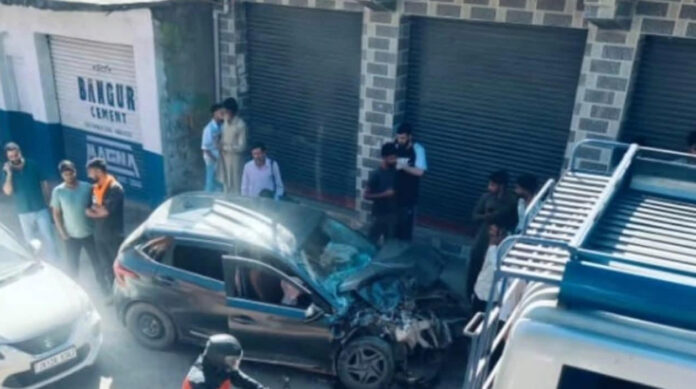
Poonch, May 6: At least five people were injured after an Alto car collided with a Canter vehicle in the Sathra area of Mandi tehsil in Jammu and Kashmir’s Poonch district on Wednesday.
According to reports, the accident took place in Nadi Sathra, following which police and local residents rushed to the spot and shifted the injured to the Sub-District Hospital Mandi for treatment.
Doctors said that three of the injured are in stable condition, while two sustained serious injuries. The critically injured were provided initial treatment and later referred to District Hospital Poonch for advanced treatment.
CEC Orders Immediate Arrest Of Those Involved In Post-Poll Violence In Bengal: Official

KOLKATA, May 6: Chief Election Commissioner Gyanesh Kumar directed the authorities concerned to immediately arrest those involved in post-poll violence and vandalism in West Bengal, an official said on Wednesday.
The Election Commission’s directive came after two persons were killed in alleged incidents of post-poll violence in the state on Tuesday, besides scores of party offices being ransacked.
The CEC issued instructions to the West Bengal chief secretary, director general of police, Kolkata police commissioner and directors general of central armed police forces, along with all district magistrates, superintendents of police and other officials, to maintain continuous patrolling in sensitive areas, he said.
“Those responsible for inciting violence and carrying out acts of vandalism must be arrested immediately,” the official said, quoting the CEC’s instruction.
The chief election commissioner also stressed the need for swift and firm enforcement of the law, he added.
This directive came amid concerns over law and order in parts of the state, with the Election Commission closely monitoring the situation, he added.
“We have been asked to remain on high alert and ensure that any attempt to disturb peace is dealt with firmly,” a senior police officer said.
The state authorities have intensified vigil across districts, with coordinated efforts between the police and central forces to prevent any untoward incident, he added.
The assembly elections were held in West Bengal in two phases – April 23 and 29. The counting of votes took place on May 4.
The BJP sealed a landslide victory with 207 seats in the 294-member assembly, ending the TMC’s uninterrupted 15-year rule in the state. (AGENCIES)
Every 6th BJP MP In LS Won Through ‘Vote Chori’, Should We Call Them ‘Ghuspethiya’: Rahul
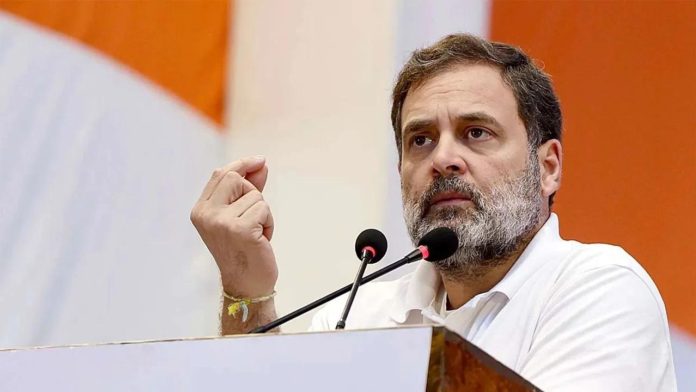
New Delhi, May 6: Congress leader Rahul Gandhi on Wednesday alleged that every sixth BJP MP in the Lok Sabha secured his or her seat through “vote chori” and asked if they should be labelled “ghuspethiya” in that party’s own parlance.
Gandhi also claimed that the BJP would not be able to win even 140 seats today in the Lok Sabha if fair elections are held.
“Through vote theft, sometimes individual seats are stolen, and at other times, an entire government. Of the 240 BJP MPs in the Lok Sabha, roughly every sixth MP secured seat through vote chori,” the Leader of Opposition in the Lok Sabha said in a post in Hindi on X.
“They are not hard to identify – should we, in the BJP’s own parlance, label them ‘ghuspethiya’? And what of Haryana? There, the entire government itself is an ‘ghuspethiya’. The very institutions they keep in their pockets – the ones they manipulate to distort voter lists and the electoral process – are themselves ‘remote-controlled’,” Gandhi said, in a scathing attack on the BJP.
“Their real fear is the truth. For if fair elections were to be held, they would not be able to win even 140 seats today,” he said.
On Tuesday, Gandhi had termed the BJP’s victory in Bengal and Assam assembly polls a “theft” of the mandate, and a big step forward in the saffron party’s mission to “destroy” Indian democracy.
Gandhi has also come out in support of the TMC, which has been trounced by the BJP in the polls, and urged those gloating over the loss of Mamata Banerjee’s party to put petty politics aside.
“Some in the Congress, and others, are gloating about TMC’s loss.They need to understand this clearly – the theft of Assam and Bengal’s mandate is a big step forward by the BJP in its mission to destroy Indian democracy,” Gandhi had said in a post on X.
“Put petty politics aside. This is not about one party or another. This is about India,” he said in his post.
The BJP ousted Trinamool Congress from power in Bengal and captured power for the third time in a row in Assam in results of assembly polls declared on Monday. (Agencies)
Trump Pauses Project Freedom, Claims Great Progress For Final Agreement With Iran
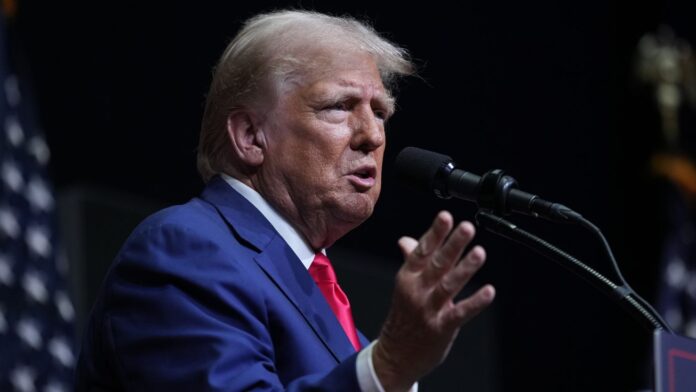
WASHINGTON, May 6: President Donald Trump has suspended “Project Freedom,” to escort ships through the Strait of Hormuz, claiming progress in negotiations with Iran toward an agreement to end the war.
In a post on Truth Social on Tuesday, Trump said, “Great progress has been made toward a complete and final agreement with representatives of Iran.”
“Based on the request of Pakistan and other Countries, the tremendous Military Success that we have had during the Campaign against the Country of Iran and, additionally, the fact that Great Progress has been made toward a Complete and Final Agreement with Representatives of Iran, we have mutually agreed that, while the Blockade will remain in full force and effect, Project Freedom (The Movement of Ships through the Strait of Hormuz) will be paused for a short period of time to see whether or not the Agreement can be finalized and signed,” Trump said.
Project Freedom was launched on Monday to escort ships, stranded due to the closure of the Strait of Hormuz, out to safety. Trump had announced the operation on Sunday and the US Central Command began implementing it the next day.
However, the Project led to friction in the vicinity of the narrow seaway, a key route for transporting one-fifth of the global oil supplies, with the UAE claiming that its ships were attacked by Iran. The US also claimed to have destroyed several Iranian small boats.
Trump’s statement on Truth Social came hours after US Secretary of State Marco Rubio announced that Operation Epic Fury, launched on February 28, had concluded as its objectives have been achieved.
“Operation Epic Fury is concluded. We achieved the objectives of that operation. We’re not cheering for an additional situation to occur. We would prefer the path of peace. What @POTUS would prefer is a deal… that is, so far, not the route that Iran has chosen,” Rubio told a press conference at the White House on Tuesday.
On Project Freedom, Rubio said the goal was to rescue almost 23,000 civilians from 87 different countries who were trapped inside the Persian Gulf and left for dead by the Iranian regime.
“This is not an offensive operation. This is a defensive operation, and what that means is very simple: there’s no shooting unless we’re shot at first. We’re not attacking them, but if they’re attacking us or they’re attacking a ship, you need to respond to that,” Rubio said. (Agencies)
Scooter Catches Fire Outside BSF Headquarters In Jalandhar, Locals Claim Blast-Like Sound
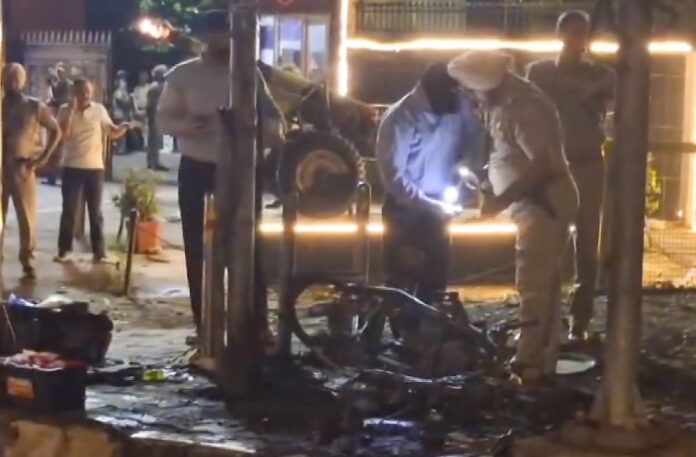
Chandigarh, May 5: A scooter parked near BSF Chowk in Punjab’s Jalandhar district caught fire on Tuesday evening causing panic in the area, police said, even as locals claimed they heard a blast-like sound from the vehicle.
The incident took place at around 8 pm outside the headquarters of the Border Security Force’s Punjab Frontier, which is located along a road that connects the main city with the Amritsar-Delhi highway.
Nobody was hurt, said police who have cordoned off the area.
It is yet to be ascertained how the scooter caught fire, they said, even as opposition parties launched an attack on the AAP government over an “explosion” in Jalandhar.
“Prima facie, the facts are that an Activa (scooter) parked here (Jalandhar) caught fire. We are still verifying the facts on the ground,” Jalandhar Police Commissioner Dhanpreet Kaur said.
A police patrol team was present in the area at the time.
Replying to a question, Kaur said it is too early to say that a blast has taken place, adding that they are carrying out an investigation.
Meanwhile, a 22-year-old man named Gurpreet Singh has been identified as the one who was riding the scooter.
Talking to reporters, one of his relatives said Gurpreet comes to the area daily to deliver parcels. On Tuesday evening, when he was approaching his parked scooter, it suddenly caught fire. Gurpreet then rang up his father and informed him about the incident, the relative said.
Commissioner Kaur, along with other senior police officials, reached the spot and took stock of the situation.
A forensic team, a dog squad and a bomb squad have also arrived at the spot.
Kaur said the youth is fully cooperating with the investigation. According to Gurpreet, his vehicle suddenly caught fire, she said.
When asked if a blast had taken place as part of any conspiracy, she said it is too early to comment.
“We cannot confirm anything at the moment. We are investigating from all angles. If new details emerge, we will share them,” she said.
However, a local said he heard a blast-like sound.
“I was standing near a barrier when I heard a loud sound,” he said.
The opposition parties have targeted the ruling AAP government over the incident.
Punjab Congress chief Amrinder Singh Raja Warring claimed that an “explosion” near the BSF headquarters in Jalandhar is deeply alarming.
In an X post, he said, “A blast in a delivery scooter in a crowded area exposes a serious collapse of law and order. Punjab is a sensitive border state; such incidents raise grave national security concerns. Yet, while the AAP-led Punjab government is busy parading its MLAs before the President, the BJP-led Centre is equally distracted and failing in its responsibility to ensure security. People deserve safety, not political theatre.”
Shiromani Akali Dal leader Bikram Singh Majithia asked if law and order in a border state has collapsed.
“From the Shambhu railway track to the busy BSF Chowk in Jalandhar, continuous blasts within a week — has Punjab’s security completely failed?” he asked. (Agencies)
A revisit to Ladakh’s flawed politics
Nawang Tsering Shakspo
sntsering52@gmail.com
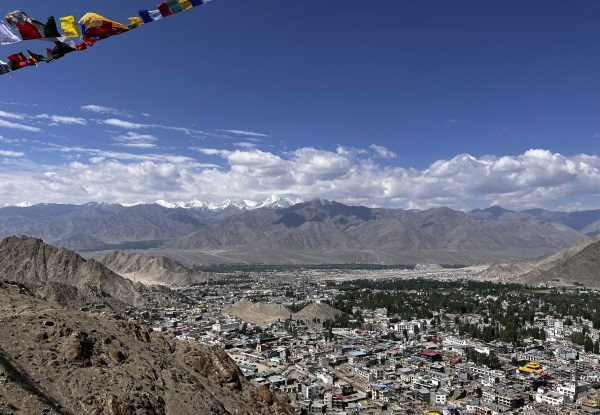
Politics in Ladakh, right from the country’s independence in 1947, has been awfully flawed. The region remained cut off from the rest of the country till 1962-63. Interestingly, an Indian Air Force DC-3 Dakota aircraft, piloted by Air Commodore Mehar Singh, landed on the airstrip built in a great rush in Leh on May 24,1948. That was done to secure Ladakh from the Pakistani ‘Kabaile’ invaders as well as to reinforce the presence of the Indian army. With that historical event, Ladakhi leaders, under the stewardship of Kushok Bakula Rinpoche, visited Srinagar and New Delhi to apprise the authorities of the step-motherly treatment from the State Government, and to request for an early redressal of the people’s grievances under the new democratic setup.
Acknowledging the request of the delegation, Pandit Jawaharlal Nehru, the then Prime Minister of India and Sheikh Mohammed Abdullah, paid an official visit to Leh on July 4, 1949, and in the absence of any road connectivity in the region, the visiting dignitaries toured the central part of India riding horses. Addressing the people, Nehru promised to grant a fair treatment to the region regarding development and, in consultation with the local public, chose Kushok Bakula Rinpoche as the leader of Ladakhi people to represent Ladakh in the State Legislative Assembly. Nehru instructed Sheikh Sahib to work zealously with Bakula for the wellbeing of Ladakhis.
Unfortunately, the Kashmir Government paid very little attention to Ladakh, particularly in regard to the distribution of development funds coming from the Centre and treated Ladakh as their colony. They passed certain laws in the State Assembly which went against the very wishes of Ladakhis, particularly land abolition Act. Similarly, a post of a minister to a Ladakhi was due in the Sheikh Cabinet. Additionally, to elect a Member of Parliament, (Lok Sabha), which was due for Ladakh, was also kept clubbed with the Ganderbal Constituency. Under such circumstances, there existed no chance for a Ladakhi to be a Member of Parliament and to find a forum to air their grievances.
Despite all these unusual complications within Ladakh, the ancient trade route with Xinjian continued, and the same remained a major source of people’s income almost till 1960. It was only when the Sino-Indian war broke in 1962, and since then Ladakh lost its unique position as a Central Asian trading post though the trade was moving in an informal and unregulated way, laden on horses and camel caravans. On the other hand, the Kashmir Government was reluctant to pay any attention to the plight of Ladakhis. Kushok Bakula, now a legislator from Ladakh, lost his patience and publicly protested against what he called Srinagar-dominated administration, saying, “nostalgic longing in Ladakh for a union with their spiritual home, Tibet”.
As the Kushok’s relations with Sheikh Abdullah and Kashmir Government remained strained, it came to the track only after the assumption of Bakshi Ghulam Mohammad as the Prime Minister of the state, after deposition and arrest of Sheik Abdullah in 1953. As wished by Nehru, Bakshi appointed Kushok Bakula as a minister in his Cabinet in 1953 and he remained as a minister in the State Government till his unopposed election to the Lok Sabha in 1967.
With the exit of Kushok Bakula from the State politics, the Kashmiri leaders repeated the old policy of not having any Ladakhi legislator in the State government. For that purpose, they created two factions in the only ruling party of the time in the State called the Congress, dubbing them as Congress A and congress B. Ladakhis soon understood the ruling party’s ‘divide-and-rule’ policy. Responding to such tactics, the people of Ladakh came on a single platform and launched an agitation against the Kashmir Government, and the demands of the agitators included a ministerial berth and teaching of Ladakhi language in schools. This agitation resulted in the creation of 32 posts of Ladakhi language teachers and some posts of Arabic teachers. Two Ministerial berths were granted to the legislators, one hailing from Leh and the other from Kargil. In addition, an enquiry commission came into being to find out the lapses regarding the fund allotment to the region and other development-related issues. Soon, the commission came to be known as Gajendragadkar Commission and with the passage of time the recommendation of the commission came out into the open and the same emerged as one of the first political victories for Ladakhis.
In 1973, Balraj Madhok, a former President of the Jan Sangh, through a press statement, said “Ladakh should be separated from the state of Jammu and Kashmir and be made a Union Territory in the interest of national security and wider interest of the nation.” Seeing good reason and weight in the statement of Balraj Madhok, and with the blessings of Kushok Bakula a demand was made through a press conference for separate Ladakh from Kashmir and grant Union Territory status to the region. The demand got high coverage in the Indian press and with that demonstrations were held in Leh including a stone-pelting incident on the motorcade of the Chief Minister Syed Mir Qasim who had come to Leh to sort out the grievances of Ladakh. In the incident, the district magistrate was injured at village Nimo, 36 km away from Leh city and Thupstan Chewang, nephew of Kushok Bakula, was apprehended as the prime suspect. In this way, the situation took a dramatic turn in the sense that certain Ladakhi leaders who had got positions in the government under the Buddhists’ agitation, turned their loyalties to the Kashmir government and opposed the demand of UT, and raised the voice that a separation of Ladakh from the State would harm the cause of national integration. The then leaders, however, supported the demand of granting Schedule Tribe status to Ladakhis.
This dramatic event occurred around the time when the historic talk between Indira Gandhi and Sheikh Abdullah was to be transpired and as an outcome of the talk, the Sheikh proposed to create three regional autonomous councils, one each for Jammu, Kashmir and Ladakh. This announcement made even in a public meeting held in Leh market Leh but in reality, no change had followed his taking over as the Chief minister of the State, and the apathy towards Ladakh continued. However, veteran Ladakhi engineer Sonam Norboo was given a berth as Works Minister. Around that time, Kushok Bakula who was at the same time had been appointed as a Member, Minorities Commission, by Morarji Desai. But the Sheikh Government did not extend protocol to the members while on a visit to the state capitals. Besides that, regarding the Schedule Tribe status for Ladakhis, the Sheikh’s Government declined to grant written permission to the Government of India under the pretext of article 370. With that, the tussal between the Sheikh and Bakula deepened.
On the other hand, taking the issue of ST, a massive protest was held in Leh in the month of August 1989. At that time, I was in Tokyo, Japan, attending the biannual meeting of International Association for Tibetan Studies (IATS), and in the morning of August 29, 1989, the Japan Times published the news regarding a firing incident in Leh in which three Buddhist protesters were killed. After this unprecedented incident of killings, Kushok Bakula in his capacity as the member of the Minorities Commission, despatched a strong letter to Rajiv Gandhi, the then Prime minister, stating that,” As my sincere efforts in safeguarding the interests of the microscopic Buddhist minority of the Jammu and Kashmir State are not bearing the desired fruits, it is becoming extremely difficult for me to justify my association with the Minorities Commission”. Interestingly, that letter was written by Kushok Bakula on my persuasion and the same clicked, and within 15 days of receiving the letter by the PM office, the Central Government issued notification to the grant Schedule Tribe status to certain sections of Ladakhi people.
Even after that, Ladakhis kept mounting pressure upon the Government of India for the grant of UT status to Ladakh. On the other hand, from the year 1990 to 1996, the J&K State remained reeling under President’s rule. Hence, the Central government seeing an appropriate time to grant justice to the Ladakh region, the President of India, through a notification, formed the Ladakh Autonomous Hill Development Council, Leh and Kargil. Eventually, this action of the Government of India proved as the first step towards grant of UT status to Ladakh.
Meanwhile, in the Kashmir Valley, due to political disturbances, things took an ugly shape, and then began, in 1990, the migration of Kashmiri Pandits from the Valley in large numbers. Later, on seeing the root-cause of Kashmir problem and the unrest in the valley, the Government, in the year 2008, appointed a study group called ‘interlocutor’, and the study report of the three members team of interlocutors soon came to be known. Besides others issues, the interlocutors recommended that, “Ladakh would no longer be part of Kashmir division, as is the case presently”. And that meant that the three-member interlocutors recommended that Ladakh be made a separate division carving out of the Kashmir Division. On that issue, I personally shared some feelings in the press by demanding the change of nomenclature of Jammu and Kashmir State to Jammu, Kashmir and Ladakh State. Besides that, my well-researched article demanding Divisional Status for Ladakh, was published in all the major dailies of the State, such as Greater Kashmir, Greater Jammu, Daily Excelsior, Kargil Number, Epilogue and other national papers like The Tribune.
With that event taking a significant political as well as administrative decision, Satyapal Malik, the then Governor of Jammu and Kashmir granted the Divisional Status to the Ladakh region, separating it from Kashmir Division on February 8th, 2019, and next within a six-month period, another significant decision of the Central Government came to surface, granting Union Territory status to Ladakh on the 5th of October 2019 and with that section 370 of the Indian Constitution, which granted special power to the then Kashmir Government to prevent the Central Government from imposing any law passed by Parliament was scraped. Additionally, the National Commission of Schedule Tribe and the then Tribal Minister of India also had favoured the extension of the 6th Schedule of the Constitution to Ladakh. Besides that, the Parliamentary Panel also has asked the home ministry to consider the grant of 5th and 6th Schedule Status to Ladakh. Not only that, the grant of the 6th Schedule to Ladakh also surfaced in the election manifestos of the BJP, but, unfortunately, the Government of India led by the BJP declined to honour their promises made at the time of election. Instead, the Government granted additional five districts to the region in one stroke, in addition to the existing two districts of Ladakh, Leh and Kargil.
Prior to Ladakh becoming a Union Territory, headed by a Lieutenant-Governor, the Administration of two districts was managed by the two District Magistrate-cum Development Commissioners, stationed one each at Leh and Kargil. Now, under the U.T. regime, to manage the same administration, there are dozens of IAS and IPS cadre officers and a number of other officers of similar positions. Maybe, a good number of high-profile administrators are required in the changed Administrative setup of the two districts to carry out welfare schemes of the Ladakhis. Besides, Ladakh has two Hill Councils with about sixty Councillors. Out of the sixty, ten are Executive Councillors with the status of a Deputy Minister, and the Council Chairman and the Deputy Chairman have Cabinet status, but without any executive power. On the other hand, a perception prevails among the locals that with the region becoming a UT, the job opportunities for the locals have greatly shrunk.
In recent times, the Leh Apex body and the Kargil Democratic Alliance (KDA) spearheaded an agitation, voicing four major demands including the 6th Schedule status and Statehood for Ladakh. Several rounds of talks have already been held with the Central Authorities but without any yield. As a result, this situation of crisis has brought more frustration and anger among the people of Ladakh. In my view, an immediate solution is required from the government to pave the way for the grant of statehood by extending the provisions of 6th Schedule of the Constitution, or the Pondicherry type of UT with legislative power by extending the 6th Schedule status so that Ladakh, once a peaceful region known all over the world, regains its old glory.
Since Ladakh is the crown of Mother India, bordering two hostile countries, China and Pakistan, only a happy Ladakh will be in the best interest of the country. The Central government’s dilly-dallying tactics over the Ladakhis’ genuine demands should not and can’t be brushed aside.
Strong demand of vehicles pushes J&K auto retail sale up in April 2026: FADA
Excelsior Correspondent
JAMMU, May 5: The strong demand of vehicles pushed J&K auto retail sale up in April 2026.
This was disclosed by Sanjay Aggarwal, Chairperson, Federation of Automobile Dealers Associations (FADA), here today.
In a press statement issued, Aggarwal said that in J&K for April 2026, the 2-Wheeler category witnessed a growth of 20.85% at 10,704 units in April 2026, as compared to 8,857 units in April 2025.
The 3 Wheeler category witnessed a growth of 52.38% at 1,472 units in April 2026, as compared to 966 units in April 2025.
The Commercial Wheeler category witnessed a growth of 5.89% at 1,240 units in April 2026, as compared to 1,171 units in April 2025. The Construction Equipment category witnessed a downfall of -12.28% at 50 units in April 2026, as compared to 57 units in April 2025.
The Passenger Vehicle category witnessed a Growth of 20.52% at 6,085 units in April 2026, as compared to 5,049 units in April 2025.
The Tractor Vehicle category witnessed a growth of 21.04 % at 420 units in April 2026, as compared to 347 units in April 2025.
In J&K total retail is 19,971 in April 2026 as compared to 16,447 in April 2025 thereby registering a growth of 21.43 % YoY.
Aggarwal said that reflecting on April 2026 Auto Retail performance in J&K, “April 2026 achieved a growth of 21.43 % YoY.
He said that April 2026 has been a strong month for auto retail in Jammu & Kashmir, with the industry registering a healthy 21.43% year-on-year growth. This broad-based growth across segments, especially in two-wheelers, passenger vehicles and tractors, reflects improving consumer confidence and resilient demand across both urban and rural markets.
Aggarwal said that the strong 20%+ growth in both passenger vehicles and two-wheelers underscores sustained retail momentum, supported by better inventory availability and evolving consumer preferences. Dealers across Jammu & Kashmir are witnessing improved footfalls and conversion rates.
Contractors won’t participate in Flood Control works: CAJP
Excelsior Correspondent
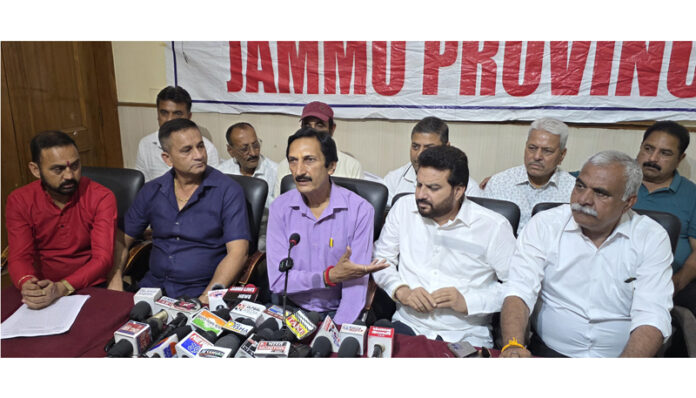
JAMMU, May 5: Contractors Association Jammu Province (CAJP) has said that contractors could not participate in the tender process initiated by the Flood Control Department (Jal Shakti) under SASCI component due to unfair conditions imposed by the authorities.
Addressing a press conference here today members of the Association said that contractors’ fraternity is unhappy with the behavior of the officials of the Hydraulic Wing of the Jal Shakti Department. They said Flood Control department, invited tenders for the works under SASCI component, whose funds will be available up to August 2026 only, and after that no contractor will claim his dues as per the conditions of the NIT. They said the position of AAA and TS is currently under process.
General secretary of the Association, Vinod Kohli pointed out that the funds are approved under SASCI but not released to the department so far. They said the rules of Geology & Mining Department clearly state that no mining activity is allowed from July Ist to September 30. Since these works are of protection nature and need material from the rivers and Nallahs, under no circumstances these works could be executed up to June 30 and moreover, as per conditions, no funds will be released after August 31.
In view of these very unfair and unjustified conditions, the Association has taken a decision not to participate in the tender process as they will be in massive financial loss. Any contractor participating in the work will be at high risk and the Association will not be responsible, Kohli added.
Referring to the incident of Bantalab near Jammu where three labourers were killed at a bridge site, Association appealed to the Govt to release some amount to their kith and kin from the funds contributed as labour cess by the contractors as poor and hapless contractor can not afford to pay from his own pocket. He said the contractors are still waiting for the release of their payments worth over Rs 1200 crores of JJM works from the last two years and also pending liability of 2017 to 2019, but the Govt is still unmoved.