

BEIJING, Jan 27: A Chinese man, who fatally stabbed a doctor over what he considered a botched nose operation, was today sentenced to death by a court in eastern China.
Lian Enqing, 33, killed an ear, nose and throat specialist and injured two others because he was angry over the failure of the nasal surgery done by them, the Intermediate People’s Court in Taizhou City said.
At an earlier hearing, Lian’s sister said that he suffered respiratory problems after the surgery in March 2013.
While the hospital confirmed that the surgery was successful, Lian felt he was being cheated by the doctors.
According to his sister, from August to October 15 last year, Lian was under treatment at Shanghai Mental Health Centre, diagnosed with persistent delusional disorder.
The court believed that Lian was conscious of his crime and had the capacity for criminal responsibility, state-run Xinhua news agency reported.
The case puts a spotlight on overburdened medical sector. (AGENCIES)
Chinese man sentenced death for killing doctor
Thai police rules out murder in Karl Slym’s death
BANGKOK, Jan 27: Thai police today ruled out murder as the cause of the death of Tata Motors’ Managing Director Karl Slym who fell from the 22nd floor of a five-star hotel here.
“We can rule out murder in this case,” a police official said, adding that they were probing the case.
Slym, 51, died yesterday after he fell from the 22nd floor of the riverside Shangri-La hotel in Yannawa district.
A British national, Slym was here to attend a board meeting of the Thailand arm of the company and was to have checked out of the hotel yesterday.
Tata Motor officials here did not comment on the incident.
Slym was leading the company at a time when the auto industry was grappling with prolonged slowdown.
He joined the auto major in 2012 as part of a major management overhaul and was responsible for charting the company’s strategy to regain momentum in the Indian market.
Before joining Tata Motors, Slym was the executive vice president, SGMW Motors, China (a General Motors Joint Venture). Prior to that, he was president, managing director and board member of General Motors in India during 2007-11.
For over two decades, Slym was with Toyota and General Motors in various positions across geographies. (AGENCIES)
Ukraine eyes state of emergency as ministry seized
KIEV, Jan 27: Ukraine threatened to impose a state of emergency today after demonstrators occupied the justice ministry and protests demanding the president’s resignation spread despite a power-sharing offer.
Opposition leaders said an olive branch proposal from President Viktor Yanukovych was not enough to end the ex-Soviet country’s worst crisis since independence and demanded snap elections this year.
The protests began more than two months ago over Yanukovych’s rejection of a pact with the European Union under Russian pressure. But they have now turned into an all-out bid to oust him from power.
Protesters have already attempted to blockade 14 of the 25 regional administrations, including in southern and eastern parts of the nation of 46 million that predominantly speak Russian and share an historical allegiance to Moscow.
Tensions remained high in Kiev as several dozen radical protesters from a group named Spilna Sprava (The Right Deed) seized control of the justice ministry yesterday, smashing windows and erecting barricades outside.
Justice Minister Olena Lukash, who is taking part in negotiations between the opposition and Yanukovych, said she would ask for the talks to be broken off if the building was not freed.
“I will be forced to ask the president of Ukraine to stop the talks if the building is not freed immediately and negotiators are not given a chance to find a peaceful solution to the conflict,” Lukash told Ukraine’s Inter channel.
If the protesters do not vacate the building, Lukash said she would also approach Ukraine’s national security council with “a demand to discuss imposing a state of emergency in this country.”
Europe has urged dialogue between the two sides — a call echoed by Pope Francis, who voiced hope in his weekly Angelus prayer that “the search for common good may prevail in the hearts of all”.
Under unprecedented pressure, Yanukovych on Saturday offered the opposition posts in government including that of prime minister, but his opponents said the offer fell short of their needs.
Yanukovych proposed sharing leadership with Fatherland party chief Arseniy Yatsenyuk as prime minister and UDAR (Punch) chief and former boxing champion Vitali Klitschko as deputy prime minister. (AGENCIES)
Philippine military attacks hardline Muslim renegades
MANILA, Jan 27: The Philippine military attacked a Muslim renegade faction today, two days after the country’s main Muslim rebel group successfully ended negotiations to end a decades-long insurgency that has killed tens of thousands.
Soldiers, backed by artillery, attacked guerrillas of the Bangsamoro Islamic Freedom Fighters (BIFF) in a remote village on the southern island of Mindanao, triggering fighting that sent hundreds of civilians fleeing, the military said.
Regional military spokesman Dickson Hermoso told AFP the attacks were launched in a bid to arrest about 25 leaders of the BIFF, a small group of between 250 and 400 militants that is opposed to the peace process.
The attacks began today morning and were continuing throughout the day, according to Colonel Hermoso, who said there were no immediate casualties.
Hermoso said the Moro Islamic Liberation Front (MILF), the 12,000-strong rebel organisation that wrapped up peace talks with the Government on the weekend, was helping the military.
“The MILF are part of the law enforcement operations. They are just securing their communities so those (BIFF fighters) cannot enter. They are also angry at the BIFF,” he told reporters.
MILF military spokesman Von al-Haq confirmed that the military had coordinated with the MILF before the attack.
“The BIFF cannot enter (our territories.) We have a line where we have re-positioned (personnel). If they run there, they cannot enter there unless they are surrendering,” he said.
The MILF has been leading a rebellion in the southern Philippines since the 1970s aimed at winning independence or autonomy for the country’s Muslim minority in Mindanao, which they regard as their ancestral homeland.
About 150,000 people are estimated to have been killed in the conflict.
After 18 years of negotiations, the MILF agreed Saturday on the final parts of a peace accord that would give Muslims a large degree of autonomy in the south, including control of much of the region’s natural resources.
The peace accord is expected to be signed within weeks and President Benigno Aquino is aiming for it to be fully implemented before he steps down in mid-2016.
However it must still clear other hurdles, including congressional approval and a regional plebiscite, as well as the opposition of smaller rebel groups such as the BIFF.
The BIFF broke away from the MILF gradually after its leader, Saudi-trained cleric Ameril Umbrakato, accused the main Muslim group of betraying the region’s quest for independence. (AGENCIES)
Japan posts record USD 112B trade deficit in 2013
TOKYO, Jan 27: Japan’s trade deficit surged to a record USD 112 billion in 2013 as the shutdown of nuclear power plants swelled the nation’s energy import bill.
Provisional data today showed that exports rose 9.5 per cent to USD 680.9 billion, while imports jumped 15 per cent USD 793.2 billion.
Japan’s trade deficit in 2012 was 6.94 trillion yen. The deficit has been rising as costs for imports have surged with the weakening of the Japanese yen and increased purchases of foreign oil and gas.
Japan’s nuclear reactors have been offline for safety and regulatory checks after the March 2011 earthquake and tsunami devastated the Fukushima nuclear plant.
The largest shortfall, USD 128.8 was with the Middle East, source of the largest share of resource-scarce Japan’s imports of oil and gas.
The weaker yen is a mixed blessing for Japan. It is boosting corporate profits due to higher yen-denominated income for companies that earn a large share of their revenues overseas.
“Our imports are affected both by the yen’s value and also by oil prices, so we will be watching the situation,” chief government spokesman Yoshihide Suga said today.
He reiterated Japan’s eagerness to buy lower-priced shale gas from North America, pending US approval of such exports.
Apart from energy imports, Japanese manufacturers increasingly are relying on overseas sources for components for electronics and other products.
The recovery in exports so far has failed to offset those costs and Japanese consumers are paying sharply higher prices for fuel and food.
Japan’s deficit with China, its biggest trading partner, rose more than 43 per cent in 2013 to USD 49 billion. With the US, it logged a surplus of USD 59.5 billion, up nearly 20 per cent from a year earlier.
December’s deficit was USD 12.7 billion, the fourth straight month of increase.
Japan’s economy emerged from recession a year ago and has been gaining momentum, spurred by strong Government spending and monetary stimulus.
That has also pushed demand for imports higher, a trend likely to continue at least until a 3 percentage point increase in consumption tax to 8 per cent takes effect in April, said Marcel Thieliant, an economist for Capital Economics in Singapore. (AGENCIES)
Attacks push Iraq death toll to 26: officials
BAGHDAD, Jan 27: Late night attacks in Sunni Arab areas north of Baghdad pushed the overall death toll from violence in Iraq a day earlier to 26, security and medical officials said today.
The protracted surge in nationwide unrest, coupled with a deadly standoff in Anbar province between security forces and anti-Government fighters, has left more than 850 people dead so far this month.
Diplomats and foreign leaders have urged Iraq’s Shiite-led Government to address long-term grievances in the disaffected Sunni community to undercut support for militants, but with elections due in April, Prime Minister Nuri-al-Maliki has taken a hard line.
Violence in Anbar, as well as Baghdad and several areas north of the capital yesterday left at least 26 people dead and dozens more wounded, officials said on today, updating previous tolls.
The deadliest of the violence struck in Abu Ghraib, a Sunni Arab town to the west of Baghdad, where eight people were killed in separate incidents – six soldiers were gunned down in a checkpoint attack, while a bombing on a busy road killed two people.
Gunmen in Baghdad killed four people in two different shootings, including a former Iraqi army general, while militants targeting local officials in Baquba and Mosul, two of the country’s most violent cities, left three dead.
Three car bombs in the ethnically-mixed city of Kirkuk killed four more people, and another car bomb in the town of Mishahda left three dead.
And in Fallujah, which has been out of Government hands for several weeks, a mother and her three children were killed when a blast struck their home, a doctor said. It was unclear if heavy artiller of smaller rockets were responsible for the explosion.
The latest bloodshed pushed the overall death toll for the month above 850 – more than three times the toll for January 2013.
It comes as security forces are locked in battles with militants, including those affiliated with the Al-Qaeda-linked Islamic State of Iraq and the Levant (ISIL), in Anbar, a mostly-Sunni desert region west of Baghdad that shares a border with Syria.
ISIL has been involved in the fighting, and witnesses and tribal leaders in Fallujah say the group has tightened its grip on the city in recent days, but other militant groups have also battled security forces and their tribal allies.
The standoff has forced more than 140,000 people to flee their homes, the UN refugee agency said, describing this as the worst displacement in Iraq since the 2006-08 sectarian conflict. (AGENCIES)
Japan NHK boss under fire for comfort women remark
TOKYO, Jan 27:Japan’s top Government spokesman today defended the new head of public broadcaster NHK for his remarks that the use of women as military prostitutes was common worldwide during World War II.
NHK chairman Katsuto Momii told a news conference Saturday marking his appointment that “comfort women” existed in any country at war, not just Japan. He also criticised South Korea for dredging up a compensation issue that had been settled by a bilateral peace treaty.
His remarks have raised concerns about a possible right-leaning shift by the country’s public broadcaster, which has reportedly faced criticism from Prime Minister Shinzo Abe’s nationalist government for having programs that were too liberal.
Momii’s comments drew an angry response from South Korean officials and former victims. The country’s ruling and opposition parties demanded an apology from Japan and Momii’s resignation. Kang Il-chul, 87, who said she was abducted by Japanese soldiers and forced into sex slavery at 15, called his comments “absurd.”
Abe is thought to be pushing a more nationalist agenda since taking office in December 2012, and NHK’s recent appointments were seen reflecting his ideological bias.
The Government oversees NHK’s public service content, and its chairman is picked by parliament-approved advisers. One of them, a best-selling author reportedly favoured by Abe, is known for his remarks defending Japan’s wartime actions.
Under national security guidelines adopted by Japan’s Cabinet last month, Abe wants to raise the country’s defence posture and play a greater role in international peacekeeping.
And his visit to the Yasukumi war shrine last month and his World War I analogy last week comparing Japan-China tension with that of Britain and Germany a century ago were seen as signs of his belligerence.
The military brothel system was “common in any country at war,” Momii said Saturday. “The comfort women system is considered wrong under today’s moral values. But the military comfort women system existed as a reality at that time.”
“Putting my chairman’s title aside, the issue becomes complicated because South Korea criticises as if Japan was the only one that forcibly drafted women into the system,” Momii said.
“And (South Korea) demands money, compensation. Why do they dredge up something, the issue that had been already settled by a bilateral treaty? It’s wrong.”
Momii, 70, previously served as a vice chairman of Mitsui, a large trading house.
At a news conference today, Chief Cabinet Secretary Yoshihide Suga defended Momii’s remarks as his personal views.
Suga said that Abe, in line with his predecessors, has expressed sympathy to Asian women forced to provide sexual services for Japanese soldiers and “there is nothing more to add to that.” (AGENCIES)
Ajanta Pharma Q3 net up 92 pc at Rs 62 cr
NEW DELHI, Jan 27: Drug firm Ajanta Pharma today posted 91.64 per cent rise in its net profit at Rs 62.42 crore for the third quarter ended December 31, 2013, on account of robust sales in the domestic and emerging markets.
The company had posted a net profit of Rs 32.57 crore for the same period of previous fiscal.
Net sales of the company rose to Rs 292.59 crore for the third quarter, as compared to Rs 225.68 crore in the same period of previous fiscal, Ajanta Pharma Ltd said in a filing to the BSE.
“We had a good quarter fuelled by strong business performance in India and emerging markets,” Ajanta Pharma Joint Managing Director Rajesh Agrawal said.
During the quarter under review, the company’s India revenues stood at Rs 98 crore, up 38 per cent over the corresponding period of last fiscal.
Exports to emerging markets, including African and CIS countries, stood at Rs 195 crore during the quarter, a growth of 26 per cent.
Shares of the company were trading at Rs 937.80 apiece on the BSE in late afternoon trade, up 0.27 per cent from its previous close. (AGENCIES)
Nickel futures fall 0.63% on global cues
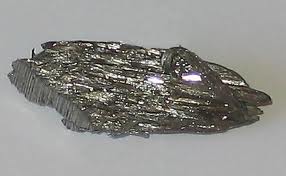
NEW DELHI, Jan 27: Nickel prices fell by 0.63 per cent to Rs 900.90 per kg in futures trade today as speculators trimmed their positions, taking a negative cues from overseas markets.
At the Multi Commodity Exchange, nickel for delivery in January fell by Rs 5.50, or 0.63 per cent, to Rs 900.90 per kg in business turnover of 2,372 lots.
Similarly, the metal for delivery in February declined by Rs 5.20, or 0.57 per cent, to Rs 907.60 per kg in 463 lots.
Analysts attributed the fall in nickel futures to a weak global trend on speculation that Indonesia, may not impose a complete ban on ore shipments, easing supply concern, mainly influenced nickel prices at futures trade.
Meanwhile, nickel for delivery in three months lost 0.9 per cent to 14,354 dollar a metric tonne, the lowest level since January 20 on the London Metal Exchange. (AGENCIES)
Mixed trend prevails in foodgrain market.
CHENNAI, Jan 27: The prices of moong dal, gram dal, and wheat increased while sugar decreased in the wholesale foodgrain market here today.
Rest all other commodities ruled steady.
Sugar declined by Rs 30 per quintal to Rs 2,850 from Rs 2,880.
However, Moong dal and Gram dal rose by Rs 400 and Rs 100 per quintal each to Rs 9,400 and Rs 3,900 from its last week’s closing rate of Rs 9,000 and Rs 3,800, respectively.
In addition, Wheat went up by Rs 100 per quintal to Rs 2,600 from Rs 2,500.
Following are the wholesale rates of various agri-commodities today (in rupees per quintal, except where stated otherwise): Thoor Dal Rs 7,200 Urad Dal Rs 7,200 Moong Dal Rs 9,400 Gram Dal Rs 3,900 Sugar Rs 2,850 Wheat Rs 2,600 Maida (90 kg) Rs 2,500 and Sooji (90 kg) Rs 2,600. (AGENCIES)