

This has reference to the letter regarding conversion of agriculture land into non-agriculture activities. In this context, it is said that businessmen, land mafia and other anti-social elements purchase land from poor people at low prices but sell the same at huge rates. Thereby making huge profits. This business has made some people millionaire overnight.
But those who use it for agriculture purposes are still seeped in poverty and ignorance. They can’t afford to buy even five marlas of land in the Jammu city.
Therefore, it is suggested to the Housing Department to purchase land, and distribute it among poor people at affordable prices, so that they too can dream of building homes in the city.
Yours etc….
S S Bhagat
on e-mail
Conversion of Agriculture land Sir,
Obama to spell national security priorities in his speech
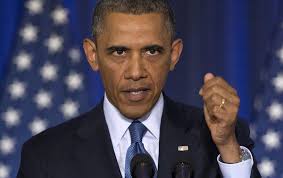
WASHINGTON, Jan 27: In his State of the Union Address on Tuesday, US President Barack Obama is expected to spell out his national security priorities, in particular those on Afghanistan, officials said on the eve of his annual speech to the Congress.
“We expect the President to address Afghanistan, among other national security priorities,” a White House official told reporters, as final shape were being given to Obama’s annual State of the Union Address.
In his speech, Obama is expected to indicate the broader contours of his new national security strategy, identifying foreign policy priorities for the remainder of his time in office.
Meanwhile the White House Press Secretary, Jay Carney, said the 2014 is going to be the “year of action” for the US President and this would be reflected in his speech.
“What we saw last year in 2013 was a Washington that did not deliver for the American people.
And the President sees this as a year of action, to work with Congress where he can and to bypass Congress where necessary to lift folks who want to come up into the middle class,” Carney told the ABC news in an interview.
A top Obama advisor Dan Pfeiffer, yesterday said three words would sum up the President’s message on Tuesday night: opportunity, action, and optimism.
“The core idea is as American as they come: If you work hard and play by the rules, you should have the opportunity to succeed.
Your ability to get ahead should be based on your hard work and ambition and who you want to be, not just the raw circumstance of who you are when you’re born,” he said.
“On Tuesday night, the President will lay out a set of real, concrete, practical proposals to grow the economy, strengthen the middle class, and empower all who hope to join it,” Pfeiffer said.
In this year of action, he said, the President will seek out as many opportunities as possible to work with Congress in a bipartisan way.
“But when American jobs and livelihoods depend on getting something done, he will not wait for Congress,” he said.
In his interview to ABC, Carney said Obama is very disappointed that the Senate failed to heed the will of the vast majority of the American people when it came to expanding background checks.
“On immigration reform, we’re actually optimistic that 2014 will be the year that Congress delivers to the president’s desk a bipartisan, comprehensive immigration reform bill that meets the principles he laid out and that he can sign into law,” he said. (AGENCIES)
Honouring civilians
Sir,
This has reference to the news item ‘In a first, Ladakh civilians get bravery award from Army’ DE, Jan 24.
It is a laudable step that Army has honoured three civilian from Ladakh region for their exemplary courage and devotion to duty. The move will certainly strengthen military civilian bond in the region. The cooperation between the two segments is in the national interest. Besides, honouring civilians will inspire others as well in this task.
Army has been extending all possible help to civilian when they are in great trouble either due to natural or manmade calamities. It is the duty of the civilians to reciprocate whenever need arises.
The three civilians have put before others an excellent example of courage and bravery.
This example needs to be emulated whenever any such occasion arises.
Salute to Indian Army and the brave sons-of-the soil.
Yours etc…
Kamlesh Jamwal
Kalu Chack,
Jammu
Girl Child Day
Sir,
This has reference has to the National Girl Child Day that was observed recently throughout the length and breadth of the country.
Even after sustained efforts made by the NGOs, social and women’s organisations and incentives extended by the State and Central Governments nothing has changed for the girl child.
She is still discriminated by the society. The skewed sex ratio in most of the states including Jammu and Kashmir bear testimony to the fact that much more needs to be done to give the child her due position in the society.
Time has proved it that the girl child does not lag behind the male child in any field – education, science, agriculture etc. She shoulders her responsibility with more responsibility, sincerity and with efficiency. She contributes to the nation building process equally as does the male child.
It is the time that we change our outlook towards her. She should be accorded a dignified and equal place in the society.
The equality will not create any imbalance in the society as is predicted by social scientists in case situation does not improve right now.
Yours etc…
Sunanda Sharma, Rehari, Jammu
Route to pro-poor prosperity
Dr Bharat Jhunjhunwala
The Aam Aadmi is so dissatisfied with the present political arrangements that he was inclined to support a dharna by Delhi CM Arvind Kejriwal which was clearly against the law. Section 144 had been promulgated in the area. Yet about 70 percent of the Delhi people supported Kejriwal’s protest. The Aam Aadmi feels that it is not possible to reform the system from within. He is willing to take the law into his own hands. This dissatisfaction arises from the fact that inequality in the country has increased stupendously. On the one hand a handful of the elite-specially ministers and government servants-are minting money. Walk into any village in the country and most likely the best house will belong to a government servant. The Aam Aadmi feels cheated. He has elected the politicians; and government servants were expected to ‘serve’ the people but they have become an end unto themselves.
Roots of this exasperation lie in the economic model we have followed since Independence. The economic policies have been basically anti-people. I give a few recent examples. FDI in retail is being encouraged. That will lead to loss of livelihood to millions of street corner shops. The MNCs may truly provide cheaper and better quality goods than what is available in the market at present. But the shop owner would not have the money to buy them. Of what use are the cakes and pastries displayed in the shop if one does not have the money to buy them? Two, land of the poor and tribals is being mercilessly acquired for mining and other commercial activities. True, they often get good compensation in cash. But this money does not last long in absence of avenues for productive employment. Many oustees of Tehri Dam are today living like paupers. The sense of security and belonging they had doing agriculture in their self-owned fields has gone.
There is a consensus that we must remove multiple rates and types of taxes and introduce one Goods and Services Tax. It is forgotten though that the reduction of tax on machine made cloth has led to the decline of handloom and millions of weavers have lost their livelihood. The consumer has indeed got cheap cloth but the weaver has been reduced to a pauper. Four, huge costs are being imposed on the Aam Aadmi by subjecting him to environmental disaster. People living near thermal power plants are being subjected to radiations so that air-conditioners in Delhi can be provided with electricity. Industries are discharging pollutants into our rivers with impunity. The fishes are dying and fishermen are losing their livelihood. But scrutiny of these harmful policies is not undertaken because these are beneficial for the elite.
At the same time the politicians have to manage their way through democracy. They need to collect votes from the same Aam Aadmi whom they have deprived of his livelihood. This objective is secured by implementing pro-poor relief programs such as MNREGA, Right to Food and loan waiver for farmers. Ministers and government servants take the butter and distribute buttermilk to the poor. This is flaunted as the Government being pro-poor.
The economic theory underlying this model was that of ‘trickle down.’ It was assumed that a part of the increase in income and wealth of the rich will trickle down to the poor. Such indeed takes place. But a trickle is only a trickle. It is like the elite capturing the village pond for its swimming and handing a bucket of water to the Aam Aadmi for his bath and cooking. We must appreciate that there has been a huge expansion of the middle class-courtesy ‘trickle down.’ Poverty has virtually been eliminated from the country. But inequality has risen and that is irking the Aam Aadmi.
The rise in inequality was fine in the short run. The impact of economic policies was hazy. People were happy with the relief programs. But the tables have turned in the long run. The ill effects of the anti-poor economic policies have become manifest and people have become disenchanted with the present system. They see that corruption is spreading all around; and that the rich are getting richer and ministers and government officials are pursuing their self interest without restraint. This explains the support to AAP despite the Government implementing these path breaking relief programs.
The present policy is bad in principle. One cannot provide genuine relief to the poor by depriving them of their livelihoods. The pro-growth economic policies such as those of industrialization have delivered. India is today recognized as an emerging economic super power. But that is no solace to the weaver who loses his livelihood.
The task before us is to take the best of the two approaches. The pro-growth economic policy has to be combined with not only protecting but also supporting the livelihood of the Aam Aadmi. Vinoba Bhave had once said that the touchstone of an economic policy should be how it affects the poorest person. The Government has essentially delivered this by providing cheap grains and 100 days employment under MNREGA. The body of the poor people has been taken care of but his soul is unhappy. He has lost the pleasure of life and living off doles panned out by the Government.
The increase in inequality that we see is not a contribution of the Government. Inequality has historically increased with economic development. The agricultural society was more unequal than the tribal food gatherers. The British Empire was more unequal than the Roman Empire. Globalization will lead to further increase in inequality in keeping with this trend. One person like Bill Gates is making money from selling Windows software across the world. On the other hand there is a global race to bottom in wages earned by the unskilled worker. Globalization had enabled MNCs to move to countries where the wages are at a global minimum. Hence we find industries migrating from China to Vietnam nowadays. Inequality is increasing and will continue to increase. The problem is becoming worse because of corruption. The Government is trying to find solution to this by implementing poverty alleviation programs. This will not work because it alleviates only extreme forms of poverty. Moreover, rampant corruption in the welfare bureaucracy leads to more dissatisfaction even if it helps reduce poverty.
I do not know of a economic solution to the problem. Perhaps the solution will lie in the field of culture. The rich may be persuaded to live simple lifestyles; and there has to be greater accountability of the politicians and government servants as being demanded by AAP. Then the huge amount of money owned by the rich will not irk the people.
Nutritents deficiency in Apple trees
Prof. (Dr) R.D. Gupta
Apple being one of the most important temperate fruit, is mostly grown in Jammu and Kashmir, Himachal Pradesh and Uttrakhand, and to some extent in north eastern hill states like Arunachal Pradesh, Sikkim, Nagaland etc. like food grain crops, apple and other fruit trees also require all the essential plant nutrients, which consist both of macro-N, P, K, Ca, Mg, S and micro-Fe, Cu, Mn, Zn, B, Mo and Cl. The amount of these plant nutrients are taken from the soils by this fruit tree like others which varies according to its variety nature of the soil and its slope vis-à-vis water management practices etc.
Nitrogen (N): It is one of the major mineral plant nutrients which tackles the growth and yield of the fruit trees and, thus, imparts a good response to this nutrient. Its deficiency symptoms appear in older leaves, which usually show nitrogen content less than 1.89%. The affected leaves get reduced in size with yellowish colour at the base of leaf during early stages of growth two the sprays of 1% urea during active growing season at 7 days interval on the appearance of visual deficiency have been found effective in controlling the aforesaid symptoms. Spray should be done during early morning hours or evening.
Phosphorus (P): Phosphorus is generally obtained from soils in the early stages when the trees have formed intensive root system. Acute deficiency of P in the apple tree results in slender shoot growth with upright leaf petioles. The leaves are smaller than normal and remain dark green with reddish or purplish tinting of the midrib and larger veins. The interveinal areas of leaves become bronzed in appearance. Apple trees growing on low available P soils are of low vigour with stunted growth and production of inferior quality fruit. The deficient leaves become violet to purple in colour and the deficiency occurs mostly in older leaves. The emergence of bud gets delayed and deficiency usually appears in those apple trees which have P in the range of 0.10 to 0.13% in their leaves. Apply 150g of P per tree in the form of DAP (330g) for a tree having more than 10 years of age.
Potassium (K): Potassium improves the quality of apple especially colour and plants can withstand water stress especially in soils of Karewas of Kashmir where already prevails water scarcity. Besides playing significant role in regulating transpiration and water-conditions in the plant cell, it also acts as an activator for a number of enzyme systems.
Apple leaves generally show chlorotic mottling between veins and marginal scorching of older leaves. Its deficiency has been observed in those soils whence four or five crops had been harvested. A slight chlorosis sometimes preceded the actual scorching. There is collapse of well grown trees. Such trees appeared normal in early summer but started showing severe scorching within week’s time and get died the same season. The deficient plants contained 1.00 to 1.49% K in their leaves. Addition of 670 g MOP per tree should be applied along with DAP.
Calcium (Ca): As the mobility of Ca is low, so its deficiency can be seen in younger leaves. The trees revealing deficiency have Ca in their leaves to less than 1.2 %. In Ca deficient plants the terminal ends become dark brown which later on turn into dark black and finally necrotic. Its deficiency can be removed by applying CAN instead of urea @ 1 Kg tree. It should be added 60-100 cm away from the trunk in the basin and thoroughly mixed in the soil.
Magnesium (Mg): Since Mg is essential for chlorophyll formation, hence its deficiency is revealed by localized destruction of this pigment and usually there is “V shaped” interveindous discoloration of older leaves. Deficiency occurs in trees having less than 0.25 % Mg in their leaf samples. Application of magnesium sulphate @ 1-2 Kg per tree about 2-3 weeks before flowering checks its deficiency.
Sulpher (S): It is a constituent of protein in the form of S-bearing amino acids like cystine and methionine. Common deficiency symptoms are burning of young leaves to a pale green colour. The leaves showing S-deficiency have less than 0.1% S in dry matter. Application of gypsum @ 1-2 Kg per tree can check its deficiency.
Zinc (Zn): As Zn is not readily translocated from the old to new leaves hence its deficiency symptoms appear in new leaves. Shortening of the stem into nodes and restriction of leaf size, and rosette appearance of leaves are the other symptoms of Zn deficiency in apple trees. Zinc is necessary for the synthesis oftryptophan, a precursor of indole acetic acid which acts as growth hormone. Application of 20-25 Kg Zn SO4 per ha to soil would be enough to correct Zn deficiency. However, if deficiency symptoms in apple appear at later stage than spray 1% solution of Zn SO4 (1% Zn SO4) to 0.75 Kg hydrated lime. This spray should be done when apple trees have enough foliage. Usually leaves having less than 10 ppm Zn are considered deficient in this nutrient.
Boron (B): Deficiency of B is noticed in those apple orchards where its content lies between 30 and 34 ppm in their leaves. Visible symptoms of B deficiency are death of shoot tips. Leaves become thick textured sometimes there is curling and get turn into quite brittle. Generally flowers do not form and root growth is stunted. There is disintegration of the internal tissues which results in abnormalities such as internal cork formation in apple fruits. Soil application of borax @ 75-150 g per tree per year has been found effective in controlling the deficiency. It should be applied at the time of dormancy (End of December or mid of January).
Future Strategies
Although the author has not been able to observe Fe and Mn deficient apple plants in the Kashmir valley during the survey conducted by him in the years 2010 and 2011 yet there are reports from Uttrakhand and Himachal Pradesh with regard to their deficiency. Hence more studies are required to be carried out in this aspect.
The apple orchardists are required to apply fertilizers on the basis of soil test. For this purpose, they should have contact with the scientists of Soil Testing Laboratories which are under the Department of Agriculture where the soil testing is done free of cost.
To have complete picture of mineral nutrients of apple orchards detailed studies of leaf samples analysis is also required to be done.
Whichever organic manure is available with the orchardists, it must be applied during the month of December or January. It will take care of macro as well as micronutrients deficiency to some extent and also help in stabilizing the pH of the soils.
While adding organic manures, the orchardists must ensure that their manure is well decomposed one. Well decomposed nature of the organic manure can be judged when it is dark brown or black in colour and amorphous in character.
Happy Gupta Productions holds audition
Excelsior Sports Correspondent
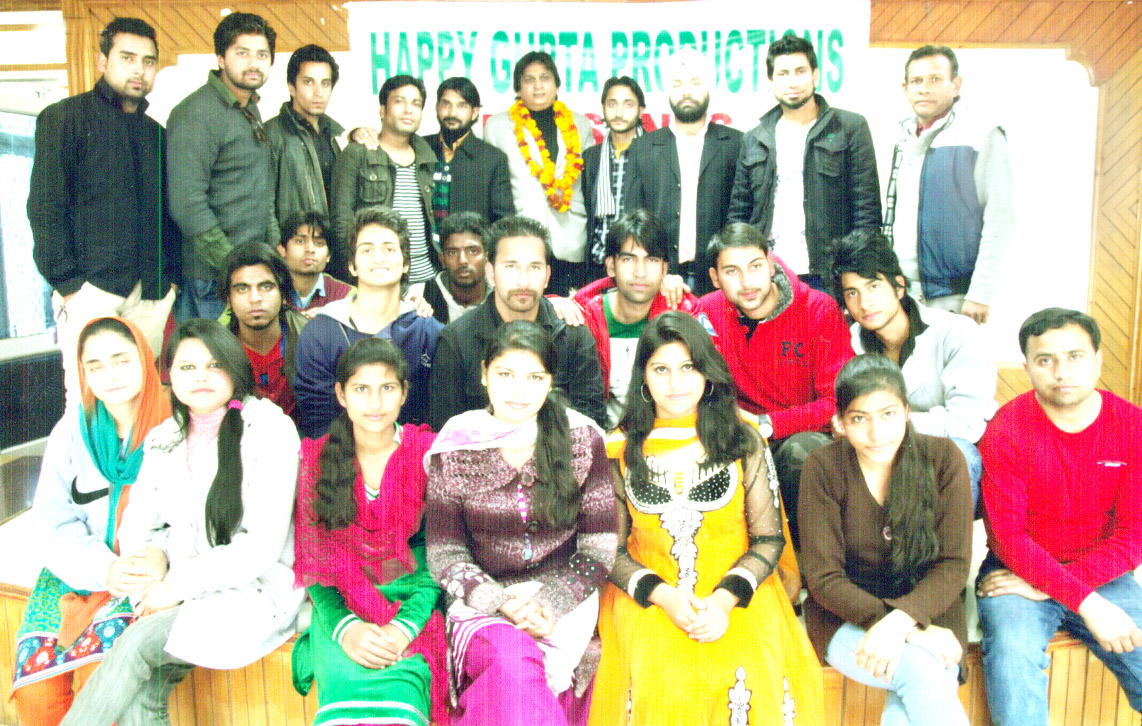
JAMMU, Jan 27: To select the artists for a Punjabi film ‘Parshawan’ Happy Gupta Productions held an audition of talented artists at KL Sehgal Hall, here today.
Over 300 artists from Jammu and outskirts participated in the audition and it was observed that more participants were from outside.
MP Gupta, State President National Media Foundation wass the chief guest on the occasion, while Happy Gupta, Mushtaq Ali and Angad Sodhi were the adjudicators.
The second audition will be held at Luthra Public School, Kachi Chawni from 2 pm to 6 pm tomorrow, while the third audition will be held at 12C Ext. Valmiki Chowk, Gandhi Nagar, Jammu from 12 pm to 5 pm tomorrow.
It is pertinent to mention here that the Director of the film is Rishi Sharma from Bollywood Industry Mumbai.
Chinese man sentenced death for killing doctor
BEIJING, Jan 27: A Chinese man, who fatally stabbed a doctor over what he considered a botched nose operation, was today sentenced to death by a court in eastern China.
Lian Enqing, 33, killed an ear, nose and throat specialist and injured two others because he was angry over the failure of the nasal surgery done by them, the Intermediate People’s Court in Taizhou City said.
At an earlier hearing, Lian’s sister said that he suffered respiratory problems after the surgery in March 2013.
While the hospital confirmed that the surgery was successful, Lian felt he was being cheated by the doctors.
According to his sister, from August to October 15 last year, Lian was under treatment at Shanghai Mental Health Centre, diagnosed with persistent delusional disorder.
The court believed that Lian was conscious of his crime and had the capacity for criminal responsibility, state-run Xinhua news agency reported.
The case puts a spotlight on overburdened medical sector. (AGENCIES)
Thai police rules out murder in Karl Slym’s death
BANGKOK, Jan 27: Thai police today ruled out murder as the cause of the death of Tata Motors’ Managing Director Karl Slym who fell from the 22nd floor of a five-star hotel here.
“We can rule out murder in this case,” a police official said, adding that they were probing the case.
Slym, 51, died yesterday after he fell from the 22nd floor of the riverside Shangri-La hotel in Yannawa district.
A British national, Slym was here to attend a board meeting of the Thailand arm of the company and was to have checked out of the hotel yesterday.
Tata Motor officials here did not comment on the incident.
Slym was leading the company at a time when the auto industry was grappling with prolonged slowdown.
He joined the auto major in 2012 as part of a major management overhaul and was responsible for charting the company’s strategy to regain momentum in the Indian market.
Before joining Tata Motors, Slym was the executive vice president, SGMW Motors, China (a General Motors Joint Venture). Prior to that, he was president, managing director and board member of General Motors in India during 2007-11.
For over two decades, Slym was with Toyota and General Motors in various positions across geographies. (AGENCIES)
Ukraine eyes state of emergency as ministry seized
KIEV, Jan 27: Ukraine threatened to impose a state of emergency today after demonstrators occupied the justice ministry and protests demanding the president’s resignation spread despite a power-sharing offer.
Opposition leaders said an olive branch proposal from President Viktor Yanukovych was not enough to end the ex-Soviet country’s worst crisis since independence and demanded snap elections this year.
The protests began more than two months ago over Yanukovych’s rejection of a pact with the European Union under Russian pressure. But they have now turned into an all-out bid to oust him from power.
Protesters have already attempted to blockade 14 of the 25 regional administrations, including in southern and eastern parts of the nation of 46 million that predominantly speak Russian and share an historical allegiance to Moscow.
Tensions remained high in Kiev as several dozen radical protesters from a group named Spilna Sprava (The Right Deed) seized control of the justice ministry yesterday, smashing windows and erecting barricades outside.
Justice Minister Olena Lukash, who is taking part in negotiations between the opposition and Yanukovych, said she would ask for the talks to be broken off if the building was not freed.
“I will be forced to ask the president of Ukraine to stop the talks if the building is not freed immediately and negotiators are not given a chance to find a peaceful solution to the conflict,” Lukash told Ukraine’s Inter channel.
If the protesters do not vacate the building, Lukash said she would also approach Ukraine’s national security council with “a demand to discuss imposing a state of emergency in this country.”
Europe has urged dialogue between the two sides — a call echoed by Pope Francis, who voiced hope in his weekly Angelus prayer that “the search for common good may prevail in the hearts of all”.
Under unprecedented pressure, Yanukovych on Saturday offered the opposition posts in government including that of prime minister, but his opponents said the offer fell short of their needs.
Yanukovych proposed sharing leadership with Fatherland party chief Arseniy Yatsenyuk as prime minister and UDAR (Punch) chief and former boxing champion Vitali Klitschko as deputy prime minister. (AGENCIES)