

Nawang Tsering Shakspo
sntsering52@gmail.com
Politics in Ladakh, right from the country’s independence in 1947, has been awfully flawed. The region remained cut off from the rest of the country till 1962-63. Interestingly, an Indian Air Force DC-3 Dakota aircraft, piloted by Air Commodore Mehar Singh, landed on the airstrip built in a great rush in Leh on May 24,1948. That was done to secure Ladakh from the Pakistani ‘Kabaile’ invaders as well as to reinforce the presence of the Indian army. With that historical event, Ladakhi leaders, under the stewardship of Kushok Bakula Rinpoche, visited Srinagar and New Delhi to apprise the authorities of the step-motherly treatment from the State Government, and to request for an early redressal of the people’s grievances under the new democratic setup.
Acknowledging the request of the delegation, Pandit Jawaharlal Nehru, the then Prime Minister of India and Sheikh Mohammed Abdullah, paid an official visit to Leh on July 4, 1949, and in the absence of any road connectivity in the region, the visiting dignitaries toured the central part of India riding horses. Addressing the people, Nehru promised to grant a fair treatment to the region regarding development and, in consultation with the local public, chose Kushok Bakula Rinpoche as the leader of Ladakhi people to represent Ladakh in the State Legislative Assembly. Nehru instructed Sheikh Sahib to work zealously with Bakula for the wellbeing of Ladakhis.
Unfortunately, the Kashmir Government paid very little attention to Ladakh, particularly in regard to the distribution of development funds coming from the Centre and treated Ladakh as their colony. They passed certain laws in the State Assembly which went against the very wishes of Ladakhis, particularly land abolition Act. Similarly, a post of a minister to a Ladakhi was due in the Sheikh Cabinet. Additionally, to elect a Member of Parliament, (Lok Sabha), which was due for Ladakh, was also kept clubbed with the Ganderbal Constituency. Under such circumstances, there existed no chance for a Ladakhi to be a Member of Parliament and to find a forum to air their grievances.
Despite all these unusual complications within Ladakh, the ancient trade route with Xinjian continued, and the same remained a major source of people’s income almost till 1960. It was only when the Sino-Indian war broke in 1962, and since then Ladakh lost its unique position as a Central Asian trading post though the trade was moving in an informal and unregulated way, laden on horses and camel caravans. On the other hand, the Kashmir Government was reluctant to pay any attention to the plight of Ladakhis. Kushok Bakula, now a legislator from Ladakh, lost his patience and publicly protested against what he called Srinagar-dominated administration, saying, “nostalgic longing in Ladakh for a union with their spiritual home, Tibet”.
As the Kushok’s relations with Sheikh Abdullah and Kashmir Government remained strained, it came to the track only after the assumption of Bakshi Ghulam Mohammad as the Prime Minister of the state, after deposition and arrest of Sheik Abdullah in 1953. As wished by Nehru, Bakshi appointed Kushok Bakula as a minister in his Cabinet in 1953 and he remained as a minister in the State Government till his unopposed election to the Lok Sabha in 1967.
With the exit of Kushok Bakula from the State politics, the Kashmiri leaders repeated the old policy of not having any Ladakhi legislator in the State government. For that purpose, they created two factions in the only ruling party of the time in the State called the Congress, dubbing them as Congress A and congress B. Ladakhis soon understood the ruling party’s ‘divide-and-rule’ policy. Responding to such tactics, the people of Ladakh came on a single platform and launched an agitation against the Kashmir Government, and the demands of the agitators included a ministerial berth and teaching of Ladakhi language in schools. This agitation resulted in the creation of 32 posts of Ladakhi language teachers and some posts of Arabic teachers. Two Ministerial berths were granted to the legislators, one hailing from Leh and the other from Kargil. In addition, an enquiry commission came into being to find out the lapses regarding the fund allotment to the region and other development-related issues. Soon, the commission came to be known as Gajendragadkar Commission and with the passage of time the recommendation of the commission came out into the open and the same emerged as one of the first political victories for Ladakhis.
In 1973, Balraj Madhok, a former President of the Jan Sangh, through a press statement, said “Ladakh should be separated from the state of Jammu and Kashmir and be made a Union Territory in the interest of national security and wider interest of the nation.” Seeing good reason and weight in the statement of Balraj Madhok, and with the blessings of Kushok Bakula a demand was made through a press conference for separate Ladakh from Kashmir and grant Union Territory status to the region. The demand got high coverage in the Indian press and with that demonstrations were held in Leh including a stone-pelting incident on the motorcade of the Chief Minister Syed Mir Qasim who had come to Leh to sort out the grievances of Ladakh. In the incident, the district magistrate was injured at village Nimo, 36 km away from Leh city and Thupstan Chewang, nephew of Kushok Bakula, was apprehended as the prime suspect. In this way, the situation took a dramatic turn in the sense that certain Ladakhi leaders who had got positions in the government under the Buddhists’ agitation, turned their loyalties to the Kashmir government and opposed the demand of UT, and raised the voice that a separation of Ladakh from the State would harm the cause of national integration. The then leaders, however, supported the demand of granting Schedule Tribe status to Ladakhis.
This dramatic event occurred around the time when the historic talk between Indira Gandhi and Sheikh Abdullah was to be transpired and as an outcome of the talk, the Sheikh proposed to create three regional autonomous councils, one each for Jammu, Kashmir and Ladakh. This announcement made even in a public meeting held in Leh market Leh but in reality, no change had followed his taking over as the Chief minister of the State, and the apathy towards Ladakh continued. However, veteran Ladakhi engineer Sonam Norboo was given a berth as Works Minister. Around that time, Kushok Bakula who was at the same time had been appointed as a Member, Minorities Commission, by Morarji Desai. But the Sheikh Government did not extend protocol to the members while on a visit to the state capitals. Besides that, regarding the Schedule Tribe status for Ladakhis, the Sheikh’s Government declined to grant written permission to the Government of India under the pretext of article 370. With that, the tussal between the Sheikh and Bakula deepened.
On the other hand, taking the issue of ST, a massive protest was held in Leh in the month of August 1989. At that time, I was in Tokyo, Japan, attending the biannual meeting of International Association for Tibetan Studies (IATS), and in the morning of August 29, 1989, the Japan Times published the news regarding a firing incident in Leh in which three Buddhist protesters were killed. After this unprecedented incident of killings, Kushok Bakula in his capacity as the member of the Minorities Commission, despatched a strong letter to Rajiv Gandhi, the then Prime minister, stating that,” As my sincere efforts in safeguarding the interests of the microscopic Buddhist minority of the Jammu and Kashmir State are not bearing the desired fruits, it is becoming extremely difficult for me to justify my association with the Minorities Commission”. Interestingly, that letter was written by Kushok Bakula on my persuasion and the same clicked, and within 15 days of receiving the letter by the PM office, the Central Government issued notification to the grant Schedule Tribe status to certain sections of Ladakhi people.
Even after that, Ladakhis kept mounting pressure upon the Government of India for the grant of UT status to Ladakh. On the other hand, from the year 1990 to 1996, the J&K State remained reeling under President’s rule. Hence, the Central government seeing an appropriate time to grant justice to the Ladakh region, the President of India, through a notification, formed the Ladakh Autonomous Hill Development Council, Leh and Kargil. Eventually, this action of the Government of India proved as the first step towards grant of UT status to Ladakh.
Meanwhile, in the Kashmir Valley, due to political disturbances, things took an ugly shape, and then began, in 1990, the migration of Kashmiri Pandits from the Valley in large numbers. Later, on seeing the root-cause of Kashmir problem and the unrest in the valley, the Government, in the year 2008, appointed a study group called ‘interlocutor’, and the study report of the three members team of interlocutors soon came to be known. Besides others issues, the interlocutors recommended that, “Ladakh would no longer be part of Kashmir division, as is the case presently”. And that meant that the three-member interlocutors recommended that Ladakh be made a separate division carving out of the Kashmir Division. On that issue, I personally shared some feelings in the press by demanding the change of nomenclature of Jammu and Kashmir State to Jammu, Kashmir and Ladakh State. Besides that, my well-researched article demanding Divisional Status for Ladakh, was published in all the major dailies of the State, such as Greater Kashmir, Greater Jammu, Daily Excelsior, Kargil Number, Epilogue and other national papers like The Tribune.
With that event taking a significant political as well as administrative decision, Satyapal Malik, the then Governor of Jammu and Kashmir granted the Divisional Status to the Ladakh region, separating it from Kashmir Division on February 8th, 2019, and next within a six-month period, another significant decision of the Central Government came to surface, granting Union Territory status to Ladakh on the 5th of October 2019 and with that section 370 of the Indian Constitution, which granted special power to the then Kashmir Government to prevent the Central Government from imposing any law passed by Parliament was scraped. Additionally, the National Commission of Schedule Tribe and the then Tribal Minister of India also had favoured the extension of the 6th Schedule of the Constitution to Ladakh. Besides that, the Parliamentary Panel also has asked the home ministry to consider the grant of 5th and 6th Schedule Status to Ladakh. Not only that, the grant of the 6th Schedule to Ladakh also surfaced in the election manifestos of the BJP, but, unfortunately, the Government of India led by the BJP declined to honour their promises made at the time of election. Instead, the Government granted additional five districts to the region in one stroke, in addition to the existing two districts of Ladakh, Leh and Kargil.
Prior to Ladakh becoming a Union Territory, headed by a Lieutenant-Governor, the Administration of two districts was managed by the two District Magistrate-cum Development Commissioners, stationed one each at Leh and Kargil. Now, under the U.T. regime, to manage the same administration, there are dozens of IAS and IPS cadre officers and a number of other officers of similar positions. Maybe, a good number of high-profile administrators are required in the changed Administrative setup of the two districts to carry out welfare schemes of the Ladakhis. Besides, Ladakh has two Hill Councils with about sixty Councillors. Out of the sixty, ten are Executive Councillors with the status of a Deputy Minister, and the Council Chairman and the Deputy Chairman have Cabinet status, but without any executive power. On the other hand, a perception prevails among the locals that with the region becoming a UT, the job opportunities for the locals have greatly shrunk.
In recent times, the Leh Apex body and the Kargil Democratic Alliance (KDA) spearheaded an agitation, voicing four major demands including the 6th Schedule status and Statehood for Ladakh. Several rounds of talks have already been held with the Central Authorities but without any yield. As a result, this situation of crisis has brought more frustration and anger among the people of Ladakh. In my view, an immediate solution is required from the government to pave the way for the grant of statehood by extending the provisions of 6th Schedule of the Constitution, or the Pondicherry type of UT with legislative power by extending the 6th Schedule status so that Ladakh, once a peaceful region known all over the world, regains its old glory.
Since Ladakh is the crown of Mother India, bordering two hostile countries, China and Pakistan, only a happy Ladakh will be in the best interest of the country. The Central government’s dilly-dallying tactics over the Ladakhis’ genuine demands should not and can’t be brushed aside.
A revisit to Ladakh’s flawed politics
Strong demand of vehicles pushes J&K auto retail sale up in April 2026: FADA
Excelsior Correspondent
JAMMU, May 5: The strong demand of vehicles pushed J&K auto retail sale up in April 2026.
This was disclosed by Sanjay Aggarwal, Chairperson, Federation of Automobile Dealers Associations (FADA), here today.
In a press statement issued, Aggarwal said that in J&K for April 2026, the 2-Wheeler category witnessed a growth of 20.85% at 10,704 units in April 2026, as compared to 8,857 units in April 2025.
The 3 Wheeler category witnessed a growth of 52.38% at 1,472 units in April 2026, as compared to 966 units in April 2025.
The Commercial Wheeler category witnessed a growth of 5.89% at 1,240 units in April 2026, as compared to 1,171 units in April 2025. The Construction Equipment category witnessed a downfall of -12.28% at 50 units in April 2026, as compared to 57 units in April 2025.
The Passenger Vehicle category witnessed a Growth of 20.52% at 6,085 units in April 2026, as compared to 5,049 units in April 2025.
The Tractor Vehicle category witnessed a growth of 21.04 % at 420 units in April 2026, as compared to 347 units in April 2025.
In J&K total retail is 19,971 in April 2026 as compared to 16,447 in April 2025 thereby registering a growth of 21.43 % YoY.
Aggarwal said that reflecting on April 2026 Auto Retail performance in J&K, “April 2026 achieved a growth of 21.43 % YoY.
He said that April 2026 has been a strong month for auto retail in Jammu & Kashmir, with the industry registering a healthy 21.43% year-on-year growth. This broad-based growth across segments, especially in two-wheelers, passenger vehicles and tractors, reflects improving consumer confidence and resilient demand across both urban and rural markets.
Aggarwal said that the strong 20%+ growth in both passenger vehicles and two-wheelers underscores sustained retail momentum, supported by better inventory availability and evolving consumer preferences. Dealers across Jammu & Kashmir are witnessing improved footfalls and conversion rates.
Contractors won’t participate in Flood Control works: CAJP
Excelsior Correspondent
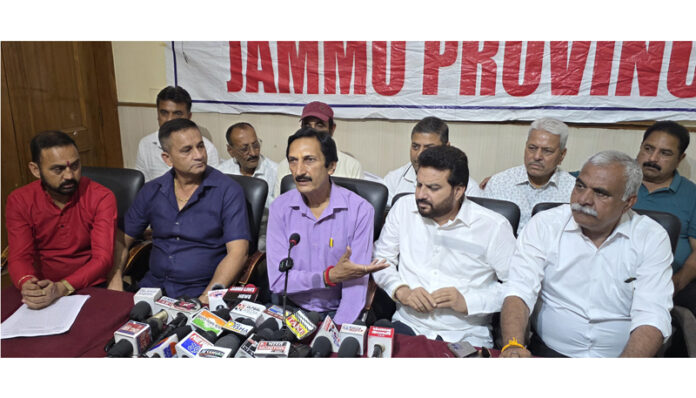
JAMMU, May 5: Contractors Association Jammu Province (CAJP) has said that contractors could not participate in the tender process initiated by the Flood Control Department (Jal Shakti) under SASCI component due to unfair conditions imposed by the authorities.
Addressing a press conference here today members of the Association said that contractors’ fraternity is unhappy with the behavior of the officials of the Hydraulic Wing of the Jal Shakti Department. They said Flood Control department, invited tenders for the works under SASCI component, whose funds will be available up to August 2026 only, and after that no contractor will claim his dues as per the conditions of the NIT. They said the position of AAA and TS is currently under process.
General secretary of the Association, Vinod Kohli pointed out that the funds are approved under SASCI but not released to the department so far. They said the rules of Geology & Mining Department clearly state that no mining activity is allowed from July Ist to September 30. Since these works are of protection nature and need material from the rivers and Nallahs, under no circumstances these works could be executed up to June 30 and moreover, as per conditions, no funds will be released after August 31.
In view of these very unfair and unjustified conditions, the Association has taken a decision not to participate in the tender process as they will be in massive financial loss. Any contractor participating in the work will be at high risk and the Association will not be responsible, Kohli added.
Referring to the incident of Bantalab near Jammu where three labourers were killed at a bridge site, Association appealed to the Govt to release some amount to their kith and kin from the funds contributed as labour cess by the contractors as poor and hapless contractor can not afford to pay from his own pocket. He said the contractors are still waiting for the release of their payments worth over Rs 1200 crores of JJM works from the last two years and also pending liability of 2017 to 2019, but the Govt is still unmoved.
Why urban reforms in J&K can no longer wait
Dr Priyank Goswami
priyank.policy@gmail.com
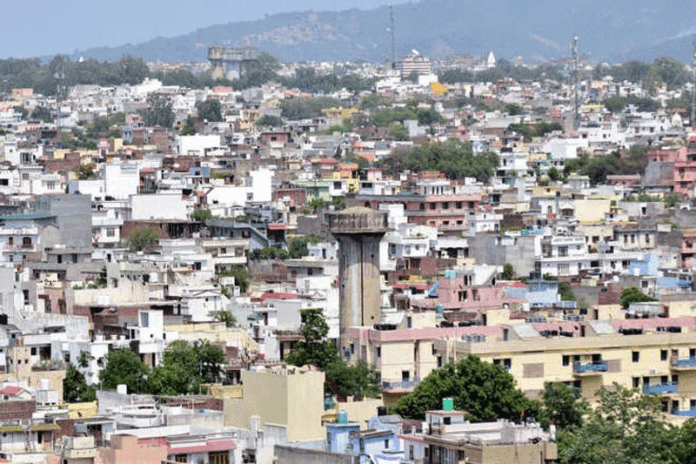
A new NITI Aayog framework on urban governance arrives as Jammu and Srinagar repeat the same mistakes they have been making for over a century.
When British engineers built embankments along the Jhelum in the nineteenth century to protect Srinagar’s expanding city centre, Sir Walter Lawrence, the Settlement Commissioner, voiced his disquiet. Restricting the river’s natural width, he warned, would one day exact a price. In September 2014, the Jhelum proved him right, submerging Srinagar in its worst floods in living memory. In August 2025, the Tawi delivered the same lesson in Jammu: the Riverfront Development Project had reclaimed some 23 hectares of riverbed, narrowing the channel through the city, and the river took back what had been taken-different rivers, different centuries, the same failure.
Against this backdrop, the NITI Aayog report “Moving Towards Effective City Government: A Framework for Million-Plus Cities,” released on 25 April 2026 by Union Minister Manohar Lal Khattar, should be read in J&K. Its central argument is not new: India’s cities are governed by a confusing array of agencies with no single authority accountable to citizens for the whole of urban life. What is striking is that this diagnosis fits Jammu and Srinagar with a precision born of a very particular history.
Srinagar received its municipality in 1886 under Dogra rule. Jammu followed under the same First Municipal Act. Over the past century, both bodies have been superseded, suspended, and starved more often than empowered. The Jammu Municipal Corporation’s own records show that elections have been held just five times since Independence: 1956, 1972, 1980, 2005, and 2018. The government dissolved the elected council in 1960, 1975, and 1983. In J&K, the denial of urban self-governance was not an accident. It was the default, reinforced by political centralisation and, in Srinagar, by the security logic of the insurgency years, which suspended ordinary civic life for a generation.
The 74th Constitutional Amendment of 1992 mandated the devolution of powers to urban local bodies. Before August 2019, its mandatory provisions did not apply to J&K under Article 370. Since reorganisation as a Union Territory, real steps have been taken: roads, schools, and health sub-centres have been transferred to the two Municipal Corporations; a high-level devolution committee was constituted in February 2025. But the NITI Aayog report calls for something more demanding: structural change in who governs the city and who answers for the consequences.
Nowhere is the cost of that unanswered question more evident than at Dal Lake. A CAG report from April 2026 found that its open water area fell from 15.40 to 12.91 square kilometres between 2007 and 2020, a contraction of over ten per cent in thirteen years, despite Rs 45 crore invested in sewage treatment plants. The plants were built; the sewer networks connecting households and houseboats to them were not. The Lakes Conservation and Management Authority regulates land use but cannot coordinate with the Municipal Corporation on solid waste. Multiple agencies partially implement orders from the National Green Tribunal. The result: a lake studied, audited, litigated, and funded for four decades, still shrinking. No one is in charge.
Jammu presents the same picture across different geographies. The Jammu Development Authority prepares the Master Plan; the Municipal Corporation is responsible for enforcing it; the Irrigation and Flood Control Department manages the river; and Jammu Smart City Limited executes flagship projects. When the Tawi flooded in August 2025, encroachments on nallah protection walls were found to have reduced drainage capacity. That these structures existed at all, in plain violation of the Master Plan’s no-construction buffer, is not a story of individual lawbreaking. It is a story of a city with no government capable of consistently applying its own rules.
The Smart City Mission delivered tangible infrastructure in both cities through Special Purpose Vehicles outside the municipal corporations. But the SPVs reported to their boards, not to elected ward councillors. When the mission reached financial closure in March 2025 and the SPVs wound down, the maintenance question reverted to the same under-resourced corporations that had been bypassed to build the infrastructure in the first place. The government chose to invest in the city while continuing to withhold the means of governing it.
The NITI Aayog report’s prescriptions directly address this dysfunction. Directly elected mayors with fixed tenures and genuine executive authority would create a political centre of gravity that J&K’s cities have never had. Today, the mayor of the Jammu Municipal Corporation is elected solely by ward councillors, making the office inherently weak. Integrating development authorities under city government oversight would end the impunity of agencies that plan cities they do not have to manage. Formula-based finance commission transfers would give municipal bodies something long denied: the ability to plan beyond a single financial year.
As a Union Territory under direct central administration, J&K does not face the political friction that prevents most states from acting on the 74th Amendment’s promise. The Ministry of Housing and Urban Affairs has a direct administrative relationship with J&K that no state government has. This is a rare opening that should not be wasted. Under the 2035 Master Plan, Srinagar’s metropolitan planning area now extends to 766 square kilometres, yet no metropolitan planning committee is operational. Jammu hosts one of India’s largest pilgrimage economies, yet its municipal corporation cannot reliably plan its own drainage. The February 2025 devolution committee must produce a time-bound, public action plan. Direct election of mayors with executive powers must be on the legislative agenda before the next municipal cycle.
Sir Walter Lawrence’s warning about the Jhelum went unheeded for a century. The NITI Aayog report makes a structurally identical argument: J&K’s governance problem, if left unaddressed, will continue to manifest as floods, shrinking lakes, encroached nallahs, and infrastructure no one maintains. J&K has been told this before. The question is whether those who govern these cities can finally answer for them.
(The author is a Senior Research Officer at the Indian Institute of Public Administration, New Delhi)
JU Business School organizes workshop on AI & Agentic Systems
Excelsior Correspondent
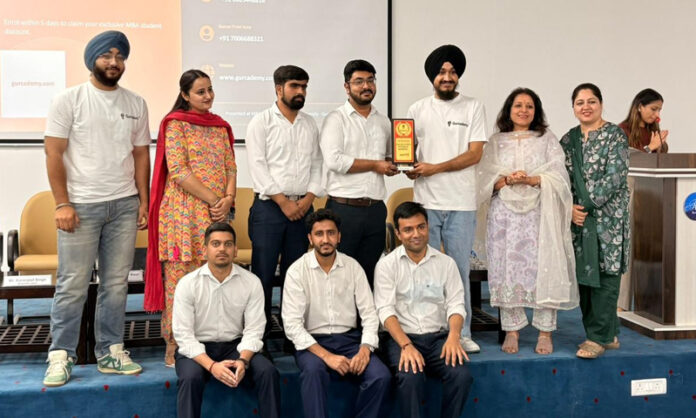
JAMMU, May 5: The Business School, University of Jammu, organised a workshop on “AI & Agentic Systems in Business” in collaboration with Gurcademy, aimed at familiarising students with emerging advancements in artificial intelligence and its applications in business decision-making.
The workshop brought together experts and participants to deliberate on the growing significance of AI-driven systems in transforming modern business practices.
Speaking on the occasion, Prof Amisha Gupta, Director of The Business School, emphasised the importance of equipping students with contemporary technological competencies in line with evolving industry requirements. She noted that such initiatives play a crucial role in bridging the gap between academic learning and industry expectations.
The keynote speaker, Er Inder Pal Singh, Founder of Net17 Solutions, delivered an insightful session on the practical applications of artificial intelligence and its growing role in business. He highlighted the role of agentic AI in enhancing efficiency, automating processes, and enabling data-driven strategies.
Karanjeet Singh, Business Head at Gurcademy, also addressed the participants and emphasised the need to bridge the gap between academic learning and industry requirements.
The session focused on equipping students with essential skills to work with AI technologies and adapt to the evolving professional landscape. An interactive question-and-answer session further enriched the learning experience. The workshop witnessed active participation from faculty members and students, making it an engaging and interactive learning experience. The event was coordinated by Dr Farah S Choudhary.
Chennai Super Kings beat Delhi Capitals by eight wickets
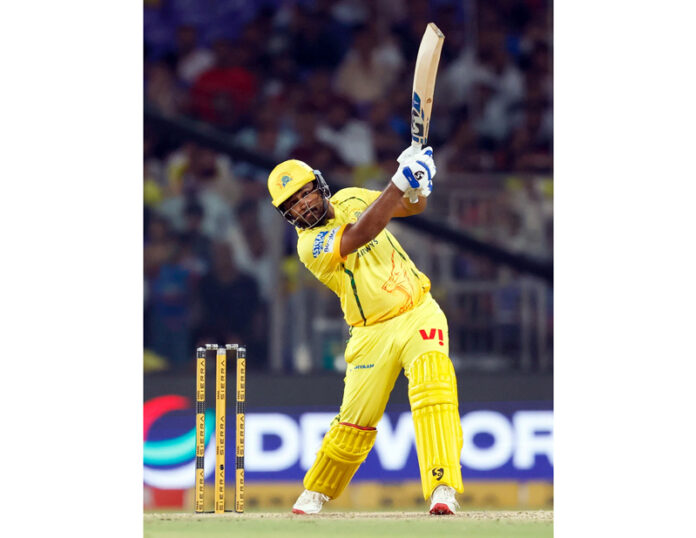
NEW DELHI, May 5: Sanju Samson paced his unbeaten 87 off 52 balls perfectly on a tricky track as Chennai Super Kings kept themselves relevant in the Indian Premier League with an eight-wicket win over a self-destructing Delhi Capitals here on Tuesday.
After opting to bat, DC’s struggles with the bat at home continued as they ended with a below par 155 for seven on a pitch offering assistance to the spinners with odd ball holding up.
Samson and Kartik Sharma (41 not out off 31 balls) forged a 114-run unbroken partnership off 66 balls for the third wicket, taking CSK home in 17.3 overs for their fifth win of the season. For DC, the road to play-offs got a lot tougher with their sixth loss in 10 matches.
While the CSK spin duo of Akeal Hosein and Noor Ahmad excelled, DC’s lead spinner Kuldeep Yadav conceded 34 runs in his three overs. He was hit for four sixes in those 18 balls, releasing all the pressure DC had put on the opposition by limiting them to 44 for one in the powerplay.
While skipper Axar Patel did the containing job well, Kuldeep failed to get a wicket in the middle overs to make it easier for CSK. Trump card Mitchell Starc was not able to strike early on though Lungi Ngidi removed Ruturaj Gaikwad in his opening over.
It seemed Samson had it all figured out in his head. Having laboured to 15 off his first 17 balls, he targeted Kuldeep post the powerplay to anchor the chase for his team. His innings included half a dozen sixes.
The opener has also struck two hundreds in his debut season for the storied franchise.
Earlier, DC’s free fall began with the loss of opener Pathum Nissanka who failed to clear the mid-on fielder off a slower ball from left-arm pacer Mukesh Choudhary.
Both Nissanka (19 off 15 balls) and K L Rahul (12 off 13 balls) began with crisp boundaries but did not last long. After Nissanka, Rahul attempted an inside-out hit off left-arm spinner Akeal Hosein but could not get to the pitch of the ball on the charge to be caught by opposition captain Ruturaj Gaikwad.
DC laboured to 37 for two in the powerplay with Hosein bowling half of the overs, including one from the other end that produced the wicket of Rahul.
With DC’s innings not gaining any momentum, the crowd, mostly in yellow supporting CSK and M S Dhoni, who did not even travel for the game, built more pressure on the ‘home team’. Chants of ‘CSK, CSK’ were heard regularly during the innings.
With a poor batting performance like that, it seemed DC had not overcome the mental demons of 75 all out in their last game here.
After the powerplay, another spinner Noor Ahmad dominated the opposition, removing Karun Nair and Nitish Rana, who both fell to a poorly executed sweep shot.
Axar had the ideal opportunity to make an impact with the bat but fell to a soft dismissal, offering a sitter to the cover fielder off a Gurjapneet Singh ball that appeared to stop on him. DC were then reeling at 69 for five in 11 overs.
Tristan Stubbs (38 off 31 balls) and impact player Sameer Rizvi (40 not out off 24 balls) hit a flurry of sixes to take the innings forward in their 65-run stand but the damage done in the first half of the game could not be reversed as DC ended with an underwhelming total.
Brief Scores:
Delhi Capitals: 155 for 7 in 20 overs (Tristan Stubbs 38, Sameer Rizvi 40 not out; Noor Ahmed 2/22)
Chennai Super Kings 159 for two in 17.3 overs (Sanju Samson 87 not out, Kartik Sharma 41 not out). CSK win by eight wickets. (PTI)
============
2 Indian journalists win Pulitzer Prize for highlighting cyber fraud
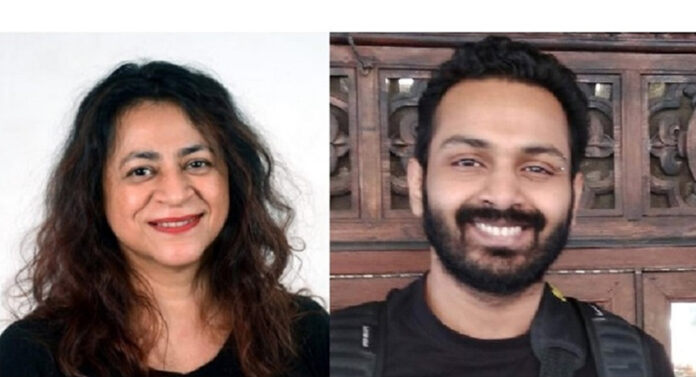
NEW YORK, May 5 : Indian journalists Anand RK and Suparna Sharma have won the prestigious Pulitzer Prize for their work highlighting digital surveillance and cyber fraud.
Anand and Sharma won the award, announced on Monday, in the Illustrated Reporting and Commentary category. They share the award with Natalie Obiko Pearson of Bloomberg.
According to The Pulitzer Prizes website, the award-winning work titled “trAPPed”, produced for Bloomberg, narrates the “riveting account” of a neurologist in India who was held under a “digital arrest” through her phone, using a blend of “visuals and words” to underscore the “growing global challenges of surveillance and digital scams”.
The Pulitzer Prizes, administered by Columbia University, are regarded as among the highest honours in journalism, literature and music composition, recognising excellence in reporting and storytelling. (PTI)
Cab approves 2 new semiconductor units; cumulative investment Rs 3,936 cr
NEW DELHI, May 5: The Cabinet on Tuesday approved two more semiconductor manufacturing units with cumulative investment of more than Rs 3,936 crore.
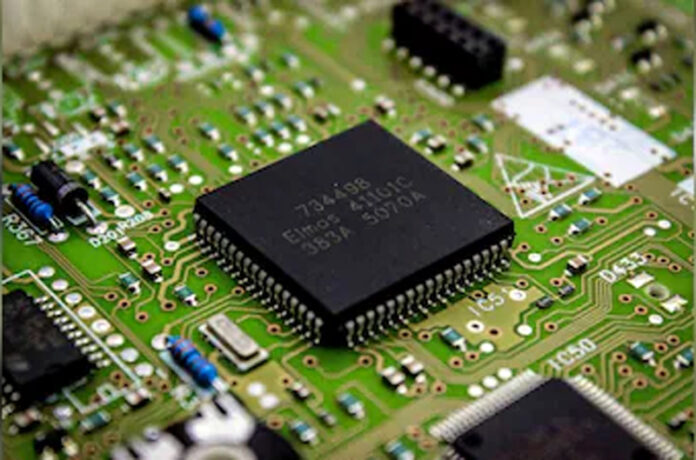
The semiconductor projects have been approved under India Semiconductor Mission (ISM), which includes the country’s first commercial mini/micro-LED display facility based on GaN (Gallium Nitride) Technology and a semiconductor packaging facility, I&B Minister Ashwini Vaishnaw said.
The semiconductor manufacturing facilities will be set up in Gujarat with a cumulative investment of about Rs 3,936 crore and are expected to generate cumulative employment for 2,230 skilled professionals.
Crystal Matrix Limited (CML) will establish an integrated facility for compound semiconductor fabrication and ATMP in Dholera, Gujarat, for manufacturing mini/micro-LED display modules.
Suchi Semicon Private Limited (SSPL) will set up an Outsourced Semiconductor Assembly and Test (OSAT) facility in Surat, Gujarat, for manufacturing discrete semiconductors.
With these two approvals, the semiconductor ecosystem in the country would get a significant boost as the number of approved projects under India Semiconductor Mission reaches 12, with cumulative investments of about Rs 1.64 lakh crore. (PTI)
Dr Jitendra addresses Prayagraj Defence Symposium, highlights 174% rise in defence production
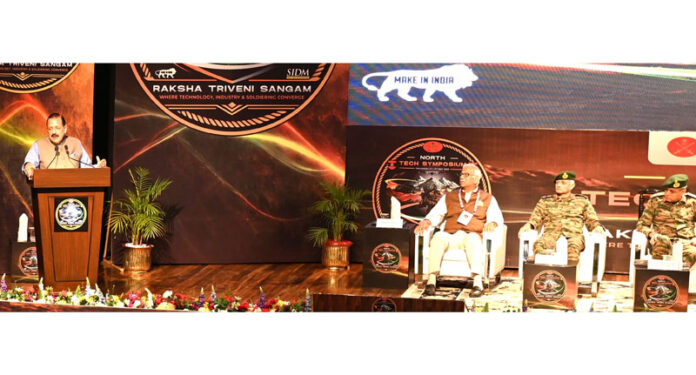
Excelsior Correspondent
PRAYAGRAJ, May 5: Union Minister of State (Independent Charge) for Science & Technology, Earth Sciences, and MoS PMO, Personnel, Public Grievances, Pensions, Atomic Energy and Space, Dr. Jitendra Singh today said that India has entered a decisive phase in its defence journey, where technology, indigenous innovation and private sector participation are shaping a new global identity for the country.
Addressing the North Tech Symposium 2026 in Prayagraj, the Minister said that warfare is no longer defined by physical strength alone but increasingly driven by advanced technologies, real-time data systems and automated platforms. He said this transformation has significantly enhanced India’s operational capabilities and global standing.
Dr. Jitendra Singh said that in the last decade, India has transitioned from being a major importer of defence equipment to an emerging exporter, with defence production reaching Rs 1.54 lakh crore recording 174 % rise in one decade and export growth rising to Rs 23,622 crore recording 34 times rise in one decade.
The Minister said a substantial contribution of around Rs 15,000 cr to total exports came from the private sector, reflecting a major shift towards collaborative defence manufacturing.
Referring to the increasing support from the Government , the Minister said, the current budget 2026-27 earmarks Rs 681000 cr for budget, which is 9.5 % more than last year.
Referring to India’s expanding technological base, the Minister said sectors such as space, atomic energy, artificial intelligence and quantum technologies are now integral to defence preparedness. He said India has already achieved rapid progress in quantum-secure communication capabilities, which will play a critical role in future warfare systems.
Dr. Jitendra Singh said reforms in key sectors have opened new opportunities for industry participation, enabling faster innovation cycles and scaling of indigenous technologies. He added that government support through funding mechanisms and policy initiatives is creating a strong ecosystem for research, development and deployment.
Emphasising the importance of synergy, Dr. Jitendra Singh said that the alignment of operational requirements of the Armed Forces with scientific research and industrial capability is essential for building a resilient and self-reliant defence ecosystem. He called for accelerated timelines from design to deployment, with focus on reliability, scalability and long-term sustainment.
The North Tech Symposium 2026, being held in Prayagraj from May 4 to 6, is themed “Raksha Triveni Sangam- Where Technology, Industry and Soldiering Converge.” The event is jointly organised by the Northern and Central Commands of the Indian Army in collaboration with the Society of Indian Defence Manufacturers (SIDM).
Dr. Jitendra Singh said that India’s pursuit of self-reliance in defence is rooted in technological sovereignty, with a focus on developing, owning and sustaining critical technologies within the country. He expressed confidence that collaborative efforts between the Armed Forces, industry and research institutions will accelerate India’s emergence as a leading defence technology nation.
He said the outcomes of the North Tech Symposium will play a significant role in strengthening India’s defence preparedness and advancing indigenous innovation for future battlefield requirements.
India remains top remittance recipient country in the world with USD 137 bn: UN

UNITED NATIONS, May 5 : India received more than 137 billion dollars in remittances in 2024, the top remittance recipient country in the world and the only nation to surpass 100 billion dollars, the UN agency on migration said.
“India consistently leads as the top recipient of remittances, followed by Mexico,” the World Migration Report 2026, released by the International Organization for Migration (IOM) on Tuesday, said.
In 2024, India, Mexico, the Philippines and France were the top four remittance recipient countries globally.
“India, however, continued to be well above the rest, receiving more than USD 137 billion, and remained the only country to surpass USD 100 billion,” the report said.
Since 2010, India has been the top remittance receiving country in the world, when it had received 53.48 billion dollars, which grew over the years to 68.91 billion dollars in 2015, 83.15 billion dollars in 2020 and 137.67 billion dollars in 2024.
The report said that the distribution of remittances varies across regions as well, with South Asia estimated to experience the highest growth in 2024 at 11.8 per cent, driven by continued strong inflows to India, Pakistan and Bangladesh.
High-income countries are almost always the main source of international remittances. For decades, the United States of America has consistently been the top remittance-sending country in the world, with a total outflow surpassing USD 100 billion in 2024. It was followed by Saudi Arabia (over USD 46 billion), Switzerland (around USD 40 billion) and Germany (nearly USD 24 billion).
The report also said that countries in Asia continue to account for the largest share of internationally mobile students. In 2022, more than one million international students came from China, the single largest origin country worldwide. India ranked second, with over 620,000 students abroad.
Beyond these two leading countries, origin country numbers drop considerably: Uzbekistan (150,000), Viet Nam (134,000) and Germany (126,000) follow, while the United States, France, Nigeria, the Syrian Arab Republic and Nepal each had between 95,000 and 115,000 students studying abroad. More than half of the world’s internationally mobile students reside in countries in Europe and North America.
The Indian diaspora has been instrumental in the expansion of India’s technology sector, it said.
The report pointed out that protecting migration’s role in development also means addressing the “brain drain” challenge and turning it into “brain gain”. When skilled workers emigrate, origin countries may lose human capital, but tailored policies can circulate knowledge so that both origin and destination countries benefit.
“India’s brain gain efforts include annual diaspora conventions and innovation hubs to entice Indian scientists and entrepreneurs back (or to mentor startups remotely), while China’s initiatives like the Thousand Talents Plan have successfully attracted thousands of overseas Chinese academics to return and bolster domestic research and development. Such programmes can have mixed results, however, notwithstanding the longer-term benefits,” it said.
The report also noted that, consistent with previous years, the
largest internal displacements in Asia in 2024 were triggered by disasters rather than conflict and violence.
The Philippines recorded the highest number of internal disaster displacements in the region and the second largest in the world, after the United States. There were nearly 9 million disaster displacements in the Philippines in 2024, most of which (86 per cent) were the result of typhoons.
Internal disaster displacements in India were the second largest in the region, exceeding 5 million, and triggered by floods and storms, including significant cyclones. China, with more than 3.9 million internal disaster displacements in 2024, recorded the third highest figure in Asia, driven largely by Typhoon Yagi.
Further, all of the five largest migration corridors involving countries in Oceania comprise migrants to Australia, with the largest corridor being from the United Kingdom to Australia.
Just over 1 million migrants from the United Kingdom were living in Australia in 2024, and this number has remained relatively stable over the last 35 years.
The second and third-largest corridors were from India and China to Australia (around 876,000 and 656,000, respectively).
“Australia was home to the largest number of refugees and asylum-seekers in 2024, with nearly 30,000 refugees and over 91,000 asylum-seekers residing in the country. Most asylum-seekers in Australia come from Asia, but from a wide range of countries, including China and India, which were the origin countries of the first and second largest number of asylum-seekers in Australia in 2024. (PTI)