

MUMBAI: A special Air India flight carrying 46 Indian nurses set free by Sunni militants ISIS in strife-torn Iraq and 137 others arrived in Mumbai today.
The flight carrying 183 Indian nationals from Erbil landed in Mumbai at 8:43 AM.
The flight has made a ‘technical halt’ in Mumbai for refuelling and catering supplies.
The flight would leave for Kochi at 9:55 AM and reach the city at 11:55 AM, Air India officials said.
The flight would then leave for Hyderabad at 12:55 PM and arrive in the city at 1425 hours. The flight’s last destination would be Delhi where it would arrive at 1740 hours, the officials said.
Besides the nurses, the plane is also carrying 137 other Indian nationals, including 70 from Kirkuk in the northern part of Iraq.
An Air India spokesperson in Kochi said there are 183 passengers, including 23 crew members and three government officials, including a joint-secretary level IFS officer and an IAS woman officer from Kerala on board the flight.
According to information provided by Air India from Erbil, forty-six nurses will get down at Kochi and around 100 other passengers are bound for Hyderabad.
The ordeal of the nurses, who were working at a hospital in Saddam Hussein’s hometown of Tikrit, began when a swift ISIS (Islamic State for Iraq and Syria) offensive was launched on June 9.
The nurses were moved out on Thursday against their will and detained in the militant-held city of Mosul, 250 km from Tikrit. The Erbil International airport is about 80 km from Mosul.
Speaking to reporters in Kochi, Kerala Chief Minister Oommen Chandy said that evacuation of nurses from Iraq was a result of “collective efforts” and thanked External Affairs Minister Sushma Swaraj, Indian Embassy in Iraq and Ministry of External Affairs.
“We were in a very difficult situation in the last few days. Nurses in Tikrit were directly contacting me and their family members were contacting me.
“I requested External Affairs Minister Sushma Swaraj and also called the Indian Embassy. I am very thankful to Swaraj and Indian ambassadors, MEA and the Embassy, they all helped us,” he said.
“In the last two days, I met Swaraj four times and we discussed everything and I’m happy about the attitude of the minister, she took personal interest,” said Chandy.
Meanwhile, the relatives of the nurses have already arrived at Nedumbassery Airport to receive them.
Father of Neenu Jose (23) from Rajakaad in Idukki said, “I am grateful to God, Chief Minister Oommen Chandy and External Affairs Minister Sushma Swaraj”.
Neenu’s mother said, “Today is my daughter’s birthday and the reunion is the best gift”.
Sudeep, CEO of NORKA Roots, which acts as a counsel for the non-resident Keralites, said all the 46 nurses, except one, belonged to Kerala. The other one hails from Tuticorin in Tamil Nadu.
All efforts will be made to take them to their respective residences as soon as they arrive in Kochi, he said. (AGENCIES)
Special AI flight carrying Indian nurses lands in Mumbai
Amarnath yatra resumes from Baltal
SRINAGAR : Yatra to holy Amarnath cave shrine in south Kashmir Himalayas resumed this morning from shortest Baltal route after remaining suspended for a day due to slippery conditions following heavy rains. However, yatra from traditional Pahalgam track continued smoothly.
Yatra officials said a fresh batch of pilgrims, including women and sadhus left Baltal base camp early this morning for the Holy Cave shrine following improvement in the weather and track conditions.
Yatra was suspended yesterday following slippery track conditions due to heavy rains. However, helicopter service was resumed in the afternoon after weather improved. They said yatris, who were held up at cave shrine yesterday after darshan of self made Ice-Shivlingam on June 3, also started return journey this morning. Officials said a fresh batch of pilgrims left Nunwan Pahalgam base camp for Chandanwari, the last motorable halting station on 42 km-long traditional track. Pilgrims, who had night halt at different halting station on the track, have also started their onward journey towards cave shrine early this morning.
More than 75,000 pilgrims had darshan of the ice-shivlingam in the cave shrine since the commencement of the two-month-long yatra from June 28.
(AGENCIES)
9th batch of 2,489 devotees leaves for Amarnath from Jammu
JAMMU : A ninth batch of 2,489 pilgrims today left amidst tight security from the base camp here for the Amarnath cave shrine in south Kashmir Himalayas.
The batch, which includes 543 women and 34 children, left in a convoy of 76 vehicles from Bhagwati Nagar base camp in Jammu at around 4:25 A.M., police said.
The convoy is expected to reach destinations at Baltal and Pahalgam base camps by this evening, they added.
Including those that left today, as many as 14,592 pilgrims have so far gone onwards from Jammu to the Amarnath shrine. (AGENCIES)
Militant killed, jawan injured in encounter in Pulwama
Srinagar: An unidentified militant was killed and an Army jawan injured in an encounter in Tral area of South Kashmir’s Pulwama district today.
Security forces launched a search operation in the forest area of Aripal village in Tral area following information about presence of militants there, an Army spokesman said.
He said contact was established with the militants and so far one unidentified ultra has been killed.
“The body of the militant, along with one AK 47 rifle, has been recovered,” the spokesman said, adding the operation was still in progress.
He said an Army jawan was also injured during the operation. (Agencies)
Cost escalation of projects
Developmental projects in our State floated either by the Centre or the State are seldom completed on scheduled time. Many reasons are assigned. Some of the difficulties in timely implementation of the projects could be overcome with little imagination and alacrity on the part of operatives on the ground. We do understand some of the physical disadvantages dogging a number of major projects, which need to be taken into account at the time of giving final shape to the project blue print.
But the cumulative result of delaying the implementation of projects is steep escalation that would lead to the suspension of work on some vital projects unless financial support is made available from some source. This discouraging aspect is to be expressively felt in the prestigious Prime Minister’s Reconstruction Programme for J&K State. In November 2004, the then Prime Minister Dr. Manmohan Singh paid his first formal visit to Kashmir where he announced that the Centre would provide rupees 24,467 crore for launching PMRP for J&K. Under this plan as many as 67 projects/schemes in four areas covering 11 sectors of economy were cleared for launching within ten years. The present assessment reveals that only 34 (a little over 50 per cent) projects have been completed so far even as the Re-construction Plan was due to complete 10 years in the next few months. Some of the remaining projects are either underway or have been suspended for want of funds. According to knowledgeable sources cost escalation of PMRP will jump to 35.000 crore rupees which means an increase of 11,000 crore rupees.
Some of the approved projects were to be undertaken by the Centre while others were either implemented by the State or through joint undertaking with the Centre. The hydro-electric power generating projects were to be included in the Central sector. National Hydro-electric Power Corporation is the agency through which power generating task is undertaken in the State. Actually, it is in the sector of power generation where cost escalation has been the highest. We would have very much liked that greater attention had been focused on power generation and whatever small or big projects had been identified should have been completed within the time frame. This has not happened and now we shall have to pay through our nose. In June this year, the term of the works undertaken in State under PMRP would have ended, and the Centre was not obliged to financially support the floated projects beyond that date. But the new Government at the centre headed by Narendra Modi has accorded sanction to extending the continuation of PMRP sponsorship in the J&K for one more year. It has been done with the intention that the State would be able to bring as many more projects to completion within the stipulated time of one year as can be possible. In other words it means that there will be no paucity of funds for the projects that are either half way or need to be revived. The Centre has also agreed to extend financial support to projects undertaken by the State under the PMRP and, in addition to that, it has also agreed to speed up power generating projects no matter whatever the cost escalation.
We appreciate the liberal attitude of the Centre in regard to giving as much support to the State as it can so that economic development of the State is not arrested or suspended. The State Government should recognize the goodwill gesture shown by the centre. But at the same time we would like to say a word of caution to the State Government. A culture is developing in the State administrative system that reduces the importance of completing various projects on time. This is not a healthy trend and needs to be arrested. How can our state move forward and raise the standard of the people if more than half of the projects recommended and supported by the Centre are not completed in time. State Government should order research in the causes of long delays in completing major and minor projects and invite suggestions to overcome the bottlenecks. We have been repeatedly saying that such a study is urgently needed. It needs to be found out whether there is shortage of skilled and unskilled labour or whether there are serious problems with the transportation of raw material to project sites or whether there is the endemic problem of land acquisition etc. These matters need full investigation and solution as part of the mechanism devised for completing projects on.
Restoration of Yuva Vani
The strong argument in support of opening Yuva Vani channel of AIR in J&K some years ago was that it served the local cultural aspirations and also provided platform for new talent. On the basis of this sound argument, the Yuva Vani began its relays. Many accomplished artists with good talent took keen interest in performing at this channel and providing great source of entertainment and education to the youth of the State. At the same time, some of the traditional cultural manifestations which might have faded away with the passage of time have been revived and rejuvenated by the Yuva Vani.
Unfortunately, just before the parliamentary elections this channel was stopped by the Union Ministry of Information. We are not aware what the reasons for closing down the channel were but we are fully aware that there was widespread resentment among the youth in Jammu against this decision and they demanded restoration of the channel. Thanks to the efforts of Dr. Jitendra Singh, the MOS at PMO who took up the matter with the Union Minister of Information and convinced him that Yuva Vani channel should be revived. Jammu youth will be very happy to know that the service has been restored and they can make their input in more effective manner through this channel. There is need of improving the programmes of this channel especially in bringing awareness to the youth of their role in building cultural profile of the nation. In particular we would like that the youth of rural areas derive maximum benefit from the channel.
Remembering the founding Editor
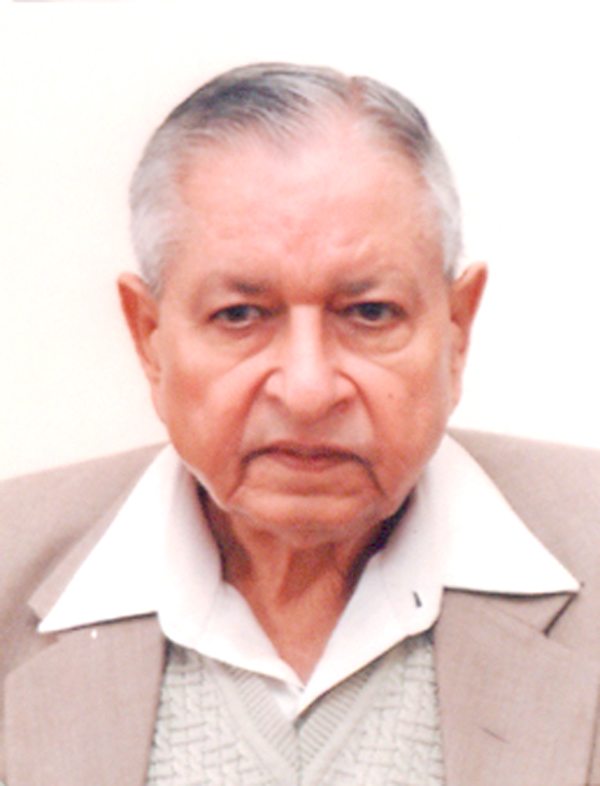 Today the 5th of July 2014, we are observing the second death anniversary of the doyen of journalism and the founder of Daily Excelsior. This day induces us to look in retrospect and bring to our mind the vision and pioneering role of late S.D. Rohmetra when four decades and half ago, he started the Daily Excelsior with a modest beginning. Through the qualities of tremendous self-confidence, vision and hard work, he steered the paper through many difficult stages until it gained fairly wide popularity among the reading public. It soon rose to be the largest circulated English daily in the State.
The spectacular success registered by the Daily Excelsior under his stewardship was possible for two important factors to which he always paid special attention. These were the cooperation of his team of workers and the massive goodwill of the reading public. He had the unique style of carrying his team of dedicated workers along through thick and thin, understanding and sympathizing with them and giving them the feel of being members of one big family.
In regard to his care for the reading public, he saw to it that the Daily Excelsior not only catered to variegated tastes of our readers but also, and essentially, ensured that we carried the happenings of the day faithfully and commented on them dispassionately. Under the guidance of its mentor, Daily Excelsior came to be regarded as the most independent and objective paper of the State.
After his sudden and untimely departure in 2012, we have tried to walk in his footsteps and maintain the traditions he had carefully laid down. Past two years posed many challenges to us at various junctures. But drawing inspiration from the roadmap left behind by S.D. Rohmetra, Excelsior team has managed to surmount all difficulties, and with refurbished motivation of serving the country, the state and its people, we tried to improve the profile of the paper.
From 12 or 14 pages, the Daily Excelsior has grown to 16 or 20 pages. Its circulation has also gone up manifold, and encompasses a variety of aspects of social life. It gives us satisfaction to say that we have managed to come up to the expectations of the people by giving them the best possible reading material in the form of wide coverage of news in every field, opinion, editorials and write-ups etc
But this achievement and forward move could be possible only with close understanding and cooperation among the entire staff of the Daily Excelsior. The widening circle of readership worked as morale booster. At every stage of our work, the guidelines we inherited from late S.D. Rohmetra, the founding father of Daily Excelsior and the doyen of journalism always stood us in good stead.
Lastly we are indebted to the encouragement and patronage of the reading public, whose time to time suggestions and guidance remain invaluable input for improving the profile of the paper.
On the second death anniversary of S.D. Rohmetra, we take the pledge to relive the dream of our Founding Editor and assure our worthy readers that we shall strive more to meet their expectations.
-Kamal & Neeraj
Wants to win hearts of people with development, ‘Vikas Yatra’ has started from Katra today: Modi
* Hints at more role of private players in Railways
* Rly Stns will be developed better than Airports
Sanjeev Pargal
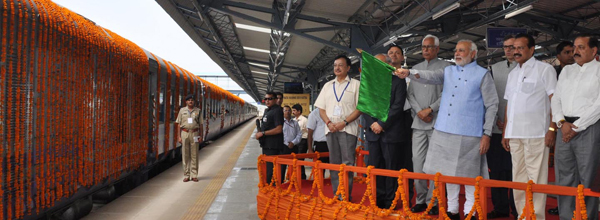
KATRA, July 4: Prime Minister Narendra Modi today used historic moment of linking holy town of Katra, the base camp of Mata Vaishno Devi Ji shrine with rest of the country by rail, to give a clarion call to the people of Jammu and Kashmir that he wants to win hearts of people through development and welfare.
In his 21 minutes address to selected gathering after flagging off DMU train from Katra to Udhampur carrying 100 students marking a historic chapter, which was being awaited by millions of pilgrims visiting the cave shrine of Goddess Vaishno Devi ji every year, Modi without naming militancy or disturbances in Jammu and Kashmir said the State has gone through many “problems and difficulties’’ and we want it to make “prosperous and peaceful”.
“Vajpayee Ji (Atal Bihari Vajpayee, who headed BJP led NDA Government for about six years from 1998 onwards) had started the process (of peace). We want to take it forward. Our purpose is not to play politics but win hearts of Jammu and Kashmir through development and welfare. And very soon, we will fulfill this dream,’’ Modi said in his address in the presence of Governor NN Vohra, Chief Minister Omar Abdullah, Railways Minister Sadanand Gowda, Minister of State in PMO Dr Jitendra Singh and Minister of State for Railways Manoj Joshi.
As expected, Modi made no direct reference of militancy, separatists or roadmap to Kashmir solution but declared that he was committed to follow Vajpayee’s doctrine on Kashmir, who had called for solution to Kashmir problem under the “ambit of humanity’’.
Modi said every Indian citizen wants to see peace in Jammu and Kashmir.
The Prime Minister’s indirect reference to Kashmir problem came at the fag end of his speech.
Linking launch of train service to Katra as ‘Vikas Yatra’, Modi took an indirect dig at successive State Governments on “lack of development in Jammu and Kashmir’’.
“While inaugurating the train, I went inside and asked the school children travelling in it as to how many of them had seen or travelled in the train earlier. I was surprised to hear that 80 per cent of them were sitting in the train for the first time. This is the situation when even first decade of 21st century was over.
“This is definitely the cause of worry. What kind of development we have given to the people. In Katra town, which is not far away from Jammu, 80 per cent students are sitting in the train for the first time. Let us take pledge on this occasion that we will take development to far off areas to benefit poorest of poor and change quality of life of the people,’’ Modi said.
Modi said more trains would be introduced from places such as New Delhi, Howrah, Ahmedabad, Mumbai, Yeshwantpur and Bangalore to the pilgrim town.
“I am also happy to announce that 3 pairs of train services currently between Jammu to Udhampur will be extended to Katra.
“The Railway has also planned to run 3 pairs of Express trains from New Delhi, Kalka, Ahmedabad, Mumbai and Bangalore,” he said.
Besides, six more trains, including three premium trains from Bandra, Bangalore and Howrah, would be introduced for Katra.
“With the opening of the rail linkage and by increasing the frequency of rail services, I am sure there will be a definitive thrust to development in J&K enabling economic development and greater investment opportunities,” he said.
Indian Railways, he said, is committed to ensuring a balanced development of different regions of the country through rail transport.
Noting that introduction of rail services in the Kashmir Valley has been a great success so far, he said railways have not only enhanced the carrying capacity of DEMU trains from 8 to 12 Coaches but also planned 4 more pairs of enhanced services in the Kashmir Valley.
He added: “it would be our pledge to generate employment for the youth whether we are in the Government or not’’.
Asserting that he wants to make Jammu and Kashmir “power of development’’, the Prime Minister said the development would come with speed and energy.
“Today I’m inaugurating two major projects in Jammu and Kashmir—one the rail project, which means speed and second the Uri-II power project, which means energy. With speed and energy, we want to develop Jammu and Kashmir,’’ he declared.
“Hum Jammu Kashmir Kay Vikas Ko Urjawaan Banaayenge, Aur Gatiwaan Banaayenge (we will give energy and power to development of Jammu and Kashmir). This is a day that brings speed (gati) and energy (urja) to the development of Jammu and Kashmir. Speed stands for train project and urja for Uri-II, both of which are being inaugurated today,’’ the Prime Minister said.
The Prime Minister also allayed the fears of the people of Jammu, who feel that the direct rail link to Katra will have negative impact on the development of their city, saying the “development of Jammu will not be stalled.”
“Development always brings opportunities. More the development, more the opportunities to grow. This has happened in many States and this would happen here also. The people would benefit from extension of train to Katra rather than facing any harm,’’ Modi said, adding “Jammu’s development will continue unhindered. And even with new railway station at Katra, it will in fact be a more qualitative development’’.
He said the next 10 years would be full of development and opportunities for the people.
“The people will never face problem in shifting train from Jammu to Katra. They will utilize this opportunity of development for them. Katra will be at the centre stage and Jammu will also benefit out of it. Development brings with it the infrastructure. While train has reached Katra today, the business has already started flourishing. It (the business) will flourish everywhere in the State,’’ he said.
Allaying apprehensions of Jammu, Modi said there will be no problem in the development of Jammu and that he could say so from his experience.
“When facilities increase, people use their time to go other places. So, I think, a person who comes to Katra directly, will visit Jammu too. I believe there will be opportunities for more qualitative development of Jammu,’’ he asserted.
He added that the Government will further enhance the rail connectivity in Jammu and Kashmir and that the Banihal rail line will be linked to the rest of the country directly.
He announced one ticket journey for the people of India to the Kashmir Valley. He said the people would reach Katra directly in the train from different parts of the country, then board the bus to Banihal and again take train from Banihal to Kashmir. This entire journey would be covered on one ticket, he added. It may be mentioned here that train in Kashmir plies up to Banihal only and the focus has now shifted to Katra-Banihal railway line, which was scheduled to be completed in 2018.
He announced that six long distance and trains would chug up to Katra very soon. Apart from them, three DMU trains would chug up to Katra, he said.
Lauding Shri Mata Vaishno Devi Shrine Board (SMVDSB), he noted that the Board has already made arrangements for issuing passes to the pilgrims for visiting the shrine at Katra station itself, which will save time of the pilgrims coming from all over the country.
He said Railways is an environment-friendly mode of transport and it will be spread in Jammu and Kashmir. He called for developing Katra railway station with solar energy, which should be visible from Trikuta Hills. Railways Board chairman Arunendera Kumar promised in his address that when the Prime Minister visits Katra next time, he would definitely see the Katra Railway Station developed with solar energy.
The Prime Minister expressed wish to convert the railway station in first of its kind to be powered by solar energy.
“I have asked the authorities that this can be the first such railway station which we can convert into solar-based railway station,” he said.
“Railway board chairman has expressed that it (board) will take up the work in this direction immediately. Katra will be model of environment friendly railway station with solar lighting facilities.”
Recalling that even before starting his election campaign, he had visited holy cave shrine of Mata Vaishno Devi ji and took blessings of the Goddess, Modi said today he was starting ‘Vikas Yatra’ of the country again with the blessings of Goddess from foothills of Vaishno Devi Bhawan.
“I had come to Mata Vaishno Devi shrine during election campaign and today we begin our development journey from here. We are committed to take this journey forward,’’ he said.
Modi declared that his Government was committed to develop railway stations in the entire country “much better than the Airports’’ and this includes Jammu railway station too. Chief Minister Omar Abdullah in his address had referred to worst condition of Jammu railway station as compared to most modernized station developed at Katra.
“I agree with the Chief Minister (Omar Abdullah). Why can’t we develop railway stations much better than the airports. Definitely, we will do this. Not only, Jammu railway station but we will develop all railway stations in the country better than the airports,’’ Modi said.
Dedicating the Katra line to the nation, Modi said a holy atmosphere is prevailing when the train is reaching Katra.
“A step has been taken to connect Mata Vaishno Devi shrine by train at a time when on the one side, Amarnath yatra is going on while on the other side, holy month of Ramzan is underway. This, the train has started reaching Katra, the foothills of Maa Vaishno Devi in the pious environment,’’ he said.
“The railway line to Katra is not just a gift to the State of Jammu and Kashmir but to the entire nations—125 crores Indians, who wish to come to the shrine and I am proud to be placing this gift before them,’’ he said, adding that he had suggested to the Railway Minister that this train should be named ‘Shri Shakti Express’.
Meanwhile, ahead of the rail budget, Modi hinted at an increased role of the private sector in development of Railways.
“We want the railway stations to have better facilities than airports. This is our dream and it is not a difficult thing to do and this is economically viable too. I have discussed it in detail with my Railway friends. You will see a change in near future.
“In that, private parties would also be ready to invest because this is a good project economically and will benefit everyone. This would be a win-win situation project and we want to move ahead in this direction in the coming days,” he said.
Modi said the railway stations in metros and important cities such as Jammu would be priority for the Government with regard to development of railway stations.
He said the Railway Ministry has been given a detailed outline of the project.
“I congratulate the crores of devotees of Mata Vaishno Devi, who want to come here for pilgrimage from all across the country,” Modi said.
Modi said the Government will further enhance the rail connectivity in J and K and that the Banihal rail line will be linked to the rest of the country directly.
He said Railways is an environment-friendly mode of transport and it will be spread in Jammu and Kashmir.
Stressing that Himalayan States have similar sets of problems and opportunities, Modi proposed a “common model” for their development.
“I accept that there is need to have a separate policy and planning for development of the Himalayan States in India. All the states located in Himalayan belt including Jammu and Kashmir have same set of problems and also diverse opportunities in similar nature,” Modi said.
He said: “we want to go for it, in the Himalayan States until North-East, which will benefit not only Jammu and Kashmir but also North East. We are committed to move in that direction as well.”
The last link between Katra and Banihal pass, is expected to be completed by 2018. The 25-km long Udhampur-Katra line, commissioned after prolonged delays, has been built at an estimated cost of Rs 1,132.75 crore.
The train will traverse through seven tunnels and over 30 small and large bridges. There will be a small station – Chakrakhwal – between Udhampur and Katra.
Trains will be able to reach Katra directly as the 53-km Jammu-Udhampur rail line is already operational. This would enable lakhs of pilgrims headed to the revered Vaishno Devi shrine to travel directly to the base camp at Katra.
The train connectivity to Katra is part of the ambitious Kashmir rail link project that will connect the Valley with the rest of the country. The last link between Katra and Banihal pass, is expected to be completed by 2018.
The 25-km long Udhampur-Katra line, commissioned after prolonged delays, has been built at an estimated cost of Rs 1,132.75 crore.
The train will traverse through seven tunnels and over 30 small and large bridges. There will be a small station – Chakrakhwal – between Udhampur and Katra.
Trains will be able to reach Katra directly as the 53-km Jammu-Udhampur rail line is already operational. This would enable lakhs of pilgrims headed to the revered Vaishno Devi shrine to travel directly to the base camp at Katra.
Railway Protection Force (RPF) has been stationed at vulnerable locations all along the track in protected bunkers to maintain round-the-clock vigil.
Katra station is equipped with modern facilities, including tourist guide Counter, cloak room, waiting hall, VIP lounge, escalators and lifts and parking spaces.
The train connectivity to Katra is part of the ambitious Kashmir rail link project marking region’s rail connectivity with the rest of the country.
The train connectivity to Katra is part of the ambitious Kashmir rail link project that will connect the Valley with the rest of the country.
The Mata Vaishno Devi shrine can now look forward to a larger turnout of pilgrims after the train service to Katra.
The Mata Vaishno Devi pilgrimage yearly attracts about 10 million pilgrims although, thus far, the only access to Katra was through National Highway 1-A.
Pilgrims from Kerala, Odisha, Maharashtra, West Bengal and other parts of the country come to the shrine on a regular basis.
Work on the 25-km long Udhampur-Katra rail link had begun in 2005 but took nine years to complete due to problems posed by the hilly terrain, which also forced railways to change the alignment in between.
Railway Minister Sadanand Gowda said that the rail link will hand an opportunity to scores of people to make the pilgrimage. He announced that direct trains would be arranged to Katra from New Delhi, Kalika (Chandigarh), Ahmedabad, Mumbai and Bangalore soon apart from three DMUs.
He further said that the Katra line marks a milestone in the Railway’s efforts towards fulfilling the aspirations of the public.
Forty per cent of the Katra-Udhampur route is covered by tunnels and there are also seven major bridges. The bridge on Jhajjar river enroute is the longest steel girder bridge in the country at a height of 85 meters and two spans of 154m each. The rail link has 22 curves.
To conquer the Shivaliks, innovative approaches were adopted to ensure the highest standards of operation and safety, said Gowda.
The rail project has permanent jobs for 700 persons whose land was taken over for the laying of the line.
As part of the project, 235-km length of approach roads to worksites were constructed to provide road connectivity to far -flung villages of J&K.
There are about 1,000 taxis currently operating here and the number is likely to increase now after the inauguration of the rail link.
Gowda along with Minister of State for Railways Manoj Sinha also visited Mata Vaishno Devi ji shrine after the launch of train service.
Locals, meanwhile, hailed the launch of the rail service and said it would bring about development of the region.
“This step by the Modi Government will boost the economic strength of Katra, which will now become a powerful economic backbone of J-K,” said Ravinder Singh, a local businessman.
CEO of the Shri Vaishno Devi Shrine Board, Dr Mandeep Bhandari, said that in the past decade, the shrine had become the busiest mountainous cave shrine and the second busiest shrine across the country.
Gowda, in his address to the gathering, said Railways connectivity to Katra would benefit the traders, locals, students and, above all, the pilgrims of Mata Vaishno Devi ji as they would reach Katra with comfort.
“Aspirations of a large number of people have been fulfilled with linking of Katra with rest parts of the country,’’ he said, adding Railways has planned six long distance trains and three DMUs for Katra.
Saluting engineers, officers and staff of Railways, Gowda said they had to work very hard for 40 per cent construction of track, which was very very tough but they managed to concur Shivalik hills. He declared that work was on at Katra-Banihal section, which would give full connectivity to the Kashmir Valley with the country.
Gowda, who delivered speech in English, said train service in the Kashmir Valley has also been a tremendous success and capacity of DMUs there is being enhanced from eight to 12 coaches. Kashmir will have five DMUs soon while three DMUs would move between Jammu-Udhampur-Katra apart from six Express trains linking Delhi, Kalika, Ahmedabad, Mumbai and Bangalore with the holy town.
In his address, Minister of State in PMO Dr Jitendra Singh said it was from this holy town of Katra that the Prime Minister had set off on country wide campaign with the blessings of Goddess Vaishno Devi and “today the time has come to repeat the pledge by trekking on the path of development’’.
“We feel very proud that Modi has given an ‘adhbut bhaint’ (unique gift) to the devotees of Mata Vaishno Devi ji by linking Katra, the base camp of the shrine with rest of the country,’’ Dr Singh, who also happened to be the Lok Sabha member from Katra (which is part of Udhampur-Doda Parliament set), said.
Dr Singh said: “perhaps Goddess Vaishno Devi also wanted Katra railway project to be inaugurated by Modi and that was why it (the project was delayed.
“It seems it was the wish of the Goddess to get the project inaugurated by Modi. Only he can come to the Durbar of Goddess, who is called be Her. The project was delayed and today, Modi is dedicating a unique gift to millions of people of the country by linking Katra with train’’.
Asserting that Katra and Reasi have vast problems of road, water, health and education, Dr Singh said he wouldn’t mention the problems on pious and food day today but will brief them to the Prime Minister later.
“I take pledged before Goddess Vaishno Devi ji today that I will act as their true representative. The people have given me a task to fulfill.. to meet their aspirations..to come up to their expectations that I will work hard and with honesty and fulfill all aspirations of the people,’’ Jitendra said, adding he would serve as people’s voice before the Prime Minister.
Omar credits Vajpayee for rail link
Excelsior Correspondent
JAMMU, July 4: Chief Minister Omar Abdullah today gave credit of Katra and other rail line projects in the Kashmir Valley to former Prime Minister Atal Bihari Vajpayee saying it was Vajpayee who declared it as national project leading to speedy work on it while other leaders only laid stones and gave no funds for construction work.
Addressing the select gathering after inauguration of Katra rail line, Omar said the people had to wait for a long time to see the train reaching Katra, which would benefit not lakhs but crores of people.
“It was like a dream some tried to sell. But the person, who really filled color in the dreams was none other but Atal Bihari Vajpayee (former Prime Minister), who declared it as a national project and today the results are before us. From Baramulla to Banihal and Jammu to Katra, the train has started running,” he said, adding many leaders used to the project, laid stones but gave no funds for their construction.
“I will also like to thank Dr Manmohan Singh, former Prime Minister, who too showed interest in the project,” Omar said and hoped that remaining portion of rail project between Katra to Banihal would also be completed at the earliest.
Asserting that train has changed lives of the people, the Chief Minister called upon the Government to take up the uncovered areas like Rajouri and Poonch, Doda and beyond in Jammu region, Kashmir East West like Kupwara, Tangmarg etc to boost economy and tourism to benefit the people.
Describing Jammu as heart of the State, he tried to dispel impression among the people especially the business community that after shifting of train to Katra, Jammu will face situation like that of Pathankot.
“I won’t allow Jammu to become Pathankot. I have a plan for Jammu. I assure you that Jammu will continue to get due attention so that it remained focused attention and was not reduced to Pathankot after shifting of train to Katra,” Omar said, adding with the help of the Government of India, many projects would come up at Jammu for its development so that it remained attraction of pilgrim and other tourists.
He pointed out worst condition of Jammu Railway Station as compared to most modernized railway station at Katra and wanted it to be developed. “The Jammu Railway Station also needs upgradation so that it presents good look,” he said.
“As Dr Jitendra Singh said, this is flag off ceremony of train and I too would not like to mention rest of the problems. When there is another tour, I will take up the other problems,” the Chief Minister said.
Underlining that economic development of Jammu and Kashmir is largely dependent on Railways, Omar stressed the need for early completion of unconnected stretches of Jammu-Baramulla railway track.
Omar said that economic linkage of Jammu and Kashmir with the rest of the country is dependent on railways and it will get a comprehensive boost by this initiative.
He thanked the Prime Minister for inaugurating the railway track from Udhampur to Katra and expressed hope that the demand of the State for the extension of railway link to various areas would be accommodated for the larger economic and developmental interests of the state.
Omar also sought the Prime Minister’s intervention in implementation of various tourist and beautification projects to make Jammu and Srinagar model cities of the country.
Congress leader and former Minister Jugal Kishore, MLC, who was lone Congress leader present at the function, said it was the Congress, which had done all the work for bringing rail to Katra and Kashmir.
“Prior to 1947, train used to come to Jammu from Sialkot. When Sialkot went to Pakistan, the train service was resumed to Jammu from Pathankot in 1972 during then Prime Minister Indira Gandhi’s tenure. The train reached Udhampur and Baramulla during Dr Manmohan Singh’s tenure. Even, track up to Katra had been completed by the previous Congress Government,” Mr Kishore told the reporters.
Uri-II doesn’t have ‘license’ to operate!
Neeraj Rohmetra
Jammu, July 4: Amidst the fanfare surrounding the first visit of Prime Minister Narendra Modi to the border State, Minister for Health and Medical Education, Taj Mohi-ud-Din has stirred a fresh controversy by claiming that the 240 MW Uri-II Hydro Electric Project, which had been inaugurated today, has no license to operate.
The senior Minister affiliated with Congress party, who is also legislator from Uri made these claims despite the fact that the project was inaugurated by the Prime Minister today in presence of
Governor, NN Vohra, Chief Minister Omar Abdullah, Union Minister of State for Power, Piyush Goyal and Chief Secretary, Iqbal Khanday.
Interestingly, the Cabinet Minister has made these allegations despite being fully aware of the fact the Chief Minister is holding the charge of Power Ministry in the State and the top hierarchy of the Power Department are fully aware of all facts pertaining to the Uri-II Project.
“It is also well known fact that as per the earlier program, the Prime had to conclude his visit to the State only after inauguration of the prestigious Rail project in Katra and there was no proposal to visit Uri. However, the entire program was rescheduled only after Chief Minister, Omar Abdullah in his one-to-one meeting with Mr Modi on June 20 in New Delhi urged the latter to also inaugurate the Hydro Power Project”, official sources said.
“Astonishingly, the Cabinet Minister is now pointing fingers at the Centre for inaugurating an ‘illegal project’, when the State administration is fully aware of all the facts”, sources remarked.
Castigating the Union Government for inaugurating the project, Minister for Health and Medical Education, Taj Mohi-ud-Din told EXCELSIOR, “National Hydroelectric Power Corporation (NHPC) hasn’t obtained any license from the State Government to run the 240 MW Hydro Electric Power Project and therefore, the project is presently being run illegally without obtaining the required mandatory permissions”.
“Even former Prime Minister, Manmohan Singh was slated to inaugurate the Uri-II project in June, 2013 but the proposal was deferred after I took up the matter with the Centre. I had send written objections to the Prime Minister’s Office (PMO) about the status of the matter and also informed the Central Government that the NHPC hadn’t obtained the required license from the State Government”, he added.
“It was only after objections raised by us that Dr. Manmohan Singh, the then Prime Minister dropped the proposal of inaugurating the Power project to avoid any controversy”, said the Minister adding, “as per the existing laws of the State, NHPC needs to first apply for license to the J&K Water Resources Authority, which has to further take up the case with Cabinet. It is only after the Cabinet sanction that the Company can run the project”.
Dwelling further, Mr Taj said, “though NHPC had applied long back to get the license, the Company had been denied the same as it failed to meet the statutory guidelines. As per the agreement with Centre, NHPC was supposed to construct a bridge, set up a stadium, construct Uri bus stand besides provide employment to local youth living within 5 Km radius of the project. However, all these promises remained unfulfilled”.
Asked why the State Government invited the Prime Minister to inaugurate the project, when they were aware of the fact, he quipped, “all the records of previous communication are lying in the PMO office and they should have taken cognizance of them before taking the final decision”.
To a pointed query if he would raise the matter vociferously in the Cabinet, he said, “I am going to take up the issue in the next Cabinet meeting. How can we allow the project to be operated illegally and without obtaining all the mandatory permissions are required”.
On June 28, last year the matter had also been taken up by the State Minister with the then Union Power Minister, Sushil Kumar Shinde. “As per the MoU, which was ratified by the cabinet, the recruitment for class III and class IV employees were to be made from local areas and in addition to 12 per cent power as royalty from the projects, State was to get 15 per cent at bus-bar rate”.
“As per the Water Resource Management Act-2010, which enables State to charge from power producing Corporation for harnessing State’s water potential for electricity generation, NHPC had to pay nearly Rs 220 crore for the project, but they haven’t paid a single penny”, the Minister added.