Dr Satnam Singh Chhabra
Proper eating and spending quality time in fitness centers are not the only way to keep you healthy and active. Small things that are part of our day to day activities also play an important role in keeping us fit. Every 1 in 3 rd person today is facing lifestyle prone health hazards. Cervical problems, back pain, migraine, knee pain, spinal issues sound so normal these days. In the last few years some serious problems like Carpel Tunnel Syndrome and Slipped Disc have also been observed among very young working people.
Have we ever wondered why we have become prone to these problems? Have we given thought to the reason? One of the major reasons could be our work place, the place where we spend maximum hours, days and years of our lives. No matter how much you try keeping yourself up to the mark in work, fashion, looks and social activities but if one is not fit from inside, one cannot give their best in any of the above.
Neuro Spinal issues have become so common these days regardless of your age. People in age group of early 20’s are getting prone to these problems out of which slipped disc, low back pain, cervical are observed in majority. Slipped disc problem can occur due to various reasons. Sometimes the main reason for the cause is due to making some simple moves like bending down in a wrong position or lifting some heavy objects. Slipped disc can also hit you while doing some regular and common activities in your daily routine such as changing poses during sleep, driving for long hours, sitting in a wrong posture for long hours in sedentary jobs.
It is imperative to check with your small activities that have become a part of your lifestyle in day to day routine. Symptoms that warns you of might be getting prone to these problems includes early morning stiffness, constant back pain that rises while lying on bed at night, numbness in legs and feet, muscle aches, weakness while walking, headache and shoulder pain. And if you find these signs hitting you then here are some tips that will not only help you to stay fit and light at you work place but will also prevent you to get prone to those elderly health issues.
Instead of being a lazy bee make sure that you walk in the nearby parking the morning. If the weather doesn’t permit then spend some time on the treadmill. Always walk to the nearby metro station, park your vehicle a little away so that you walk towards it. Always take stairs at the work place instead of the lift.
Driving or travelling in a car is also one of the major causes for back ache problems, especially with the profession which demands travelling for long hours. To avoid this problem always follow the rule of sitting with the knees in level to hips. One can go for some ergonomic options to keep back and posture in a natural and comfortable manner. Use an artificial back support. Keeping wrong distance from steering wheel can give you trouble in wrist, back, neck, arms, shoulders and spine. So make sure that along with the right sitting posture your distance from your steering wheel is also right. Your chest should be parallel to your steering wheel.
Most importantly, a terrible work station can aggravate lot of problems like, knee pain, poor eye sight, constant headache, strain in back and neck and lots more. So make sure where you are going to spend long productive hours is right for you. Keep a footrest to raise the knees in level with the hips. Your office chair should be in such a shape that its back pushes your lower back slightly forward. One should fit to the height of computer screen. If chair can’t be adjusted then use a stand or books to amend the height of your screen. You can also try some light exercises that can be followed while sitting at office chair only. Sit straight and stretch your legs with toes facing upward. Now try to raise them to 30°- 40° and slowly put them down without touching the ground. Now repeat this for 10-15 times. This will not only keep your belly in, but will strengthen your lower back too. Another exercise that you can do is; drop down a pen or pencil on floor and try to lift it with your toe fingers, and practice the same with both feet one by one. After every one or two hours strive to go for a round in office, if space is not enough then try to go outside, and if you don’t see anyone around then stretch out your arms and body for a few seconds. Don’t be embarrassed to do so. It is a question of your health. You may even end up setting an example for others too.
One of the common reasons for occurring sudden Low back pain is the wrong bending position therefore you should always take care that you don’t pick anything from ground by bending directly. Always follow the squatting position that is first sit on your knees and then pick the object.
And if you feel unexplained numbness and tingling sensation at your finger tips especially the thumb, index, and middle finger of the hand then it can be a sign of Carpal tunnel Syndrome which is caused due to work involving wrist movement, persistent typing work, or use of mouse and keyboard. So giving rest to wrist is also essential and to avoid this one more lifestyle generated problem make sure that you give rest to your hand and wrist in few intervals. Try to keep your hand and wrist in straight position while working and by keeping your posture right.
Your diet intake also plays a vital role to keep you at bay from such health problems. So ensure that you consume healthy and leafy vegetables. And to keep you fresh and active if staying up for long working hours in office then always opt for fresh fruits, juice and coconut water as a light snack. Avoid fried and fattening food and go for low carb options like salads.
(The author is Head of Neuro Spine Department, Sir Ganga Ram Hospital, New Delhi)
Health check at work

Cipher Decipher
Hi Friends! We are back with your favourite column for the week. Please have a look at OUR MESSAGE before you send in your message to us.
1. To all from Sanjay Dhar: “ The body is a temple of God. Keep body beautiful and bright through right thinking, right speech and right living”.
2. From Rohini Gupta to all: “ It is not the load that breaks you down, it’s the way you carry it”.
3. To all from Usha Raina: “ Do not worry about failures. Worry about the chances you miss when you do not even try”.
4. From Abhi Gupta to all: “ The quickest way to get to your freedom is to walk into your fears”.
5. To all from Khushi Gupta: “ Poverty is the parent of revolution and crime”.
6. From Sudhir Kumar Gupta to all: “ Language is a city to building of which every human being brought a stone”.
7. To all from Brighu Mahajan: “ A creative man is motivated by the desire to achieve, not by the desire to beat other”.
8. From Ruchika Gupta to all: “ Faithfulness is the best way to attract God’s blessing”.
9. To all from Sudhir Kumar Gupta: “ Rumours travel faster, but they don’t stay put as long as truth”.
10. From K K Gupta to all: “ An investment in knowledge always pays in best interest”.
11. To all from Sharda Gupta: “ Few things are harder to put up with than a good example”.
12. From Puneet Gupta to all: “ Never say God, I have a big problem, instead say, hey problem I have a big God”.
13. To all from Mohini Gupta: “ Never test the depth of a river with both feet”.
BEST MESSAGE
The award of rupees 200 for this week’s best message has gone to MOHAMMAD IRFAN S/o MOHDYASIN R/o RAMZANPURA EIDGAH ROAD, JANIPUR for the message “ Its not the load that breaks you down, it’s the way you carry it”.
Congrats. The prize money would be sent to you through money order
e-mail: cipher-decipher@dailyexcelsior.com
Inner Voice
WHO IS TO BLAME?
She sits in front of the mirror
Stares at the women in the reflection
Her trembling fingers reach her face
Picked her every flaw, every blemish
till nothing was left to trace
Those greys that she tries to hide
Old age is her new friend, a friendship
she vehemently denies.
She reached for the picture stuck in the corner. Its edges folded, a little torn
A flawless beautiful face looks back
at her, a face that she once owned.
She looks back at the mirror anxious
To find the answer she tries to look deep
Alas ! All she sees is a shallow mind
and a heart that would never speak.
Furious she picks up the comb and
throws it on the mirror
But what shattered is not the mirror,
it is her soul.
She searches for who she really
is looks at the pieces once again
Hoping that the mirror may now understand,
But the mirror us clear, it reflects what it sees
It’s the woman, aloof from the truth
Veiled herself with memories she
welled in the past
Afraid to face the reality,
which came to her at last
And what she saw she could never relish
Cruel reality brought fresh
tears to her vacant eyes.
Alone with her thoughts she sits on her bed
Is she to blame ? Or is it the mirror?
Sama Saraf
152, A/C, Vasant Kunj, New Delhi
“THE OLD TOWN”
The peaceful and beautifull,
The place of honest people,
the holy land
Situated at the nook,
Of the cruel world,
Another heaven on the land
Where nature sings,
Where nature dance,
where everyone enjoy it existence
God really exist there,people say
But it is difficult to believe
In this red hot era
How old is it?
No one knows, i just want to be there
to have the true zest of life
I will try to reach one day there,
At the lonely corner,
Where it is situated
VIVE LA “the old town”
ANIL RAJGOTRA
1st year,GDC SAMBA
BEAUTIFUL FRIEND
My Beautiful Friend
You made me laugh when I cried
so hard
You gave me bracelets to cover
my scars
You held me close when I was so
cold
You offered a comforting hand to
hold
You picked me up whenever I fell
You showed me heaven when I
was blinded by
hell
You answered my calls in the
darkened night
You gave me the reasons to hold
on and fight
You rescued me when I was
drowning in pain
You placed me back on the right
path again
Neelam Devi
G D C Ramban (S)
TRY TO CLIMB UP
Because hope is a rope ,.
Which takes you to the top.
Life gives you red ,
Also gives u blue
But if you keep a hope ,
You always get a clue.
A clue of success ,
Which reduces your stress ,
It gives u motivation ,
You start feeling relax
Motivation makes you work ,
You learn to bear the jerk ,
You start trying again
And learn finding gain.
You think of wrong and right ,
And also learn to fight ,
One who learns to fight ,
Always reaches the height.
So it was only a hope
Who makes you to try ,
‘Try’ takes you to height
Which turns your future bright.
Pooja (Pari)
Swami Budha Amarnath Pilgrimage
KD Maini
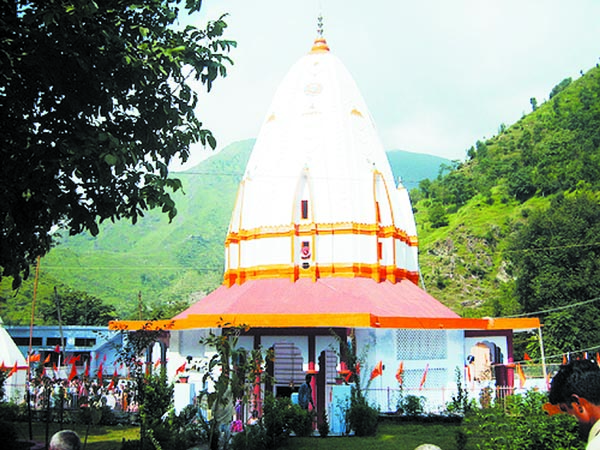
Swami Budha Amarnath Temple is situated in between the main belt of Pir Panchal range at Rajpura Mandi which is 23 kilometers on the north east of Poonch city. This sacred place is located on the confluence of two gushing streams namely Nallah Gagri and Pulsta Nadi. This place is surrounded by snow bound lofty peaks, thick belt of fir forests (in the eastern side), lush green pastures and crystal clear streams and nallahs. The climate of this attractive and charming spot is very pleasant and cool. At present Swami Budha Amarnath temple is connected with a motorable road and it is 244 kilometers from Jammu.
The original temple has been carved out of one big stone. There are four doors in the temple on the northern, southern, eastern and western sides which indicates that the doors of this shrine are open for all the four varnas. There is a natural Shivlinga of white stone (Chakmak) inside the temple. A number of ancient idols collected from nearby villages have also been installed in the premises of the temple where there were four holy springs in the past. At present the water of three springs has been diverted to fourth one which is on the southern side of the temple. The water of these springs is considered holy from religious point of view. The pilgrims first take bath in this spring and then enter the temple for prayers.
Thousands of pilgrims with great devotion come to this place from various parts of the country every year. The main religious function is held on the occasion of Raksha Bandhan which is known as Mela Swami Budha Amarnath Festival. Three days before the Mela, a religious congregation is held at Dashnami Akhara Poonch for Havan and Pooja of Chari Mubarakh.
The procession of Chari Mubarakh starts from Akhara in between the chanting of bhajans and religious slogans. A guard of honour from Police contingents is paid to Chari Mubarakh at the gate of the Akhara. The Swami Ji is carried in a palki by the devotees, along with the sacred mace. Thousands of devotees and hundreds of Sadhus accompany the procession which leads towards Swami Budha Amarnath on foot. The main halt is at Chandak, (the name of the Chandaka Devi) where lunch is served to the yartis. While on the way from Poonch to Mandi, a number of stalls remain erected for welcoming the Charri Mubarakh and yatries. At Chandak, light drinks are served by a prominent Muslim of Chandak to yatries. The procession reaches Rajpura on the same day in the afternoon where it is received by the local people, sadhus and workers of the Trust after guard of honour by the BSF contingent at the gate of Swami Budha Amarnath. The Charri Mubarakh is taken to the main shrine in between the traditional rituals followed by the Aarti of Lord Shiva.
On the occasion of Raksha Bandan, thousands of pilgrims from Poonch, Rajouri, Jammu and other parts of the country have darshan of Charri Mubarakh and holy shrine. After performing the religious rituals, the devotees come out of the shrine with great joy and satisfaction. Then the langer starts in which people of all sections sit together in a row and have their lunch. The District Administration along with the Managing Committee makes all adequate arrangements for the comfortable stay of yatries. By this way, this religious function takes the shape of public festival in which people of all section take part.
This holy place has great religious importance. It is said that at this very place Lord Shiva had started narrating Amar Katha to Parvati Ji which ended at Swami Amarnath located near Pahalgam Kashmir. This temple is considered older than the Swami Amarnath Ji of Kashmir. This is why the shrine is known as Swami Budha Amarnath. It is believed that one must visit this sacred place before performing the yatra of Amarnath Kashmir.
A number of legends are famous in and around Poonch city regarding the eruption of this ancient temple. As per one legend, Mahatma Pulsta (the grandfather of Kind Ravana of Sri Lanka) meditated at this very place for a pretty long time. He was devotee of Lord Shiva. There are number of references in Neel Mat Puran about Pulsata Rishi. As per these references, Pulsat was also an artist and sculptor. He erected number of images of God.
The legend goes that Pulsata meditated with such a devotion at Rajpura Mandi that Lord Shiva gave him Darshan at this very place. In the memory of Darshana of Lord Shiva, Rishi Pulsata constructed the temple of Shiva and erected a lingum there. Since the Pulsata was a great Rishi, a sculptor and very popular among the habitants of this area, therefore, after his death the people converted this small temple into a shrine. Later on this shrine took the name of Swami Budha Amarnath. Even now a number of idols of ancient time are available in this area. It is possible that these idols may have been installed by Pulsat Rishi.
Woes of Turtuk

Mahesh Kaul
Jammu And Kashmir State has the distinction of being blessed with varied topography, vegetation, climate, culture and people. The frontier areas of the state had importance for the strategic reasons for the rulers of the state and when the state acceded to India in the backdrop of the partition of India, it assumed political prominence for different reasons.
The imperial British overlords and the communal forces, which enjoyed their patronage, were hell bent to destabilize the state. It suited them to maintain their foothold and stranglehold over the Northern Frontier.
Dogra rulers who defined the geographical and political boundaries of Jammu and Kashmir in terms of viable administrative purpose kept a keen eye on the ethnic tribes that inhabited Gilgit and Baltistan. Their culture, tradition and way of life needed to be understood in order to govern the people.
Turtuk Unveiled written by Dr. Kavita Suri is a well measured move and welcome addition to the archival and research material available on the tribes of Turtuk, a part of Baltistan. It is pertinent to mention that the British paid significant attention to Gilgit as far the strategic value is concerned .Gilgit was in the centre stage of the intrigues to destabilize the defense of India so that advantage is given to Pakistan in the Himalayas. In this process of destabilization Baltistan was affected automatically as the region is in the geographical proximity of Gilgit.
People of this area have been suffering but it goes to their credit that they have retained their smile in spite of the inhospitable terrain. Dr. Kavita Suri’s book “Turtuk Unveiled” should be seen in this backdrop as it places Turtuk in proper perspective.
The book has been divided into 12 chapters acknowledgements, foreword, Introduction, references and Index. Author has utilized her skill as the professional journalist and photographer to give the vivid and pictoral description of Turtuk besides the well researched text. The book reveals the professional competence of Dr. Kavita Suri in terms of presenting the text photographs. Her vast experience as the reputed journalist associated with various newspapers of substance and credibility like the Statesman and the academic proficiency as an academician has added value to the book.
The Book has presented a unique issue regarding the unique place -Turtuk. Introduction to the text on the jacket of the book explains the crisis the people of Turtuk face and sets the tone for the reader as to why this book should be read about the place called Turtuk in the Ladakh region of the Jammu and Kashmir state. It reads:”Turtuk, small place nestled at the farthest end of Nubra valley in Ladakh has a unique history. It was part of Baltistan, had remained with Pakistan for a long time and then was reunited with India. Turtuk Unveiled which is first literary work of its kind on Indian side of Baltistan, throws light on Indian side of Baltistan, throws light on the history of the region which is dominated by the Balti tribal’s”
Explaining the locale of the place, she writes, “Situated amid the mighty Himalayas and Karakorum mountain range in northern Pakistan and Ladakh, Baltistan or Baltiyal (Land of Baltis or Homeland of Baltis as is popularly known in Balti language) is the historic junction of the Buddhist and Islamic Worlds.”(pp 40)
Balti is the prominent tribe of this area. It was during the expedition and conquest of General Zorawar Singh that this region became the frontline of the defense of the state of Jammu and Kashmir .Giving the historical background and writing about the conquest, Dr. Kavita Suri writes, “By the summer of 1840, General Zorawar Singh had conquered the whole of Baltistan. In addition to Skardu; In place of Ahmed Shah, his eldest son Muhammad Shah was made the king. Thus Baltistan came under the Dogras.”(pp 48)
Elaborating further she says, “Turtuk has an interesting history. From 1947-48 onwards till 1947, it was part of Pakistan and many villagers living in these areas were working with Pakistani army mostly posted in the northern area of Gilgit-Baltistan. Thang Top and Trig heights in the area are still under pak occupation and are overlooking Turtuk Valley. Just down below, Thang village on Indian side is thickly populated and so is Franoo village on the other side in Pak-occupied Kashmir. In 1971, India launched an operation to liberate Turtuk and reunited it with Ladakh.”(pp 66). Turtuk remained under Pakistani occupation till 1971 and it was during the Bangladesh liberation war that this area came under the ambit of theatre of war, leading to the reunification of this area with India.
People of Turtuk have witnessed the administration of both Pakistan and India. It who has shaped their perception in terms of identity and at present it has lead to identity crisis. The book deals at various aspects of this issue and can act as a guide for the policy makers to devise mechanism to develop this area.
Book deals in detail with the traditions, culture and way of life of the Baltis. The major problem being faced by the Baltis is the land ownership that has led to their identity crisis. Giving vent to the woes of the people she writes,” Since 39 years, Ghulam Mohammed has been trying to get the revenue papers made of his land and home in Turtuk. But all his efforts have been wasted. He is among the 5000 Baltis of this region who do not have any land records. There are absolutely no revenue records hare unlike the other parts of the state of Jammu and Kashmir.( pp 74-77)
Explaining this issue, Dr. Suri writes, “As Turtuk was part of Chorbat block of Skardu district of Baltistan from 1948 to 1971,all the land records and related papers were kept in the office of land revenue records at the tehsil headquarter of Skardu only and were maintained by the Pakistan administration. But when the Line of Control was redrawn after Operation Turtuk, the land records were left in Skardu resulting which the villagers became landless landowners of their own lands.Presently, though hundreds of acres of land is being cultivated or owned by the Baltis in the villages of Turtuk, Tyakshi, Chalunka,thanag and Bogdang but they are landless legally .”(pp 74-77)
The author has documented the pioneering role played by the Indian army in terms of Operation Sadbhawana leading to social transformation and capacity building besides infrastructural development.
Turtuk Unveiled by Dr.Kavita Suri is a must read for researchers, policy makers and the social scientists.
The cost of the book it quite exorbitant, it should be revised to suit the common reader. Publisher should take care of the typographical mistakes that have crept in.
Machail Yatra
G.L. Khajuria
Jammu and Kashmir as a whole is a land of temples, sacred shrines and of course a treasure trove of pilgrimages of varied hues which occupy almost every nook and corner of the State.
There is no denying the fact that ‘Chandi Mata’ who is popularly known as Machail Wali Mata occupies a prominent place among the devotees.
The Chandi Mata is mostly confined to Himalayan region. In Jammu itself she has manifested at Mahalaxmi Mandir at Pacca Danga and at Bhadarwah where from her Holy Mace (Charri) starts in the month of August every year.
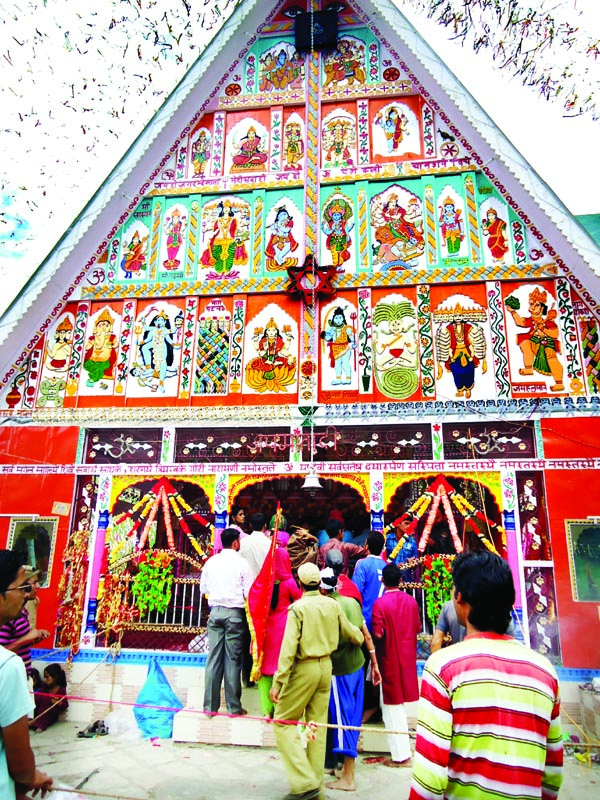
It is situated around 306kms away from Jammu, (Jammu-Batote) (120kms) Batote-Kishtwar (121 kms) Kishtwar-Atholi- Gulabgarh-65kms) by road and thence onfoot to Machail Mata which is barely 30kms. Though the terrain is too tough to trek but with the grace of Almighty Mata Chandi, one feels joyous in association with enchanting pilgrims echoing Jai Mata Jai Chandi Mata. The entire trek remians dotted with yatries of all hues in colorful attire.The main stopovers en route are : Gulabgarh, Layondee, S Kunderpul, Chishoti, Hamori and Machail. The entire area is surrounded by lush green, meadows and flanked by deodar, kail, fir, spruce, oaks, shrubs and herbs.
According to the ancient sources, Maa appeared in the form of Pindi, the same as it is in Vaishno Devi. She came here from the Mindal Bhattas, a small village in Himachal Pradesh to bless the people of Paddar. The yatra was initially started by Thakur Kulbir Singh of Bhaderwah who was serving in J&K Police department and was posted in Machail.
The mention of Machail yatra would be incomplete without the mention of “Trishul Bhaint” yatra.
The “Trishul Bhaint” yatra leaves from Doda city to Chinote Bhaderwah. It is preceded by a Jagran at Radheysham Temple at Doda city. Then the yatra leaves for Bhaderwah. After reaching Chinote, the yatra is received and welcomed by the local people at Chinote.
The unique holy mace of the Goddess leads the pilgrims and provides them with strength and inspiration. Amidst natural ambience, the people trek the mountainous route chanting “Jai Maa Chandi”, “jai maa chandi”.
The holymance is welcomed enroute by thousands of devotees at various villages. These inaccessible hamlets include Matti, Seondi, Hamiddran, Massu, Mao, Garh, Naral, Sugliangadi, Bathree, Mulgo, Shagaani, Kokandran, Rotae, Palalee, Betha and a big village Ligree having hamlets viz, Doordo, Stangarhi, Thatak, Shahalee, totee, Pondale, Tunkhel, etc. The village Ligree is having a population around 1000 or so. At Machail, a small village, rather hamlet is located at the sacred shrine of Mata Chandi and the devotees throng in queues for hours together to have a holy darshan of Mataji, to pay obeisance and obtain blessings.
During the trek, one comes face to face with nature in its true colours.
One experience the silence of lush green meadows, the music of gurguling streams and that of trees when a whiff of air makes them sway here and there. One only needs a sensibility to experience this.
The ambience around makes one spiritually surcharged. One forgets the daily routine life, and remains soaked in spirituality. The jorney allows us to differentiate between bad and good.
The yatra also allows us to know how faith brings people of different denominations closer to each other. The artificial barriers created on caste or region basis vanish here. The yatris who throng here from different parts of the country have just one thing in mind -to get blessings of the Mata, and nothing else. It is also an opportunity to know the lifestyle of people living in farflung areas where there are no basic amenities of life available.
The Chandi Dham Machail has both Shiv and Shakti. On the one hand, the Goddess Chandi (Shakti) is blessing her devotees at Machail village while on the other hand there’s a Shiva Lingam on the opposite high mountain where the pilgrims visit to pay obeisance on the pious occasion of the Shakti yatra. The mountain is called Shiv Pahad. The devotees describe it as a unique union of Shiva and Shakti at Machail.
The Chhari as such culminates at the shrine Shakti where a Maha Yagya is held.
Machail yatra attracts a vast number of pilgrims. Now with the increasing focus on Bhadarwah as a pilgrim and tourist spot the civic amenities for this religious spot need to be undertaken on a war footing.The toilet blocks, road upgradation, plantation, rain shelters, retaining walls at steep points have to incorporated in the development plan for Machail Mata Shrine. Then increasing number of people will visit it to get spiritual peace. It will give boost to local economy which is hard pressed at present, apart from boosting tourism the clarion call of the day.
SPORTS SPHERE
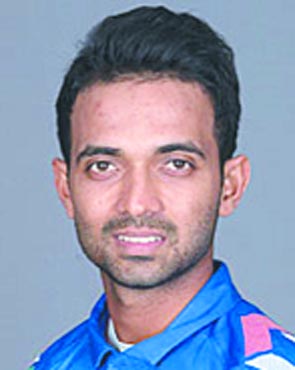 Born on June 6, 1988, Ajinkya Madhukar Rahane is an Indian international cricketer. He represents Mumbai in domestic competitions. He is a right-handed batsman, who made his international debut against England at Manchester in August 2011 and made his Test debut against Australia in March 2013.[1][2] In Indian Premier League, he currently plays for the Rajasthan Royals.
Rahane made his first-class debut in 2007-08 season and averaged an impressive 62.04 after 100 innings. As Rahane scored over 1000 runs thrice in his five seasons, a Test call-up became inevitable. In the 2011 Irani Trophy match against Rajasthan, he scored 152 and that innings helped him get selected in India’s Test squad. With batsman Shikhar Dhawan injuring his fingers, Rahane made his Test debut in the 2013 Border–Gavaskar Trophy. He was also part of the India tour of South Africa, 2013 and India tour of New Zealand, 2014. His maiden Test century came at Basin Reserve, Wellington in the last match of the series.
Rahane is widely praised for his batting technique, commitment and discipline to the game. He is sometimes described by the pundits as “one of the rising stars of Indian cricket.
Rahane had performed well when India U-19 toured New Zealand in early 2007 with two hundreds.
Rahane made his first-class debut, at the age of 19, for Mumbai against Karachi Urban in the Mohammad Nissar Trophy in September 2007, at Karachi, when most of the first-choice Mumbai players were unavailable for various reasons.
He made his Ranji Trophy debut for his first-class side Mumbai in the 2007/2008 season and made his List A debut for Mumbai against Delhi in the Ranji One-day Trophy in March 2007, at Delhi. Two centuries in the Emerging Players Tournament in Australia brought him a place in the India ODI squad for the tour of England in 2011.
Rahahe was named in the Test squad to play the West Indies in November 2011, however he finally made his debut in Test cricket on 22 March 2013 against Australia in the Border-Gavaskar Trophy at Feroz Shah Kotla Stadium, Delhi.
Identify the Player:

Write a brief description about him in 250 words.
Questions of this week:
1. Who got 6-wicket haul for India in the second Test match of ongoing series against England?
2. For which team Abhimanyu Mithun played in IPL-7?
3. Which Indian female lifter won gold medal in the ongoing Commonwealth Games at Glasgow?
4. How many runs Ian Dev Singh scored against KCCC in the finals of the Chevrolet Cup T20 Cricket Tournament?
5. Who is Ranjeet Bali?
Answers of the last week:
1. Ajinkya Rahane 2.RCB 3. Petra Kritna and Novak Djokovic 4. 19 runs 5. General secretary JKCA..
The best entry of this week was received from Abhimanyu Gupta, H No 71/2 Upper Roopnagar, Jammu.
The other entries of the week were from Sanjay Dhar, R/o Lane No-1, H-No 3, Upper Laxmi Nagar, Sarwal, Jammu; Ram Rattan of Anand Nagar, Jammu;.Ram Singh of Samba, Jammu; Pritam Sharma.of Rehari Colony, Jammu; Chand Ji Bhat of Kunjwani, Jammu and Abhishek Kumar of Jammu.
Dear Contestants, please send your reply within five days to:-
Sports sphere, Daily Excelsior
C/o Excelsior House, Janipur, Jammu. Pin 180007
Or through e-mail: sportsquiz@dailyexcelsior.com

Contradictory statements
Lt Col R K Langar
Sometimes apparent contradictory statements give deeper knowledge and understanding. Looks like a paradox but it is absolutely true. Again there is a tendency to express certain things about life in a negative way where as these could also be easily expressed in a positive manner. We shall study the above two aspects with examples.
Contradictory statements
” Meet some one as if you are meeting him for the first time” is one statement . Another statement which is quite opposite to it says ” meet some one as if you have known him for ages.” These two statements look opposite to each other but see how these give deep understanding about our conduct.
Meet someone as if you are meeting him for the first time
This holds good for person A who is holding personal grudge against some other person B. B has annoyed A on some issue and A has not forgotten it nor has he forgiven B. if some one has harmed you in the past and you have not forgotten it, then only you are suffering and not the person who has harmed or annoyed you. The person who has annoyed you does not even remember the incident, whereas you have kept this incident in your heart and unnecessarily you are feeling miserable. That is the reason that our scriptures advice us that we should not only forgive but also forget so that you remain free and do not carry the annoyance with you. Past is past. We are also advised by our scriptures and sages that we should live in the present without holding any regrets of the past in our mind and at the same time without worrying for the future. That is why it is said that you should meet your old acquaintance who have annoyed you as if you are meeting them for the first time. When you meet a person for the first time you are bound to be courteous towards him. So let us forgive others who have harmed you. More important is to forget the past and live in the present. You should first forgive yourself as you yourself have done so many wrong things in the past. What you want from others, you must give it to others first. If you want to others to love and respect you, you must first love and respect others. When you do so your love and respect shall be responded. If it does not come, donot expect but shall keep on giving love and respect to others. This is the golden rule.
Meet some one as if you have known from ages
When you know someone for a very long time, you are always happy to meet him. You extend warmth and hospitality to him. Similarly when you meet some one say even for the first time, you should show warmth in meeting him as if you have known him for him for ages. Warmth here means that the other person should feel that you are welcoming him and are feeling delighted to meet him. The warmth which you extend to the other person should be from your heart and not that inwardly you do not feel happy but outwardly you are pretending that you are happy to meet. Here you must remember that your thoughts, words and deeds should be in unison with each other. If you show warmth on meeting the other person for the first time, the other person shall feel very comfortable.
I have noticed that people do not show warmth and cordiality on meeting another person. You only show warmth on meeting the other person when you have some self interest. This is selfishness. This is the reason that most of the relationships are fragile and not sincere. Bhagavad Gita tells us to see yourself in the other person because it is the same Atma or soul which resides in every one and see the other person in yourself. So the other person you meet is you yourself. We all want that people should be nice to us, then why do not we show sincerity and warmth in meeting others. Your motto of life should be ‘ May I give comfort and warmth to any one who comes in my contact.’
At one moment I feel that the whole world belongs to me and the next moment I feel that nothing in the world belongs to me
The above contradictory statement was made by king Janaka. Janaka was the king of Mithila and father of Sita, wife of Lord Rama. King Janaka was known for working for the welfare of all people of his kingdom. He attained perfection from karma yoga. He taught others by personal example to work selflessly for their own upliftment and for the good of fellow beings. When king Janaka says that the whole world belongs to him, he is referring to the Atma or soul inside him which is a fragment of God. When man attains perfection, the soul is liberated from the limiting adjuncts which are body, mind and intellect and we can enlarge and embrace the whole world. Then the man sees his own self in all beings and feels that the world is his own. As is Macrocosm outside so is the Microcosm inside. Such a statement can be made only by a person like king Janaka who had attained union of his Atma or self with Supreme self.
When king Janaka says that nothing in the world belongs to him, he is referring to the famous verse of Isha Upanishad which says that whole world belongs to God and whatever you possess is not your own. You are only a custodian of what you possess. Hence do not have a sense of possession or a sense of I and Mine. The other interpretation of this statement is that when man leaves the world whatever are his possessions are left behind.
Both the above statements beautifully explain the reality of life. The aim of life is to attain liberation and feel that the whole world belongs to you as you feel oneness with all. But at the same time one must remember that when one dies all his possession are left behind. There are some such statements in Bhagavad Gita also which makes one get to the deeper understanding of what Lord Krishna is teaching to Arjuna. The other thing which I want to mention is that we have a tendency to explain things negatively. We have often heard that one bad fish spoils the whole pond. This underscores the influence of bad over others. If bad can influence others it is also true that good too can influence in the same manner. Why cannot we say that one good person in the family can influence the other members of the family to become good by his personal good conduct. Like wise a good family in the society will have good influence on the society. While both statements are acceptable but the second statement is more appealing for our evolution. The moral of the story is that one should explain situation in a positive way so that the listeners understand the value of goodness rather than to get inclined towards the bad.