NEW DELHI, May 6: South Korean auto major Hyundai on Wednesday reiterated its commitment to shaping mobility for India and the world, as the company marks 30 years of operations in the country.
Established on May 6, 1996, the company’s arm Hyundai Motor India Ltd (HMIL) has invested Rs 40,700 crore since its inception, with another Rs 45,000 crore lined up between FY26 and FY30 to drive manufacturing, electrification, future mobility and introduction of 26 new products by FY2030.
HMIL has sold a total of 1.35 crore units since its inception, including 96 lakh in India and 39 lakh exported to 150 countries, the company said in a statement.
It reinforces India’s role in Hyundai’s global success – as India’s largest exporter of passenger vehicles on a cumulative basis, it added.
“HMIL’s 30-year journey is defined by trust earned over time and the pride of our teams delivering consistently for customers across India,” HMIL MD and CEO Tarun Garg said.
“As we celebrate this milestone, we look ahead with youthful energy and unwavering commitment, shaping mobility for India and the world.”
Guided by Hyundai’s global vision of ‘Progress for Humanity’, “Garg said, “We remain deeply connected to India’s aspirations, driving innovation, sustainability and shared prosperity for generations to come”.
HMIL has two manufacturing plants in Chennai and Pune with a total annual production capacity to scale to 10.74 Lakh units by 2028. It currently has 1,675 service touchpoints across 1,025 cities with over 50,000 trained service professionals pan-India. (PTI)
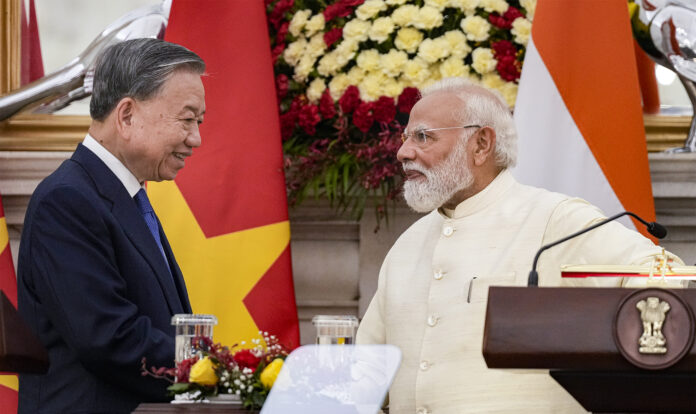
Prime Minister Narendra Modi and Vietnam President To Lam, left, during a joint press statement at Hyderabad House, in New Delhi.
NEW DELHI, May 6 India and Vietnam on Wednesday elevated their ties to an enhanced comprehensive strategic partnership and set a USD 25 billion annual trade target by 2030 as Prime Minister Narendra Modi and Vietnamese President To Lam held talks focusing on expanding bilateral ties in areas of trade, defence, and critical minerals in the face of increasing geopolitical upheavals.
Following the Modi-Lam meeting, the two sides signed as many as 13 agreements which will provide for deeper two ways engagements in a range of areas including digital payments, rare earth minerals, pharmaceuticals, education, banking and culture.
Modi and Lam also deliberated on the situation in the Indo-Pacific amid China’s increasing assertiveness in the region, and agreed to continue to contribute to the rule-of-law, peace, stability, and prosperity.
It is understood that China’s growing military muscle-flexing in the South China Sea also figured in the delegation-level talks between the two sides.
Elected as president earlier this month, Lam began his first state visit to India on Tuesday, leading a high-level delegation for a three-day trip.
“A decade ago, Vietnam became India’s first comprehensive strategic partner in ASEAN (Association of Southeast Asian Nations) . Since then, our relations have made rapid and comprehensive progress,” Modi said in his media statement.
“Building on this strong foundation, today we are elevating our relations to the level of Enhanced Comprehensive Strategic Partnership. We will now advance our partnership to even higher goals,” he said.
“Our cooperation will reach new levels in every area ‘“ culture, connectivity, and capacity building, as well as security, sustainability, and supply chain resilience,” Modi added.
He noted that the bilateral trade between India and Vietnam has doubled in the last decade to reach USD 16 billion and that the target now is to increase it to USD 25 billion by 2030.
Modi also cited a plethora of agreements signed between the two countries to emphasis that the economic engagement is expected to witness a significant upswing going forward.
“The MoU between our drug authorities will now increase access to Indian medicines in Vietnam. Exports of Indian agricultural, fisheries, and animal products to Vietnam are also set to become easier. Very soon, Vietnam will taste India’s grapes and pomegranates,” he said.
The two sides also agreed to update the India-ASEAN trade agreement by the end of this year.
“This will provide a new impetus to trade and investment between India and all ASEAN countries. New initiatives in critical minerals, rare earths, and energy cooperation will ensure the economic security and supply chain resilience of both countries,” Modi said.
“To boost financial connectivity, we have today decided to enhance cooperation between our central banks. India’s UPI and Vietnam’s fast payment systems will soon be linked. Furthermore, we are strengthening state-to-state and city-to-city cooperation between the two countries,” he noted.
Modi said India is grateful to Vietnam for its strong condemnation of the Pahalgam terrorist attack and standing with India in its fight against terrorism.
“In this era of global turmoil and economic challenges, thanks to their talent, good governance, and economic reforms, India and Vietnam are emerging as the world’s fastest-growing economies,” he said.
“Now, through our enhanced strategic partnership, we will support each other’s rapid growth. As the Buddha’s teachings say, ‘If you light a lamp for someone else, it also illuminates your own path’,” Modi said.
He also described Vietnam a a key pillar of India’s Act East Policy and Vision Ocean.
“In the Indo-Pacific region as well, we share a common outlook. Through our strengthening defence and security cooperation, we will continue to contribute to the rule-of-law, peace, stability, and prosperity,” he said.
The prime minister said India will broaden its relations with ASEAN with Vietnam’s cooperation.
In his remarks, Lam said both sides agreed to deepen political trust and elevate security cooperation.
Last year, the two sides inked a pact to set up a framework for submarine search, rescue and support mechanism. They also signed a letter of intent (LoI) to strengthen bilateral defence industry collaboration. (Agencies)
NEW DELHI, May 6: Hachette India will now be handling distribution in the country for leading independent publishers from the UK, including Faber, Granta Books, Europa Editions, Fitzcarraldo Editions, and Swift Press, the publisher announced on Wednesday.
Other UK publishers in this “exclusive agency distribution arrangement”, which will begin in October this year, are Scribe Publications, Daunt Books, Bedford Square, Duckworth, and Firefinch.
“I am absolutely thrilled that Hachette India will be representing some of the most revered publishing companies in the world… I have long admired their brilliant lists and look forward to working with them on growing their business and presence in India,” Riti Jagoorie, managing director of Hachette India, said in a statement.
While Faber has published 13 Nobel Laureates and six Booker Prize-winners, including Kazuo Ishiguro and Anna Burns; Granta has shaped contemporary serious fiction and narrative non-fiction along with publishing 31 Nobel Laureates.
Europa published Elena Ferrante’s Neapolitan novels in English, Fitzcarraldo has had four of its authors — Svetlana Alexievich, Olga Tokarczuk, Annie Ernaux and Jon Fosse — winning the Nobel in Literature; Scribe is known for its rigorous and consequential fiction and non-fiction; Swift publishes literary and political non-fiction of enduring relevance; Daunt brings a distinctive editorial voice to fiction and travel writing; Bedford Square is one of the most closely watched new imprints in British publishing.
Duckworth, one of the UK’s oldest imprints is known for publishing accessible, stimulating and intellectually curious works of non-fiction, while Firefinch have a carefully curated list of fiction and non-fiction built on taste, market awareness and decades of experience.
“It is a great honour for Hachette to have the opportunity to represent the wonderful Faber and Alliance publishers’ lists in the Indian market. These are lists with enormous ongoing potential in India and across the Subcontinent, and I have every confidence that Riti Jagoorie and the team at Hachette India – working closely with our friends at Faber – will take their authors’ work to an even wider audience,” Charlie King, CEO of Hachette UK International, said. *(PTI)
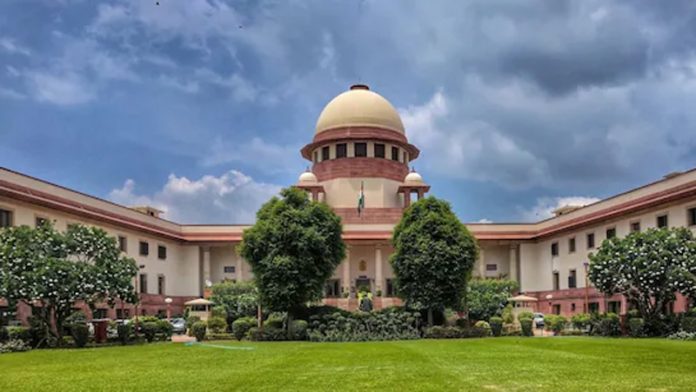
NEW DELHI, May 6: The Supreme Court collegium has approved a proposal for appointment of 10 advocates as judges of the Punjab and Haryana High Court.
The collegium headed by Chief Justice of India Surya Kant, in a meeting held on May 4, approved names of advocates Monica Chhibber Sharma, Harmeet Singh Deol, Puja Chopra, Sunish Bindlish, Navdeep Singh, Divya Sharma, Ravinder Malik, Pravindra Singh Chauhan, Rajesh Gaur, and Minderjeet Yadav as judges.
Chauhan is currently the Advocate General of Haryana while Deol is Additional Advocate General of Punjab.
In another decision, the collegium also approved the proposal for appointment of three judicial officers as judges of the Andhra Pradesh High Court.
The three judicial officers are Sunitha Gandham, Alapati Giridhar, and Purushottam Kumar Chintalapudi. (PTI)
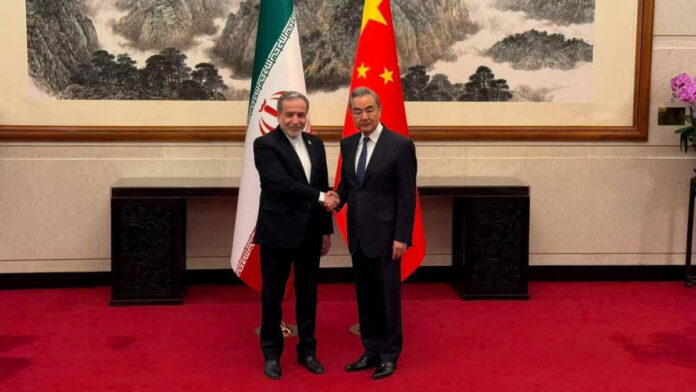
BEIJING, May 6: China’s Foreign Minister Wang Yi on Wednesday held talks with his Iranian counterpart Abbas Araghchi here amid mounting pressure on Iran to open the Strait of Hormuz for international shipping and reach a deal with the US to end the war.
Araghchi’s one-day visit comes a week ahead of US President Donald Trump’s planned trip to Beijing from May 14 to 15 for talks with his Chinese counterpart Xi Jinping to discuss, among other things, a comprehensive trade deal.
Official media reports here said Wang and Araghchi, who is on his first visit to Beijing after the US-Iran war started, met to discuss the prevailing situation arising from the US blockade of Iranian ports to force Tehran to lift its blockade of the Strait of Hormuz.
China is a close partner of Iran, and the biggest buyer of Tehran’s crude oil.
Argachi’s visit comes in the immediate backdrop of US Secretary of State Marco Rubio’s announcement on Tuesday that major US military operations against Iran are over.
Rubio told reporters at the White House that ‘Operation Epic Fury’, the attack the US and Israel mounted on Iran on February 28, has concluded because its objectives were met.
Rubio earlier urged China to tell Araghchi that Iran’s actions are causing the country to be “globally isolated.”
On Araghchi’s visit to China, Rubio reiterated the need for Iran to lift its blockade of the Strait of Hormuz, the critical waterway that caters to over 20 per cent of global oil and gas supplies.
“I hope the Chinese tell him what he needs to be told. And that is what you are doing in the Strait is, causing you to be globally isolated,” media reports quoted Rubio as saying.
“You’re the bad guy in this”, he said, adding that China, more than the US, is suffering from Iran’s actions in the Strait as its export-driven economy depends on shipments going through Hormuz.
Rubio said it is in China’s interest that Iran stop closing the Strait, and many countries want to help open Hormuz, but some cannot do so.
Both China and the US want to see an end to the war in West Asia before Trump’s visit.
Beijing is also widely reported to have been helping Pakistan, which is currently mediating between the US and Iran to bring the conflict to an end.
Beijing, which shares close ties with other Gulf countries, is reportedly counselling Tehran to reach an agreement with Washington.
The US blockade of Iranian ports, strongly criticised by China, is putting pressure on Beijing to augment its energy supplies. (PTI)
LOS ANGELES, May 6: South Korean actor Lee Byung-hun, known internationally for Netflix’s “Squid Game”, has signed on to star in an upcoming martial arts action film set in the early Joseon Dynasty.
According to Deadline, the movie is currently titled “Nambeol” and is backed by renowned South Korean production banner Hive Media Corp.
Described as a hard-boiled martial arts action flick, the movie follows nine warriors who travel to Tsushima Island to rescue Korean captives kidnapped by Japanese pirates.
Lee, also known for movies such as “I Saw The Devil” and “No Other Choice”, will play the leader of the group.
Though not based on specific historical events, the story is set during a period when Korea faced frequent Japanese pirate raids.
“Nambeol” marks the directorial debut of veteran cinematographer Lee Mo-gae, whose credits as director of photography include “A Tale of Two Sisters”, “Asura: The City of Madness” and “Exhuma”.
He previously collaborated with Lee Byung-hun on “The Good, the Bad, the Weird” and “I Saw the Devil”.
Lee Byung-hun is currently filming Disney+ series “The Koreans”, a reimagining of the FX series “The Americans”.
His most recent film, Park Chan-wook’s “No Other Choice”, premiered at the Venice film festival last year and was selected as Korea’s submission for the Academy Awards. (PTI)
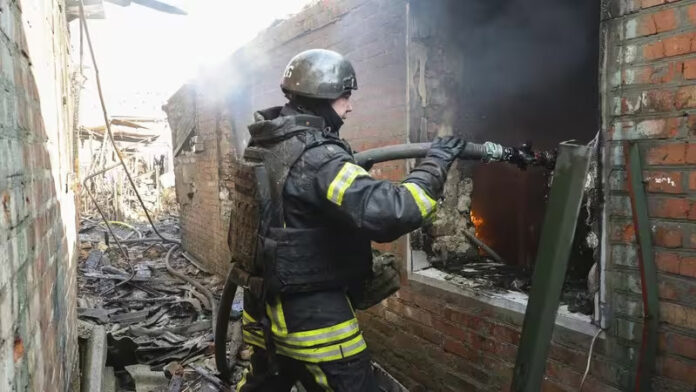
KYIV, May 6: Russia fired dozens of drones at Ukraine in nighttime attacks, Ukrainian officials said Wednesday, disregarding a unilateral ceasefire announced by Kyiv that began at midnight.
The Russian Defence Ministry claimed that Ukraine hadn’t abided by its own ceasefire, saying that air defences shot down 53 Ukrainian drones over Russian regions, the illegally annexed Crimean peninsula and the Black Sea between Tuesday evening and dawn Wednesday.
Five people were killed by a Ukrainian drone strike on the city of Dzhankoi in Crimea, according to Russia-installed Gov. Sergei Aksyonov. He reported the casualties just after midnight, but posted about the attack itself more than 90 minutes earlier.
There had been no official sign from Moscow that it would heed Kyiv’s ceasefire, and there was little hope for a pause in hostilities as the war stretches into its fifth year following Russia’s all-out invasion of its neighbour. US-led diplomatic efforts to stop the war over the past year have come to nothing.
On Tuesday, Russian drone and missile strikes on Ukraine killed 27 people and wounded 120 others, all of them civilians, according to Ukrainian Interior Minister Ihor Klymenko. The war has killed more than 15,000 civilians, according to the United Nations.
Both sides have kept up long-range strike campaigns. On the roughly 1,250-km (800-mile) front line, meanwhile, Russia’s bigger army remains engaged in a slow-moving and costly slog against Ukraine’s drone-heavy defences.
Ukrainian President Volodymyr Zelenskyy had announced the unilateral ceasefire after Russia said it would hold its own pause of hostilities over two days later this week while it marks the 81st anniversary of the defeat of Nazi Germany in World War II. The Ukrainian leader said any breach of the ceasefire would trigger a military response.
European officials had welcomed Ukraine’s unilateral move as a goodwill gesture illustrating its readiness for a peace settlement.
Russian forces launched 108 drones and three missiles overnight, Ukrainian Foreign Minister Andrii Sybiha said, with attacks continuing throughout the night and into Wednesday morning.
“Moscow once again ignored a realistic and fair call to end hostilities, supported by other states and international organisations,” Sybiha said in a post on X.
Moscow’s proposal to stop fighting on Friday and Saturday follows a pattern of Russia declaring short unilateral ceasefires during the war timed to coincide with various holidays, most recently Orthodox Easter.
Those suspensions of combat don’t produce any tangible results amid deep mistrust between the warring sides.
Sybiha said Russia’s actions exposed its calls for a separate ceasefire around May 9 as insincere. “Putin only cares about military parades, not human lives,” he said.
The diplomat called for increased international pressure on Moscow, including new sanctions, diplomatic isolation, accountability measures for war crimes and expanded military and civilian support for Ukraine. (AP)
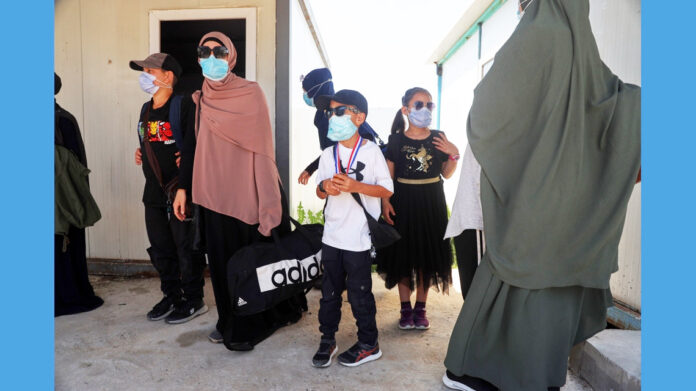
MELBOURNE, May 6: A number of Australian women with alleged ties to Islamic State group militants will be arrested and face criminal investigations if they return from Syria, police said Wednesday.
The Australian Government had been alerted Wednesday that four women and nine children had booked flights from Damascus to Australia, Home Affairs Minister Tony Burke said. He did not say when they were expected to arrive.
Australian Federal Police since 2015 have been investigating the behavior of Australians who had traveled to the Islamic State group’s so-called caliphate that had been centered in Syria, Police Commissioner Krissy Barrett said.
Investigations had included potential terrorism offenses and crimes against humanity such as slave trading, she said.
“Some individuals will be arrested and charged. Some will face continued investigations when they arrive in Australia,” Barrett told reporters.
The children would undergo programs to counter violent extremism, she said.
The Government was required to provide the group travel documents but has repeatedly said it was not helping repatriate them.
“The individuals concerned traveled … in support of one of the most horrific terrorist organizations we’ve seen in recent history or in our lifetimes,” Burke told reporters.
“There is a reason why the Government has drawn a very hard line saying we will do nothing to assist. The government’s complete lack of support for these individuals is a direct reflection of the decisions that they made,” he added.
The women were held in Roj Camp near Syria’s border with Iraq. They left the camp last week, but the Syrian government told The Associated Press then that the Australian government had “refused to receive them.”
Burke said there was little his Government could do to prevent their return. “There are very serious limits on what can be done with respect to preventing a citizen of a country returning to their country,” Burke said.
A previous attempt to return 34 women and children to Australia from the same camp in February was turned back by Syrian authorities.
On that occasion, Australia’s Government banned one of the women from returning.
The woman, whom the Government did not identify, had been issued with a temporary exclusion order which Australia can use to prevent high-risk citizens from returning for up to two years.
The orders were created by laws introduced to in 2019 to prevent defeated Islamic State fighters from returning to Australia. There are no public reports of an order being issued before.
Such orders can’t be made against children younger than 14. But Australia has ruled out separating children from their mothers.
Burke said the order made in February that banned the woman’s return remained in place.
Under Australian law, it was an offense punishable by up to 10 years in prison to travel to the former Syrian Islamic State group stronghold of Raqqa without a legitimate reason from 2014 to 2017.
Former Islamic States fighters from multiple countries, along with their wives and children, were held in a network of camps and detention centers in northeast Syria after the militant group lost control of its territory in Syria in 2019. Though defeated, the group still has fighters that carry out attacks in Syria and Iraq.
The larger al-Hol camp has now been closed, and thousands of suspected IS militants previously held in Syria were transferred to Iraq by the U.S. military to stand trial there.
The moves came after fighting between government forces and the SDF in January. Government forces seized much of the territory formerly held by the SDF. Amid the chaos, many detainees fled al-Hol and some prisoners escaped from a detention center.
Australian Governments have repatriated Australian women and children from Syrian detention camps on two occasions. Other Australians have returned without government assistance. (AP)
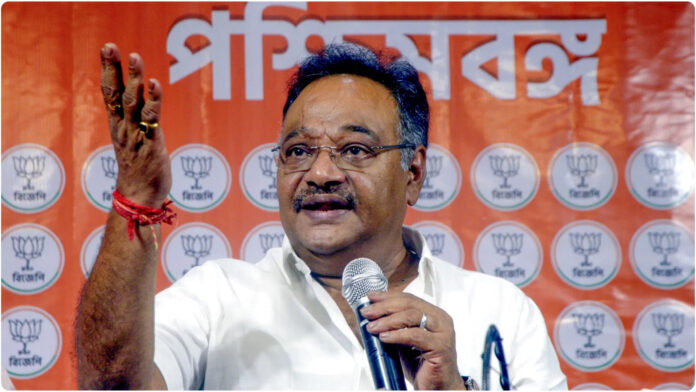
KOLKATA, May 6: West Bengal BJP president Samik Bhattacharya on Wednesday announced that the oath-taking ceremony of the new government in the state will be held on May 9.
Bhattacharya told reporters that the swearing-in ceremony will take place at Brigade Parade Ground in central Kolkata from 10 am.
“The new BJP government will take oath on May 9 at 10 am,” he said.
The BJP secured a landslide victory in the recently concluded West Bengal assembly elections, ending the 15-year rule of the Trinamool Congress in the state.
JAMMU, May 6: Displaced Kashmiri Pandits protested here on Wednesday against the Jammu and Kashmir administration’s move to integrate their relief rations into the National Food Security Act (NFSA). Minor clashes broke out between demonstrators and police as they attempted to march towards the Relief Commissioner’s office.
Terming the move a “conspiracy” to dilute their migrant and genocide victim status, the protesters vowed to intensify agitation if the decision is not rolled back.
The administration is integrating migrant ration cards, including those of Kashmiri Pandits (KPs) in Jammu, into the NFSA database. This process began in early 2026. As of April 2026, officials said over 17,500 migrant ration cards have been integrated, with more than 50,000 families ultimately set to be included to enable access to wider social welfare schemes.
Hundreds of members of the displaced community, representing groups such as the United Alliance of Kashmiri Displaced Community, Panun Kashmir and various migrant camp residents, joined the protest march, which was also supported by Shiv Sena.
The protesters, including residents of Jagti, Purkhoo, Nagrota and Muthi migrant camps, assembled on the road outside the Relief Commissioner’s office and raised slogans against implementation of the NFSA.
As they tried to move towards the office, a heavy police contingent stopped them, leading to brief scuffles and pushing between the two sides, said officials.
Police later dispersed the crowd. Afterwards, the protesters staged a sit-in and raised anti-government slogans.
Community leaders described NFSA as a “black law” and a “trap” for Kashmiri Pandits, alleging that its implementation would dilute their distinct identity as displaced persons and affect their rehabilitation rights.
“It is a black law and a trap for the community to dilute their identity as genocide survivors. The discrepancies in this law amount to outright injustice.
For 36 years, Kashmiri Pandits have suffered after their displacement, and now under NFSA, our identity is being diluted,” said Panun Kashmir convenor Dr Agnishaker.
“We urge the authorities to reconsider the decision pragmatically and address the community’s genuine concerns. In its present form, this is anti-community,” he said.
He also expressed concern over the upcoming census, demanding recognition of their distinct identity as internally displaced persons and victims of genocide. “If our identity is not included, it will amount to erasing Kashmiri Pandits forever,” Agnishaker said.
Another leader, Arvind Kaul, alleged that their fundamental right to peaceful protest was being curtailed.
“It is our fundamental right to protest peacefully, but we are not even being allowed to do that,” he said, demanding restoration of their rights and continuation of the existing relief system.
He sought permanent rehabilitation for the displaced community, stating that they neither have homes nor their homeland, yet are being asked to register Kashmir as their permanent address.
Echoing similar sentiments, community leader Sunil Kumar said the displaced population would continue their struggle until a permanent and dignified resolution to their displacement is achieved.
“We strongly oppose these laws being imposed on us repeatedly. We will not step back until our demands are met,” he said.
The protesters warned of a larger agitation if their concerns are not addressed, reiterating their demand that the government focus on rehabilitation in Kashmir rather than altering the relief distribution mechanism. (Agencies)