Friday, May 15, 2026
E-Paper
Home Blog Page 71

LG inaugurates National Youth Festival

Excelsior Correspondent

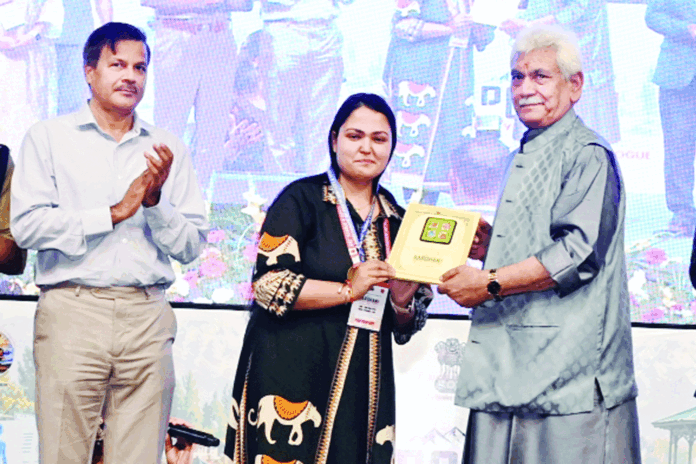
Srinagar, May 11: The Lieutenant Governor, Manoj Sinha today inaugurated National Youth Festival- Aarohan 2026 in Srinagar.
The Lieutenant Governor said this event declares a new vision of ‘Rise, Shine, and Conquer’ to our youth which encapsulates a complete philosophy that lights the path to the future, a promise, and a bold challenge to build a developed India @2047.
“National Youth Festival is also a proclamation that the time for youth has arrived. Through Youth Festival’s “Young Leaders Dialogue,” we are laying the very foundation and the framework on which the next chapter of India’s glorious heritage will stand tall,” the Lieutenant Governor said.
The Lieutenant Governor observed that history was never made by those who waited for permission to be extraordinary. He urged the youth participating in ‘Viksit J&K Young Leaders Dialogue’, ‘Hackathon’ and ‘Cultural Event’ to rise up and commit to building a developed India that future generations will take pride in. He said governance can’t thrive without the voice of its youth and inclusive governance means ensuring young people have a real stake in the work happening across every key sector.
“Every young boy and girl has incredible talent. They just need opportunities and faith in themselves. I want India’s youth to create their own paths instead of treading well-worn trails, because innovation and invention spring from uncharted routes. What India needs is youth brave enough to shatter pre-made molds,” the Lieutenant Governor said.
The Lieutenant Governor also stated that culture is our identity and it is the vibrant proof of our existence, revealing who we are and what dreams and aspirations drive us. He said when young people express themselves through music, art, literature, dance, theater, sports, and crafts, they are channeling the soul of India itself.
The Lieutenant Governor said that the youth must embrace their uniqueness instead of copying others and realise their full potential.
“The world doesn’t need another copy of someone who already exists. It craves no duplicates. It needs unique youth like you, individuals with one-of-a-kind personalities who don’t just shine for themselves, but light the way for those who come after,” the Lieutenant Governor said.
He said victory isn’t about dominating others but about conquering apathy, overcoming inequality, and defeating despair.
“Our youth must remember that humanity’s greatest triumphs weren’t won on battlefields. The biggest victories emerged from classrooms and labs, achieved by young trailblazers who refused to accept the world as they found it and transformed it through their resolve and grit. We must triumph over darkness. We must conquer the fear of bold new experiments. And we must resolve to build a strong, empathetic, and developed India,” the Lieutenant Governor said.
Ashwani Kumar, Additional Chief Secretary, Power Development Department; Dr Shahid Iqbal Choudhary, Commissioner Secretary to Government, Youth Services and Sports; Akshay Labroo, Deputy Commissioner Srinagar; Dr GV Sundeep Chakravarthy, SSP Srinagar; Anuradha Gupta, Director General, Youth Services and Sports; Young leaders from various parts of the country, senior officials and youth in large number were present.
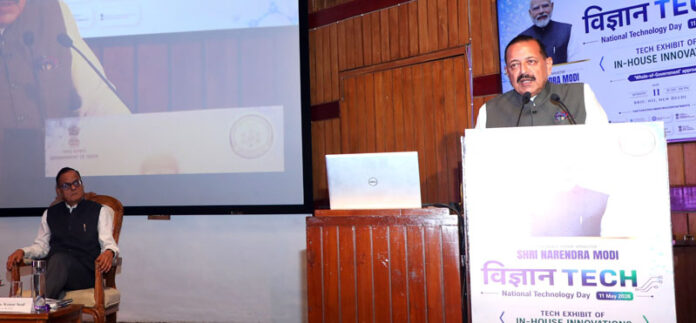
Independent India’s major share of technological transformation in last one decade: Dr Jitendra

Union Minister Dr Jitendra Singh addressing “Vigyan TECH 2026
Union Minister Dr Jitendra Singh addressing “Vigyan TECH 2026", organised on the occasion of National Technology Day at BRIC-NII, New Delhi on Monday. Also seen is Principal Scientific Advisor to Govt, Prof A.K. Sood.

‘National Technology Day’

Excelsior Correspondent
NEW DELHI, May 11: Union Minister of State (Independent Charge) for Science & Technology, Earth Sciences, PMO, Personnel, Public Grievances, Pensions, Atomic Energy and Space, Dr. Jitendra Singh today said that independent India’s major share of technological transformation has happened in the last one decade due to decisive policy reforms, strong political support for science and technology, enhanced research freedom and increased participation of the private sector.
Addressing the inaugural session of “Vigyan TECH 2026” organised on the occasion of National Technology Day at BRIC-NII, Dr Jitendra Singh said, India always possessed scientific talent and capable human resources, but after 2014 science and innovation received unprecedented national priority, resulting in rapid technological advancement across sectors.
The Minister said, India’s startup ecosystem has expanded from barely 350-400 startups in 2014 to more than two lakh startups today, making India the world’s third-largest startup ecosystem. He said India’s Global Innovation Index ranking improved from 80 to 38, while the country today ranks sixth globally in patents with more than one lakh patents filed, over 55 percent of them by Indian residents. He added that India has also emerged among the world’s leading nations in scientific publications and innovation-driven research.
On the occasion, Dr Jitendra Singh also inaugurated the exhibition and interacted with exhibitors participating in the day-long event themed “Building India’s Innovation Ecosystem for Viksit Bharat”. The programme brought together fourteen Ministries and Departments associated with science, technology and research on a common platform for the first time.
The event also featured release of the compendium, showcasing indigenous technologies developed by autonomous institutes and laboratories of participating Ministries and Departments, besides technology transfer initiatives and exchange of MoUs.
Among those present on the occasion were Principal Scientific Adviser to the Government of India Prof. Ajay Kumar Sood; Secretary Department of Biotechnology, DG BRIC and Chairman BIRAC Dr. Rajesh S. Gokhale; Secretary Ministry of Earth Sciences Dr. M. Ravichandran, senior officials from DST, CSIR, ICMR, NITI Aayog and other scientific institutions.
A special message from Prime Minister Narendra Modi was read out by DBT Secretary Dr. Rajesh S. Gokhale, in which the Prime Minister extended his greetings on National Technology Day and appreciated the coming together of multiple science Ministries and Departments on a single platform to strengthen India’s innovation and research ecosystem.
Dr. Jitendra Singh said several landmark initiatives launched during the last decade have positioned India among frontline scientific nations. Referring to the National Quantum Mission, India AI Mission, Anusandhan National Research Foundation, Research Development and Innovation initiative, WISE-KIRAN scheme for women scientists and NIDHI programme for startups, he said the government has consistently expanded opportunities for innovation, entrepreneurship and inclusive scientific growth.
The Minister also highlighted administrative reforms undertaken to provide greater autonomy and flexibility to scientific institutions, including liberalised procurement norms and delegation of Global Tender Inquiry exemption powers to institute directors to accelerate research and innovation activities.

Somnath temple laid foundation of new India: LG

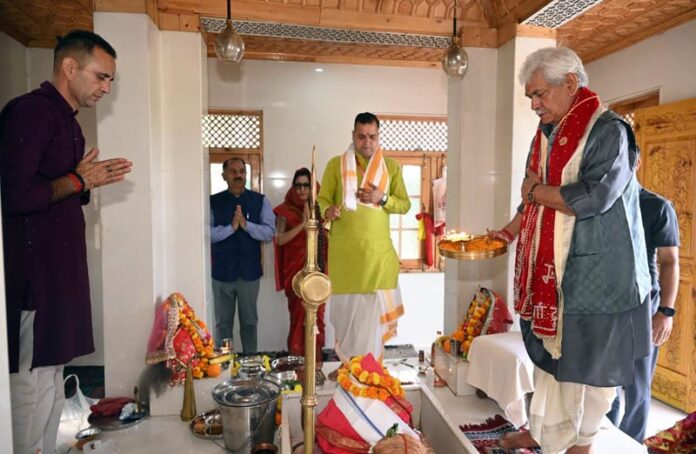
LG Manoj Sinha offers prayers at the temple on Monday.

‘Despite invasions, it remains guiding light’

Excelsior Correspondent
SRINAGAR, May 11: Lieutenant Governor, Manoj Sinha performed Puja on Somnath Swabhiman Parv, a celebration of 1,000 years of unbroken faith and unyielding resolve. He also attended a public event organized on the sacred occasion at Lok Bhavan here.
He said despite countless atrocities and invasions by aggressors, Somnath has remained a guiding light ushering Bharat towards new horizons.

Follow the Daily Excelsior channel on WhatsApp
“From the consecration of the rebuilt Somnath on May 11, 1951, to this day, this center of faith has ignited the deepest spirit in every Indian.  I am confident that Somnath’s blessings will continue to inspire us to march forward with renewed resolve,” the Lieutenant Governor said.
He also stated that Somnath Temple has always awakened new possibilities across the nation and laid foundation of a new India.
“Somnath is a celebration of India’s rich spiritual and cultural heritage. Somnath embodies the divinity of our land. Somnath is eternal prayer. Somnath is inseparable from our culture and its sanctity lives in every Indian heart,” Sinha said.
He observed that Somnath is the very core of our eternal culture’s existence and its purity is intertwined with the soul of every Indian.
“Somnath is the divinity of India. Somnath is dedication. Somnath is devotion. Somnath is eternal prayer. Somnath is the thirst for truth. Somnath is the radiant light of luminous saints. Somnath is our pride. Somnath is our strength,” he said.
The Lieutenant Governor said that no other temple or sacred site looted and destroyed 17 times, only to rise again each time in full splendor.
“The Somnath temple stands alone as the foremost example. Invaders and rulers from Mahmud Ghaznavi to Alauddin Khilji and Zafar Khan, plundered and razed it time and again. Yet, despite repeated destruction, Somnath endured in our collective soul and later rebuilt by countless great kings.
“On this occasion, I bow to those great souls who, in various ways, not only preserved Somnath’s eternal sanctity but stood firm to defend the temple from invaders. I pay homage to Bhim Dev, Jayapal, Anandpal, and Maharaja Dharsen. I also offer tribute to the Iron Man, Sardar Vallabhbhai Patel, who, after India’s independence, directed the temple’s reconstruction on November 12, 1947 and on May 11, 1951, then President of India Dr. Rajendra Prasad performed the consecration ceremony,” the Lieutenant Governor said.
He said that Somnath Temple’s immortality teaches us to channel the nation’s entire strength into creation, drawing inspiration from the past to make it the bedrock of life, and build India’s golden future.
The Lieutenant Governor said that the rebuilding of Somnath Temple is a symbol of inner victory for every person, a lamp of faith and resolve burning for millennia.
“Somnath Temple is a beacon of the nation. Without Somnath, our society would be lifeless,” he said.

Following Adh-Kunwari tragedy, PSC on Home Affairs reviews disaster preparedness at Bhawan

Chairman says terror contained, killings stopped

*Historic development in J&K after Art 370 abrogation

Sanjeev Pargal
JAMMU May 11: The Parliamentary Standing Committee (PSC) on Home Affairs today reviewed disaster preparedness at holy cave shrine of Shri Mata Vaishno Devi Ji where tragedy struck last August killing nearly 30 pilgrims at Adh-Kunwari while prior to that 12 pilgrims were killed and 15 others were injured in stampede at the Bhawan on January 1, 2022.

Follow the Daily Excelsior channel on WhatsApp
The PSC on Home Chairman Radha Mohan Das Aggrawal, in a brief chat with media persons at Katra, the base camp of the shrine, said following abrogation of Article 370 of the Constitution of India, a revolutionary change has been witnessed in Jammu and Kashmir with terrorism contained and innocent killings stopped.
“After Article 370 was scrapped, lives of the people of Jammu and Kashmir have changed. A revolutionary change has taken place in the UT. Terrorism has been checked and killings of the innocent people have stopped. Youth have been focusing on education. Women are moving freely,” Aggarwal said.
Asserting that historic development has taken place in Jammu and Kashmir, the PSC on Home Affairs chairperson said earlier the funds used to go into the pockets of politicians and terrorists but they are now being used for welfare and development of the Union Territory.
“We heard about a change in Jammu and Kashmir. Today, we have witnessed it closely,” he said.
Responding to a question on change of Government in West Bengal, Aggarwal charged previous Mamata Government with resorting to “political terrorism” saying that dispensation never trusted democracy, policies and values.
“In her bid to appease (the minorities), the former Government had crossed all limits and virtually became `anti-Hindu’. The Hindus in their own country were being treated as second-class citizens in West Bengal,” he said, adding that BJP victory in Bengal is message to all politicians that “appeasement and discrimination” will not be tolerated by the people.
To a question on Congress leader Rahul Gandhi criticizing Prime Minister Narendra Modi’s remarks on fuel and gold; Aggarwal said Rahul always gives “childish and anti-national statements”.
“When one Prime Minister (a reference towards Lal Bahadur Shastri) called for fasting once a week due to shortage of food, the people had responded to the call. The people are with Prime Minister (Narendra Modi),” he asserted.
He took a dig at Rahul Gandhi saying they were aligned with DMK for 25 years and have now dumped it to join TVK for the sake of power. “Earlier, the MPs used to defect but in this case, the entire Congress Party has defected,” he said.
Earlier, the PSC on Home Affairs reviewed disaster preparedness at Shri Mata Vaishno Devi Bhawan and enroute with top officials of the Shrine Board, civil and police administration.
It may be mentioned here that in August 2025, nearly 30 pilgrims died of landslide at Adh-Kunwari after heavy rainfall while on January 1, 2022; 12 pilgrims were killed and 15 others were injured due to stampede at the Bhawan.
After the review, the Committee left for Srinagar.
As per tour schedule of the PSC on Home, the Committee will meet representatives of the Ministry of Home Affairs and administration of the UT in Srinagar to discuss administration, development and people’s welfare on May 12.
It will have a tour of Gulmarg on May 13 to assess security situation at tourist places. The PSC members will have an interaction with representatives of the Jammu and Kashmir Police at Sonmarg on May 14. The Committee will reach Kargil on May 15 and assess border security establishments and have an interaction with representatives of the Indian Army.

Pakistan summons Afghan diplomat over deadly KPK attack

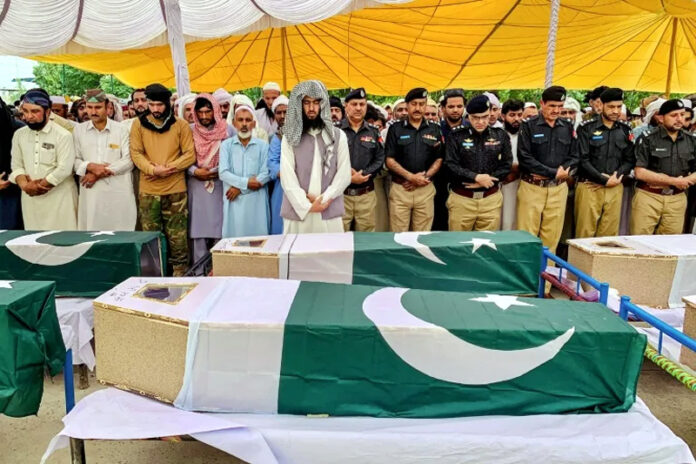
ISLAMABAD, May 11: Pakistan on Monday summoned the Afghan Charge d’Affaires and issued a “strong demarche” over a deadly attack carried out by the TTP on a police post in Khyber-Pakhtunkhwa.
At least 15 security personnel were killed and several others injured in the suicide attack on the police post in Khyber Pakhtunkhwa’s Bannu district on Saturday.
The ministry conveyed that a detailed investigation into the incident, along with evidence collected and technical intelligence, indicates that the attack was masterminded by terrorists residing in Afghanistan, the Foreign Office (FO) said in a statement.
“Reiterating Pakistan’s grave concern over the continued use of Afghan soil for terrorist attacks against Pakistan, it was impressed upon the Afghan side that Pakistan reserves the right to respond decisively against the perpetrators of this barbaric act,” it said.
It was further highlighted that the continued presence of various terrorist groups on Afghan soil, and the permissive environment enabling their operations, have been well documented in reports by the UN Monitoring Team and other international organisations, the FO said.
“The fight against terrorism is a common cause, and the Afghan Taliban must honour their commitment not to allow their territory to be used for terrorism against other countries,” it said.
Pakistan has repeatedly urged the Afghan Taliban regime to take concrete and verifiable action against Fitna-al-Khawarij, ISKP/Daesh and other elements operating from Afghan soil, it added.
Fitna al-Khawarij is a term the state uses to refer to the banned Tehreek-i-Taliban Pakistan (TTP).
The FO said that Pakistan has also constructively engaged with the Afghan Taliban regime through several rounds of talks mediated by brotherly and friendly countries. However, the Afghan Taliban have consistently failed to commit to, or deliver, meaningful and verifiable action against these terrorist outfits.
The Afghan Taliban regime has also been categorically informed that, if it continues to harbour these terrorist organisations, Pakistan will not compromise on its national security or on the safety and protection of its citizens, according to the FO.
Relations between the two countries have lately become strained, largely because of the TTP but also due to frequent border skirmishes.
There has been an uptick in the incidents of terrorism in Pakistan since the Taliban took over the government in Kabul in 2021, dashing hopes in Islamabad that a friendly government in Afghanistan would help to tackle militancy. (PTI)

Srinagar acquires changed look due to ongoing development: Parl Committee

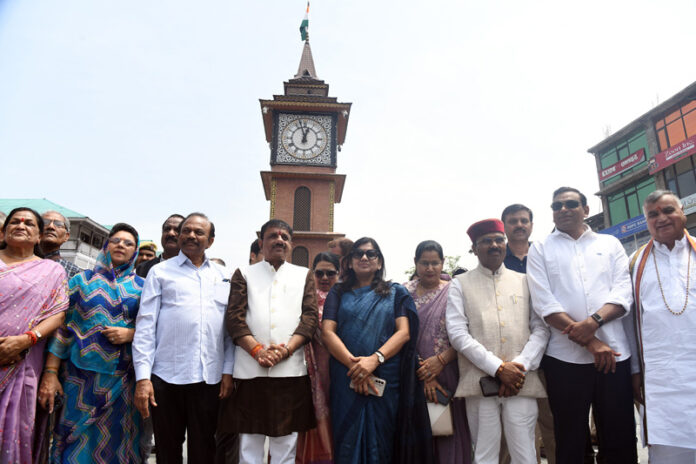
Parliamentary delegation at Lal Chowk, Srinagar on Monday. — Excelsior/Shakeel

Fayaz Bukhari
Srinagar, May 11: A Parliamentary Standing Committee on Housing and Urban Affairs today said Srinagar has acquired a “changed look” due to the ongoing urban development and Smart City projects, while also stressing the need to protect the environment alongside rapid urban growth.

Click here to watch video
The committee, led by MP Magunta Sreenivasulu Reddy, visited several Smart City assets in Srinagar, including the Jhelum Riverfront, Lal Chowk Public Square and Balidan Stambh, as part of its 2025-26 study programme to assess the implementation of urban development initiatives in J&K.
Speaking to reporters during the visit, committee member MP Satpal Brahmachari said the delegation was satisfied with the pace and visibility of the developmental works in the city.
“The work is progressing at a good pace, whether by the Srinagar Municipal Corporation or the district administration. All agencies are working effectively, and Srinagar today presents a changed look because of the developmental works carried out across the city,” Brahmachari said. He said the transformation in Srinagar was clearly visible on the ground and credited both the Government of India and the J&K administration for the execution of key projects.
“There have been significant visible changes in Srinagar. Development is moving at a great pace and its impact can be seen on the ground. Good work is being done by both the Government of India and the Government of J&K,” he said, adding that upcoming projects would further accelerate development in the region.
Another committee member, MP Maya Naroliya, said the committee’s visit was aimed at reviewing developmental works and assessing their impact on tourism, employment and public infrastructure.
“We visited the Jhelum Riverfront, which has become more attractive and well-developed. It will not only boost tourism but also create more employment opportunities for local people,” she said.
Naroliya said the committee would prepare a report highlighting shortcomings, gaps and areas where further development was needed in J&K.
“The report will also examine what more can be done to strengthen development in J&K and how additional central schemes can be brought to both Kashmir and Jammu for faster progress,” she said.
Another committee member, Mahima Kumari, said traders in Lal Chowk informed the delegation that tourism had witnessed a significant rise following the developmental works in Srinagar.
“The shopkeepers in Lal Chowk told us that tourist footfall has increased substantially after the developmental works, with nearly a 40 per cent rise in tourism,” she said.
She added that the committee had stressed the need to protect the environment alongside development and urged both residents and tourists to maintain cleanliness and reduce the use of plastic.
During the visit, the committee was briefed on projects related to urban infrastructure, housing, sanitation and municipal services.
Discussions focused on improving urban governance, strengthening civic facilities and ensuring effective implementation of flagship schemes of the Government of India.
Chief Executive Officer of Srinagar Smart City Limited, Faz Lul Haseeb, briefed the committee on various Smart City initiatives being implemented across Srinagar, including projects aimed at improving public spaces, pedestrian-friendly infrastructure, urban mobility and civic amenities.
The committee is scheduled to visit Gulmarg tomorrow, where it will hold a review meeting with officers of the Housing and Urban Development Department and provide feedback and recommendations on ongoing projects.

India has 60 days of crude, gas stocks; no shortage fears: Govt

NEW DELHI, May 11: The union government today sought to reassure citizens amid rising concerns over the escalating West Asia conflict, asserting that India has sufficient reserves of key petroleum products and that there is no reason for panic buying or fear of shortages.
Chairing the fifth meeting of the Informal Group of Ministers (IGoM) on West Asia at Kartavya Bhawan in the national capital, Defence Minister Rajnath Singh reviewed the evolving regional situation and directed ministries to ensure that global disruptions do not impact Indian citizens.
The meeting was attended by union ministers including J. P. Nadda, Hardeep Singh Puri, Ashwini Vaishnaw, Kiren Rijiju, Kinjarapu Rammohan Naidu, Sarbananda Sonowal and Jitendra Singh.
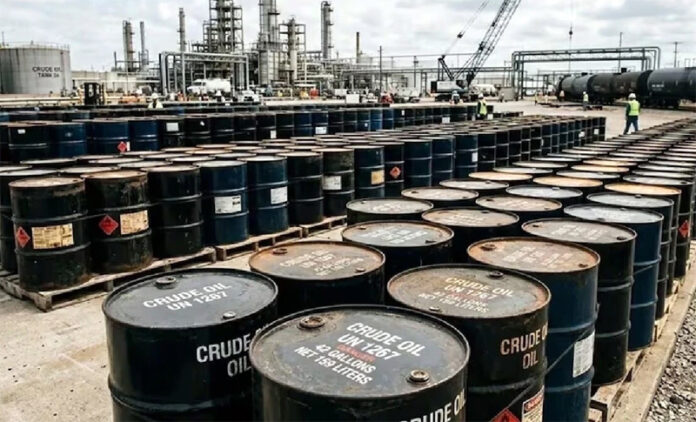
Officials informed the ministers that India currently holds 60 days of crude oil reserves, 60 days of natural gas stocks and 45 days of LPG rolling stock, ensuring that domestic demand remains fully met despite turbulence in global energy markets.
“The country is secure, and there is no shortage of any petroleum product,” officials told the meeting, while noting that India continues to maintain stable fuel supplies even as many countries have introduced emergency consumption controls.
India currently has foreign exchange reserves of nearly USD $703 billion, while its refining capacity continues to remain robust. Officials said India is now the world’s third-largest oil refiner and the fourth-largest exporter of petroleum products, supplying fuel to more than 150 countries.
Despite the strong supply position, the government acknowledged the financial strain caused by rising international crude prices.
Officials said public sector oil marketing companies are currently absorbing losses of nearly Rs 1,000 crore per day, while under-recoveries have touched nearly Rs 2 lakh crore in the first quarter of 2026, ensuring that the burden is not passed on to consumers.
There is “no reason for anxiety, and no reason for any citizens to rush to retail outlets,” officials emphasised during the meeting.
Rajnath Singh directed ministries and state governments to implement Prime Minister Narendra Modi’s call for responsible fuel usage.
“Ministries and States must identify, in a coordinated manner, measures to institutionalise fuel efficiency, public awareness, and responsible consumption behaviour,” Singh said.
Earlier in the day, PM Modi had urged citizens to reduce fuel consumption by increasing the use of public transport, opting for carpooling, avoiding unnecessary foreign travel and limiting non-essential purchases.
The Prime Minister also called on farmers to reduce chemical fertiliser usage by 50 per cent, adopt natural farming methods and increase the use of solar-powered irrigation systems.
Following the meeting, Singh reiterated that the government was fully prepared to deal with any disruption arising out of the West Asia conflict.
In a post on X, he said, “All concrete steps are being taken to prevent shortages or disruptions in supply chains. People must remain calm.”
The Defence Minister stressed that India’s immediate priority was to protect its economic and energy interests amid global uncertainty.
“Government’s primary focus is to ensure that energy flows remain uninterrupted, economic stability is maintained and maritime trade routes remain secure,” he said.
He also called for long-term structural reforms in India’s energy sector, including faster expansion of renewable energy sources, diversification of imports and strengthening strategic reserves.
Warning that global crises now have far-reaching consequences, Singh said, “We need to focus on strategic crisis anticipation, early warning assessment, scenario planning and timely whole-of-government preparedness.”
The ministers were also briefed on recent economic support measures for industries impacted by the crisis, particularly MSMEs.
Officials said the union Cabinet recently approved the Emergency Credit Line Guarantee Scheme 5.0, aimed at providing an additional credit flow of Rs 2.55 lakh crore to businesses, including full credit guarantee support for MSMEs.
The Finance Ministry has also issued force majeure relief measures for companies facing contractual delays due to disruptions caused by the ongoing crisis.(UNI)

DYSS holds Inter-School sporting activities in Jammu, Udhampur

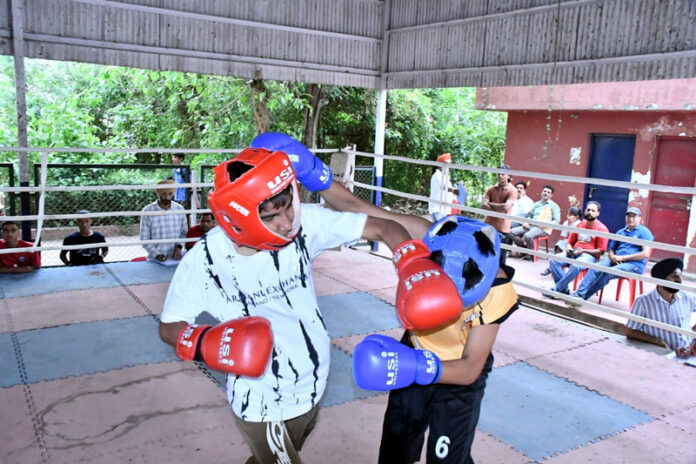
Athletes in action during a match in Jammu on Monday.

Excelsior Sports Correspondent
JAMMU/UDHAMPUR, May 11: Inter School District Level Selection Trials cum Competitions in Wushu and Boxing for Under-14 and Under-17 boys commenced at MA Stadium Jammu under the Department of Youth Services and Sports, District Jammu, along with zonal level sports activities conducted at Mini Stadium Udhampur. The events witnessed enthusiastic participation from young athletes across the districts, showcasing high levels of skill, discipline and sportsmanship.
The events are being organised under the patronage of Director General Youth Services and Sports JKUT, Anuradha Gupta under the guidance of Joint Director Youth Services and Sports Jammu Inderjeet Singh and under the overall supervision of DYSSO Jammu Sukhdev Raj Sharma. In Udhampur, the competitions were conducted under the supervision of Jyoti Rani Gupta.
At Jammu, the Wushu U-17 boys category witnessed outstanding performances across multiple weight divisions. In the below 45 kg category, the top position was secured by Ansuman, followed by Manik in the below 48 kg category, Banu Partap (below 52 kg) and Hamid emerged as leading performer in 56 kg category, Krishna Bhagat stood first in the 60 kg category. In the 65 kg category, Shaksham emerged winner, while in the 70 kg category Prarav secured the top position. In the 75 kg category, Parth claimed first position, followed by Arun Sharma in the 80 kg category and Saiyam in the 85 kg category.
In Boxing U-14 boys category, winners included Bhavya Singh in the 28-30 kg category, Arayaveer in 30-32 kg, Pranav Thakur in 32-34 kg, Keshav Sharma in 34-36 kg, Kartavya Sharma in 36-38 kg, Danjot Singh in 38-40 kg, Rajveer Chib in 40-42 kg and Manav in 42-44 kg category.
Meanwhile, in Udhampur zonal competitions, Badminton and Football events produced strong results. In Badminton U-14 boys category, Abhiraj secured first position, while in U-17 category, Priyash emerged winner. Football trials also highlighted promising performances from Under-14 and Under-17 categories.
The events concluded with appreciation from officials including Vinod Khajuria and Sunil Khajuria, who lauded the young athletes for their dedication, discipline and sporting spirit, emphasizing the role of sports in youth development and nation-building.

PM concludes two-day Gujarat with massive roadshow in Vadodara

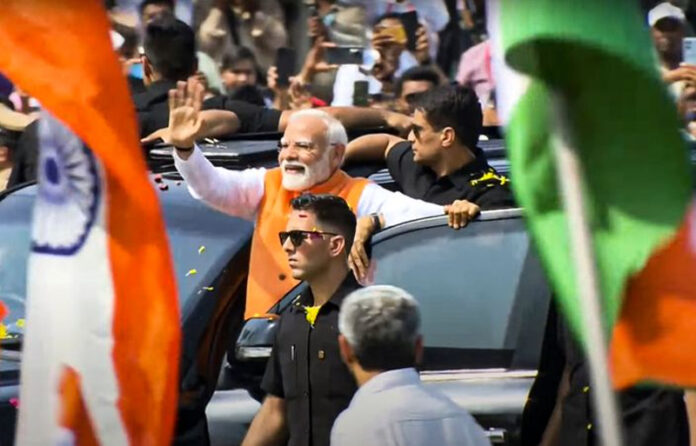
VADODARA, May 11: Prime Minister Narendra Modi on Monday night held a roadshow in Gujarat’s Vadodara district, marking the conclusion of his two-day visit to the state.
A large number of people gathered along the nearly 1.5-km stretch from Gada Circle to the airport to greet the Prime Minister, who was accompanied by Gujarat Chief Minister Bhupendra Patel, Deputy CM Harsh Sanghavi and BJP state unit president Jagdish Vishwakarma.
People on the both sides of the route held the Tricolour as well as banners related to Operation Sindoor and the BJP’s lotus symbol amid chants of ‘Modi Modi’ and ‘Jai Shri Ram’.
The entire stretch was illuminated with decorative lighting, and cultural performances added colour to the event.
Artists from the Bengali community performed along the route, while Gujarati garba performances were also staged during the roadshow.
Modi took part in the roadshow after addressing a gathering here following the inauguration of the Sardar Dham Hostel built by the Patidar community. Earlier in the day, he took part in the Somnath Amrut Mahotsav, marking 75 years of the reconstruction of the iconic place of worship.
He had arrived in Jamnagar on Sunday night for his two-day visit to Gujarat. (PTI)

1557 tonnes per day: J&K’s garbage burden beyond processing capacity

No RDF conversion plants in UT yet

*Scientific disposal still a distant goal in several ULBs

Mohinder Verma
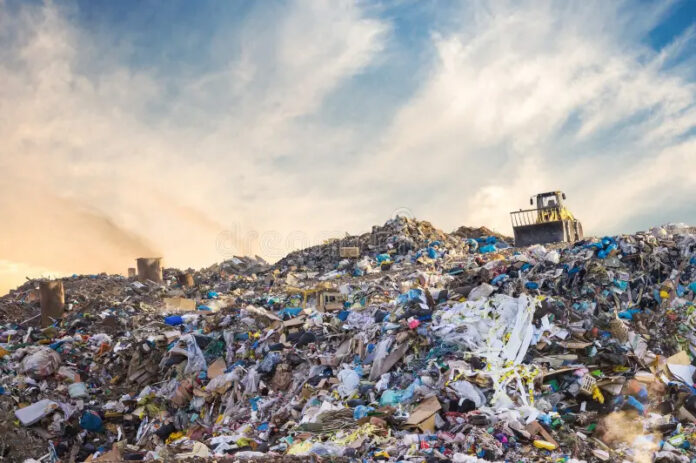
JAMMU, May 11: The Union Territory of Jammu and Kashmir is generating a massive 1,557 tonnes per day (TPD) of municipal solid waste, while several Urban Local Bodies (ULBs) are still struggling with incomplete infrastructure, local dumping sites, stalled projects and inadequate scientific disposal systems.

Follow the Daily Excelsior channel on WhatsApp
The revelations have surfaced in the Government’s affidavit/Action Taken Report filed on compliance of the Solid Waste Management Rules, 2016 and other environmental issues in terms of National Green Tribunal order dated September 24, 2025.
According to the affidavit, of the total waste generated daily in J&K, nearly 936 TPD is biodegradable waste, 443.17 TPD recyclable waste and 177.69 TPD inert waste. The report states that around 1,530.8 TPD waste is collected and transported, while approximately 1,027 TPD is scientifically processed through different facilities established across the Union Territory thereby leaving 352 TPD unprocessed.
The affidavit identifies Srinagar Municipal Corporation (SMC) as the largest waste generator with nearly 550 TPD garbage, followed by Jammu Municipal Corporation (JMC) with approximately 380 TPD waste generation daily.
The Government has informed that SMC is processing waste at the Achan facility through windrow composting, while JMC is operating the Kot Bhalwal waste processing plant. Srinagar handles around 110 TPD wet waste and Jammu around 164 TPD wet waste, producing nearly 22 TPD and 32.8 TPD compost respectively.
Among major towns, Anantnag generates 69.3 TPD waste, Udhampur 53.2 TPD, Katra 38.8 TPD, Kathua 25.3 TPD, Sopore 25.8 TPD, Baramulla 24.5 TPD, Rajouri 17.4 TPD, Bandipora 15.6 TPD, and Poonch 11.3 TPD.
However, despite these processing systems, the affidavit acknowledges major gaps in scientific disposal and waste treatment. The Government has admitted that municipalities like Bandipora, Langate, Pattan, Uri, Frisal and others are still dumping portions of waste at local dumpsites because of absence or non-completion of scientific processing facilities. In Bandipora alone, nearly 14 TPD waste is reportedly going to local dumpsites, while Pattan dumps around 7 TPD, Langate 3 TPD, and Uri around 2 TPD.
The affidavit further reveals that several municipalities are dependent on cluster arrangements and Memorandums of Understanding (MoUs) have been signed with neighbouring civic bodies for waste treatment.
Lakhanpur is linked with Kathua, Hiranagar with Samba, Ramgarh with Vijaypur, Chenani with Batote, while several Kashmir municipalities are clustered with Anantnag, Budgam and Baramulla municipalities for processing of solid waste.
The report also details multiple hurdles affecting implementation of waste management projects. At Frisal, the civil work was paused due to public interference. In Uri, tenders have only been floated for construction of compost pits, while in Pattan work has merely been allotted for compost pit construction. In Bandipora and Wattergam, construction works are still under progress.
The Government has also admitted that certain projects suffered natural damage. In R S Pura, the waste processing site was reportedly washed away in flood.
On dry waste management, the affidavit reveals that J&K presently handles around 415.36 TPD dry waste through Material Recovery Facilities with combined capacity of 504.40 TPD. Srinagar generates nearly 30 TPD Refuse Derived Fuel (RDF) and 70 TPD recyclables, Jammu produces about 50 TPD RDF and 80 TPD recyclables, while Directorate of Urban Local Bodies Jammu and Directorate of Urban Local Bodies Kashmir generate approximately 34.4 TPD and 39.4 TPD RDF respectively.
However, in one of the most significant disclosures, the Government has admitted that no dedicated RDF pellet or briquette plant presently exists anywhere in Jammu & Kashmir. The affidavit states that combustible waste including multilayer plastics, laminated packaging material, cloth pieces, rags and foams are presently converted into loose RDF only, which is being stored at processing sites.
The Government has informed that RDF generated in J&K is proposed to be utilized in cement industries as alternate fuel, though the proposal is still at the consultation stage. The affidavit also lists several steps already taken by the Government for improving waste management infrastructure.
These include establishment of windrow composting and pit composting facilities across municipalities, outsourcing of operation and maintenance of certain processing plants, clustering of municipalities for shared waste processing, sale of compost to farmers and households, utilization of compost in parks and gardens and development of Material Recovery Facilities for dry waste segregation.
The Government has additionally informed that several Integrated Solid Waste Management (ISWM) projects have been approved by the Cabinet or are under implementation in different districts.
While the affidavit highlights expansion of infrastructure and multiple corrective measures initiated by the Government, it simultaneously exposes the continuing dependence on dumpsites, delayed projects, lack of RDF conversion plants and incomplete scientific disposal systems across many urban local bodies of the Union Territory.