

No RDF conversion plants in UT yet
*Scientific disposal still a distant goal in several ULBs
Mohinder Verma
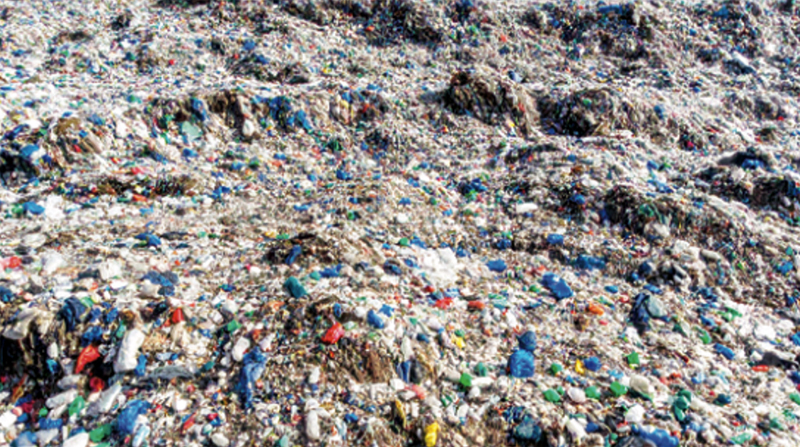
JAMMU, May 11: The Union Territory of Jammu and Kashmir is generating a massive 1,557 tonnes per day (TPD) of municipal solid waste, while several Urban Local Bodies (ULBs) are still struggling with incomplete infrastructure, local dumping sites, stalled projects and inadequate scientific disposal systems.
Follow the Daily Excelsior channel on WhatsApp
The revelations have surfaced in the Government’s affidavit/Action Taken Report filed on compliance of the Solid Waste Management Rules, 2016 and other environmental issues in terms of National Green Tribunal order dated September 24, 2025.
According to the affidavit, of the total waste generated daily in J&K, nearly 936 TPD is biodegradable waste, 443.17 TPD recyclable waste and 177.69 TPD inert waste. The report states that around 1,530.8 TPD waste is collected and transported, while approximately 1,027 TPD is scientifically processed through different facilities established across the Union Territory thereby leaving 352 TPD unprocessed.
The affidavit identifies Srinagar Municipal Corporation (SMC) as the largest waste generator with nearly 550 TPD garbage, followed by Jammu Municipal Corporation (JMC) with approximately 380 TPD waste generation daily.
The Government has informed that SMC is processing waste at the Achan facility through windrow composting, while JMC is operating the Kot Bhalwal waste processing plant. Srinagar handles around 110 TPD wet waste and Jammu around 164 TPD wet waste, producing nearly 22 TPD and 32.8 TPD compost respectively.
Among major towns, Anantnag generates 69.3 TPD waste, Udhampur 53.2 TPD, Katra 38.8 TPD, Kathua 25.3 TPD, Sopore 25.8 TPD, Baramulla 24.5 TPD, Rajouri 17.4 TPD, Bandipora 15.6 TPD, and Poonch 11.3 TPD.
However, despite these processing systems, the affidavit acknowledges major gaps in scientific disposal and waste treatment. The Government has admitted that municipalities like Bandipora, Langate, Pattan, Uri, Frisal and others are still dumping portions of waste at local dumpsites because of absence or non-completion of scientific processing facilities. In Bandipora alone, nearly 14 TPD waste is reportedly going to local dumpsites, while Pattan dumps around 7 TPD, Langate 3 TPD, and Uri around 2 TPD.
The affidavit further reveals that several municipalities are dependent on cluster arrangements and Memorandums of Understanding (MoUs) have been signed with neighbouring civic bodies for waste treatment.
Lakhanpur is linked with Kathua, Hiranagar with Samba, Ramgarh with Vijaypur, Chenani with Batote, while several Kashmir municipalities are clustered with Anantnag, Budgam and Baramulla municipalities for processing of solid waste.
The report also details multiple hurdles affecting implementation of waste management projects. At Frisal, the civil work was paused due to public interference. In Uri, tenders have only been floated for construction of compost pits, while in Pattan work has merely been allotted for compost pit construction. In Bandipora and Wattergam, construction works are still under progress.
The Government has also admitted that certain projects suffered natural damage. In R S Pura, the waste processing site was reportedly washed away in flood.
On dry waste management, the affidavit reveals that J&K presently handles around 415.36 TPD dry waste through Material Recovery Facilities with combined capacity of 504.40 TPD. Srinagar generates nearly 30 TPD Refuse Derived Fuel (RDF) and 70 TPD recyclables, Jammu produces about 50 TPD RDF and 80 TPD recyclables, while Directorate of Urban Local Bodies Jammu and Directorate of Urban Local Bodies Kashmir generate approximately 34.4 TPD and 39.4 TPD RDF respectively.
However, in one of the most significant disclosures, the Government has admitted that no dedicated RDF pellet or briquette plant presently exists anywhere in Jammu & Kashmir. The affidavit states that combustible waste including multilayer plastics, laminated packaging material, cloth pieces, rags and foams are presently converted into loose RDF only, which is being stored at processing sites.
The Government has informed that RDF generated in J&K is proposed to be utilized in cement industries as alternate fuel, though the proposal is still at the consultation stage. The affidavit also lists several steps already taken by the Government for improving waste management infrastructure.
These include establishment of windrow composting and pit composting facilities across municipalities, outsourcing of operation and maintenance of certain processing plants, clustering of municipalities for shared waste processing, sale of compost to farmers and households, utilization of compost in parks and gardens and development of Material Recovery Facilities for dry waste segregation.
The Government has additionally informed that several Integrated Solid Waste Management (ISWM) projects have been approved by the Cabinet or are under implementation in different districts.
While the affidavit highlights expansion of infrastructure and multiple corrective measures initiated by the Government, it simultaneously exposes the continuing dependence on dumpsites, delayed projects, lack of RDF conversion plants and incomplete scientific disposal systems across many urban local bodies of the Union Territory.
 Follow our WhatsApp channel
