Excelsior Correspondent
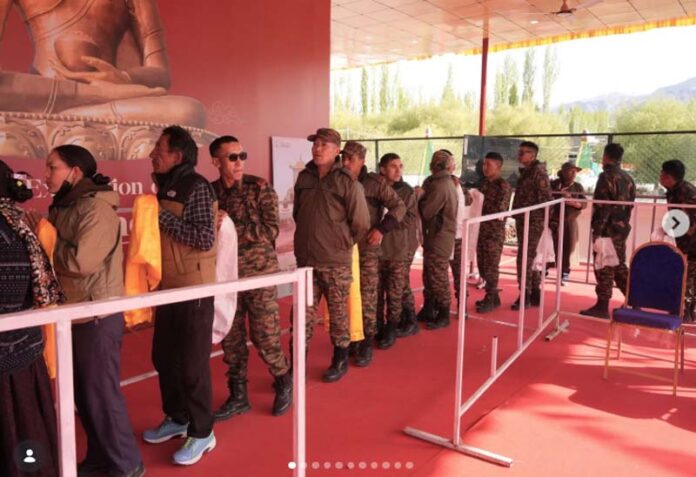
LEH, May 6 : Around 10,000 devotees visited Jivetsal on Thursday as the fifth day of the Buddha relics veneration brought in people from Leh Phudo, Gangles to Skara, alongside government employees and personnel from the Army, paramilitary forces and the Ladakh Police.
From the early morning hours, queues stretched across the approach to the site, moving steadily as visitors waited their turn for a brief moment before the relics.
Organisers noted that the day saw one of the more diverse gatherings so far, with uniformed personnel and civilians arriving in equal measure under the ongoing village-wise schedule.
Prayer ceremonies were led by monks from Chemday Monastery as part of the 15-day programme organised under the Ladakh Gonpa Association, with 16 monasteries taking turns to conduct the rituals each day.
On the ground, volunteers of the Ladakh Buddhist Association Youth Wing managed crowd movement, assisted elderly visitors and coordinated basic arrangements, ensuring that the large turnout was handled without disruption.
The Ladakh Buddhist Association said the phased schedule is aimed at enabling access across regions while maintaining order at the venue.
The veneration will continue tomorrow, with residents of New Settlement scheduled to visit.
The sacred relics will remain at Jivetsal until May 11, following which they will be taken to Zanskar as part of the continuing exposition.
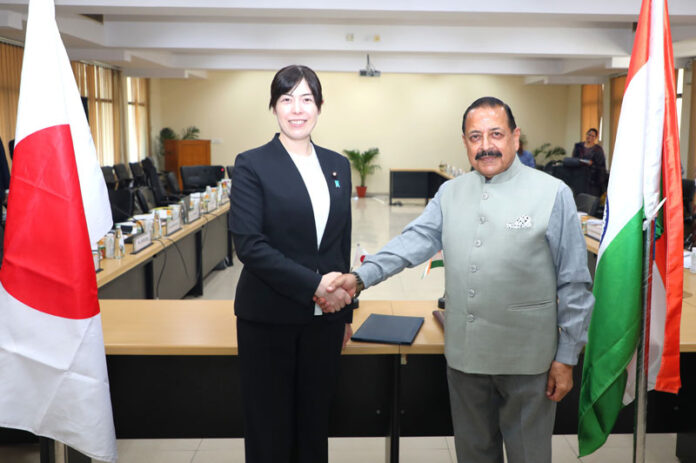
Japan Minister for Science & Technology Policy and Minister of State for Space Policy, ONODA Kimi, calling on Union Minister Dr Jitendra Singh at New Delhi.
Excelsior Correspondent
NEW DELHI, May 6: Japan Minister for Science & Technology Policy and Minister of State for Space Policy, ONODA Kimi, accompanied by a high level official delegation, called on Union Minister of State (Independent Charge) for Science & Technology, Earth Sciences, and Minister of State for PMO, Personnel, Public Grievances, Pensions, Atomic Energy and Space, Dr. Jitendra Singh, to discuss collaboration across different domains, particularly in the field of health and medical devices.
India and Japan advanced their strategic partnership in science, technology and innovation during the high-level bilateral engagement with a strong focus on emerging and critical technologies.
The meeting marked the exchange of a Memorandum of Cooperation (MoC) in the field of health and medical devices among the Japan Agency for Medical Research and Development (AMED), the Indian Council of Medical Research (ICMR) and the Department of Science and Technology (DST).
A Letter of Intent (LoI) on cooperation in Quantum Science and Technology was also signed between the Cabinet Office of Japan and DST, opening new avenues for collaboration in next-generation technologies.
Addressing the gathering, Dr. Jitendra Singh said- India and Japan share a natural synergy in science and technology. While Japan brings advanced technological capabilities, India offers a vast pool of talented human resources. Together, we can accelerate innovation in frontier areas and translate research into impactful societal outcomes.
The Minister added that India’s expanding national missions in Quantum Technologies, Cyber-Physical Systems, Electric Mobility, Clean Energy and Advanced Computing reflect the country’s strong push towards deep-tech sectors, creating new opportunities for joint research, co-development and industrial partnerships.
Speaking on the occasion, Ms. ONODA Kimi appreciated India’s rapid economic growth and its strong commitment to innovation, particularly the large-scale adoption of artificial intelligence across sectors. She shared that her visit to India, including interactions with academic institutions, reflected a strong culture of resilience among young researchers, with the ability to learn from failure and continue pursuing innovation.
ONADO Kimi highlighted that Japan’s strengths in advanced manufacturing and computational technologies, including quantum and AI, align closely with India’s expanding technology ecosystem. She expressed confidence that the agreements exchanged during the meeting, particularly in quantum technologies and health research, will promote deeper collaboration spanning research, application and industrial deployment.
During the discussions, both sides exchanged detailed views on strengthening cooperation under India’s National Quantum Mission, which is advancing an integrated approach across quantum computing, communication, sensing and materials, along with progress in long-distance quantum secure communication networks.
From the Indian side, key participants included Prof. Abhay Karandikar, Secretary, Department of Science and Technology, and Prof. Rajiv Bahl, Director General, Indian Council of Medical Research, along with senior officials associated with international cooperation and quantum initiatives.
The Japanese delegation included senior officials such as Fukunaga Tetsuro, Director-General, Secretariat of Science, Technology and Innovation Policy; Mr. Hayashi Teiji, Ambassador for Global Health, and representatives from AMED and the Embassy of Japan in India.
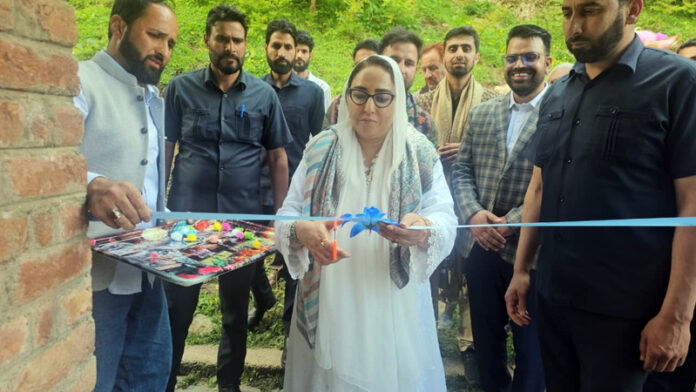
J&K Waqf Board Chairperson, Dr Darakhshan Andrabi inaugurating beautification project at Sarbal Shrine.
*Lays foundation for works at Aishmuqam
Excelsior Correspondent
SRINAGAR, May 6: The Jammu and Kashmir Waqf Board Chairperson, Dr Syed Darakhshan Andrabi today visited the Ziyarat of Sakhi Zainuddin Wali (RA) at Aishmuqam and paid obeisance there.
She inspected the whole complex and took stock of the management and other facilities there.
Waqf Board’s Executive Magistrate- Ishtiyaq Mohiuddin, Executive Engineer of the Board Qazi Mushtaq and other officers accompanied Dr Andrabi.
Waqf Chairperson laid the foundation for the construction of the retaining wall in the shrine. Later, Dr Andrabi inaugurated multiple developmental works including the reconstruction and beautification project of the shrine of Sakhi Zainshah Wali at Sarbal shrine. She also unveiled the developmental plaque at the shrine complex.
Waqf Chairperson spoke to media after these events and assured that Board will continue its journey for excellence through transparent developmental projects throughout Jammu & Kashmir.
“Sakhi Zainuddin Wali (RA) is the beacon of our spiritual Rishi tradition. The Board has done massive developmental works at both these shrines and also improved the facilities for the devotees visiting the shrines. The developmental journey continues”, said Andrabi.
She thanked her critics for making her to mobilize more vigorously towards selfless service and also convincing her that great work is the real answer to the criticism around. “We have a clear roadmap, a broad vision and hence no distraction stops us from going ahead. Glorifying our spiritual centres with required infrastructural developmental and ensuring a befitting environment through proper management of our shrines is our resolve and we enforce all our energies into this mission”, Dr Darakhshan said.
Waqf Chairperson also interacted with many public delegations at both places after the events.
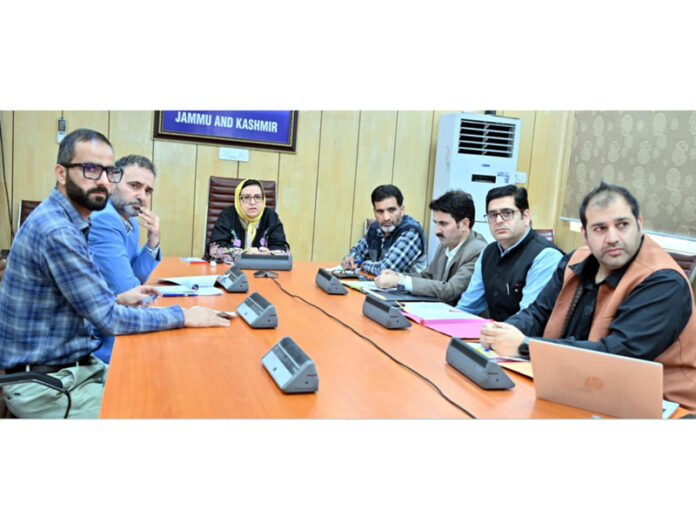
Minister Sakeena Itoo chairing a meeting on Wednesday.
Excelsior Correspondent
SRINAGAR, May 6: Minister for Health and Medical Education, Social Welfare and Education, Sakeena Itoo today chaired a high-level review meeting to assess the recruitment process undertaken by the Jammu and Kashmir Services Selection Board (JKSSB) in various departments like Health and Medical Education, Social Welfare, Education Departments and Sher-e-Kashmir Institute of Medical Sciences (SKIMS) Soura.
The meeting was attended by Chairman, JKSSB, Vikas Kundal; Secretary JKSSB, Khurshid Ahmad Sanai; Additional Director SKIMS, Zahoor Ahmad Mir; Controller of Examinations JKSSB, Director Finance, Health and Medical Education Department, representatives of various departments and other officers.
During the meeting, the Minister conducted a comprehensive evaluation of the progress made in filling vacancies of different categories in various departments. The review meeting also focused on expediting transparent, merit-based recruitment to address critical manpower requirements across healthcare institutions and allied departments.
Addressing the officers, the Minister emphasized on the Government’s commitment towards ensuring efficiency, accountability and fairness in the selection process. She stressed on maintaining transparency and adhering to timelines during the recruitment process.
The Minister directed the concerned authorities to accelerate the recruitment process, particularly in Health and Education Departments as well as SKIMS. She also stressed on maintaining coordination between the departments and recruiting agency to ensure vacant positions are filled promptly and selected candidates are deployed without unnecessary delays.
“Human resource, particularly in Health Department, is vital for improving healthcare access and outcomes, particularly in underserved and remote areas”, Sakeena said.
Emphasizing on the importance of timely recruitment, Sakeena Itoo directed the concerned authorities to expedite the ongoing selection processes while strictly adhering to merit, transparency, and fairness. She expressed satisfaction over the pace of recruitment and stressed that there should be no complacency in meeting future targets.
Regarding SKIMS Soura, the Minister directed the Additional Director to maintain constant coordination with JKSSB administration so that the recruitment process of pending posts is finalized timely. She highlighted that SKIMS is a premiere health institution and the government is determined to ensure sufficient manpower in it for constant service delivery of public.
While reviewing various aspects of JKSSB related to recruitment processes, Sakeena Itoo asked the JKSSB administration to explore the possibilities of reducing the application fee for the advertised posts. She directed them to study the fee structure of Government recruiting agencies of other States and UTs, and examine the growing demand of candidates calling for reduction in application fees.
During the meeting, Chairman JKSSB briefed the Minister on department-wise recruitment status, upcoming examinations and measures being implemented to streamline the selection process.
J&K BJP spokesperson Gaurav Gupta posing with National general secretary Tarun Chugh.
Excelsior Correspondent
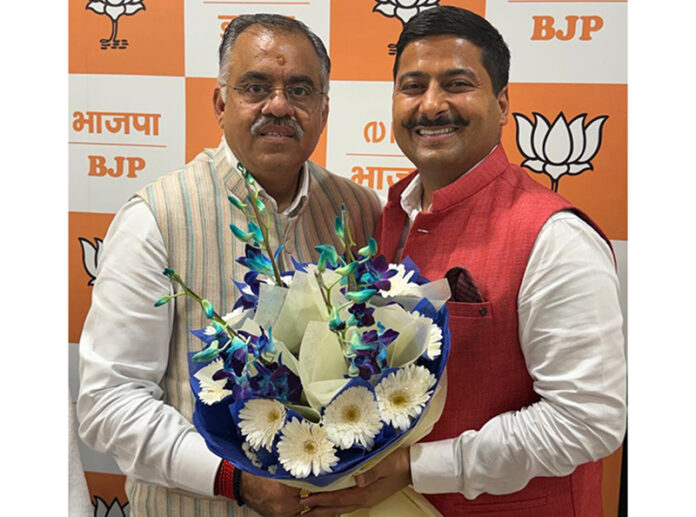
JAMMU, May 6: J&K BJP spokesperson and convenor, International Affairs, Gaurav Gupta today called on National general secretary of the party Tarun Chugh in New Delhi and held detailed discussions on key organizational and political developments, particularly in the context of Jammu & Kashmir.
During the meeting, Gaurav Gupta said that the BJP’s strong performance in the recently concluded Assembly elections in Bengal reflects the growing trust of citizens in the leadership of Prime Minister Narendra Modi and the BJP’s commitment to development, good governance, and national unity.
The discussions also focused on strengthening the party’s outreach in J&K, with emphasis on youth engagement, grassroot expansion, and further consolidating public support across regions. Gaurav highlighted the positive transformation taking place in J&K in recent years, including improved infrastructure, enhanced connectivity, and increased investment opportunities.
Tarun Chugh reiterated the BJP’s commitment to ensuring peace, progress, and prosperity in the Union Territory. He stressed the importance of continued public outreach and organizational strengthening at the booth level to further expand the party’s base.
Gaurav also discussed various issues concerning the people of J&K, including employment generation, promotion of tourism, and empowerment of youth and women. He reaffirmed the party’s resolve to work tirelessly for the welfare of all sections of society and to take forward the vision of a developed and peaceful J&K.
The meeting concluded with a renewed commitment to intensify organizational activities and ensure that the benefits of Government schemes reach every household in the region.
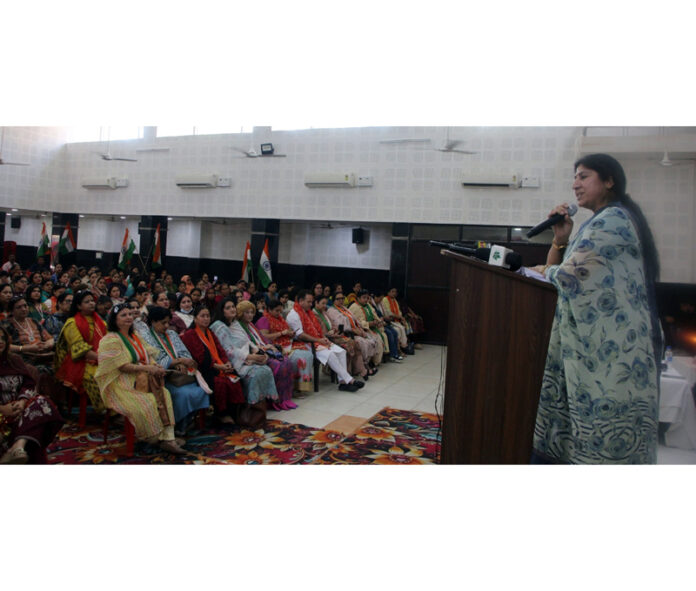
BJP spokesperson Purnima Sharma addressing a meeting at Jammu on Wednesday.
‘NC on ventilator’
Excelsior Correspondent
JAMMU, May 6,: BJP spokesperson J&K and former Deputy Mayor, Purnima Sharma launched a scathing attack on the Government led by Omar Abdullah, accusing it of administrative failure, excessive centralisation of power, and lack of accountability even after nearly two years in office.
Taking a sharp dig, she alleged that the real reason behind the delay in Cabinet expansion is internal discord within Jammu and Kashmir National Conference (NC). “The National Conference is on ventilator. The leadership knows that the day Cabinet is expanded, internal contradictions will surface and the party will scatter like a house of cards,” she remarked.
She further claimed that there is growing resentment among party leaders over denial of ministerial berths and alleged prevalence of “transfer industry” and favouritism. “Leaders within the party are feeling sidelined due to `Parivaarvaad’ and selective decision-making. This internal rift has the potential to divide the party into factions,” she added.
Purnima Sharma also alleged that the Omar Abdullah-led Government has reduced governance to a “one-man show,” with key portfolios being retained by the Chief Minister, instead of being distributed among ministers. She claimed that crucial departments such as Finance, Revenue, General Administration, and several unallocated portfolios continue to remain concentrated at the top, severely impacting governance and delaying decision-making.
She further stated that as per the existing administrative structure, all unallocated departments remain directly under the Chief Minister, increasing the burden on a single office and weakening accountability. “Even important sectors like Tourism, Housing, and Urban Development are being handled in a centralised manner, reflecting lack of delegation”, she added.
Purnima Sharma criticised the delay in Cabinet expansion, stating that even after a prolonged period in office, the Government has failed to induct adequate ministers. “Jammu & Kashmir cannot be run through over-centralisation and control from a single office. This is not governance, this is administrative bottleneck and mismanagement,” she said.
BJP MLA, Jammu East, Yudhvir Sethi during a meeting at Ambphalla on Wednesday.
Excelsior Correspondent
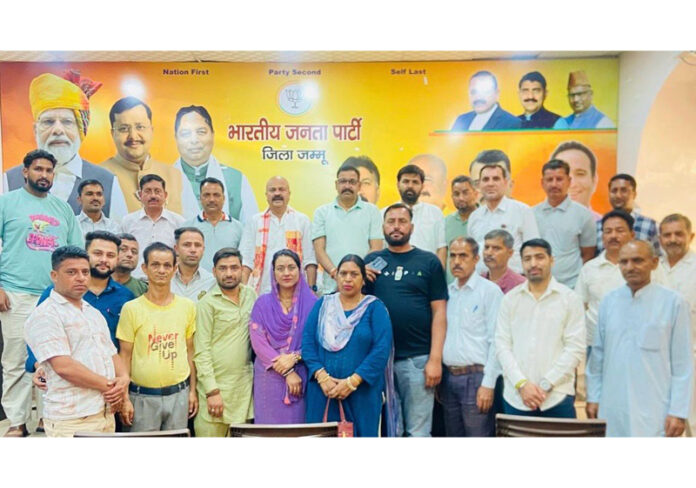
JAMMU, May 6: Senior BJP leader and MLA Jammu East, Yudhvir Sethi, on Wednesday chaired separate organizational meetings of BJP workers from Amphalla and Bajalta Mandals to review ongoing developmental initiatives in the constituency and discuss future plans aimed at strengthening public outreach and accelerating civic works in the area.
The meetings witnessed the participation of Kuldeep Kandhari, vice president, Ajay Sharma, Ampahlla Mandal president, Swati Sharma, Bajalta Mandal, Shiv Kumar Sharma, general secretary, Karan Sharma, Sunny Sharma, Bhishan Singh, Pooja, senior party functionaries, booth-level workers, youth activists, and local representatives who shared feedback regarding developmental needs, public grievances, and organizational activities in their respective mandals.
The discussions mainly focused on infrastructure development, road connectivity, sanitation, water supply, power improvements, and expansion of welfare schemes in Jammu East constituency.
Addressing the gatherings, Yudhvir Sethi appreciated the dedication and commitment of party workers in taking Government schemes and party policies to the grassroots level.
He said that BJP workers have always acted as a bridge between the people and the administration and have played a crucial role in ensuring that developmental benefits reach every household.
“Development and public welfare remain our top priorities. Prime Minister, Narendra Modi led Central Government has initiated several people-centric projects in Jammu East, and we are committed to accelerating the pace of development in both urban and rural areas. The active involvement of party workers is essential in identifying local issues and ensuring their timely redressal,” Sethi said.
The MLA emphasized that several developmental projects are currently underway in the constituency, including improvement of roads, drainage systems, and beautification initiatives. He said that the coming months would witness further expansion of infrastructure and civic amenities in Jammu East constituency with special focus on neglected and far-flung areas.
Excelsior Correspondent
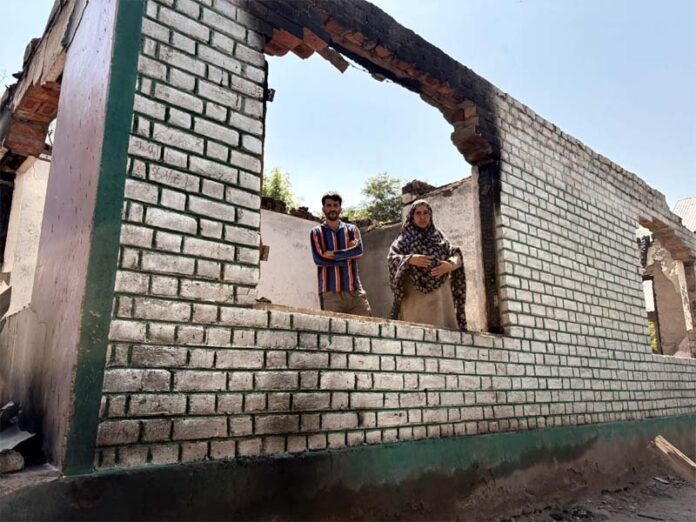
SRINAGAR, May 6: A year after Operation Sindoor, residents of Salamabad village in the Uri sector of north Kashmir are still struggling to rebuild homes damaged in cross-border shelling, with many families saying Government aid has fallen far short of their needs.
On the anniversary of the operation, residents in Salamabad, in Baramulla district near the Line of Control, described a slow and difficult recovery marked by financial hardship, inadequate infrastructure and lingering fear from last year’s violence.
Residents said they received between 2- 3 Lakh rupees in Government assistance to reconstruct their homes, but argued the amount is insufficient given high construction costs and logistical challenges in the hilly border area. “We are labourers earning just 500 rupees a day. It is already difficult to arrange food and medicines. How can we rebuild a house with such a small amount?” said Talib Hussain, a resident of Salamabad.
Many villagers said they are still living in temporary shelters or partially damaged homes, with no access to protective bunkers despite the area’s vulnerability to sporadic cross-border firing. The lack of road connectivity has compounded their difficulties, forcing families to carry construction materials manually over long distances. “We have to carry building material on our heads, which makes the process even more difficult and expensive,” another resident said.
Women in the village described ongoing psychological distress and a sense of abandonment. Zeenat, a resident, said she received relief only once and has seen little follow-up support since. “They knew everything. No one came to me again,” she said.
Residents also said that no bank loans or additional rehabilitation schemes have reached them, leaving families with limited means to rebuild. Many depend on daily wage labor, making it difficult to save for construction while meeting basic needs.
Hussain said his family continues to struggle to support their children’s education. “We work day and night just to feed our children,” he said. “My eldest son is in college, but we don’t have money to support him,” he added.
Others recounted the trauma of the shelling and its lasting impact. Samiya, another resident, said her home was completely destroyed and her family continues to live in uncertainty. “We have suffered a lot. Our house is gone. Even today, if we hear a loud noise, we get scared,” she said. She added, “It has been a year, but we are still struggling. We want the government to give us a house, a roof over our heads.”
Villagers have appealed to authorities to increase compensation, improve road access and provide bunkers and additional support to ensure their safety and rehabilitation.
MS SCI Jammu, Dr Deepak Kumar and others during an awareness event in campus of the institute.
Excelsior Correspondent
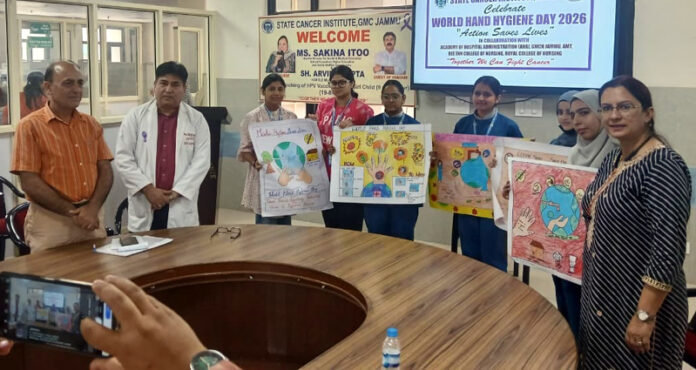
JAMMU, May 6: Government State Cancer Institute (SCI) Jammu today organized ‘World Hand Hygiene Day’ in its campus in collaboration with Government Medical College Jammu, Academy of Hospital Administration (AHA) Jammu Chapter, Bee Enn College of Nursing, AMT School and Royal College of Nursing.
The programme featured a series of awareness and training activities aimed at promoting proper hand hygiene practices and strengthening capacity building among healthcare professionals and students. The event was organized under the initiative of Dr Deepak Kumar, Medical Superintendent (MS), SCI Jammu.
As part of the programme, students from different institutions participated in a poster-making competition based on key messages related to hand hygiene. A skit depicting proper hand hygiene practices along with their merits and demerits was also presented. Students also demonstrated correct hand-washing skills during practical sessions.
The poster-making competition and skit were presented by students of Bee Enn College of Nursing, Kot Bhalwal, while hand hygiene washing skills were demonstrated by students of AMT School, Bakshi Nagar, Jammu.
A technical session was delivered by Dr Beena Jad, Assistant Professor, Microbiology, Shri Mata Vaishno Devi Institute of Medical Excellence (SMVDIME), Kakrayal, Katra, who is also a national expert in Infection Prevention and Control and member of AHA.
An awareness and Behaviour Change Communication (BCC) session on hand hygiene was conducted by Sadiq Khan, National Trainer and programme coordinator.
In his address, Dr Deepak Kumar stressed that capacity building, awareness generation and behaviour change communication are among the most important tools for quality patient healthcare and prevention of diseases through community outreach and institutional training programmes.
The event was attended by Abhilasha Sharma, Tutor/ Warden of AMT School Bakshi Nagar GMC Jammu, Radhika Sharma, Associate Professor, Bee Enn College of Nursing Kot Bhalwal, besides staff of SCI Jammu.
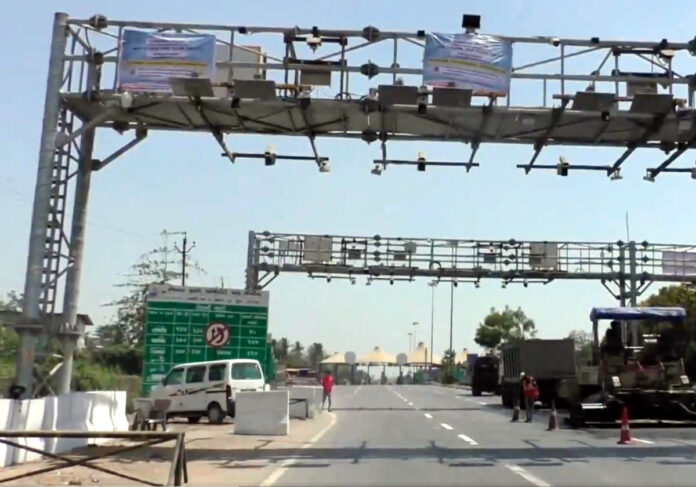
NEW DELHI, May 6 : The road transport and highways ministry has launched India’s first multi-lane free flow (MLFF) barrierless tolling system at the Choryasi Toll Plaza on the Surat-Bharuch section of NH-48 in Gujarat, marking a big shift in highway tolling.
The state-of-the-art system enables seamless toll collection without requiring vehicles to stop, using advanced technologies such as Automatic Number Plate Recognition (ANPR) and FASTag.
India’s electronic toll collection (ETC) infrastructure was started in 2014. Currently, vehicles need to stop at each fee plaza for payment of the highway usage charge.
Choryasi ranks among the top 10 toll plazas in the country in user fee collection. Indian Highways Management Company Limited (IHMCL), a company promoted by the National Highway Authority of India (NHAI), has signed an agreement with ICICI Bank to implement the country’s first comprehensive MLFF tolling system at Choryasi Fee Plaza.
State-owned NHAI is planning to roll out MLFF tolling at around 25 national highway fee plazas during the current financial year.
There are a dozen of toll plazas, including the Mundka toll plaza on the newly opened greenfield Urban Extension Road-II, where the multi-lane free flow tolling system is under testing.
BENEFITS OF MLFF
———————
Uninterrupted traffic flow: Vehicles no longer need to stop or slow down at toll plazas, leading to smoother traffic movement and reduced congestion.
Operational efficiency and cost savings: Reduced reliance on toll booth infrastructure and manpower results in lower operating costs over time.
Environmental benefits: Smoother traffic flow reduces vehicular idling, cutting down emissions and contributing to cleaner air near tolling points.
HOW DOES MLFF WORK?
————————–
High-performance RFID readers detect FASTag affixed on vehicles at high speeds. At the same time, ANPR cameras capture licence plate data, while RADAR and LiDAR systems accurately detect and classify vehicles. MLFF equipment creates a toll transaction through reading of the FASTag and/or vehicle number plate, and deducts the fee from the FASTag. With the ‘One Vehicle, One Tag’ policy in place, the FASTag is linked to the vehicle number. It also captures evidence of vehicles where payment fails.
CONVENTIONAL TOLLING VS MLFF TOLLING
————————————————
Conventional fee plazas rely on physical booths, gates, and lane infrastructure. MLFF replaces this with smart overhead gantries – minimising ground infrastructure while maximising efficiency. Where traditional systems cause delays and frustration, MLFF delivers a fast, transparent, and high-integrity revenue process.
ELECTRONIC NOTICE
———————–
MLFF also introduces a robust e-notice and grievance redressal mechanism. If a vehicle fails to pay the applicable user fee while crossing an MLFF plaza, an electronic notice, or e-notice shall be issued for recovery of the unpaid fee, as per Rule 14 of the National Highway Fee Rules 2008.
E-notice will be sent via SMS to the registered mobile number of the vehicle owner as per the VAHAN database, and also to the mobile number linked to the FASTag of the vehicle as per the issuer bank’s records.
E-notice amount shall be twice the applicable user fee. However, if payment is made within 72 hours of issuance, a 50 per cent discount shall apply, and the amount payable shall be limited to the user fee applicable to the vehicle only.
After 72 hours, the road user shall be required to pay the full e-notice amount. (PTI)