Sunday, May 10, 2026
E-Paper
Home Blog Page 61

Don’t expect any Cabinet expansion: Farooq

‘Op Sindoor has paid dividends’

Suhail Bhat

SRINAGAR, May 6: National Conference President, Dr Farooq Abdullah, today ruled out any immediate expansion of the Council of Ministers, dismissing speculation that has circulated in recent days about additions to the National Conference-led Government.

Follow the Daily Excelsior channel on WhatsApp  
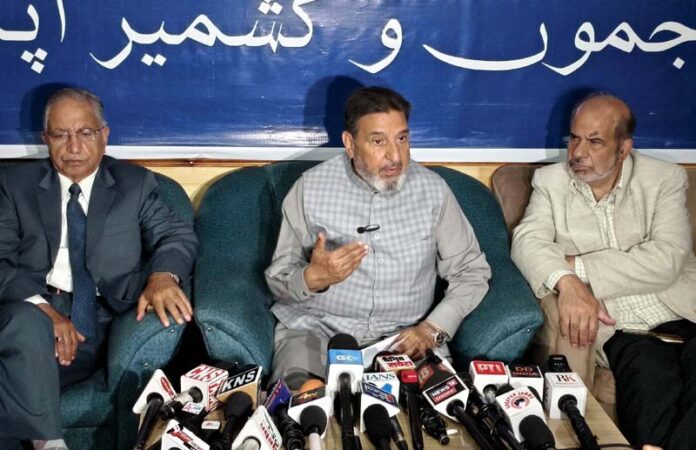
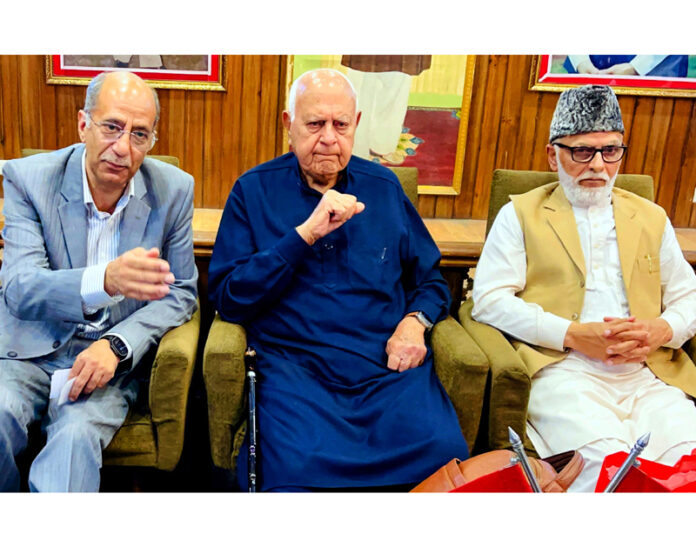
“Don’t expect any cabinet expansion,” Abdullah told reporters at the party headquarters, Nawa-e-Subah, responding to questions about whether the Government planned to induct more ministers.

Click here to watch video

His remarks come amid rumors that the government led by Chief Minister Omar Abdullah could soon expand its cabinet. The Jammu and Kashmir government currently has five cabinet members, including the Chief Minister.
Speaking on “Operation Sindoor,” Abdullah said the operation had “paid its dividends” and reiterated his opposition to war. “Wars do not bring solutions. They bring problems,” he said, pointing to the destruction in Ukraine and instability in the Middle East as examples.
Addressing broader political developments in West Bengal, Abdullah said, “The results have come. Mamata is not accepting it. She says that rigging has been done there.”
He also noted shifting political dynamics elsewhere, saying a new government is being formed in Tamil Nadu, the Congress party had won in Kerala, and the Bharatiya Janata Party had secured victory in Assam.
When asked about the influence of SIR, Abdullah said, “Yes, there is an impact of SIR and other things,” without elaborating.
Abdullah, however, dismissed concerns about an impending war in the Middle East. “No, I do not think so. Don’t worry. The world is not ready for war,” he said, citing worsening economic conditions worldwide.
The NC Chief warned that conflict in the region would have severe global consequences due to its concentration of oil and gas resources. “All the petrol and gas is in the Middle East. If there is pressure on this, the condition of the world will get so bad that it will be difficult to survive,” he said, adding that no country wants another war.
Responding to questions about India’s strength, Abdullah said the country was already strong and questioned what more was needed.
On recent reports of explosions in Punjab, he downplayed concerns. “There are always blasts in India. Don’t worry,” he said.
Addressing criticism from opposition parties over issues such as Article 370, statehood and unfulfilled election promises, Abdullah dismissed the attacks. “I think it is a very good thing. This is their job. If they don’t do their job, how will they survive?” he said.
“They can lie and do whatever they want. Our party is doing what it is supposed to do. We will not back down.”
Kashmiri Pandits protest against NFSA integration, minor scuffle with police

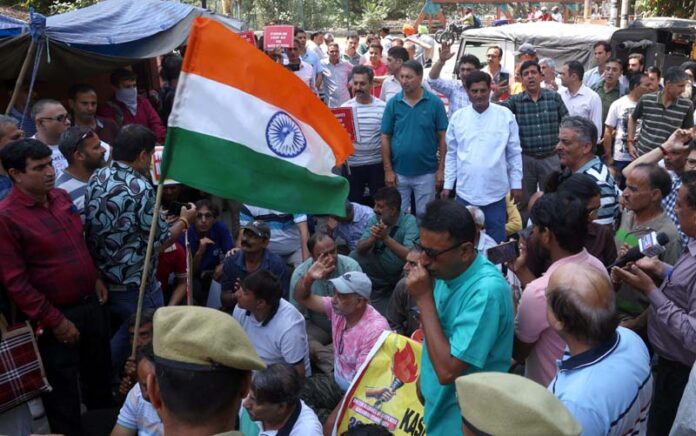
Kashmiri migrants holding protest in front of Relief and Rehabilitation Commissioner's office at Jammu on Wednesday. -Excelsior/Rakesh

Excelsior Correspondent
JAMMU, May 6: Displaced Kashmiri Pandits protested here on Wednesday against the Jammu and Kashmir administration’s move to integrate ration cards into the National Food Security Act (NFSA). Minor clashes broke out between demonstrators and police as they attempted to march towards the Relief Commissioner’s Office.

Click here to watch video

Terming the move a “conspiracy” to dilute their migrant and genocide victim status, the protesters vowed to intensify agitation if the decision is not rolled back.
Hundreds of members of the displaced community, representing groups such as the United Alliance of Kashmiri Displaced Community, Panun Kashmir and various migrant camp residents, joined the protest march, which was also supported by Shiv Sena.
The protesters, including residents of Jagti, Purkhoo, Nagrota and Muthi migrant camps, assembled on the road outside the Relief Commissioner’s Office and raised slogans against implementation of the NFSA.
As they tried to move towards the office, a heavy police contingent stopped them, leading to brief scuffles and pushing between the two sides, said officials.
Police later dispersed the crowd. Afterwards, the protesters staged a sit-in and raised anti-Government slogans.
Community leaders described NFSA as a “black law” and a “trap” for Kashmiri Pandits, alleging that its implementation would dilute their distinct identity as displaced persons and affect their rehabilitation rights.
“It is a black law and a trap for the community to dilute their identity as genocide survivors. The discrepancies in this law amount to outright injustice. For 36 years, Kashmiri Pandits have suffered after their displacement, and now under NFSA, our identity is being diluted,” said Panun Kashmir convenor, Dr Agnishaker who also addressed the protestors.
“We urge the authorities to reconsider the decision pragmatically and address the community’s genuine concerns. In its present form, this is anti-community,” he said.
He also expressed concern over the upcoming census, demanding recognition of their distinct identity as internally displaced persons and victims of genocide.
“If our identity is not included, it will amount to erasing Kashmiri Pandits forever,” Agnishaker said.
Another leader, Arvind Kaul, alleged that their fundamental right to peaceful protest was being curtailed.
“It is our fundamental right to protest peacefully, but we are not even being allowed to do that,” he said, demanding restoration of their rights and continuation of the existing relief system.
He sought permanent rehabilitation for the displaced community, stating that they neither have homes nor their homeland, yet are being asked to register Kashmir as their permanent address.
Echoing similar sentiments, community leader Sunil Pandita said the displaced population would continue their struggle until a permanent and dignified resolution to their displacement is achieved.
“We strongly oppose these laws being imposed on us repeatedly. We will not step back until our demands are met,” he said.
The protesters warned of a larger agitation if their concerns are not addressed, reiterating their demand that the Government focus on rehabilitation in Kashmir rather than altering the relief distribution mechanism.
Those who addressed included Sunil Fotedar of Vision Kashmir, Veer Ji Raina of Thinkers Forum, Ravi Ji ASKPC, Youth 4 PK, Dilip Pandita Victims of Terrorism, Sunil Pandita of Jagti Migrant Welfare Movement, M K Razdan of Durga Nagar Committee, Buta Nagar Camp representatives, Mohan Lal Comrade, Bharat Kachroo, Desh Rattan of AIMCCC, Manesh Sawhney president, Shiv Sena, Ravinder Koul of Relief holders and Sanjay Chowgami.

Young athletes shine at zonal sports meet

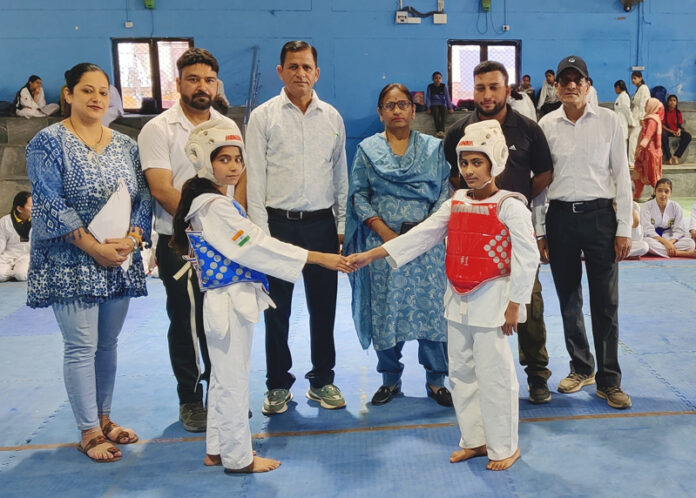
Players being introduced ahead of the match in presence of dignitaries.

Excelsior Sports Correspondent
UDHAMPUR, May 6: The Department of Youth Services and Sports, Zone Jib, Udhampur, today launched an inter-school zonal-level sports tournament for Under-14 and Under-17 girls, marking the beginning of the 2026–27 sports calendar approved by Director General Youth Services & Sports J&K (UT), Anuradha Gupta.
The event witnessed enthusiastic participation as competitions began in Athletics, Karate, Judo, Wushu, Boxing, and Taekwondo under the supervision of Zonal Physical Education Officer Jib, Jyoti Rani Gupta. She encouraged them to display discipline, determination, and sportsmanship while striving for excellence.
As part of the programme, 320 students from 27 Government and private schools took a collective pledge under the Nasha Mukt Bharat Abhiyan, marking 100 days of the anti-drug campaign and reaffirming their commitment to a drug-free lifestyle.
Technical coordination and selection were conducted by Ajit Singh Bandral and Sanjay Sharma (PEMs, ZPEO Office Zone Jib), along with a team of physical education experts, who identified emerging talent across disciplines.
Results: In Judo U-14 girls, Simran Dogra won the -27 kg category, while Janvi Devi secured first position in -32 kg. In U-17 category, Purvi clinched first place in -36 kg and Komal Devi topped -40 kg. In Taekwondo, Purbhi Sharma won the -35 kg U-17 category and Mahi Devi secured -38 kg, while in U-14 category Rudrakshi won -22 kg and Ananya Sharma secured -24 kg. In Wushu, Plasksha won the -40 kg category and Lalita secured first place in -48 kg. In Karate U-14 girls, Nazia won the -34 kg category and Rachna Devi secured first place in -38 kg.
In Athletics, Musrat Begum won the 100m (U-14) and Sonam Riaz (U-17), while Manvi Sharma and Divya secured first positions in 200m categories. In 400m, Sonali Devi won in both U-14 and U-17 categories, Sunakshi Sharma won the 600m U-14, and Gudia Devi clinched the 800m U-17 title.

Don’t drag Quran into politics to hide failures: Mufti to NC

Excelsior Correspondent
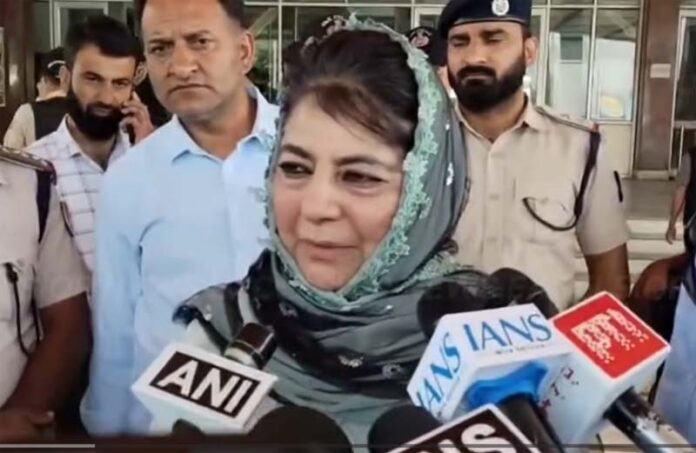
SRINAGAR, May 6: Peoples Democratic Party President Mehbooba Mufti today accused the ruling National Conference of “dragging the Holy Quran into political discourse” and attempting to deflect attention from governance failures.

Click here to watch video

Addressing reporters here, Mufti said the National Conference had “fallen to a new low” by invoking religious sentiment instead of engaging in substantive political debate. She argued that if the party wished to challenge her politically, it should do so on policy and performance rather than religion. “They don’t understand the greatness of the Holy Quran,” Mufti said, adding that those invoking it in politics had remained silent on several key issues affecting the region.
She cited the passage of the Waqf Bill, the closure of Siraj-ul-Uloom School, and alleged surveillance of mosque committees, clerics, and imams as instances where, according to her, the party failed to speak up. She also raised concerns over what she described as the “erosion of the Urdu language.”
Without naming him directly, she referred to decisions taken under departments linked to Omar Abdullah, questioning recruitment practices and alleging that jobs were being filled through “backdoor entries” and outsourcing to banks without public advertisement.
Mufti further accused the National Conference of attempting to divert public attention from pressing issues, including unemployment and administrative actions such as demolition drives. She claimed that houses were being demolished under various pretexts, including alleged links to drug peddling and militancy sympathisers, and that government employees were being dismissed without adequate accountability. “The youth, especially those from open merit categories, are struggling while the Government watches like spectators,” she said.
Mufti appealed to keep religion out of political rivalry. “If they want to fight us, they should do so politically. But for God’s sake, do not involve the Holy Quran,” she said.

Back-to-back explosions near security establishments in Punjab

KLF claim of responsibility being verified: DGP

CHANDIGARH, May 6: Two back-to-back explosions near security establishments shook Punjab on Tuesday night, triggering panic and drawing condemnation from opposition parties, which called them efforts to “destabilise” the state.

Follow the Daily Excelsior channel on WhatsApp  
The first explosion happened around 8 pm in Jalandhar outside the headquarters of the Border Security Force’s Punjab Frontier, while the second blast occurred at around 11 pm near the army cantonment in Amritsar’s Khasa. No injuries have been reported, police said.
An investigation into both incidents is underway.
Amritsar (Rural) Senior Superintendent of Police Suhail Mir Qasim stated that police received reports of a loud sound at around 11 pm on a road in Khasa. “Our teams arrived on the scene immediately,” he said.
Preliminary inspections indicated that someone had thrown an explosive device towards the boundary wall, leading to the explosion, according to the SSP. Police mentioned that a piece of a tin sheet covering the boundary wall had fallen as a result of the blast.
Following the explosion, a team of forensic and bomb disposal squad visited the site to collect samples.
Amritsar (Rural) Superintendent of Police Aditya S Warrier, who also visited the scene, confirmed that further investigations are ongoing. Police added that a team of army officials also assessed the situation, after which the area was cordoned off.
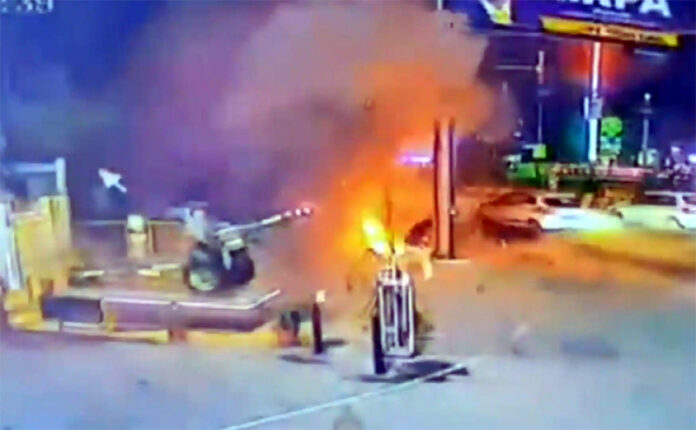
CCTV footage from the vicinity shows the explosion occurring at night. A local villager reported that his family was awakened by a loud sound and came outside their home to see what had happened.
In the Jalandhar incident, the blast ripped apart a scooter, damaged a traffic signal pole and windowpanes of a nearby shop. Locals recounted that the scooter, which was parked outside the BSF headquarters, Punjab Frontier, caught fire shortly after a loud sound. The scooter belonged to Gurpreet Singh, who regularly delivers parcels in the area.
CCTV footage captured the explosion, which resulted in a cloud of smoke. An unidentified man was seen running for cover following the blast.
Talking to reporters on Tuesday night, one of Gurpreet’s relatives said that the scooter caught fire as he was approaching it. He immediately called his father and informed him about the incident. Jalandhar Police Commissioner Dhanpreet Kaur confirmed to reporters late Tuesday that an Activa scooter parked near the gate caught fire suddenly. She stated that Gurpreet is fully cooperating with the investigation.
Punjab DGP Gaurav Yadav said the Amritsar blast was a low-intensity explosion and that no group has claimed responsibility for it. However, he reckons Pakistan’s ISI might be behind the incident.
“We assume that, as today is the Operation Sindoor anniversary, this is part of Pakistan’s ISI designs to cause disruptions in Punjab. Punjab is fighting a proxy war on behalf of the nation against Pakistan,” he said.
Regarding the Jalandhar explosion, the DGP said that the Khalistan Liberation Army (KLF) has claimed responsibility, adding that “we are verifying” the claim.
Opposition parties have condemned the AAP government over the blasts.
Shiromani Akali Dal (SAD) president Sukhbir Singh Badal criticised Chief Minister Bhagwant Mann, who also holds the home portfolio, over the blasts.
“Three blasts in 10 days, two in a single day, May 5: Jalandhar outside BSF headquarters and Sri Amritsar Sahib Army area, April 27: Rajpura rail track. Continued intelligence failures and the collapse of law and order are a matter of grave concern. Chief Minister @BhagwantMann, who is also the state Home Minister, is busy with mimicry and cheap politics. He has forfeited the right to remain in office,” Badal said in a post on X.
Punjab Congress chief Amrinder Singh Raja Warring also slammed the Mann Government.
“Back-to-back blasts have shaken Punjab. Yesterday in Jalandhar, and now near Khasa Camp in Amritsar, this is deeply alarming. Who is trying to destabilise our state? Why has the Punjab Government failed to prevent such incidents? What is the Government of India doing? Repeated lapses point to a serious breakdown of intelligence and security. Punjab’s peace cannot be compromised. We demand accountability and immediate action,” Warring said in a post on X. On April 27, an explosion occurred at a freight corridor rail track in Shambhu in Patiala. Police arrested four members of a pro-Khalistan terror module, backed by Pakistan’s ISI, for the blast. (PTI)

Future-vacancy appointees must stand behind regular recruits: HC

Excelsior Correspondent
JAMMU, May 6: The High Court of Jammu & Kashmir and Ladakh has dismissed a writ petition filed by four Munsiffs seeking higher placement in the seniority list, holding that appointees accommodated against future vacancies cannot claim seniority over candidates appointed earlier against clear and available posts.
A Division Bench comprising Justice Sanjeev Kumar and Justice Sanjay Parihar delivered the judgment in SWP No. 1577/2018, filed by Tabassum Qadir Parray, Meyank Gupta, Sajad ur Rehman and Altaf Hussain Khan against the High Court of Jammu and Kashmir and others.
The petitioners were represented by Advocate Salih Pirzada. The High Court was represented by Advocate M I Qadiri while Government Advocate Waseem Gul, Advocate Showkat Ali Khan and Government Advocate Faheem Nisar Shah appeared for the respondent.
The petitioners had challenged the seniority list of Munsiffs issued by the High Court vide order dated November 19, 2011, claiming that they should have been placed at serial numbers 16, 17, 18 and 26 respectively on the basis of their merit position in the selection list prepared by the J&K Public Service Commission.
The controversy arose out of a selection process initiated in 2008 for recruitment of Munsiffs. The High Court had requisitioned 31 vacant posts, including four backlog vacancies under the Scheduled Tribe category. However, due to an error in the vacancy reference, 35 posts were notified by the PSC and 35 candidates were recommended.
The Court noted that only 31 clear vacancies were actually available. Therefore, 31 candidates were appointed as Munsiffs vide Government order dated April 1, 2011, while the petitioners were not appointed at that stage as they were beyond the available vacancies.
Later, after fresh vacancies arose due to promotions, the petitioners were accommodated and appointed as Munsiffs vide Government order dated September 29, 2011. In the seniority list issued on November 19, 2011, they were placed below those who had been appointed earlier.
The petitioners argued that since their names figured in the same select list and their merit position was higher than some of the appointed candidates, their seniority ought to be fixed on the basis of merit rather than the date of appointment.
Rejecting the argument, the Division Bench held that the petitioners were not appointed simultaneously with those who had been appointed against clear vacancies. The Court observed that the petitioners were appointed later against future vacancies and, therefore, their date of first appointment had to be taken as September 29, 2011.
The Bench held that a candidate does not acquire an indefeasible right to appointment merely because his or her name appears in a select list, particularly when the selection is beyond the number of available vacancies. It further observed that the selection process legally came to an end with the appointment of 31 candidates against the available vacancies.
In strong observations, the Court said that the appointment of the petitioners against future vacancies was de hors the rules and irregular, if not void ab initio. The Bench further remarked that the High Court had taken a compassionate view by accommodating the petitioners against future vacancies and that they could not thereafter seek to overtake those who were regularly appointed earlier.
The Court also held that the petition was hit by delay and laches, as the seniority list had been finalized in 2011 and challenged only in 2018, after nearly seven years. During this period, the seniority position had already been acted upon and promotions to the rank of Sub-Judge had been made.
Relying on settled Supreme Court law, the Bench reiterated that seniority once settled and acted upon cannot be unsettled after a long delay, especially at the instance of persons who approach the court belatedly.
Dismissing the petition, the High Court held that the challenge to the seniority list was not only barred by delay and laches but was also devoid of merit.

Trump threatens Iran with bombing if it doesn’t reopen strait of Hormuz

‘End of war depends on Iran’

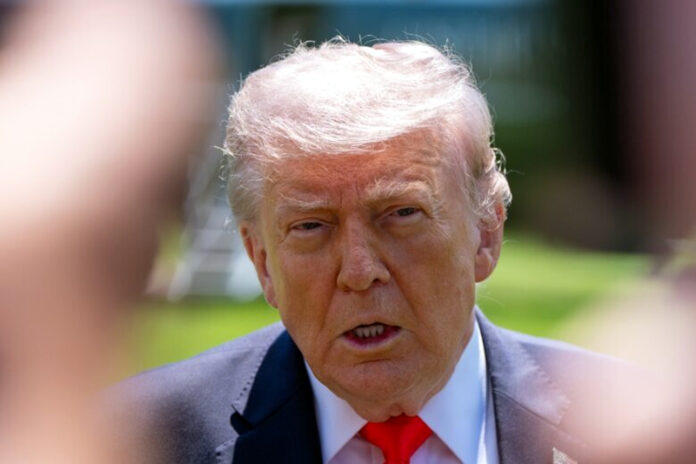
WASHINGTON, May 6: US President Donald Trump threatened Iran with more bombing Wednesday if it doesn’t reopen the Strait of Hormuz after a report that an agreement is emerging to end the war.

Follow the Daily Excelsior channel on WhatsApp  
Trump posted on social media that the war with Iran could soon end and oil and natural gas shipments could restart. But that all depends on Iran accepting a reported agreement that the US president did not detail.
“If they don’t agree, the bombing starts,” Trump wrote.
Trump’s threats came after China’s foreign minister called for a comprehensive ceasefire in the Iran war following a meeting with Iranian Foreign Minister Abbas Araghchi, who was visiting Beijing for the first time since the war with the US and Israel started February 28.
Chinese Foreign Minister Wang Yi said Wednesday his country was “deeply distressed” by the conflict.
China’s close economic and political ties to Tehran give it a unique position of influence. The Trump administration is pressing China to use that relationship to urge the Islamic Republic to open the Strait of Hormuz.
Trump said on Tuesday that he was pausing his short-lived US effort to guide stranded commercial vessels out of the Strait of Hormuz in hopes that a deal could be finalized. A shaky ceasefire has been largely holding, despite exchanges of fire during the US push to reopen the strait on Monday.
Iran’s effective closure of the strait, a vital waterway through which major oil and gas supplies, fertilizer and other petroleum products passed before the war, has sent fuel prices skyrocketing, rattled the global economy and put enormous economic pressure on countries, including major powers like China.
The spot price of Brent crude oil, the international standard, fell to around $100 per barrel Wednesday, easing significantly from big price jumps earlier in the week. The prices are still well above the roughly USD 70 a barrel that crude was selling for before the war began.
Araghchi’s visit to China comes ahead of a planned visit by Trump to Beijing for a high-profile summit May 14-15 with Chinese President Xi Jinping. The trip would be Trump’s first to China during his second term and the first by a US president since Trump visited in 2017.
“We believe that a comprehensive ceasefire is urgently needed, that a resumption of hostilities is not acceptable, and that it is particularly important to remain committed to dialogue and negotiations,” Wang said, according to a video of the meeting.
The Chinese foreign minister said the conflict “has already lasted for more than two months. It has not only caused serious losses to the Iranian people, but also had a severe impact on regional and global peace. China is deeply distressed by this.”
In a televised interview with Iran’s state media from Beijing, Araghchi said his visit included discussions of the Strait of Hormuz as well as Iran’s nuclear program and sanctions imposed on Tehran.
Iran has attained “an elevated international standing” after the war, having proven its capabilities and strength, Araghchi said. US Secretary of State Marco Rubio expressed hope that Beijing would reiterate the need for Iran to release its chokehold on the strait, which would deny its main leverage as Trump demands a major rollback of Tehran’s disputed nuclear program.
“I hope the Chinese tell him what he needs to be told,” Rubio said during a White House briefing Tuesday. “And that is that what you are doing in the strait is causing you to be globally isolated. You’re the bad guy in this.”(PTI)

J&K UT Open Chess C’ship from May 22

Excelsior Sports Correspondent

SRINAGAR, May 6: The All J&K Chess Association has announced the UT Level Open Chess Championship 2026–27, scheduled to be held from May 22 to 24 at Gindun Sports Stadium, Raj Bagh, Srinagar. The championship aims to select players for participation in the upcoming Senior National Chess Championship for men.
Players from across the Union Territory of Jammu and Kashmir have been invited to take part in the prestigious event. Interested participants must submit their entries on or before May 20, 2026, by 6:00 pm. Organizers have clearly stated that no entries will be accepted after the deadline under any circumstances.
The association has encouraged enthusiastic chess players to seize this opportunity to compete at a higher level and showcase their talent. For further details and registration, participants can contact the All J&K Chess Association through the provided phone numbers.

Fortifying Digital Frontier

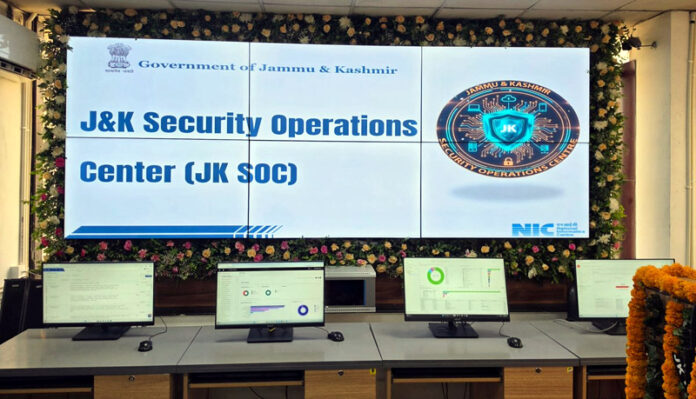
In an age where governance has migrated decisively into the digital realm, the security of that digital space is not merely a technical concern – it is a matter of public trust, national integrity, and administrative credibility. The inauguration of the Jammu and Kashmir Security Operations Centre (JK SOC) by the Chief Secretary represents far more than the launch of a facility. It signals a maturation in how the Union Territory thinks about, and acts upon, the imperative of cybersecurity. Jammu and Kashmir has, by any objective measure, distinguished itself as a frontrunner in the delivery of digital public services. To lead the country in the breadth and accessibility of online governance is no mean feat – it is an achievement that deserves both recognition and careful stewardship. Yet with that distinction comes a commensurate weight of responsibility. When more citizens depend on digital platforms for electricity billing, land records, grievance redressal, application tracking, and a host of other essential services, the stakes attached to the security and continuity of those platforms rise correspondingly. A leadership position in e-governance is only as strong as the infrastructure that underpins it.
The need for this realisation has not been without its sobering reminders. Not long ago, dozens of J&K Government websites were rendered non-functional following prolonged non-compliance with CERT-In verification and audit requirements. The spectacle of over a hundred departmental portals going dark – leaving citizens stranded and services suspended – was a cautionary tale about what happens when cybersecurity is treated as an administrative formality rather than a mission-critical obligation. The lesson was clear and unambiguous: digital governance without robust cybersecurity is a structure built on sand.
What made that episode particularly instructive was where the accountability truly lay. Agencies such as the National Informatics Centre provide indispensable expertise, technical guidance, and institutional support. But the onus of cybersecurity compliance ultimately rests with each individual department. Every ministry, directorate, and administrative unit that operates a digital presence must treat that presence as a frontline public asset – not a peripheral concern to be delegated indefinitely to external bodies. This cultural shift, from passive dependence to active ownership, is perhaps the most important reform required by J&K’s digital governance ecosystem.
The threats that necessitate this shift are neither hypothetical nor trivial. Cyber risks in J&K emanate from a uniquely complex threat landscape. Whilst individual bad actors and opportunistic cybercriminals pose a persistent danger, the more sobering reality is that hostile nations have, on multiple occasions, sought to disrupt Government portals and compromise sensitive data as part of broader destabilisation efforts. That these attempts have been thwarted consistently speaks to the vigilance and proactive posture maintained by NIC and the IT Department. However, vigilance at the national level must now be matched by robust capability at the local administrative level – which is precisely what the JK SOC delivers.
Equipped with advanced tools for real-time threat intelligence, vulnerability assessment, and security analytics, and operating on a round-the-clock basis, the SOC functions as a dedicated nerve centre for the UT’s digital assets. Its close coordination with CERT-In ensures that incident response is neither delayed nor siloed. For citizens engaging with Government portals, this translates into a measurably safer digital experience – one where their data and their interactions are shielded by a professional-grade monitoring apparatus that operates continuously, even when offices are closed.
It is equally worth acknowledging the consistent and engaged oversight that the Chief Secretary has brought to this domain. His periodic interventions on matters of cybersecurity compliance have demonstrably moved the needle, and his presence at the SOC inauguration underscores the seriousness with which the administration regards this infrastructure. Leadership attention at the highest level is not incidental – it is what transforms well-intentioned policy into concrete institutional change. The JK SOC is, in this sense, both a destination and a departure point. It consolidates the gains made thus far whilst creating the conditions for sustained, secure digital growth. As J&K continues to expand its e-governance footprint, this centre will serve as the guardian of that expansion – ensuring that the services citizens depend upon remain safely accessible. In the digital era, that assurance is not a luxury. It is the very foundation of modern, trustworthy governance.

NC abuses Delhi for votes, then aligns with it: Bukhari

Apni Party chief Altaf Bukhari along with other party leaders during a press conference in Srinagar on Wednesday. -Excelsior/Shakeel

Excelsior Correspondent
Srinagar, May 6: Apni Party president Altaf Bukhari today accused the ruling National Conference of exploiting anti-Delhi sentiment during elections while later aligning with the Centre, saying his party would engage with Delhi only for the welfare of J&K’s people and never act as “agents” of anyone.

Click here to watch video

Speaking to reporters here, Bukhari said people in J&K were emotionally misled during Assembly elections and made to believe that supporting the Apni Party would amount to compromising with Delhi.
“They abuse Delhi when seeking votes, then cling to it like a soul to the body. We will engage with Delhi for the welfare of J&K’s people, but we will never become anyone’s agents,” he said.
Bukhari alleged that mainstream regional parties had “sold everything from 1947 to 2019,” including the dignity, rights and development of the people, while failing to deliver meaningful benefits in return.
“They told people that if they voted for Altaf Bukhari and the Apni Party, there would be trade-offs with Delhi. But these parties themselves left nothing unsold in J&K,” he said.
Bukhari said the Apni Party differed from traditional regional parties because it was not centred around political dynasties.
Commenting on election results in West Bengal, Bukhari said allegations of rigging by losing parties were common in democracies, but stressed that the will of the people must prevail.
“Those who have won deserve congratulations, and those who lost should continue working among the people. Any party that fails to serve the public will eventually be rejected,” he said.
On the Special Intensive Revision (SIR) of electoral rolls being conducted by the Election Commission of India, Bukhari alleged that the exercise appeared aimed at disenfranchising Muslims.
“If such attempts are being made, it is wrong. We must remain alert because electoral roll revision is also happening in J&K,” he said.
Bukhari also reiterated his party’s demand for a ban on liquor in J&K, saying prohibition could be implemented in the Union Territory just as it had been in Gujarat and Bihar.
Referring to the Pahalgam terror attack, Bukhari described it as condemnable and questioned the continued closure of several tourist destinations in Kashmir even after the passage of one year.
“If the Government believes security arrangements are inadequate at these tourist spots, then when will it ensure proper security?” he asked.
He also appealed to tourists from across the country to continue visiting Kashmir, saying the security situation in the Valley was “better than several places in the country.”