

Monday, May 4, 2026
E-Paper
Home Blog Page 41

NC struggles for the restoration of statehood

K N Pandita
knp627@gmail.com
In his recent public address in Budgam, Dr Farooq, president of the National Conference, spoke about the historical efforts made by his party in the service of the people and its role in the development of the State. Who can deny the claims he made? That is history.
But the fact is that it is the duty of democratically governed states to serve the broad interests of the nation and divert their efforts to the development of the State. In that sense, the National Conference has played its genuine role. It is no obligation that NC has won. At best, it is an admiration.
He raised the issue of the restoration of statehood of J&K. Again, he cited the Supreme Court as well as the statement of the Home Minister on the floor of the parliament about the restoration of statehood at its proper time. All this is history without bias.
Admittedly, the status of J&K as a state is an important issue when studied from an historical perspective. But the story needs to be told or retold in its entirety and not by piecemeal. There are some vital questions which Dr Farooq should have reflected upon with earnestness.
For example, it is unavoidable for the head of a very important and historical political party like NC to raise the question of why the withdrawal of Article 370 was necessitated in 2019, while from the date of its enactment till 2019, the article was not touched by the governments at the centre. He should have told the people what the compulsions were for the NDA government to bring about the State Reorganisation Act even if the home ministry’s arguments were not acceptable to him.
From the early 1980s, separatist and secessionist elements in J&K, particularly in the Kashmir Valley, had become active. The election of 1986 was crucial, for it reflected deep polarisation of the Kashmir majority community, the then backbone of the National Conference. The opposition, not only to the NC but to the very concept of accession of the State to the Indian Union, was challenged with the Jamaat-i-Islami in the forefront. How the NC leadership handled this situation is a subject never debated freely and never brought to the public domain by the NC. The result was that the views of the MUF, and later on, the role of MUF leadership that had shifted its base to Muzaffarabad, began to be accepted by the Kashmir observers everywhere.
A decade later, in 1996, through the efforts of the Union government to restore democratic dispensation in J&K, elections were held, and the NC returned to power. Dr Farooq Abdullah took up the reins of the government. With the re-establishment of a democratically elected government, the logic demanded that the elected government instituted a comprehensive inquiry into the most vital issues facing the state such as (a) the exacerbation of separatism and secessionism in Kashmir (b) the fast rising crescendo of Jamat-i-Islami’s fundamentalist ideology in Kashmir (c) the infiltration of Jamati ideology into the organs of the state (d) the cross border terrorism in which Pakistani ISI created its moles in Kashmiri community, (e) terror against Kashmiri Pandit minority – their genocide and ultimately their ethnic cleansing. These were no small and inconsequential happenings for a State that was very strongly projected by Pakistan as a disputed land.
But the state government, perhaps abetted by the then Central government, just put an iron lid on these fundamental issues. Conversely, not only NC, but most of the political parties in Kashmir conveniently adopted double standards of defining their position in the wake of opposition to the accession of the State and extension of many parliamentary rules and regulations to the J&K State. This was the period when the sense of separate identity of the State from the Indian nation identity became deeper and deeper among the people of Kashmir.
The sad part of this story is that the local political parties, NC in the frontline, the opposition in the assembly, the state bureaucracy, the media outlets and prominent opinion-making institutions, all adopted a soft, rather conciliatory attitude towards the separatist ideologues.
During the government of Atal Bihari Vajpayee, the Central government seemed to have envisioned the consequences of this grave situation in the State. It tried a diplomatic prescription to overcome the situation and ensure that saner elements were given a chance to have their say. Omar Abdullah, the son of Dr Farooq Abdullah, was inducted into the Union Council of Ministers as MOS in the External Ministry, and Dr Farooq Abdullah was also inducted in the Union Ministry as Minister-in-Charge of Renewable Energy.
PM Vajpayee also made a very bold (through to some observers a controversial) step of a bus journey to Pakistan in 1998, exclusively with the purpose of improving friendly relations with that country. He was well received, and even during his visit to the memorial of Allama Iqbal, he went to the length of accepting the division of India and the creation of Pakistan in 1947 as a reality. It should be remembered that he was severely criticised by many, including right-wing politicians in India, but he did not flinch. In Kashmir, he had publicly stated that “Kashmir issue ko jamhuriat, insaniyat aur Kashmiriyat ke nate samajhna hoga.” The Kashmir valley leadership of all hues greeted him warmly for this statement. And remember, Vajpayee was the tallest political leader in India of his day.
But alas! While Vajpayee was building the path of peaceful coexistence in Islamabad and Lahore, the Pakistani army chief was secretly planning to control Kargil heights and cut off India’s connection with Leh. This was how the ISI and Pakistan worked to deprive Kashmiris of a peaceful resolution of the Kashmir issue.
In 2002, PDP, largely supported by the Jamati Islami, assumed power, forming a coalition government with the Congress. Its second term of power ensued in 2015 with the BJP coalition, which lasted just one year. The period between 2002 and 2016 was most crucial in modern Kashmir history. It was virtually the Jamati Islami running the show with Congress or BJP as the show boys. This was the period when all political parties of Kashmir, in or out of power, converged on one line of action. It was to play a double game, what we traditionally call hunting with the hare and hunting with the hound. Covert and overt connections grew between local moles and their masters across the border. The slogan of “talk to Pakistan” became louder day by day, and continues even now with a very shrill voice. The Kashmir leadership was eager to make Pakistan a formal partner in the issue.
Whether the terrible event of Iran-Israel-US triangular war has opened the eyes of the Kashmiri people to the catastrophe caused by extremism and Theo-fascism across the globe, will best be answered by their leadership. But to be fair, the fundamental issue is not the restoration of statehood; fundamental issues are of development, of industrialisation, of connectivity, of boosting Kashmir tourism and trade and normalising radicalism, etc., if the real interests of the people of Kashmir are to be served.
Lastly, it has to be remembered that J&K is a deficit state. Its development and progress can take place only with massive funding by the Centre. The Centre is not imposing any obligation by providing developmental funds and schemes. That is an obligation for the Centre not only for Kashmir but for all the federating states of the Union. J&K has the privilege of being included in the hilly region states, which are allocated additional funds for development under the given procedure of the Union Finance Ministry.

Reimagining the Role of Educators in present times
Meenu Gupta
mguptadps@gmail.com
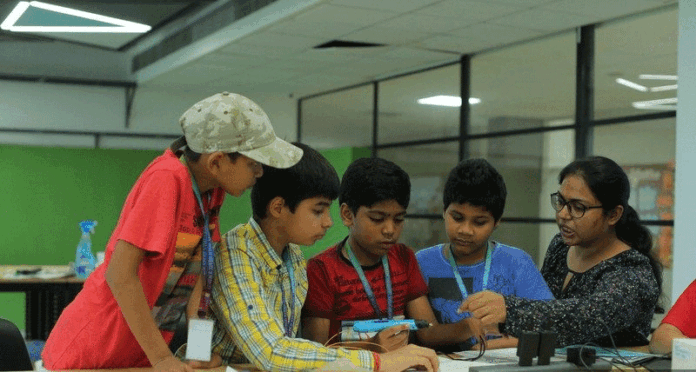
The Indian classroom is at a decisive turning point. For decades, the image of a teacher as the “sage on the stage”- the sole authority delivering knowledge, defined our education system. Today, under the transformative vision of the National Education Policy (NEP) 2020 and the National Curriculum Framework (NCF) 2023, that image is being fundamentally redefined. The teacher is no longer just a transmitter of information but a designer of learning experiences, a mentor, and a co-traveller in the child’s journey of discovery.
This is not merely a pedagogical shift-it is a moral and intellectual reset. For years, classrooms have rewarded speed over depth, silence over curiosity, and correctness over courage. We have produced students who can answer questions, but often hesitate to ask them. The new curriculum challenges this very foundation. It asks: What is the purpose of education in a world where information is everywhere? The answer is clear-education must now focus on meaning-making, not memory; on thinking, not ticking boxes. A classroom that does not provoke thought, dialogue, and doubt is no longer enough. The real transformation will happen when teachers consciously create discomfort for passive learning and replace it with the excitement of exploration.
Redefining the Teacher’s Role
In this new paradigm, the teacher becomes a “learning architect.” Lesson plans evolve into learning experiences. Instead of completing chapters, teachers curate activities, projects, and discussions that connect concepts to life beyond textbooks. Assessment, too, is no longer confined to pen-and-paper tests but is integrated into everyday learning through observation, portfolios, and reflection.
This shift requires teachers to embrace multiple roles: facilitator, assessor, mentor, and even co-learner. It also demands a mindset change-from control to trust, from coverage to depth, and from marks to mastery.
The Expanding Role of School Leaders
Equally critical is the evolving role of school leadership. Principals, Vice Principals , and the core planning team are no longer just managers of systems; they are the drivers of vision. They set the tone for what learning looks like in classrooms and what is valued within the school culture.
These school leaders must ensure that timetables, assessments, and infrastructure align with the new vision. They must create collaborative spaces for teachers, invest in professional development, and actively monitor whether classroom practices reflect policy intent. Without strong leadership, even the best curriculum reforms risk remaining on paper.
A progressive school is not defined by infrastructure or results alone, but by how its leadership empowers its teachers to think differently. When leadership shifts from monitoring compliance to nurturing innovation, classrooms begin to transform organically.
Kaushal Bodh: From Period to Purpose
Perhaps the most misunderstood aspect of the new curriculum is Kaushal Bodh. If treated as just another period in the timetable, it will fail. But if seen as a philosophy, it can redefine schooling itself.
Kaushal Bodh must move from being an “activity slot” to becoming the heartbeat of applied learning in schools. It is where knowledge meets life. Imagine students not just learning about sustainability, but designing waste management solutions within the school. Not just studying financial literacy, but managing a small student-led enterprise. Not just reading about empathy, but engaging in meaningful community work.
For this to happen, schools must rethink implementation:
* Timetables must give Kaushal Bodh/ Vikas protected, uninterrupted time, treated with the same seriousness as core subjects
* Projects should be long-term, interdisciplinary, and rooted in real-life contexts, not one-day activities
* Local community, artisans, professionals can be meaningfully involved to bring authenticity
* Student voice and choice should drive projects, allowing ownership and creativity
* Reflection must be embedded, students should think about what they learned, how they learned, and why it matters
Assessment here should not be about marks, but about growth, problem-solving, collaboration, resilience, and initiative.
If implemented with intent, Kaushal Bodh can quietly solve one of India’s biggest educational challenges- the disconnect between schooling and life. It can nurture dignity of labour, entrepreneurial thinking, and real-world readiness, all within the school ecosystem.
Teacher Training: The Real Game Changer
No reform can succeed without empowered teachers. Continuous Professional Development (CPD) is no longer optional, it is essential. Teachers must be trained in:
* Designing experiential and interdisciplinary lessons
* Conducting competency-based assessments
* Facilitating discussions and inquiry-based learning
* Integrating technology meaningfully
CBSE’s and State board’s Capacity Building Programmes (CBPs) must become a regular and mandatory part of school culture. More importantly, training should move beyond one-time workshops to sustained mentoring, peer learning, and classroom-based support.
The Way Forward
The shift from “sage on the stage” to “guide on the side” is not about reducing the teacher’s importance. It is about redefining it. In fact, the teacher’s role becomes more complex, more demanding, and far more impactful.
The success of NEP 2020 and NCF 2023 will not be measured by how beautifully they are written, but by how deeply they are lived in classrooms. It will depend on whether schools are willing to rethink timetables, whether teachers are willing to unlearn old habits, and whether leaders are willing to prioritise learning over routine.
The question before us is not whether change is coming, it already has. The real question is: will our classrooms continue to produce students who can reproduce answers, or will they nurture individuals who can think, create, and lead?
Because in the end, education is not about who speaks on the stage-
It is about the teacher who ignites minds so fiercely that students don’t just learn, they rise, they question, and they redefine the future.
(The author is Vice Principal DPS Jammu/ CBSE Resourse Person)

Rahul, Nissanka fuel DC’s seven-wicket win over RR
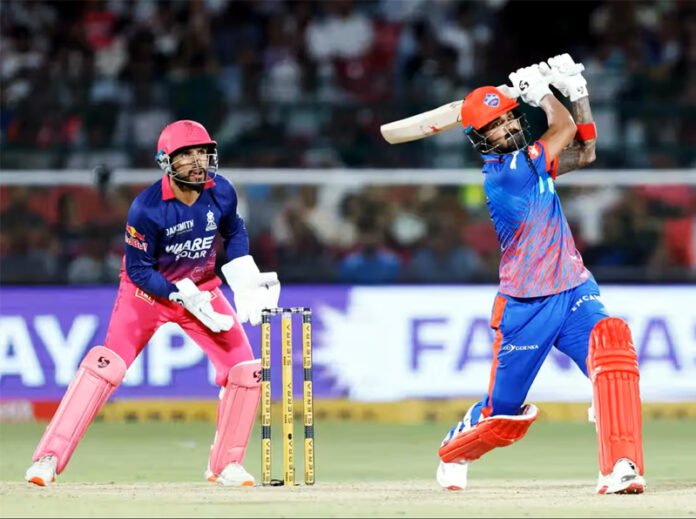
KL Rahul playing a shot during his inning of 75 runs against RR in Jaipur on Friday.
JAIPUR, May 1: A wonderful exhibition of batting gifts by KL Rahul (75) and Pathum Nissanka (62) overshadowed Riyan Parag’s redemptive 90, powering Delhi Capitals to a seven-wicket win over Rajasthan Royals in their IPL match here on Friday.
Parag washed away a lot of criticism with a 50-ball blitz to lead the Royals to a competitive 225 for six. However, Delhi Capitals replied with excellent knocks by Rahul and Nissanka to reach 226 for three.
Parag stayed off the field for a good part of the second innings with a hamstring niggle. Yashasvi Jaiswal did the captain’s duty for the Royals.
The Capitals made the best possible start to the chase as Rahul and Nissanka added 102 runs for the opening wicket in just 9.3 overs.
Rahul was a bit slow to begin with, but once he found his groove, the 34-year-old was sublime to watch.
He played shots all around the ground — a cover drive off Nandre Burger, a pull off Jofra Archer and two imperious back-to-back sixes in the ‘V’ off Ravi Bishnoi. Nissanka displayed his prowess in the pull shot, which yielded all his three maximums on the night — one off Archer and two off Burger.
Rahul brought up his fifty in 27 balls, four balls more than Nissanka, but the latter fell to Jadeja after failing to connect a reverse sweep.
The Bengaluru batter added a further 61 runs with Nitish Rana (33) as the Capitals maintained their momentum.
Both Rana and Rahul, who lofted Archer straight to Donnovan Ferreira at long on, fell in the space of six balls and the Capitals needed 49 runs from that point off 26 balls.
But Ashutosh Sharma and Tristan Stubbs managed that job very well, as DC pulled off their biggest chase in the IPL.
DC now moved up to sixth with eight points while the Royals stayed at fourth with 12 points.  Earlier, Parag vaporised multiple concerns surrounding him with a quality 90 as Rajasthan Royals posted a competitive 225 for six.
The Royals skipper was struggling for runs so far this season and if his on-field troubles were not enough, Parag copped a 25 per cent fine handed by BCCI after getting caught on camera vaping inside the dugout.
So, he had a lot to prove, and the right-hander did it in some style, notching up his first score above fifty in IPL 2026.
In fact, Parag was under serious pressure after the early departure of openers Vaibhav Sooryavanshi, who was yorked by Kyle Jamieson, and Yashasvi Jaiswal, who offered a return catch to Mitchell Starc (3/40), who made his maiden appearance in this IPL.
After all, 12 for two is not exactly the position an out of form batter wants to be in, and the nerves were evident in his loose wafts against Starc.
But the confidence returned to him once he took apart Jamieson in the sixth over through a sequence of 6, 4, 6 — a pull over mid-wicket and a slice over slips.
Once self-belief returned, it reflected in Parag’s batting too, those fast hands and audacity resurfaced.
Those elements were on ample display in a tennis-like forehand six over covers off left-arm pacer T Natarajan.
Parag brought up his fifty in 32 balls and added 102 runs for the third wicket with a composed Dhruv Jurel (42).
The dismissal of Jurel barely deterred Parag as he, in the company of middle-order batters like Ravindra Jadeja (20), marched on.
There was a brief period of lull after Jurel’s dismissal but Parag broke the lean phase with a hat-trick of boundaries off Jamieson.
Parag and Jadeja milked 53 runs for the fourth wicket before the latter succumbed to Starc.
        The Australian quick also snapped Parag’s stay, his attempt to loft him over covers ended in the hands of Axar Patel.
        RR still needed the cushion of a few more runs and Donovan Ferreira (47, 14 balls) gave them that with a little Tsunami.   (PTI)
Brief Scores:
Rajasthan Royals: 225/6 in 20 overs (Riyan Parag 90, Dhruv Jurel 42, Donovan Ferreira 47 not out; Mitchell Starc 3/40).
Delhi Capitals: 226/3 in 19.1 overs (KL Rahul 75, Pathum Nissanka 62, Nitish Rana 33).
TODAY’S FIXTURE
CSK V/s MI at
Chennai (7.30 pm)

Saina visits Vaishno Devi Shrine
Excelsior Sports Correspondent
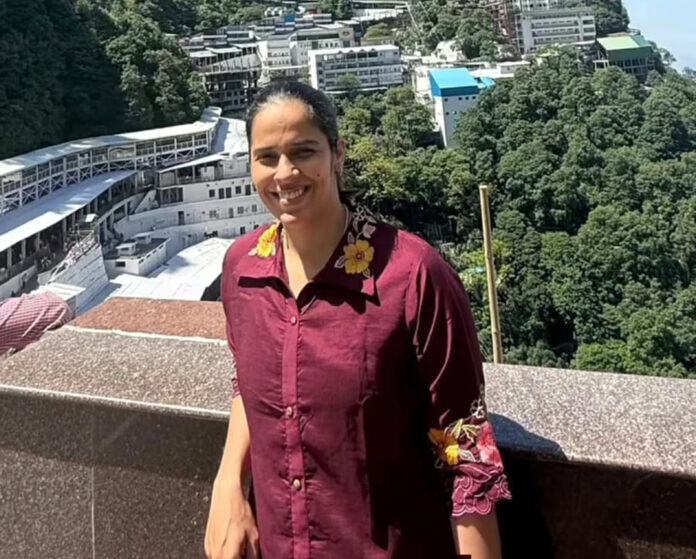
REASI, May 1: Ace Indian badminton player and Olympian Saina Nehwal visited the Shri Mata Vaishno Devi Shrine in Reasi district today and offered prayers along with her father. The Olympic medallist, who reached Jammu on Thursday, also paid obeisance at the famous Bawe Wali Mata Temple in Jammu. She shared pictures of her Jammu visit on social media, where she was seen accompanied by her father. The star shuttler’s visit drew attention from devotees and fans alike at both religious sites. Saina Nehwal is likely to return from Jammu on Saturday after completing her short pilgrimage trip. She expressed gratitude for the warm welcome and spiritual experience during her visit in Jammu.

Singapore’s Indian-origin leader reprimanded by party for lying to parliament
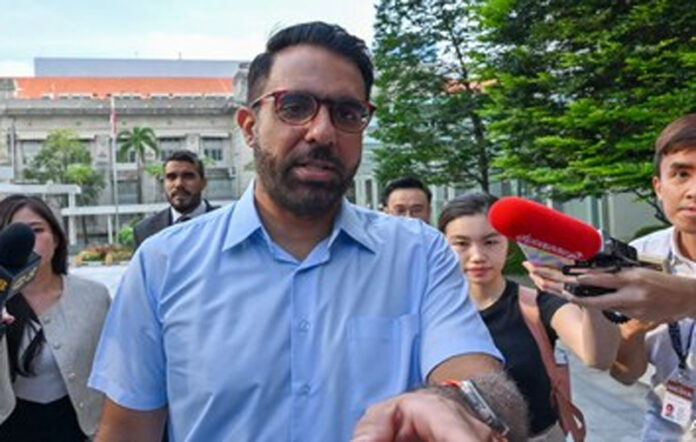
SINGAPORE, May 1 : Singapore’s opposition-led Workers’ Party (WP) has reprimanded its Secretary-General Pritam Singh for lying to a parliamentary committee, setting the stage for his conviction in the court of law.
WP, which has 12 Members of Parliament out of the 99-seat House, said on Thursday a disciplinary panel convened in January had found that Singh, a former Leader of the Opposition in the Parliament, contravened two articles of the party’s Constitution.
The party’s top decision-making body, its central executive committee (CEC), made the decision. WP chairperson Sylvia Lim, its vice-chair Faisal Manap, and Singh recused themselves from these CEC meetings, WP said in a statement.
Lim and Faisal were also linked to the lying case as witnesses.
The WP, in a letter, said that the CEC separately considered that “at all material times, 49-year-old Singh did not have any intention to act in a manner contrary to the principles, aims, or objects of the party, or prejudicial to the welfare of the party.”
It said, “In considering the range of potential actions against Singh, the CEC assessed the totality of the circumstances and issued him a formal letter of reprimand to him.”
There are “currently no restrictions on Singh that prevent him from seeking office” at the next party election, reported The Straits Times, citing a separate response to the media.
The party office-bearer election is scheduled later in 2026.
The disciplinary panel was set up by the CEC after the high court upheld Singh’s conviction in December 2025 on two counts of lying to a parliamentary committee.
On April 30, the WP said the panel found that Singh had contravened articles 20(1) and 30 of the party’s Constitution.
“The Central Executive Committee, if satisfied that the conduct of any member is contrary to the principles or aims or objects of the Party or prejudicial to the welfare of the Party, may suspend or expel such member from any post in the Party, and demote him to the status of ordinary member if a Cadre Member, and expel him from membership of the Party,” the Singapore daily cited the party’s Article 20(1) on its website.
Singh’s convictions had triggered a series of actions from both the government and his own party. Singh, who has been WP chief since 2018, was also removed as Leader of the Opposition (LO) by Prime Minister Lawrence Wong in January.
Wong cited Singh’s criminal convictions, as well as a January 14 motion in Parliament, which found him unsuitable for the role, making it “no longer tenable for him to continue as the LO.”
The prime minister’s ruling People’s Action Party has an absolute majority in parliament with 87 seats. (PTI)

Tech integration into judicial processes dismantles geographical barriers, helps litigants: CJI
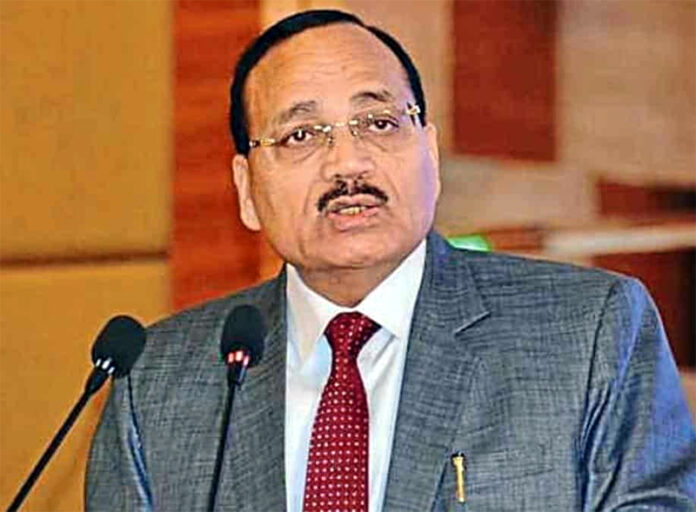
GANGTOK, May 1: Chief Justice of India Surya Kant on Friday said integrating technology into judicial processes dismantles geographical barriers to help litigants overcome problems of terrain, finance and distance.
Addressing the inaugural session of the two-day National Conclave on Technology and Judicial Education here, the CJI also said the Indian legal landscape has moved away from the era of the paper trail, where vital records languished in physical storage, to a vibrant digital ecosystem.
“When we speak of integrating technology into judicial processes across the country, we are, in effect, addressing the dismantling of geographical constraints, whether they arise from difficult terrain, financial barriers, or sheer distance,” he said.
The journey to a courtroom was often measured as a test of endurance, the Chief Justice of India said.
“The mighty Himalayas, magnificent as they are, make movement slow and uncertain. If we look at the scenario just a decade or so ago, for a Sikkimese litigant seeking justice, distance was not measured in kilometres but in days of travel across narrow paths and unpredictable weather,” he said.
The CJI said digital reform is not a matter of theory, but a practical necessity for sustaining the rule of law.
“We have moved away from the era of the paper trail, where vital records languished in physical storage, to a vibrant digital ecosystem. The e-Courts project has rewritten the relationship between the litigant and the law,” he said.
What once required physical presence and toilsome inquiry is now available through a simple digital interface, CJI Kant said, adding that in consonance with this advancement, the National Judicial Data Grid (NJDG) stands as the “beating heart” of this endeavour, offering a window into the pulse of our judicial performance.
“Beyond basic data collection, we have witnessed the advent of intelligent assistance within our chambers,” he said, mentioning translation tool SUVAS and SUPACE, an AI-driven tool designed to assist judges.
“These innovations act as force multipliers, aiding in the swift translation of judgments and providing rapid, comprehensive research to the bench. They relieve the judge of the mechanical burden of routine inquiry, allowing for a deeper immersion in the complexities of the law,” the CJI said.
He also discussed another aspect of technological advancements.
“When a litigant in the most distant corner of the country can track the progress of a case or view an order without intermediaries; if he can engage counsel from across the country and view proceedings in real time through video conferencing and live proceedings, the power dynamics of the courtroom undergo a healthy calibration,” he said.
Yet, it would be premature to assume that the task is complete, said the Chief Justice of India.
He suggested that the large-scale digitisation achieved in trial courts through the National Core Case Information Systems (NC CIS) must now find a clear and consistent reflection in the higher judiciary through stronger standardisation.
“It enables High Courts to align with a common national standard while still accommodating state-specific requirements, whether in terms of nomenclature, local language needs, or procedural workflows,” he said.
The CJI said this standardisation exercise must also be accompanied by an expansion of e-Seva Kendras, one-stop digital service centres established in high courts and district courts to help litigants and lawyers access electronic court services such as assistance with case status, e-filing, obtaining certified copies, e-payments, and video conference hearings.
“These centres must grow beyond being simple access points and develop into effective hubs of digital support. In a country marked by varying levels of literacy, they serve as the crucial link between the complexity of the law and the immediacy of a citizen’s need,” he said.
Noting that currently, there are 48 functioning e-Seva Kendras in high courts and 2,283 operational units across district courts, he said that strengthening their technical capacity is essential to ensure that the digital divide does not become a new line of exclusion.
CJI Kant also said there is a clear scope for the careful infusion and granular application of Artificial Intelligence at the trial court level.
In the context of recovery suits, for instance, predictive and analytical tools can be deployed at the very threshold of litigation, he said.
“Instead of allowing valuable judicial time to be spent at the execution stage, on tasks such as verification of assets or tracing encumbrances, these systems can undertake such foundational checks with a degree of speed and accuracy that manual processes often cannot match,” he said.
Similarly, Artificial Intelligence systems can be deployed to identify patterns in sentencing and bail practices, to promote greater consistency and predictability, the CJI said.
“This Conclave recognises that the adoption of technology is not only about implementation, but also about a necessary shift in legal education. It is no longer sufficient to be well versed in the statutes of the past. The modern judge must also engage with the logic that underpins emerging technologies,” the CJI said.
Judicial academies also must move beyond basic digital literacy, encouraging a deeper understanding of how algorithmic systems operate, and how they intersect with longstanding principles such as natural justice, he said.
“Only then can technology be integrated in a manner that strengthens, rather than unsettles, the core values of the legal system,” CJI Kant said.
The programme was attended by Chief Justice of Seychelles Supreme Court Rony James Govinden, Sri Lankan Supreme Court judge Mohammad Dhilip Nawaz and others. (PTI)

Dairy sector witnesses 70 pc growth in a decade under PM Modi: Shah
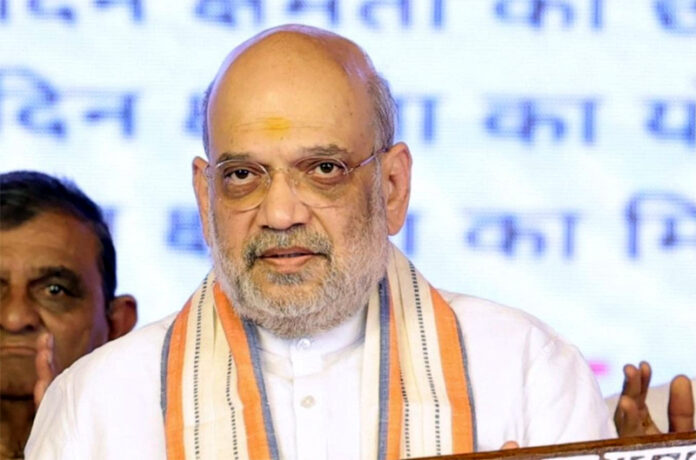
LEH, May 1 : Union Home Minister Amit Shah on Friday said India’s livestock and dairy sector has undergone a major transformation since Prime Minister Narendra Modi assumed office in 2014, with milk production rising sharply by 70 per cent in just one decade.
“There has been a major transformation in the livestock and dairy sector across the country after Narendra Modi became Prime Minister in 2014. With the creation of a dedicated Animal Husbandry Department, several revolutionary changes have taken place,” he said at an event to launch several projects in the dairy sector.
Shah said the country’s milk production has increased from 143 million tonnes in 2014-15 to around 248 million tonnes in 2024-25, marking nearly 70 per cent growth in just ten years.
“Nearly 50 per cent of this growth has come in the last five years,” Shah said.
He said per capita milk availability has increased from 307 grams per day in 2014 to around 485 grams at present, describing milk as an essential component of nutrition, especially for children.
“Pasteurised milk plays an important role in meeting children’s nutritional needs,” he said.
The home minister expressed hope that Ladakh would also achieve the national average of 485 grams of milk availability per person per day to ensure better nutrition for future generations.
Laying focus on achievements, he said milk powder production has also increased from 15,000 metric tonnes in 2014–15 to around 24,000 metric tonnes.
“Similarly, per capita availability (in another category) has increased from 148 grams to around 214 grams. I believe that the national average of 485 grams per day should also be achieved in Ladakh, ensuring adequate nutrition for future generations,” he added.
Highlighting the expansion of the cooperative network, Shah said India now has over 2.36 lakh dairy cooperative societies with around 20 million milk producers associated with them.
He added that the government has set a target of establishing 75,000 new dairy cooperative societies within five years, of which more than 21,000 have already been formed.
“Simultaneously, efforts are underway to modernise nearly 46,000 existing societies.”
The minister urged the Ladakh administration to tap the full potential of villages suitable for livestock rearing, keeping in view local climatic conditions.
He also called for promoting cooperative-based development in allied sectors, such as organic farming and honey production, in the region.
Shah said such initiatives would not only enhance farmers’ incomes but also strengthen the rural economy and contribute to sustainable development in Ladakh. (PTI)

CM inaugurates 368 residential units for Govt employees
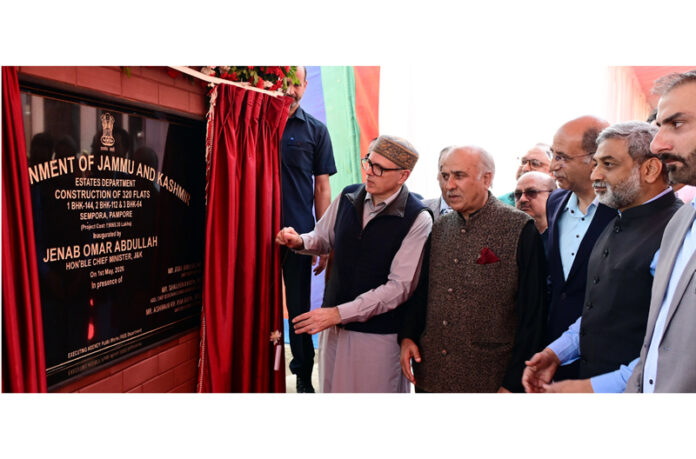
CM inaugurating residential units for Govt employees at Sempora, Pampore on Friday.

Excelsior Correspondent

PAMPORE, May 1: Chief Minister Omar Abdullah today inaugurated 368 newly constructed residential quarters for Government employees at Sempora in Pampore, developed across 23 blocks at an estimated cost of Rs 90.65 crore.
Constructed by the Estates Department, the project marks the completion of a major residential infrastructure initiative aimed at strengthening government housing facilities in the Kashmir Valley. It forms part of the government’s push to enhance employee welfare by providing modern, well-equipped residential spaces.
Advisor to the Chief Minister Nasir Aslam Wani, MLA Pampore Justice (Retd.) Hasnain Masoodi, Additional Chief Secretary Estates Shaleen Kabra, Deputy Commissioner Pulwama Dr Basharat Qayoom, Director Estates Ashwini Khajuria, along with senior officers, engineers and other concerned officials, were present on the occasion.
Click here to watch video
The Chief Minister inaugurated the Estates Quarters and inspected the newly constructed residential flats, including 2BHK and 3BHK units. He also visited the canteen and mess facilities and was briefed by senior officers of the Estates Department on upcoming and proposed housing projects.
With its completion, the quarters are expected to significantly enhance the availability of accommodation for Government employees and help ease long-standing shortage.
The project assumes added significance in view of the restoration of the annual Darbar Move by the present Government, which has revived the need for adequate residential facilities for employees relocating between Jammu and Srinagar.
The residential quarters will particularly benefit a large section of Darbar Move employees, many of whom have faced persistent challenges in securing suitable accommodation for their families over the years. The availability of these units is expected to reduce dependence on private housing and improve overall working conditions by ensuring stability and convenience.
Speaking on the occasion, the Chief Minister reiterated his Government’s commitment to providing suitable family accommodation to employees. He said that strengthening employee welfare remains a key governance priority, and that efforts are underway to further augment residential infrastructure in a phased manner across Jammu and Kashmir.
He emphasized that residential accommodation plays a crucial role in enhancing productivity and morale among government employees, adding that the government will continue to invest in infrastructure that directly impacts their well-being.
Highlighting the importance of efficient project management, the Chief Minister stressed the need for timely execution of public infrastructure works. He directed the concerned departments to ensure optimal utilization and proper maintenance of the newly created facilities so that they continue to serve employees effectively in years to come.

Nepal’s top leadership stresses unity, peace on Buddha Purnima
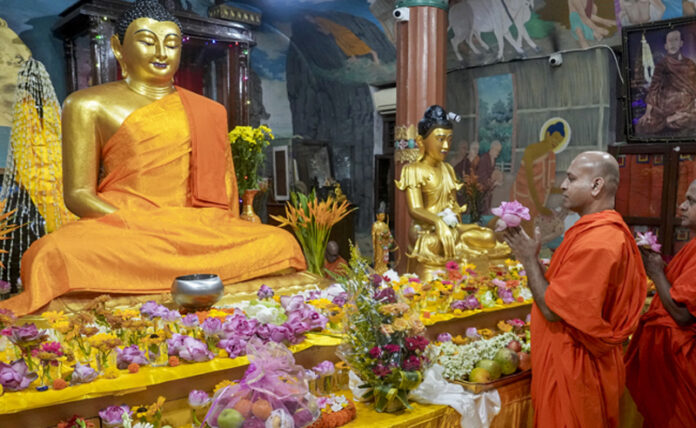
KATHMANDU, May 1 : National unity can be strengthened by following Lord Buddha’s guiding principles of tolerance and mutual goodwill, Nepal President Ramchandra Paudel said on Friday, on the occasion of Buddha Purnima.
The Himalayan nation is observing the 2570th Buddha Jayanti, or the birth anniversary of Lord Buddha, who was born in Lumbini, Nepal, around the 6th century BC.
Buddha Jayanti is celebrated on Baishakh Poornima or the full moon day in the month of Baishakh of the Lunar calendar every year.
The birth anniversary of the Buddha, regarded as the messenger of non-violence and peace, is being celebrated across the country with hopes for peace.
Traditional pujas are performed by Buddhists, with lamas and Buddhist gurus conducting ceremonies in Chaityas, monasteries, viharas, and other sacred sites.
Various programmes are being organised at important pilgrimage sites like Lumbini, Swayambhu, and Bouddha to commemorate the day.
In his message on the occasion, President Ramchandra Paudel said that national unity could be further strengthened by maintaining tolerance and mutual goodwill amid religious, social and cultural diversities, abiding by the messages and guiding principles of Lord Buddha, the proponent of non-violence and peace.
Extending his greetings to all through social media, Prime Minister Balendra Shah said that Nepal, blessed by the birth of Buddha, has always been in favour of non-violence and peace.
“The path shown by the Buddha is the path to end suffering by seeking knowledge,” he said.
“As a ray of light enters, darkness automatically disappears; likewise, our journey should be in search of the light of knowledge, should be on the path to solve problems,” said Shah.
Buddha’s birth, enlightenment, and Mahaparinirvana (death) all occurred on the full moon day of Baisakh. Thus, Buddhists worldwide, including those in Nepal, celebrate Buddha Jayanti with deep reverence and devotion.
Meanwhile, the Indian Embassy in Nepal on Thursday celebrated Buddha Jayanti in Lumbini in collaboration with the Lumbini Development Trust and Lumbini Buddhist University.
The celebration held on the eve of Buddha Jayanti featured a painting exhibition by school students, chanting of prayers by monks from Nepal and India and a vibrant cultural evening.
On the occasion, a Buddhism-themed Kathak dance was performed by a troupe from ICCR, India, headed by Deepti Gupta and a musical presentation by a Nepali band led by sarod maestro Suresh Raj Bajracharya.
Lumbini Province Governor Krishna Bahadur Ghartimagar was the chief guest on the occasion. (PTI)

MP CM meets kin of cruise boat tragedy victims; says won’t spare guilty, announces high-level probe
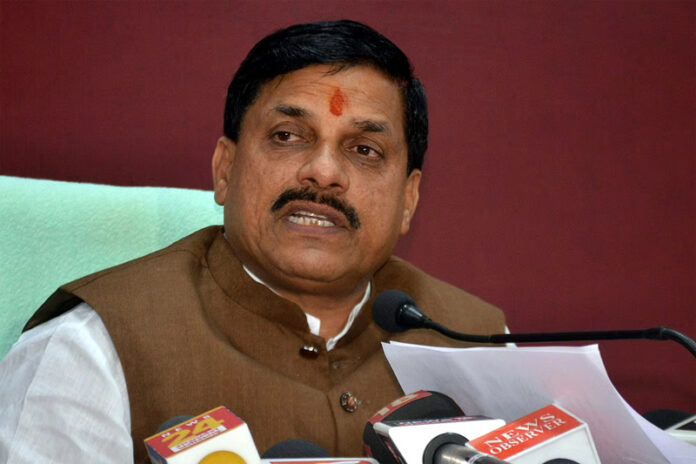
BHOPAL, May 1 : Madhya Pradesh Chief Minister Mohan Yadav on Friday met family members of the victims of the cruise boat accident that claimed nine lives at Bargi Dam in Jabalpur, and said those found guilty will not be spared.
He also announced the formation of a high-level committee to investigate the circumstances and other aspects related to the incident that occurred on Thursday.
During his meeting with the kin of the victims in Jabalpur, the CM turned emotional. He tried to console the family members.
Nine people died and 28 were rescued after the cruise boat overturned in the Bargi Dam, built on the Narmada River in Jabalpur district, after it encountered a sudden storm on Thursday evening.
CM Yadav visited Jabalpur and met the victims’ families. He assured them that the state government stood firmly with them in this hour of crisis.
Deputy Chief Minister Jagdish Devda and Public Works Department Minister Rakesh Singh accompanied him.
Yadav travelled from Kotwali to Darhai Road. There, he visited the residence of Neetu Soni, who died in the accident, and expressed his condolences.
On seeing the CM at their home, a girl from the family could not hold back tears. Moved by it, Yadav placed his hand on her head and tried to console her and other family members. He also embraced two young children.
After that, Yadav met Riyaz Hussain, who narrowly escaped the cruise boat accident and was rescued nearly four hours later, at his home.
During the interaction, Riyaz told the CM that he felt he would not survive after the boat accident.
Talking to reporters later, CM Yadav said the tragedy occurred in the Narmada river, in which nine people died and 28 others were rescued.
The incident has shocked the entire state, he said.
As Jal Jeevan Mission work was underway near the site of the accident, a team involved in it extended help in the rescue operation. After being informed, the administration sent National Disaster Response Force (NDRF) and SDRF teams to the spot, the CM said.
Skilled Army divers also took part in the rescue and relief efforts, he added.
“Riyaz Hussain was trapped in the cruise ship for four to five hours after the accident. I met him and the families of other victims,” he said.
The CM said a cash reward of Rs 51,000 would be given to those who saved the lives of others in the accident.
“The MP government has announced Rs 4 lakh each for the families of the deceased, and Prime Minister Narendra Modi has announced Rs 2 lakh each as financial assistance,” Yadav said.
The government is forming a high-level committee to investigate this incident. It will comprise the Director General of Home Guards and Civil Defence, Secretary of the state government, and Commissioner of Jabalpur Division, he added.
This committee will focus on three aspects of the tragedy – firstly, its initial probe; secondly, the circumstances leading to the tragedy, and thirdly, whether protocols were followed at the time of the accident, he said.
“Our government will prepare Standard Operating Procedures (SOPs) for all activities, including boat tourism, cruise tourism, and adventure sports, to prevent such accidents in the future,” he said.
“Whoever is found guilty in the investigation report will not be spared. We must all take the weather department’s information seriously,” CM Yadav added.( PTI)