

NEW DELHI, Apr 30: The Congress on Thursday said one full year has passed since the government announced a caste census but the details of how this enumeration will be done are still awaited, as it alleged that Prime Minister Narendra Modi has every intention of delaying the exercise.
Congress general secretary in-charge communications Jairam Ramesh said today exactly a year ago, the Modi government had announced that caste enumeration of the entire population will be included in the upcoming Census.
“The recent chronology relating to this dramatic U turn by the Prime Minister is this: On July 21 2021, the Home Minister had answered a question in the Lok Sabha asked by a BJP MP Smt Raksha Nikhil Khadse (now a Minister herself) and said that the Government of India had decided as a matter of policy not to enumerate caste-wise population,” Ramesh said on X.
On September 21 2021, the Modi government filed an affidavit in the Supreme Court stating that any directive by the court to enumerate caste-wise population would be tantamount to interfering with a policy decision already taken by the Modi government, he said
On April 16, 2023, Congress president Mallikarjun Kharge wrote to the PM demanding an up-to-date caste census as part of the regular census, Ramesh pointed out.
“On April 28 2024, in a television interview to News18 Network, the prime minister attacked the Congress saying that its demand for a caste census was indicative of ‘urban naxal’ thought,” he said.
The prime minister owes the leadership of the Congress an apology for his accusation, Ramesh said, adding that more importantly, he owes the people of India an explanation of why he allowed his mind to be contaminated by “urban naxal” thought when he announced a caste census on April 30, 2025.
“A full year has passed. The details of how this caste enumeration will be done are still awaited. There has been no dialogue with Opposition parties and state governments, let alone with experts in this subject,” Ramesh said.
“The President of the Indian National Congress had written to the PM again on May 5, 2025 on the issue of the caste census. That letter was not even acknowledged. The issues raised in that letter remain very valid even now,” he said.
In fact, they are more relevant after the recently-concluded special session of Parliament where it was evident that the PM has every intention of delaying the caste census, Ramesh claimed. (Agencies)
PM Modi Has Every Intention Of Delaying Caste Census: Congress

Cyber Police Files FIR Against PDP Leader Iltija Mufti Over Separatist-Linked Social Media Content
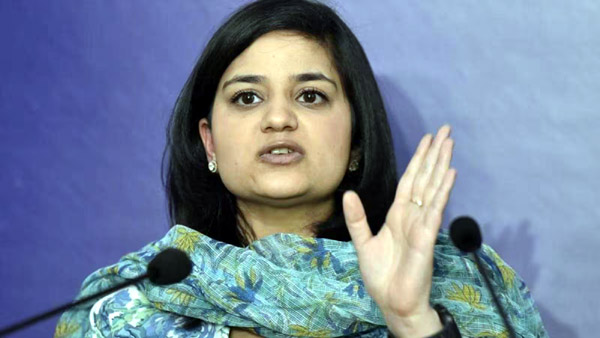
Srinagar, Apr 30: Cyber Police Kashmir has registered an FIR against PDP leader Iltija Mufti and others in connection with alleged separatist-related content circulated on social media, officials said on Thursday.
The case was initiated after a video posted on X (formerly Twitter) by Iltija Mufti featuring slain separatist leader Syed Ali Shah Geelani came to the attention of authorities.
They said FIR No. 11 has been registered under Section 152 of the Bharatiya Nyaya Sanhita (BNS), which pertains to acts threatening the sovereignty, unity, and integrity of India.
Officials further stated that unidentified persons have also been included in the FIR for allegedly sharing and amplifying the content online. Cyber Police Kashmir has taken up further investigation to determine the intent and extent of circulation of the video. (KNC)
Indus Water Treaty: Asymmetric Obligations, Unequal Concessions And Pakistan’s Aggression
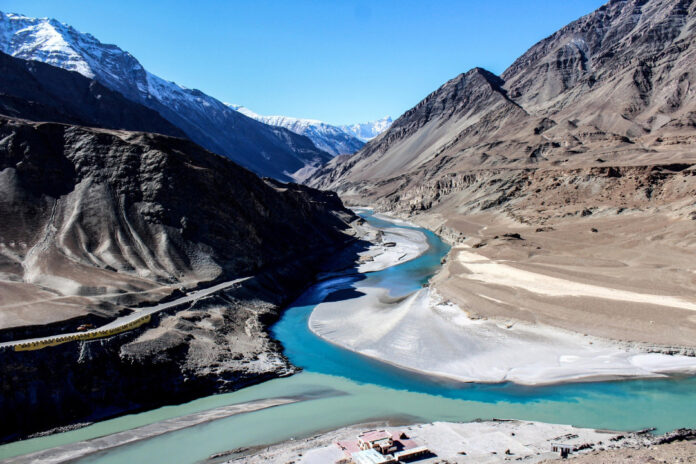
The Architecture of Inequity — How India’s Goodwill Was Codified into Concession
1. Background: The Partition of a River System
The Indus River System comprises six major rivers — the Indus, Chenab, Jhelum, Ravi, Beas and Sutlej — flowing through the territories of both India and Pakistan. The system sustains drinking water, agriculture and electricity generation across the Indus Basin, supporting hundreds of millions of people on both sides of the border.
When British India was partitioned in 1947, the Indus River System was also divided between the two successor states.
The geographic reality was stark: India, as the upper riparian state, held the headwaters of most rivers, while Pakistan’s agricultural heartland — the heavily irrigated Punjab plains — depended critically on continued water flows from the east.
India, for its part, required access to the system for its own development objectives in Punjab and Rajasthan, while seekingT stability and normalised relations with its new western neighbour.
Despite its own pressing domestic needs, India concluded this highly concessionary water-sharing pact with Pakistan on 19 September 1960, an agreement facilitated by the World Bank.
2. Negotiations – India paid the price for rationality
2.1) Pakistan’s strategy of delay and the 1954 World Bank proposal:
The trajectory of the negotiations was shaped, from the outset, by the asymmetry between India’s reasonable and constructive approach and Pakistan’s maximalist, sometimes absurd, demands — an asymmetry that anchored outcomes far more favourably to Pakistan than equity would have warranted.
The World Bank’s first substantive proposal of 5 February 1954 illustrates this plainly: even at this initial stage, it required significant one-sided concessions from India:
• All planned Indian developments along the upper reaches of both the Indus and Chenab were to be abandoned, with those benefits accruing to Pakistan instead.
• India was required to forgo diverting approximately 6 MAF from the Chenab River.
• No Chenab waters at Merala (now in Pakistan) would be available for Indian use.
• No water development would be permitted in Kutch from the river system.
Despite these considerable impositions, India accepted the proposal in good faith almost immediately, signalling its genuine desire for a speedy resolution. Pakistan, by contrast, delayed its formal acceptance for nearly five years until 22 December 1958.
As a result of this goodwill gesture of India, the restrictions were imposed on her while Pakistan continued developing new uses on the Western rivers without equivalent constraints.
Pakistan absorbed the lesson that obstruction pays and cooperation costs — and has applied this lesson consistently ever since.
3. What India lost: The scale of sacrifice
3.1) The water allocation:
Under the Treaty’s allocation formula, India received exclusive rights to the three Eastern rivers — the Sutlej, Beas, and Ravi — while Pakistan received rights to the waters of the three Western river — the Indus, Chenab, and Jhelum.
India was permitted certain limited, non-consumptive uses of the Western rivers within its own territory, primarily for run-of-river hydropower generation, subject to extensive design and operational restrictions.
In volumetric terms, the Eastern rivers allocated to India carry approximately 33 million acre-feet (MAF) of annual flow, while the Western rivers allocated to Pakistan carry approximately 135 MAF — giving Pakistan roughly 80 per cent of the system’s water. India received 20 percent, in exchange for relinquishing all claim to the vastly larger Western system.
The critical point is that India did not gain new water from the agreement. What India received was formal acknowledgment of flows it already accessed, in exchange for relinquishing all claim to the far larger Western system.
India was permitted certain non-consumptive uses of the Western rivers within its territory — primarily run-of-river hydropower generation.
3.2) The financial concession: Paying to give away water
Perhaps the most striking anomaly of the Treaty is the financial provision. India agreed to pay approximately £62 million (approximately $2.5 billion in present value) as compensation to Pakistan to build water resources infrastructure in Pakistan-occupied Kashmir.
This payment represents a unique precedent in which the upstream country, which was already surrendering the majority of the system’s water, additionally paid the downstream country for the “privilege” of doing so.
India essentially subsidised Pakistan’s acceptance of a deal that heavily favoured Pakistan on the fundamental question of water allocation.
4. The Treaty’s structural unfairness
4.1) Unilateral asymmetric restrictions on India: The Treaty imposes a series of specific design and operational restrictions on India’s use of the Western rivers that have no corresponding obligations on Pakistan’s side:
• India can develop only a limited Irrigated Cropped Area (ICA) in its territory.
• India faces strict limits on the volume of water that can be held in any storage facility on the Western rivers.
• India must comply with specific design criteria for any hydropower facilities on the Western rivers, including restrictions on pondage and storage capacity.
These restrictions are one-directional: they constrain India’s lawful development of resources within its own territory while imposing no equivalent transparency or restriction requirements on Pakistan. The result is a treaty that treats the upstream state — India — as the party requiring oversight and restraint, while the downstream state benefits from guaranteed flows. (Agencies)
Creation of five new districts in Ladakh Area as important as population
Pushp Saraf
pushapsaraf@yahoo.com
In the late 1990s, the late Ladakh leader P. Namgyal led a delegation from Leh to the then Planning Commission in New Delhi. The mood was tense. A development project sanctioned for their region had been quietly redirected to the Kashmir Valley by the State Government, which exercised near-complete administrative authority over Ladakh as part of the erstwhile Jammu and Kashmir State. The J&K Government’s reasoning was not without logic – why invest heavily in a sparsely populated, remote corner of the State when the same resources could serve a far greater number of people in the Valley?
The Ladakh delegation, however, arrived with a counter-argument that was both principled and urgent: that geographic importance cannot be reduced to a headcount. Fewer people did not mean that a region could be denied the benefits of development, infrastructure, or the basic dignity of progress. Their first meeting was with Arun Shourie, who had recently joined the Union Council of Ministers under Prime Minister Atal Bihari Vajpayee with a portfolio that included Planning. Persuaded by their case, Shourie arranged an immediate meeting with a senior Planning Commission functionary. In a quiet but telling gesture of support, he walked briefly into the room himself – lending weight to the proceedings without formally participating.
This writer was present throughout. The discussion that followed was candid and substantive. Opinions moved back and forth about the contrasting needs of densely and sparsely populated regions. The Commission official was visibly sensitive to the position of the State Government, which was absent from the room, yet equally conscious that a project once sanctioned for a specific region could not simply be reassigned without consequence. This was particularly true in the case of Ladakh which was growing increasingly aware of its democratic rights and actively demanding separation from J&K.
The episode illustrates a tension that continues to define governance in a way. While it goes without saying that populations in distress must receive priority, in ordinary circumstances the people in authority must guard carefully against being seen to act in a discriminatory or politically convenient manner. Developmental decisions carry a moral weight that goes beyond economics.
Few regions in the country make the case for focused, sustained investment as compellingly as Ladakh. The arguments are several and mutually reinforcing. Strategically, Ladakh shares a border with two countries that have illegally occupied portions of its territory – China and Pakistan – making it one of the most sensitive frontiers. This geopolitical reality alone demands constant attention, robust infrastructure, and a well-administered civilian presence. But the region’s claims on the national conscience extend well beyond security.
Ladakh’s natural endowments are extraordinary. The mighty Indus river cuts through its terrain, nourishing life in an otherwise stark landscape. Its glaciers – among them Siachen, the world’s highest battlefield – are both ecologically critical and strategically significant. Its lakes, particularly Pangong Tso and Tso Moriri, are among the most breathtaking in the subcontinent. The snow leopard prowls its high-altitude slopes; the Changthang plateau is home to the goats that produce pashmina, arguably the finest natural wool in the world. Apricot orchards, sea buckthorn groves, geothermal vents, and some of the clearest skies on earth – ideal for astronomical observation – round out a natural portfolio that most regions can only envy. Leh, in particular, has often been compared to Shangri-La, the mythical Himalayan paradise, and not without reason.
Culturally, Ladakh is a living repository of Tibetan Buddhist heritage, with ancient monasteries perched on cliffsides that have endured centuries of isolation and yet preserved traditions that scholars and pilgrims travel from across the world to witness. The region is a trekker’s paradise and one of the premier adventure tourism destinations globally.
Equally noteworthy, is the social resilience of Ladakh’s people. Women in both Leh and Kargil have demonstrated a remarkable commitment to formal education, and the region consistently records some of the highest female literacy rates in the country. This is a quiet but profound achievement that often goes unacknowledged in national discourse.
Against this backdrop, the Ladakh Administration’s formal gazette notification on April 27, approving the creation of five new districts, marks a significant administrative milestone. The new districts – Nubra, Sham, and Changthang, carved out of the erstwhile Leh district, and Zanskar and Drass, separated from Kargil district – represent a long-overdue recognition that governance must reach closer to the people, particularly in a Union Territory where distances are vast and terrain is unforgiving.
Each of these new districts carries its own distinct identity and promise. Nubra, often called the “valley of flowers” or the “orchard of Ladakh,” is renowned for its sand dunes, double-humped Bactrian camels, and fertile river valleys that contrast with the barren plateaus that surround it. Sham, the “apricot valley,” is among the more accessible parts of Ladakh and serves as the entry point for many visitors arriving via Srinagar. Changthang, lying at extreme altitude, is the homeland of the nomadic Changpa herders and the source of the pashmina wool that has made Kashmir’s artisans famous worldwide. Zanskar, long isolated by snow-blocked passes for much of the year, is home to ancient Buddhist monasteries and an extraordinarily hardy people who travel the frozen Zanskar river – the Chadar trek – when all other routes are cut off. Drass, meanwhile, holds the distinction of being the world’s second coldest inhabited settlement and is also home to the Dard people, widely regarded as the direct descendants of the Aryan race.
One hopes that the time elapsed between the Union Home Ministry’s initial announcement three years ago and this formal gazette notification has been used productive to design administrative frameworks and establish the institutional foundations necessary for the new districts to function effectively from day one.
The creation of these new districts is, at its core, a transformative decision. It is not merely administrative reorganisation, but a signal that the nation’s relationship with its most remote territories is maturing. Population density is a poor yardstick for the worth of land. Beneath Ladakh’s stark surface lie resources, strategic value, cultural heritage, and ecological significance that no census figure can capture. The new districts offer these remarkable sub-regions the opportunity to develop their own governance capacities, attract investment, and bring services within meaningful reach of their residents.
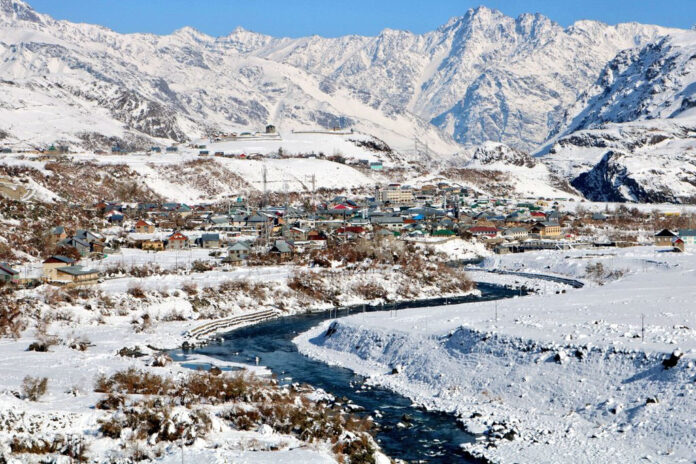
A look back at creation of five new districts in Ladakh
Pramod Jain, Rinchen Dolma
Ladakh, a Union Territory in Northern India, was on the cusp of a significant transformation on August 26, 2024, when the Ministry of Home Affairs announced “in-principle approval” for creation of five new districts in the region namely, Sham, Nubra, Changthang, Zanskar and Drass. This historic move is expected to bring governance closer to people, fostering employment and development in the region.
The new districts will not only improve the delivery of public services but also unlock a vast potential for the people of Ladakh, transforming it into a thriving and prosperous region. The decision to create new districts was driven by a vision to build a developed and prosperous region with enhanced administrative efficiency, promote inclusive development and address the unique challenges faced by the people of Ladakh.
The region’s vast and rugged terrain, coupled with its sparse population and longer distances from the capital of Leh made it difficult for people to access easy governance or services. With the announcement of five new districts, the aspirations of people for well-developed, structured, and full-fledged districts with efficient and effective administrative services and accelerated developmental activities are coming closer to reality, which will indeed bridge the gap between the administration and the people.
Opportunities and Challenges
The creation of the new districts is expected to bring about several benefits, such as improved governance, with more localized administration enabling faster decision-making and more effective delivery of public goods and public services. This step is also anticipated to enhance development in the new districts, as development initiatives will focus on the unique needs of each district, driving growth and prosperity. It will also increase employment opportunities for local youth. Infrastructure development will improve connectivity, healthcare, education, and other essential services.
However, the creation of new districts will also pose several challenges. The establishment of new administrative structures will require significant investment in infrastructure, including office buildings, equipment, staff quarters, and communication networks. The allocation of staff and resources will also be a major challenge, requiring careful planning and coordination.
The new districts will also require the establishment of new administrative offices, including the offices of Deputy Commissioner and Superintendent of Police, sub-divisional and tehsil offices, among others. This will require the recruitment of new staff at various levels.
Formation of New Districts Committee (NDC)
Following the MHA announcement, the Administration of Ladakh formed a Committee to assess various aspects related to the formation of new districts, such as headquarters, boundaries, structure, creation of posts and other aspects and submit its report within three months. The Committee comprising Pramod Kumar Jain, IAS (Retd.), as Chairman, Kacho Ashfandyar Khan, IAS (Retd.), Tsering Angchok, IAS (Retd.), Deputy Commissioner Kargil (ex-officio), and Deputy Commissioner Leh (ex-officio) as members was accordingly constituted on September 25, 2024.
The Committee held its first meeting at Leh on October 03, 2024, and deliberated on various aspects for the creation of new districts, including methods to be adopted for public consultations, terms of reference for the Committee and so on. Their work involves identifying infrastructure requirements, allocating resources, and developing strategies for effective governance, among others.
The Committee aims to ensure a smooth transition and the establishment of functional administrative structures in the new districts. Over time, the Committee spent 36 working days conducting extensive visits to the newly-formed districts of Ladakh, including the existing Leh and Kargil districts, and met with various stakeholders and delegations. They travelled around 2,700 kms through the length and breadth of Ladakh, visiting sub-divisions, tehsils and villages and meeting people. The stakeholders and delegations included local residents, local representatives such as Lambardars, Sarpanches, ex-Sarpanches, women representatives, Councillors, Executive Councillors, and so on.
The committee met 1,300 people at more than 20 locations, from Rangdum, Padum, Karsha, Shakar Chiktan, Drass, Kargil, Drachik, Beema, Khaltse, Durbuk, Tangtse, Chushul, Nyoma, Chumathang, Diskit, Bogdang, Turtuk, Sumoor, Panamik, Leh, and so on. The Committee also held separate meetings with LAHDC Leh, LAHDC Kargil, Religious bodies of Ladakh, women groups, District Bar Council and other delegations to hear their concerns and voices.
The New Districts Committee received approximately 165 memoranda and applications. Papers and inputs were also received for district, sub-divisional, and other offices for all the new districts. To boost the creation of new districts, meetings were also called with District Officers, Directors, and Secretaries of various departments to discuss and submit their proposals for creation of new posts, upgrading infrastructure and creating basic amenities and facilities such as a master plans, traffic management, sewerage, sanitation facilities, water supply, electricity supply, solar projects, fire tenders, sports infrastructure, solid waste management and other urban facilities.
The Committee also met with Lieutenant Governor Brig. (Dr.) B. D. Mishra (Retd.), Dr. Advisor Pawan Kotwal (IAS), and Director General of Police S.D. Singh Jamwal (IPS) for their views and guidance.
Empowering Local Communities
The creation of the new districts is a significant step towards empowering local communities in Ladakh. By bringing governance closer to the people, the new districts will enable more participatory and inclusive decision-making. The district administrations are expected to be equipped to respond to the unique needs and challenges of the local population, driving development and growth in the region.
As the new districts take shape, it is essential to ensure that the needs and aspirations of the local communities are taken into account. The new district administrations must work closely with local stakeholders, including elected representatives, community leaders, women and civil society organizations, to develop and implement people-centric initiatives and to build a district that is full-fledged as aspired by the people at large.
A New Era for Ladakh
At present, Ladakh has two districts, Leh and Kargil. It is one of the least populated areas of India. The creation of five new districts in Ladakh marks a significant milestone in the region’s development journey. The New Districts Committee plays a vital role in shaping the future of these districts. The Committee is ensuring that the new districts are operationalized in a fair and transparent manner. They have been engaging with local communities, listening to their concerns, and incorporating their suggestions into the proposed recommendations.
As the new districts take shape, the people of Ladakh can expect improved governance, enhanced development, and increased opportunities for employment, growth and prosperity. The creation of the new districts is a testament to the government’s commitment to empowering local communities and driving development in the region. The new districts will not only bring governance closer to the people but also unlock the vast potential of Ladakh.
(Pramod Jain (IAS retd) is the Chairman of New Districts Committee for the UT of Ladakh. Rinchen Dolma is Assistant Information Officer at DPIR, Leh. )
Akshaya Patra-inspired initiative highlights challenge of food insecurity among US college students

NEW YORK, Apr 30 : A global food initiative, inspired by the Akshaya Patra Foundation, has highlighted the need to combat the challenge of food insecurity among college students in the US, and called on the Indian-American diaspora to extend their support.
The Consulate General of India in New York, in collaboration with the World Food Movement (WFM), hosted a special event titled ‘No One Hungry’ here on Monday.
The World Food Movement, a US-based not-for-profit organisation, had in September last year launched an initiative to provide hot nutritious meals to students in New York, New Jersey, Boston and California across community colleges with a target of serving one million meals annually across the US by 2030.
Addressing the event at the Consulate, co-founder and Vice Chairman of the Akshaya Patra Foundation and the World Food Movement Sri Chanchalapathi Dasa said students across communities in the US should not be struggling to choose between food and education.
Dasa cited data to point out that about 41 per cent of students experience food insecurity in college campuses in the US.
The data, collected from over 74,000 students from 91 institutions in the country, also found that over half of structurally disadvantaged groups went hungry at college campuses.
“Seeing all of this, hearing all of this, we incorporated the World Food Movement as a charity to address food insecurity primarily in college campuses and also in certain food insecure communities,” he said.
The World Food Movement currently serves three community colleges each in New York City and New Jersey, two community colleges in the suburbs of Boston, seven community college campuses in the Bay area and provides about 1800 meals to elementary school kids in Virginia, totalling about 3700 meals per week.
India’s Consul General in New York Binaya Pradhan noted that the statistics pointed to a “very telling” issue.
While lauding efforts of the diaspora in the US to give back to communities in need across India, Pradhan stressed that it is “befitting” that Indian-Americans also “give back to the communities in the countries” where they live.
Chef Vikas Khanna, who was this month named among the 100 most influential people in the world by TIME magazine, said that in India, “food is a form of worship, care, healing” and connects people to each other.
Students, college officials and community members shared experiences of how the WFM initiative is helping address food insecurity challenges in New York.
A woman beneficiary shared that she does not have to choose between buying her next meal or purchasing sanitary products for herself. (PTI)
Javid Dar inaugurates Rs 3.5 cr Fruit & Vegetable Processing Unit in Marh
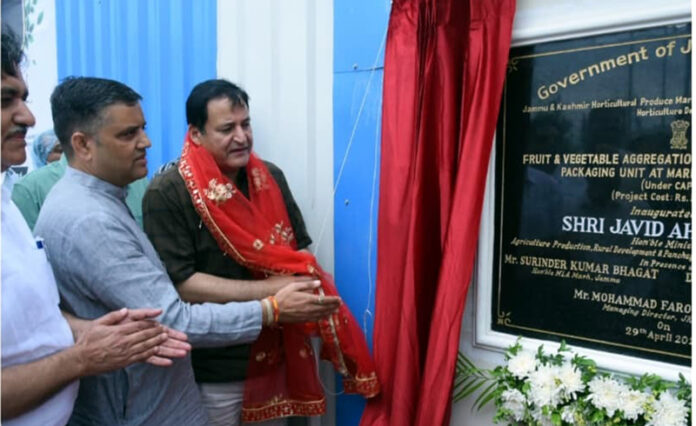
Excelsior Correspondent
JAMMU, Apr 29: In a major boost to agricultural infrastructure in Jammu region, Minister for Agriculture Production, Rural Development and Panchayati Raj, Cooperative and Election Department, Javid Ahmad Dar, on Wednesday inaugurated a state-of-the-art Fruit and Vegetable Aggregation, Processing, Grading and Packing Unit at Marh.
MLA Marh Surinder Kumar Bhagat, Managing Director JKHPMC, Mohammad Farooq Dar, Director Agriculture Jammu Anil Gupta, Director Animal Husbandry Jammu, Sanjay Gupta, Director Horticulture Jammu, Gul Sayed and Director Sheep Husbandry Jammu, Dr Syed Moin-ul-Haq were present on the occasion.
Addressing the gathering, the Minister said that establishment of the processing unit will play a transformative role in strengthening post-harvest management, boosting processing capacity and significantly reducing post-harvest losses. He said the facility will add 100 metric tonnes of storage capacity, ensuring value addition and creating better marketing opportunities for the farmers at both local and national level.
He highlighted that Marh, known as the vegetable hub of Jammu district, contributes significantly to vegetable supplies across the region, making the installation of such a facility crucial for the farming community.
“The Rs 3.5 crore project will provide farmers with modern post-harvest infrastructure, helping minimise crop damage and ensuring improved returns through better grading, packing and storage facilities,” the Minister said.
Reiterating the Government’s commitment towards farmers’ welfare, Javid Ahmad Dar said the Jammu and Kashmir Government is ensuring the availability of high-quality seeds and fertilizers to maximise farm productivity. He added that exotic varieties of vegetable seeds and fruit plants are being made available through departmental channels.
The Minister further informed that Centres of Excellence have been established across all districts to provide quality seedlings and technical support to the farmers. He assured that the demands and concerns raised by MLA Marh Surinder Kumar Bhagat would be addressed on priority, adding that several initiatives have already been taken to facilitate the farming community.
Ericsson discusses manufacturing expansion, research investments in India with Scindia
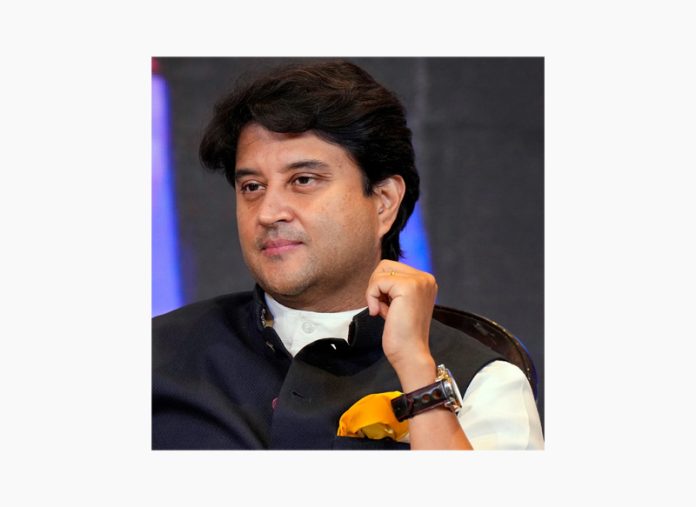
NEW DELHI, Apr 29 : Swedish firm Ericsson on Wednesday discussed its plan to expand manufacturing footprint, research and development investments, and strengthen telecom infrastructure in India with Telecom Minister Jyotiraditya Scindia.
Ericsson at present manufactures and exports 5G gears from India.
“Hon’ble Minister @JM_Scindia ji held a meeting with Mr Andres Vicente, @ericsson’s Head of Market Area India, South East Asia & Oceania. Discussions focused on expanding Ericsson’s manufacturing footprint in India, deepening R&D investments and strengthening telecom infrastructure in India,” the minister’s office said in a social media post.
India is the second largest market of the Swedish firm, which contributed 8 per cent to the consolidated revenue of the firm in the March 2026 quarter and 7 per cent in the year-ago period.
Ericsson has posted around 29 per cent growth in revenue to Rs 4,228 crore on a constant currency basis during the quarter ended March 31, 2026.
The company had posted revenue of around Rs 3,272 crore in the same quarter a year ago, calculated based on the average foreign exchange rate during the corresponding quarter. (PTI)
Rickelton’s ton in vain as SRH beat MI by 6 wickets

MUMBAI, Apr 29: Ryan Rickelton’s whirlwind unbeaten ton was overshadowed by Heinrich Klaasen’s unbeaten 65 as Sunrisers Hyderabad defeated Mumbai Indians by six wickets in an IPL match here on Wednesday.
Chasing an imposing 244-run target, Travis Head (76 off 30) and Abhishek Sharma (45 off 24) shared 129 runs for the opening wicket to set the platform for SRH.
Klaasen (65 not out off 30 balls) then displayed his all-round hitting abilities to guide SRH home with the help of Nitish Kumar Reddy (21) and Salil Arora (30 not out off 10) in 18.4 overs.
Earlier, Rickelton’s knock powered MI to 243 for five.
MI rode on a 93-run stand between Rickelton (123 not out off 55 balls) and Will Jacks (46 off 22) in 7.1 overs for the opening stand to power the side.
MI skipper Hardik Pandya scored a valuable 31 off 15 balls before being dismissed.
Praful Hinge (2/54), Eshan Malinga (1/29), Sakib Hasan (1/39) and Nitish Kumar Reddy (1/31) were the wicket-takers for SRH.
Brief Scores:
Mumbai Indian: 243 for 5 in 20 overs (Ryan Rickelton 123 not out; Praful Hinge 2/54).
Sunrisers Hyderabad: 249 for 4 in 18.4 overs (Travis Head 76, Heinrich Klaasen 65 not out; AM Ghazanfar 2/51). PTI
Cabinet meets today; JSD’s Cadre Review, SMG Rec Rules on agenda
MS, DyMS, AMSs to be re-designated as Prof, APs
*JKAS officers to be promoted, Distts to get 9 DAOs
Sanjeev Pargal
JAMMU, Apr 29: The UT Cabinet will meet here tomorrow for the last time before shifting of Civil Secretariat to Srinagar for next six months with large items on agenda including Cadre Review and Reorganization of Jal Shakti Department, finalization of Recruitment Rules for State Motor Garages, re-designation of Medical Superintendents, Deputy Medical Superintendents and Assistant Medical Superintendents in the GMCs as Professors, Association Professors and Assistant Professors, creation of nine posts of District Ayush Officers (DAOs), promotion of JKAS officers in three ranks and regularization of Lecturers in Education Department among others.
Follow the Daily Excelsior channel on WhatsApp
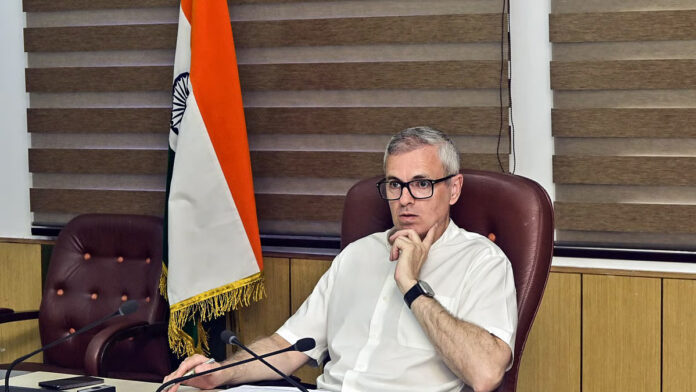
“The Cabinet is scheduled to meet at 11 AM at Chief Minister Omar Abdullah’s official residence on Thursday,” official sources told the Excelsior.
They said the Cadre Review and Reorganization of Jal Shakti Department (JSD) topped agenda of the Cabinet meeting while the Memorandum of Understanding (MoU) to be signed between the JSD UT Government with the Centre on Jal Jeevan Mission (JJM) will also be discussed as it has been drafted by the department.
The Recruitment Rules for State Motor Garages (SMG) have been finalized and the Cabinet is expected to approve its notification in tomorrow’s meeting.
In a significant decision, the Health and Medical Education Department has mooted re-designation of Medical Superintendents as Professors, Deputy Medical Superintendents as Associate Professors and Assistant Medical Superintendents as Assistant Professors in the Government Medical Colleges (GMCs) of Jammu and Kashmir.
The Cabinet is likely to give its nod to the proposal.
A proposal is also before the Cabinet on promotion of Jammu and Kashmir Administrative Services (JKAS) officers in three ranks including Under Secretaries, Additional Secretaries and Special Secretaries.
However, as per the agenda items, the Dearness Allowance (DA) of Government employees and pensioners, which was recently released by the Central Government, is not being taken up by the Cabinet tomorrow. But, the possibility of supplementary agenda to approve the DA is not ruled out, the sources said.
The Cabinet is likely to revalidate previous order on regularization of Lecturers in the Education Department.
A proposal has also gone for creation of supernumerary post of the District Judge.
Sources said nine posts of District Ayush Officers (DAOs) are proposed to be created in the Health and Medical Education Department by reducing 11 posts of the Medical Officers. Eight DAOs will be posted in the districts which were created in 2006-2007 (four each in Jammu and Kashmir divisions) and one in Pulwama district.
Sources said various development works proposed by Public Works Department (PWD), Housing and Urban Development Department and Rural Development Department are also expected to be cleared by the Cabinet in its tomorrow’s meeting.
It may be mentioned here that the Cabinet decisions are subject to approval of Lieutenant Governor Manoj Sinha.