Saturday, May 2, 2026
E-Paper
Home Blog Page 38

HC upholds building violation notices issued by LCMA in Harwan area

Excelsior Correspondent

Srinagar, Apr 29: The Division Bench of the High Court has upheld the writ court verdict whereby exclusion of the areas of tourist place Harwan from the control and jurisdiction of Jammu and Lakes Conservation and Management Authority (LCMA) was refused.
The LCMA had issued notices for unauthorized constructions and violation of building laws in the Harwan and its adjoining areas which came to be challenged by the residents of Harwan seeking direction from the writ court to declare that the (LCMA) does not have any jurisdiction over Fakir-Gujri, Gandtal, Syedpora, Theed, Dara and adjacent areas as such the notices are illegal.
The plea sought a direction upon the LCMA not to create any interference in the matters of these areas which are otherwise regulated under Panchayati Raj Act. The case projected before the court was that initially their villages did not fall within the jurisdiction of LCMA but in terms of SRO of 1998, villages Harwan Theed, Dara, Murinderbad, Mufti Bagh and Fakirgujri also came to be included in the substituted list of local areas within the jurisdiction of LCMA.
“We do not find any conflict between the Development Act and the Panchayati Raj Act insofar as regulation of building permissions and their violations are concerned. If the area of Harwan is part of a Notified Area for which LCMA has been constituted, it is the LCMA and the Control of Building Authority which alone shall have jurisdiction to grant building permissions and to ensure that no construction or development takes place in the notified area either without building permissions or in violation of permissions granted. Viewed from any angle, we find no merit in this appeal, the same is accordingly dismissed”, the Division Bench of Justice Sanjeev Kumar and Justice Sanjay Parihar said.
The Government, while invoking Section 3(3) of the J&K Municipal Corporation Act, 2000, excluded number of villages including the villages in question from the jurisdiction of Srinagar Municipal Corporation in the year 2014 and after such exclusion, the Government included Harwan as a Block under the Panchayati Raj Act and, as such, Fakir-Gujri A&B, Gandtal, Syedpora, Theed A&B, Dara A&B etc. were included as Halqas within Block Harwan.
It is contended that in pursuance of notification issued under Panchayati Raj Act, the petitioner-villagers and other residents of Block Harwan were granted building permission under Section 12(iv) of Panchayati Raj Act by the competent authority designated in terms of Government and in the Legislative Assembly, two questions in respect of unauthorized constructions and permissions in the areas including those of the petitioner-villagers, were raised, which ultimately came to be referred to the LCMA and thereafter the said Authority started issuing notices under Control of Building Operations Act, alleging violation of building laws.
The petitioner-Villagers, as such, have impugned the action of the LCMA in respect of action taken under Control of Building Operations Act, on the premise that their villages fall beyond the area within the jurisdiction of LCMA and the power to grant the building permission vests with the statutory authorities under the Panchayati Raj Ac.
They averred that in pursuance of notification issued under Panchayati Raj Act, they and other residents of Block Harwan were granted building permission under Section 12(iv) of Panchayati Raj Act read with Rule 155 of Panchayati Raj Rules by the competent authority designated in terms of Government Order dated 22.01.2022.
The LCMA counsel however, submitted that the villages of the petitioners fall within the jurisdiction of LCMA and it is the LCMA that is competent to grant permission for raising any residential or commercial construction.
Justice Rajnesh Oswal while dismissing the plea said, the petitioner-villagers are trying to justify the permissions granted by the office of Block Development Officer, Harwan, by conjoint reading of SRO 32 of 2019 and Government Order dated 22.01.2022.


Political awareness can it change Governance?

by Dhurjati Mukherjee

The election process has concluded, and all eyes would be on May 4, the day of counting. The West Bengal contest has been particularly intense, marked by sharp political rivalry between the All India Trinamool Congress and the Bharatiya Janata Party. Allegations regarding the use of muscle power and attempts to influence the electoral environment have surfaced, though the presence of central forces such as the Central Reserve Police Force has been seen as a stabilising factor in maintaining order during polling.

At this stage, it remains difficult to predict the outcome with certainty. While some analysts suggest that the BJP could make significant gains compared to its previous tally of 77 seats, both parties have expressed confidence in securing a majority. The final verdict will ultimately be determined when the results are declared. Even in the event of a reduced mandate, a return to power for the Trinamool Congress would still reflect substantial electoral support, albeit potentially lower than in the previous Assembly.

Under Didi’s franchise, the party successfully runs a ‘dada’ (musclemen) culture in their region. The problems of industrial decline, increasing debt and high levels of unemployment paint a grim picture of misgovernance. However, Mamata’s welfare model offers a quick fix and masks deeper economic issues. The hike in LakshmirBhandar and introduction of Banglar Yuba Sathi scheme and Krishak Bandhu are an extension of her political protection. Mamata has been outstanding in playing a dual role – while showing concern for the poor and marginalised on one hand, and corruption on the other.

The alleged corruption of the present regime is spoken of and not just musclemen, but the bureaucracy is accused of lending support. Recall, Supreme Court had recently observed that a chief minister cannot ‘obstruct’ an inquiry and put democracy in peril viz interruption of raids on I-PAC premises. “A chief minister of any state cannot walk in the midst of an investigation, put democracy in peril and then say, convert this into a dispute between the state and the Union. This is per se an act committed by an individual who happens to be the chief minister, putting the whole democratic process in jeopardy,” the bench of Justices Prashant Kumar Mishra and NV. Anjaria stated.

Further referring to previous judgments, it pointed out that “none of these would have ever conceived of this situation at that time that in this country a day will come when a sitting chief minister will walk into the office of some other agency”, Justice Mishra stated, adding that the framers of the Constitution too would not have envisaged such a savage and undemocratic act of a chief minister. Reports had said she had barged in so that the ED could not take the papers/files as these reveal her corrupt activities.

Some analysts are of the opinion that if the TMC regains power – perhaps a slender majority – it will become more belligerent. It may lead to a dangerous situation as she will try all sorts of antics as well as motivate the musclemen to resort to violence for the forthcoming municipal elections.

At least in West Bengal and other eastern states, political awareness is much below standard as we do not keep comparative data to judge performance of political parties or the promises they make and the work they do with public money. For example, there are innumerable cases filed by the Bengal government in the Supreme Court and the money spent in challenging judgments of the High Courts with high-profile lawyers. How can public money be spent at will and why should all cases that go against the state be challenged in the apex court? Can there be no mechanism of preventing a state going to the apex court at will and spending crores of rupees?

The very fact that our awareness level is quite low does not speak highly of the democratic polity which politicians exploit and abuse to their own advantage. There have been diverse opinionswhether the marginalised have the power to think or whether they can effectively participate in the decision-making process. Though the primary concern of the poor is work, food, shelter and health, they also think about freedom from their own perspective and like to assert their rights to get their essential demands fulfilled. But politicians and decision-makers mostly turn a blind eye to the grass-root problems and the genuine demands.

The narrative of capitalist exploitation has few takers in the recent elections. The recent World Tracker India 2026 report claimed that the richest one percent of Indians control 40 percent of national wealth and the richest 10 percent nearly 60 percent of the national income while the bottom half survived on a 15 percent share. The World Inequality Lab showed India to be virtually the most unequal country in the world, more unequal than even during the British Raj. The tragedy is that inequality in the country has been increasing at a rapid pace, but politicians do not refer to this in the campaigns.

Good governance is imperative in the running of administration of not just the state apparatus but also of the local self-government. It is regrettably poor in Panchayats with low teaching standards as teachers are not recruited on merit and health apparatus in the villages and sub-divisions is dismal. This is obviously not the case in respect of Tamil Nadu or Kerala or the other southern states.

A change is critical and there are many ways to bring it about. The most important being the induction of educated youth in political parties. Moreover, the autocratic tendencies of political parties must change, and decisions have to be taken, at least by say five people at the top. Parties like the BJP or the CPM, which are cadre-based parties, have a mechanism where decisions are not taken by any one individual, as in the case of TMC, but by a group of people.

While citizens expect effective governance from both the Centre and the states, what remains most crucial is prioritising the needs of the lower strata of society. Rural infrastructure certainly requires sustained improvement, but such efforts are undermined when a significant portion of allocated funds—allegedly as high as 50–60 per cent in places like West Bengal—is siphoned off by party cadres. This leakage not only erodes public trust but also prevents intended benefits from reaching the poor. Ultimately, whether better days materialise will depend on the ability of governments to ensure accountability, curb corruption, and deliver tangible outcomes for the marginalised. —INFA

(Copyright, India News & Feature Alliance)
New Delhi
27 April 2026

             Balanced Use of Fertilizers through 4Rs


    Dr. Parveen Kumar

pkumar6674@gmail.com

Fertilizers are a critical input in the agricultural production process. India is the world’s second largest consumer and third largest producer of fertilizers with usage roughly reaching 199.1 kg per hectare by 2023. While domestic production has increased to 503.35 LMT in 2023-24; India still import significant quantities of fertilizers particularly Urea which dominates consumption. Fertilizer consumption in India for the 2024–25 financial year was estimated to reach a record high of 70.7 million tonnes, marking a 9.1% increase over the previous year. Sales surged to 655.94 lakh tonnes (65.59 million tonnes) due to strong agricultural demand. Key trends include a 6.6% increase in urea sales above demand, while Diammonium Phosphate (DAP) consumption saw a 14% drop, MOP and Complex fertilizers dipped slightly by 1% each. Highest consumption states in the country include Uttar Pradesh (120 LMT), Punjab (60 LMT), and Andhra Pradesh (45 LMT). This means intensified agricultural activity with higher cropping intensity all across the country. The surge in consumption underscores intensified agricultural activity and higher cropping frequencies across the country.

On a per hectare basis, Punjab is the highest consumer of fertilizers in India with consumption often exceeding 190-247 kg/ha due to intensive rice-wheat cropping. While Uttar Pradesh leads in absolute total consumption, Punjab, along with Haryana and Andhra Pradesh, has the highest usage per unit area, significantly exceeding the national average. Data also reveals that average fertilizer consumption in India is approximately 140–150 kg per hectare of arable land, with recent data showing variations between 137 kg and over 199 kg per hectare depending on the source. Consumption is heavily weighted toward nitrogen (N), with total nutrient (NPK) usage rising steadily, especially in states like Punjab, Haryana, and Tamil Nadu.  Nitrogenous fertilizers form the largest share contributing to a high reliance on urea. There are regional variations in the usage with consumption highest in the North and South zones, while Eastern and Western regions often show lower average usage.

The continuous and indiscriminate use of fertilizers from the last so many decades have led to many environmental, social and health issues. Chemical fertilizers cause significant environmental and health problems, including water contamination (Eutrophication), soil degradation (acidification), biodiversity loss, and greenhouse gas emissions (nitrous oxide). Excessive use leads to nutrient runoff, damaging aquatic ecosystems, and causes fertilizer burn, which dehydrates crops. Nutrient runoff (nitrogen, phosphorus) enters water bodies, causing algal blooms, killing aquatic life, and contaminating groundwater sources for decades. Overuse reduces organic matter, destroys soil microorganisms, and causes soil acidification and hardening, limiting long-term soil fertility.  Chemical fertilizers are a significant source of nitrous oxide (a greenhouse gas) and cause air pollution. Various gases released by chemical fertilizers lead to global warming resulting in increased temperature of the planet. The global warming further adversely affects the agricultural productivity particularly in the rainfed regions. Besides, continuous exposure to chemical runoff has been associated with cancer, including gastric and testicular cancer due to high nitrate levels. Plants grown with excessive chemical fertilizer often lack nutrient quality, despite rapid growth. It has been observed that farmers due to ignorance or an understanding that larger the quantity of fertilizers applied more the yield of crops go for indiscriminate use of chemical fertilizers. Farmers also even do not know the right dose of fertilizers for the crops they cultivate and also the method of application of fertilizers. While Urea has to be applied at the rate of about 5 kilogram per kanal in Maize in three doses, farmers apply 8-9 kilogram it in a single dose. This besides having a negative impact on our soil and environment also increases the cost of cultivation ultimately making the agriculture sector non remunerative.

ICAR’s Initiative: To do away with the ignorance and wrong perception of farming community Indian Council of Agricultural Research (ICAR) has started a nationwide awareness initiative on ‘Balanced Use of Fertilizers’. The intensive campaign focuses on 4Rs i. e Purchasing Fertilizers from a Right source, applying them to different crops at Right rate i. e dosage per hectare, at Right time and at Right place. With Balanced Use of fertilizers, the initiative also promotes soil test based recommendations, Integrated Nutrient Management (INM), Organic and Natural Farming. Farmers are made aware of the appropriate fertilizers dose for Kharif crops, the right time and method of their application. They are also sensitized on the soil sampling for soil testing so that they can themselves take soil sample from their fields and send it for n nutrient analysis in labs and get their Soil Health Cards. Based on the results of soil test farmers are advised to apply the fertilizers in their fields. Krishi Vigyan Kendras have been entrusted with the lead responsibility of taking this initiative to the grass roots level. The latest data as of in the month of reveals that campaigns via Krishi Vigyan Kendras (KVKs) have reached over a lakh farmers through digital platforms and field-level training, focusing on transitioning from ‘more input’ to ‘right input’. Te campaigns also encourage combined use of inorganic fertilizers with organic sources like bio-fertilizers, farmyard manure (FYM), and green manures to improve soil structure and organic carbon content.

Appropriate Technologies are also being promoted. These technologies include Leaf Colour Charts (LCC), nanotechnology-based fertilizers (Nano Urea), and fortified, micronutrient-coated fertilizers. Balanced use of fertilizers also collaborates with PM-PRANAM scheme. The PM-PRANAM (Programme for Restoration, Awareness, Nourishment, and Amelioration of Mother Earth) scheme, approved in June 2023, incentivizes Indian states to reduce chemical fertilizer usage. It promotes balanced, sustainable agriculture by passing 50% of fertilizer subsidy savings back to states for promoting organic/alternative fertilizers. The scheme is funded by the “savings of existing fertilizer subsidy” under the Department of Fertilizers. It does not have a separate budget. 50% of the subsidy savings resulting from reduced chemical fertilizer consumption (compared to the previous three-year average) is granted to the respective state. 70% of the grant can be used for technological adoption, asset creation, and alternative fertilizer production at the village/block/district level. The remaining 30% is used for awareness generation, promoting organic farming, and incentivizing farmers/Panchayats. The scheme also stresses upon focuses on balancing the use of nitrogenous fertilizers (like Urea) with alternative fertilizers to address soil degradation and to move toward sustainable farming practices and reduce the overall burden of fertilizer subsidies.
To conclude the Balanced Use of Fertilizers Initiative aims to reverse the declining soil health caused by imbalanced nitrogen (N), phosphorus (P) and potassium (K) ratios, which are heavily skewed towards nitrogen and to promote sustainable soil health and crop management practices. KVK-Ramban under the leadership of Prof. B. N. Tripathi Hon’ble Vice Chancellor and Prof. Amrish Vaid, Director Extension has already been proactively engaged in awareness and sensitization of farming community on Balanced Use of Fertilizers and sustainable agricultural practices

Police arrest 4 for gambling

Excelsior Correspondent
Srinagar, Apr 29: Police in Baramulla today arrested four persons allegedly involved in gambling during a raid at the district’s Warapora area near Government High School.
Acting on reliable information, a police party reached the spot and conducted a raid, apprehending the accused.
They have been identified as Mashooq Ahmad Bhat, son of Mohd Sultan Bhat; Mohd Lateef Bhat, son of Mohd Sultan Bhat; Javid Ahmad Bhat, son of Mohd Asadullah Bhat; and Manzoor Ahmad Bhat, son of Farooq Ahmad Bhat, all residents of Mullabangil.
Police said playing cards and cash amounting to Rs 4,200 were recovered from their possession.
A case under FIR No. 26/2026 has been registered and investigation has been taken up.

Engineer dead, 2 injured in Shopian

Excelsior Correspondent
Srinagar, Apr 29: One engineer was killed and two others critically injured in a powerful blast that took place while they were repairing a steamer in Shopian fruit complex here today.
An official said that three engineers identified as Dileep kumar, Saroop Singal and Ram Kumar all residents of Aligarh Uttar Pradesh were working in fruit mandi at Aglar Shopian on a steamer when it blasted.
The trio was injured in the blast and were taken to DH Shopian for treatment. One of the injured Saroop Singh succumbed to injured and others were referred to Srinagar for treatment.

Puneet discusses key healthcare issues with H&ME Spl Secy

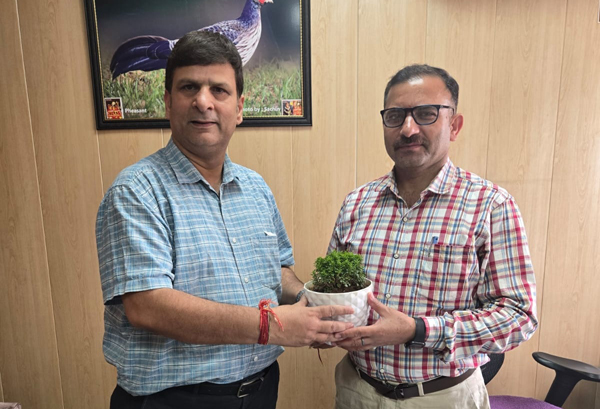
BJP leader Puneet Mahajan with Special Secretary H&ME Department Dhananter Singh.

Excelsior Correspondent

JAMMU, Apr 29: Health and Medical Cell convener of Jammu BJP, Puneet Mahajan, today met Dhananter Singh, Special Secretary, Health and Medical Education (H&ME) Department J&K, to discuss key issues concerning the healthcare sector in Jammu and Kashmir.
During the meeting, Mahajan raised several matters related to the delivery of healthcare services, particularly highlighting the challenges faced by people in remote, border, hilly, and far-flung areas. He stressed the need to strengthen medical infrastructure and improve accessibility to quality healthcare facilities in these regions.
The discussion also focused on concerns regarding the implementation of Ayushman Bharat. Issues affecting beneficiaries, empanelled hospitals, and patients requiring timely treatment were brought to the fore. Mahajan further highlighted the role of private hospitals in supporting the public healthcare system and underlined the difficulties they are encountering.
Emphasis was also laid on improving coordination between hospitals and authorities, addressing public grievances promptly, strengthening manpower, and enhancing emergency medical services.
Dhananter Singh gave a patient hearing to the issues raised and assured that genuine concerns would be taken up with higher authorities for appropriate action.

Natrang celebrates International Day of Dance

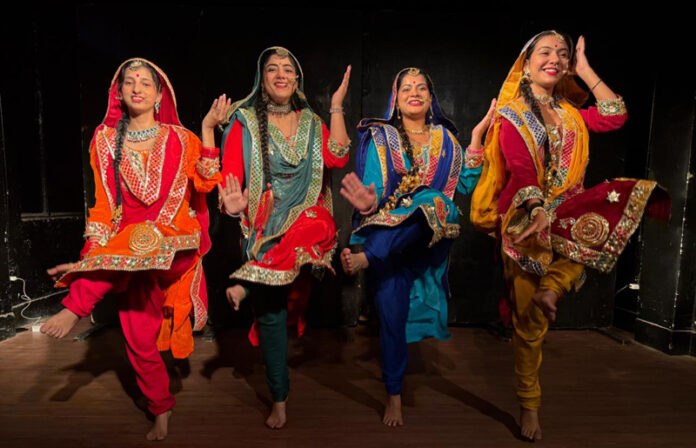
Natrang artists performing a dance item in Jammu on Wednesday.

Excelsior Correspondent

JAMMU, Apr 29: Natrang marked the International Day of Dance with vibrant celebration bringing together artists, enthusiasts and the local community in a spirited tribute to the rich heritage of Dogri dance traditions.
The event unfolded as a lively confluence of performance, reflection and dialogue, highlighting the enduring legacy of regional art forms such as Kudd and Jagarna.
Addressing the gathering, Natrang Director Padma Shri Balwant Thakur underscored the urgent need for scholarly engagement with the traditional foundations of Dogri dance.
A highlight of the evening was Balwant Thakur’s detailed narration of the Jagarna tradition—an intimate and expressive form of dance deeply rooted in the lives of Dogri women. Traditionally performed during wedding ceremonies, Jagarna unfolds on nights when the groom and male members of the village depart for the bride’s home.
The celebration concluded on a note of inspiration and introspection, with a collective resolve to preserve and promote the authentic spirit of Dogri dance traditions.

CBK registers case in fake job racket

Excelsior Correspondent

Srinagar, Apr 29: The Economic Offences Wing (EOW) of Crime Branch Kashmir has registered a case following a complaint alleging fraud in an overseas job placement that resulted in a man being trafficked to Cambodia.
According to a statement issued here, the complainant was lured by an unauthorised consultancy operating from the Pattan area in north Kashmir’s Baramulla district, which promised him a job abroad as a computer operator with a lucrative monthly salary.
Acting on these assurances, he transferred a substantial amount of money to the operator’s bank account and incurred additional expenses on travel arrangements and related purchases.
However, upon arrival in Cambodia, the complainant was reportedly received by unknown persons and, instead of being provided the promised job, was allegedly coerced into engaging in fraudulent online activities.
The EOW said the complainant refused to participate and soon realised he had been deceived, with his money dishonestly taken under false claims.
Preliminary investigation has revealed that the allegations disclose the commission of offences punishable under Section 318(2) of the Bharatiya Nyaya Sanhita.
Accordingly, cognizance has been taken and a formal case registered at Police Station Economic Offences Wing, Srinagar.

AIBCF submits memorandum to Sarmad Hafeez

Excelsior Correspondent
JAMMU, Apr 29: A delegation of members of All India Backward Classes Federation (AIBCF) submitted a memorandum to the Commissioner Secretary, Social Welfare, J&K UT, Sarmad Hafeez, highlighting several issues and demands.
The Federation drew attention towards alleged violation of prescribe rules for online application for Central and UT OBC certificates as the applicants are being asked to enclose certificate of present income whereas the reservation rules vide SRO-294 dated 21-10-2005. SRO-294 prescribe that average income of three years is to be taken and not current (single/annual) income. The delegation demanded that workshops may be conducted for proper sensitization of field staff of Revenue Deptt.
The Federation also demanded follow up and early action on the case of removal of rural tag on four castes (Barber, Dhobi, Kumhar and Teli) in Central list, which has been lying pending with the Ministry of Social Justice and Empowerment, Govt of India for the last three years.
The Commissioner Secretary gave a patient hearing to the delegation and assured proper action. The delegation comprised of F C Satia, (President); Balwant Kataria (Gen Secy), Mohd Shabir Dhobi (Vice Prez) and others.

Two female bovine smugglers held

Excelsior Correspondent
REASI, Apr 29: Reasi Police foiled an attempt of bovine smuggling by apprehending two female smugglers and rescued nine bovine animals from their possession.
A police party of Police Station Pouni, during routine patrolling in the area of Kalhar Mari, noticed suspicious movement of the two women who were taking bovine animals without valid permission and in violation of legal provisions.
The accused have been identified as Shakeela Bibi, wife of Nazkat Ali, resident of Gajore and Zebra Bibi, wife of Sonia, resident of Gajore. The police party rescued nine bovine animals from their possession.
A case under relevant sections of law has been registered in this connection at Police Station Pouni and further investigation has been taken up. The whole operation was carried out by SHO Pouni, Sumit Magotra.