

NEW DELHI : President Ram Nath Kovind, Vice President M Venkaiah Naidu and Home Minister Amit Shah paid floral tributes to Sardar Vallabhbhai Patel on his birth anniversary on Saturday, which is observed as the “National Unity Day”.
The top dignitaries paid their tributes to the first home minister of independent India at his statue located at Patel Chowk here.
Later, Shah also administered the “National Unity Day” pledge to government officials, security personnel and others.
Delhi Lieutenant Governor Anil Baijal and New Delhi MP Meenakashi Lekhi were also present on the occasion.
Later, in a tweet in Hindi, Shah said Patel’s bold leadership, devotion and patriotism will always guide the nation.
The Centre observes October 31 across the country as a day to foster and reinforce the government’s dedication to preserve and strengthen the unity, integrity and security of the nation by celebrating it as the “Rashtriya Ekta Diwas” or “National Unity Day” to commemorate Patel’s birth anniversary.
The Narendra Modi government has been observing Patel’s birth anniversary as the “Rashtriya Ekta Diwas” since 2014.
Patel was born on October 31, 1875 in Gujarat’s Nadiad.
He is credited for the merger of over 560 princely states into the Union of India.
As part of Patel’s birth anniversary celebrations, various programmes are being organised across the country, recalling his contribution to the unification of India.
Prime Minister Modi is attending a special function in Gujarat’s Kevadia, where a giant statue of Patel is located. (agencies)
President, VP, Shah pay tributes to Sardar Patel
PM Modi pays tribute to Indira Gandhi on death anniversary
NEW DELHI : Prime Minister Narendra Modi on Saturday paid tribute to former prime minister Indira Gandhi on her 36th death anniversary.
The then prime minister was assassinated by her bodyguards here in 1984.
“Tributes to our former PM Smt. Indira Gandhi Ji on her death anniversary,” Modi tweeted.
The prime minister had paid tribute to Gandhi in his monthly Mann ki Baat radio broadcast last Sunday as well. “On the 31st of October we lost former Prime Minister of India, Smt. Indira Gandhi. I most respectfully pay my tributes to her.” (agencies)
US-India relationship has bipartisan support; important to any administration: Top US official
WASHINGTON : US-India relationship has bipartisan support in this country and it will be important to any administration as Americans fundamentally believe that the two nations are strong, more secure and prosperous when they are working together on global challenges like ensuring a free and open Indo-Pacific, a top US official has said ahead of the presidential election.
In an interview to PTI, State Department spokesperson Morgan Ortagus said the US recognises that it cannot address the global challenges alone and needs partnership with countries like India to tackle them.
“For the first time in a while, I think that the world is really confronting, what it’s like whenever other great powers have values that are counter to ours. You know, democracy isn’t perfect by any means, but it does involve accountability, involves transparency,” she said.
“We know that in order to face the global challenges that we will face in the next five to 10 years, the US can’t do it alone. We have to work with our partners. We know that as it relates to a myriad of challenges on the world stage, our global partnership with India is going to be so important because it’s really all about the United States and India confronting these global challenges together,” she said.
Ortagus said the relationship between the US and India is definitely strong and it will remain so in the future.
The US-India relationship “crosses across political party lines, and will be important to any administration,” she said, ahead of the November 3 presidential election where incumbent President Donald Trump, a Republican, is being challenged by former US vice president Joe Biden, a Democrat.
“The reason is because we know that fundamentally Americans believe that the United States and India are stronger, more secure, more prosperous, when we’re working together towards things like a free and open Indo-Pacific, and more importantly, I think what’s been really exciting for many Americans to watch is India’s increased leadership role in the region and in the world,” she said, days after the conclusion of the third 2+2 ministerial between India and the US.
The evolving situation in the Indo-Pacific region in the wake of China’s increasing military muscle-flexing has become a major talking point among leading global powers. During the Indo-US dialogue held in New Delhi, the two sides deliberated prominently upon the Sino-India border row and situation in the Indo-Pacific region.
US Secretary of State Mike Pompeo and Defence Secretary Mark Esper had travelled to New Delhi for the ministerial with the External Affairs Minister S Jaishankar and Defence Minister Rajnath Singh.
Observing that the world’s oldest and largest democracies share common values, she underscored that these values are critical to the security and prosperity of the two countries.
Responding to a question, Ortagus said the historic ‘Howdy Modi’ rally in Houston last year “was such a cool visual representation” of the US-India ties.
“Obviously there’s much more to it than just that, but, President (Donald) Trump has had a very successful relationship and partnership with Prime Minister (Narendra) Modi,” she said.
While the focus remains on defence and security cooperation, the two countries are working even more together on things like COVID-19 and increasing economic ties, Ortagus noted.
“One of the things that I think is unique about the US-India bilateral relationships is our people-to-people ties. Indian culture has really permeated and become part of the American culture in so many ways. What’s fascinating about being an American is having a good Indian restaurant in your neighbourhood is just as much a staple now is having a good pizza joint,” she said.
“I think that’s really cool to show how far our cultural and people to people ties have come and how much Indian diaspora has been fully integrated culturally into American society,” said the State Department spokesperson.
Ortagus said one of the most important things that the US is going to continue to focus on is free and open Indo-Pacific, freedom of navigation, freedom of the seas, and like-minded democracy standing up for their values.
India and the US, she said, have expanded the interoperability of their forces through joint military exercises. “We are also pleased that Australia is going to join the 2020 Malabar Naval exercise that will be with the United States, India, Japan,” she said.
India on October 19 announced Australia’s participation in the upcoming Malabar exercise, effectively making it the first military-level engagement between the four-member nation grouping — the Quad.
In November 2017, India, Japan, the US and Australia gave shape to the long-pending proposal of setting up the “Quad” to develop a new strategy to keep the critical sea routes in the Indo-Pacific free of any influence. The US has been favouring making Quad a security architecture to check China’s growing assertiveness.
Ortagus said India-US defence trade has increased significantly over the past two decades. The US has authorised over USD 20 billion in defence sales to India which is an incredibly significant number, she said. (AGENCIES)
Delhi’s air quality ‘very poor’, likely to improve over next 2 days
NEW DELHI : Delhi’s air quality recorded a marginal improvement but remained in the “very poor” category on Saturday morning, while a government forecasting agency said it is likely to get better due to a favourable wind speed.
The city recorded an air quality index (AQI) of 369 at 9.30 am. The 24-hour average AQI was 374 on Friday, 395 on Thursday, 297 on Wednesday, 312 on Tuesday and 353 on Monday.
Jahangirpuri (412), Mundka (407) and Anand Vihar (457) recorded the air quality in the “severe” category.
An AQI between 0 and 50 is considered “good”, 51 and 100 “satisfactory”, 101 and 200 “moderate”, 201 and 300 “poor”, 301 and 400 “very poor”, and 401 and 500 “severe”.
On Thursday, Delhi’s AQI touched the “severe” levels for a brief period, before slipping back to the “very poor” category.
According to the Ministry of Earth Sciences’ air quality monitoring agency, SAFAR, the share of stubble-burning in Delhi’s PM2.5 pollution was 19 per cent on Friday.
It was 36 per cent on Thursday, the maximum so far this season, 18 per cent on Wednesday, 23 per cent on Tuesday, 16 per cent on Monday, 19 per cent on Sunday and nine per cent on Saturday.
The number of farm fires has again increased in Punjab (around 3,000), Haryana and Uttar Pradesh and is likely to impact Delhi-NCR’s air quality.
The wind speed has picked up. A significant improvement is predicted by Monday and the air quality is likely to slip back to the “poor” category, the SAFAR said.
According to the India Meteorological Department (IMD), the predominant wind direction was northwesterly and the maximum wind speed 15 kilometres per hour. The minimum temperature was recorded at 13 degrees Celsius.
Calm winds and low temperatures trap pollutants close to the ground, while a favourable wind speed helps in their dispersal.
The city’s ventilation index — a product of the mixing depth and the average wind speed — is likely to be around 8,500 square metre per second on Saturday — favourable for dispersal of pollutants.
The mixing depth is the vertical height in which pollutants are suspended in the air. It reduces on cold days with a calm wind speed.
A ventilation index lower than 6,000 square metre per second, with an average wind speed of less than 10 kmph, is unfavourable for dispersal of pollutants. (AGENCIES)
24,000 kanals of land transferred to Industries Department in J&K
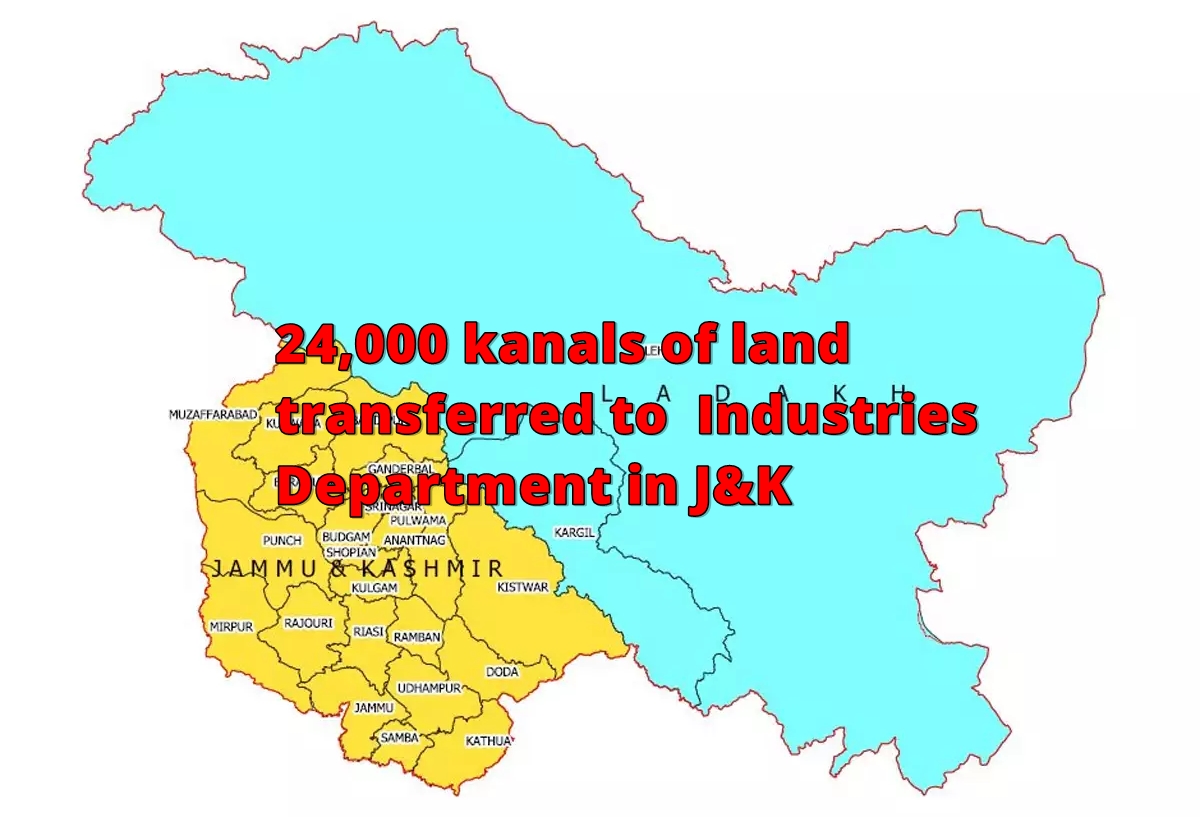
Jammu and Kashmir Government has transferred only 24,000 kanals (3000 acre) of land to the Industries and Commerce Department for investment purposes and not 2.4 lakh kanals of land as was inadvertently mentioned in a news report published in today’s edition of newspaper. According to an official spokesman, while the government has fixed target of 48,000 kanals of land for inviting investments in Jammu and Kashmir, only 24,000 kanals had been transferred so far to the Industries Department.
Pulwama terror attack truth accepted in Pak Parliament: Modi
KEVADIYA (Guj) : Prime Minister Narendra Modi on Saturday said the truth of last year’s Pulwama terror attack, in which 40 CRPF personnel were killed, has been accepted in Pakistan Parliament.
He also said that when the entire nation was mourning the death of brave soldiers in the Pulwama terror attack, some people indulged in “dirty politics” for their political gains.
Modi’s statement came days after Pakistan’s Science & Technology Minister Fawad Chaudhry admitted his country’s role in the Pulwama attack during a debate in their National Assembly (Parliament).
The prime minister was speaking at Kevadiya in Gujarat after paying tributes to Sardar Vallabhbhai Patel at the Statue of Unity on his 145th birth anniversary.
“The country cannot forget the unwanted statements given after Pulwama attack. Dirty politics laced with selfishness and arrogance was at its peak when the country was suffering from immense pain,” Modi said.
“The real face of such people has been exposed after the truth was accepted in the Parliament of our neighbouring country,” he added.
“Politics done after Pulwama attack shows that people can cross any limit for their political gains. I want to urge such political parties not to indulge in this kind of politics as it affects the morale of our security forces,” he said.
“You should refrain from playing into the hands of anti-national forces, knowingly or unknowingly,” he added. (AGENCIES)
New Land Laws: Govt transfers 2.4 lakh kanals land to I&C Deptt
Big business houses in touch with Govt
New Industrial Policy before end of 2020
Sanjeev Pargal
JAMMU, Oct 30: Just days after the Central Government opened land of Jammu and Kashmir for outsiders, the Union Territory Government has transferred 2.4 lakh kanals of land to the Industries and Commerce Department for investment purposes while almost an equal kanals of land will be notified shortly following clearance from the Forest Department as COVID pandemic notwithstanding, at least 65 big houses are constantly in touch with the Government to set up their units.
The Government had kept target of 4.8 lakh kanals of land for inviting investments in Jammu and Kashmir following abolition of special status of Jammu and Kashmir on August 5, 2019. It included extension of existing Industrial Estates as well as setting up of new Estates not only in the capital cities of Jammu and Srinagar but also in other districts of the Union Territory.
Of 4.8 lakh kanals target, the Government has transferred 2.4 lakh kanals land to the Industries and Commerce Department in Jammu, Kathua, Udhampur, Samba, Rajouri and Poonch districts of Jammu region and Srinagar, Baramulla, Budgam, Pulwama and Anantnag districts of Kashmir division.
Of 2.4 lakh kanals land kept at the disposal of Industries and Commerce Department by the Jammu and Kashmir Government, 1.6 lakh kanals is in Jammu division and 80,000 kanals in Kashmir division.
Commissioner/ Secretary Industries & Commerce Department Manoj Kumar Dwivedi told the Excelsior that 2.4 lakh kanals of land has been transferred to the Industries and Commerce Department by the J&K Government while remaining 2.4 lakh kanals land is expected to be transferred shortly.
“For 2.4 lakh kanals pending land, the No Objection Certificate (NOC) of Forest Department is pending,” Dwivedi said, adding as soon as the NOC is received, this land too will be transferred to the Industries and Commerce Department.
He added that despite COVID pandemic, a number of big industrial houses were still in touch with the Department for investment purposes and negotiations with them are on. Hopefully, the outcome is going to be favourable for Jammu and Kashmir very soon, he said.
The Industrial Policy of the Union Territory Government is also in advanced stage and is likely to be announced before the year-end which will further boost the investment in Jammu and Kashmir.
Sources said the Industrial Policy is being given final touch by the Government and it was expected to be rolled-out anytime in the month of December i.e. well before the end of this year.
“Ease of doing business” is going to be the main focus of the Industrial Policy, they added.
According to sources, the Government intends to spread the industry to various other districts of Jammu and Kashmir in addition to existing Industrial Estates in the twin capital cities of Jammu and Srinagar, to far off districts for which Kathua, Udhampur, Samba, Rajouri and Poonch districts have been selected in the initial phase while Doda, Kishtwar, Ramban and Reasi districts will be taken up in the next stage.
Similarly in Kashmir division, Baramulla, Budgam, Pulwama and Anantnag have been taken up in Phase-I while rest of the districts will be selected for development of industry in Phase-II.
Sources said nearly 20 percent of business houses among those who had shown keen interest for investments in Jammu and Kashmir during roadshows by the Union Territory Government officials in various States before Coronavirus pandemic broke out, are still in touch with the Industry and Commerce Department and the names include some big houses who planned to invest here.
The Government is confident that more business houses will line-up when the pandemic further eases as the industry is passing through bad phase because of COVID-19.
As far as the Global Investors Summit which was planned for April this year is concerned, sources said the Government is waiting for conducive atmosphere to decide fresh dates especially after virus is further reduced.
The Summit was deferred after pandemic spread in March.
Click Here To Read Updated News Correction
Sharma resigns as Advisor, appointed SEC
Excelsior Correspondent
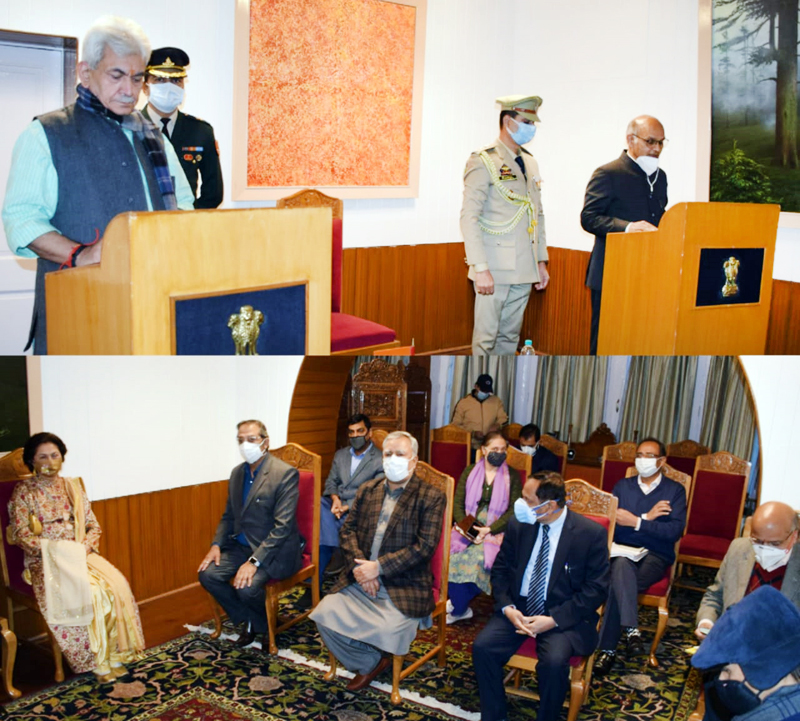
SRINAGAR, Oct 30: K K Sharma, Advisor to Lieutenant Governor Manoj Sinha, resigned from his post today and was appointed as the State Election Commissioner. Later, he was administered oath by the Lieutenant Governor.
“K K Sharma resigns as Advisor to Lieutenant Governor of J&K and appointed State Election Commissioner”, Government spokesman Rohit Kansal said in a tweet.
Sharma, a 1983-batch IAS officer of the Arunachal Pradesh, Goa and Mizoram Union Territories (AGMUT) cadre, was appointed Advisor to the Lieutenant Governor in November last year.
During his service career spanning around 30 years, Sharma has held various positions, including the Chief Secretary of Delhi and Goa. He also served as Secretary in the Ministry of Human Resource Development before his retirement.
Sharma has also served as Advisor to the Administrator of Chandigarh.
Meanwhile, Lieutenant Governor administered oath to K K Sharma as State Election Commissioner and wished him success for new assignment.
The oath ceremony was attended by Advisors Farooq Khan, R R Bhatnagar and Baseer Khan, Chief Secretary BVR Subrahmanyam, Financial Commissioner Finance Arun Mehta, Principal Secretary Home Shaleen Kabra, Principal Secretary Housing and Urban Development Department Dheeraj Gupta, Principal Secretary Power Development Department Rohit Kansal, Principal Secretary to Lieutenant Governor Nitishwar Kumar, Commissioner/ Secretary Industries and Commerce M K Dwivedi, Commissioner/ Secretary Election Department Hirdesh Kumar, Secretary Rural Development Sheetal Nanda and family members of K K Sharma.
J&K comes out with structured framework for audit of all deptts, PSUs, Corporations
Timelines fixed for action on findings, shift to e-audit begins
*Monitoring & Follow-Up Cell at UT, Divisional level
Mohinder Verma
JAMMU, Oct 30: For the first time, the Jammu and Kashmir Government has come out with structured framework for the audit of all departments, Public Sector Undertakings (PSUs), statutory authorities, Corporations and other entities in a time bound manner in order to enforce financial discipline and accountability.
Moreover, timelines have been fixed for necessary action on the findings of the audit and strategy chalked out for complete shift to e-audit in a phased manner spread over next three years. Even Monitoring and Follow-Up Cells will be established at the Union Territory and Divisional level so that audit exercise is taken to the resulted oriented conclusion.
The Directorate of Audit and Inspections was created in Jammu and Kashmir in the year 1996 under the administrative control of Finance Department with a view to enforce financial discipline and accountability in the Government departments but during all these years no serious attention was paid towards having structured framework for audit.
Now, 24 years after the establishment of Directorate of Audit and Inspections, the Government of Jammu and Kashmir has come out with Audit Manual, which besides delineating role and responsibility of the Audit Organization contains detailed guidelines and procedures to be followed in conduct of audit and drafting of reports.
Moreover, the Manual outlines the professional standards to be maintained by the audit personnel and prescribes a mechanism for audit follow-up and review at various levels so that audit exercise is taken to some result oriented conclusion. The Manual will be applicable for audit of all Government departments, Public Sector Undertakings, statutory authorities, Government corporations and other entities which are under its administrative control.
In the Manual, enough thrust has been laid on e-audit as an adaptive strategy to overcome the constraints for physical audit of records and to bring an element of technological intervention in audit exercise so as to eliminate physical visits, reduce auditor-auditee interface and ensure optimal use of time and resources.
As per the Manual, e-audit has already commenced on pilot basis in at least 50 offices during the financial year 2020-21 and audit organization will completely shift to e-audit mode in a phased manner in next three years.
Moreover, thrust has been laid on snap audits, which are based on test check instances since verifying each and every documents and records is quite time consuming, Similarly, there will be special audits either on the request of any department or suo-moto on the basis of reliable inputs to look at a specific area of an organization’s programmes, functions and activities.
Likewise, there will be concurrent audit, which is a systematic and timely examination of transactions to ensure accuracy, authenticity and compliance with procedures and guidelines.
More importantly, there will be audit of schemes to ascertain whether the same are being implemented economically and efficiently and are producing the desired results; verify the extent to which the implementing agency is effectively discharging its responsibilities especially financial; ascertain whether there are instances of over-payment, loss, extravagance avoidable excess or infructuous expenditure attributable to improper planning and verify whether community assets created under the schemes are properly inventorised and distinctly visible on the ground.
As per the Audit Manual, the Financial Department will have the powers to conduct fresh audit of any department in case there are apprehensions that the audit has not been conducted in true spirit; initiate disciplinary action against the delinquent officers/officials engaged in conducting the audit and order a special audit of the concerned department.
“As it may not be possible to audit all offices every year, a scientific method should be in place to select offices cautiously for the purpose of audit to ensure that all departments/DDOs are covered in a cycle of two years”, the Manual said, adding “since the objective of conducting internal audit is to ensure effective conduct of activities and achievement of desired goal by the department, the offices will be selected on the basis of degree of risk parameters so that high risk entities are given focused attention”.
An approved Annual Audit Programme of the departments will be finalized by 15th of March ever year keeping in view targets fixed by the administrative department during budget discussion or otherwise.
Moreover, there will be verification of receipts, payments, contingencies, grants-in-aid, public works and audit of procurements (goods and services). The most important aspect of the Audit Manual is review of utilization certificates, which otherwise receive least attention of the concerned authorities despite being repeatedly pointed out by the departments of the Union Government.
It has generally been seen in almost all the departments of the Jammu and Kashmir Government that response to audit findings remains dismal as such the Audit Manual has laid enough thrust on this important aspect.
Now, the audited departments will have to submit a detailed para-wise reply to the Audit Inspection Report within a period of 15 days positively and Audit and Inspection Directorate will issue rejoinder to the auditee about settlement of paras together with detailed remarks as to what further action is to be taken against outstanding paras.
“The Deputy Director shall prepare and furnish monthly progress report to the Directorate of Audit and Inspections by 10th of following month giving details of number of audit reports issued during the month and the number of paras involved; total amount held under objection as per the audit reports; total amount suggested for recovery as per the audit reports issued during the month; total amount of misappropriation/losses pointed out in audit reports; number of compliances received during the month and progressive pendency position of audit reports, paras and amounts held under objection, amounts suggested for recovery and amounts identified as misappropriation”, the Manual said.
For effective monitoring and follow-up of the Audit Reports there will be an Audit Monitoring and Follow-Up Cells at the Union Territory and Divisional level. Moreover, the Deputy Director concerned of the Directorate of Audit and Inspections will prepare preliminary Draft Annual Report at the close of financial year containing department/ DDO wise details of outstanding audit paras by or before May 31 every year.
It is hoped that Audit Manual will go a long way in enforcing financial discipline and accountability in the Government departments, Public Sector Undertakings, Corporations and other entities.
3 die of COVID-19, 347 fresh cases
Excelsior Correspondent
Srinagar Oct 30: Kashmir reported three more COVID-19 deaths today taking the death toll in Jammu and Kashmir to 1472 while Valley reported 347 fresh cases of COVID-19 taking the number of positive cases in J&K beyond 94330.
The victims include a 55-year-old woman from Chogul Handwara, a 50-year-old man from Noorbagh Srinagar and a 60-year-old man from Krankshivan Colony Sopore in district Baramulla.
With these deaths, the fatality count has reached 978 in Valley.
Srinagar district with 352 deaths topped the list followed by Baramulla 145, Budgam 94, Pulwama 80, Kupwara 73, Anantnag 74, Kulgam 46, Bandipora 46, Shopian 35 and Ganderbal 32.
Kashmir today reported 347 fresh cases of COVID-19 taking the number of positive cases in Jammu and Kashmir beyond 94330.
Among the cases includes seven Army personnel, two policemen and a minor besides 28 travelers. Among the fresh cases Srinagar reported 141, Budgam 26, Baramulla 66, Pulwama 20, Kupwara 25, Anantnag 12, Bandipora 14, Ganderbal 28 and Kulgam 3.
With fresh cases, Srinagar has now 19245 positive cases with 1599 active, 17293 recovered, 353 deaths; Baramulla has 5946 positive cases with 1473 active, 4328 recovered, 145 deaths; Pulwama reported 4648 positive cases with 208 active cases, 4360 recovered, 80 deaths; Kulgam has 2482 positive cases with 92 active, 2344 recoveries, 46 deaths; Shopian has 2200 positive cases with 95 active, 2070 recovered and 35 deaths; Anantnag district has 4224 positive cases with 235 active, 3915 recovered, 74 deaths; Budgam has 5974 positive cases with 285 active and 5595 recovered, 94 deaths; Kupwara has 4419 positive cases with 411 active, 3935 recovered, 73 deaths; Bandipora has 4031 positive cases with 231 active, 3754 recovered, 46 deaths and Ganderbal has 3533 positive cases with 218 active cases, 3283 recoveries and 32 deaths.
Out of 94330 positive cases, 6835 are active, 86024 have recovered and 1471 died including 978 in Kashmir division.
So far 2284588 samples were processed in Jammu and Kashmir. Of them, 2190, 258 samples tested negative and 94330 positive.
Of the total 94330 positive cases in J&K 9742 have been reported as travellers while 84588 others.
Moreover, have 654 more COVID-19 patients have recovered and were discharged from various hospitals including 377 from Kashmir Division.