NEW DELHI, Oct 31: Vice President M Venkaiah Naidu on Saturday stressed on refining and streamlining the system for delivery of governance and implementation of schemes to meet the needs of the people.
Presiding over the 66th annual meeting of the general body of the Indian Institute of Public Administration (IIPA) through video conference, the vice president called for a change in the delivery of services, delivery of justice and the way governance structures respond to the needs of the people.
“This is the change India is looking for today”, he said.
Naidu observed that the government has been making policies and designing programmes to improve the quality of life of people and fast track India’s development.
However, the effective implementation of these policies and programmes by administrative leaders and professionals is critical, he pointed out.
Naidu said the practitioners of public administration and public policy analysts have an important role to play in this by sharing insights for effective implementation on the ground.
Observing that the country is facing many challenges in areas such as health and climate change, he stressed that the requisite pool of talented professionals was available too. “What is required is the proper guidance”, Naidu added.
He reminded civil servants that they have to work together and understand the intention behind enabling legislations and schemes such as the Jan-Dhan Yojana, the Swachh Bharat Mission and the Beti Bachao-Beti Padhao Yojana.
Naidu also asked IIPA to make a compilation of good practices to enable administrators to learn from them.
He also highlighted the need to ensure online delivery of government services for bringing transparency in the system.
The vice president said that good governance must percolate down to the lowest level. It should become a way of life for institutions “we have established for our country’s governance”, he added.
Referring to the COVID-19 pandemic, Naidu said that India is fighting it with strategic alertness and prompt appropriate action, and international agencies like the United Nations and the World Health Organisation have appreciated India’s response to the pandemic.
India is turning this disruptive moment into a creative opportunity by upgrading public health infrastructure, stepping up production of medical equipment, essential drugs and focusing on self-reliance to boost local industries, he observed. (PTI)
NEW DELHI, Oct 31: Congress president Sonia Gandhi and party leader Priyanka Gandhi Vadra on Saturday paid tribute to the former Prime Minister Indira Gandhi on her 36th death anniversary.
Ms Gandhi and Ms Vadra visited the Indira Gandhi Memorial and paid tribute, while Ms Vadra also visited the Shakti Sthal and paid floral tributes on her matrydom day at former PM’s memorial along the banks of the river Yamuna.
In her message Priyanka said, ” today is the anniversary of Mahirishi Valmiki who wrote the Ramayana and also the martyrdom day of my grand mother Indira Gandhi.”
”My grand mother introduced me to the teachings of Mahirishi Valmiki. Maharishi Valmiki’s teachings inspire me to raise the voice of the part of the society who are left behind and also to support them in the fight for their justice,” Vadra said taking to twitter.
Congress MP Rahul Gandhi also remembered Indira Gandhi on her death anniversary. ” ‘asato m sadgamaya,: tamaso m jyotirgamaya,: mtyor mmta gamaya’. From the false to truth. From darkness to light. From death to life.
Thank you Dadi for showing me what it means to live these words,” read his message. Along with the tweet, the Congress leader also posted a photo of the former prime minister.
Indira Gandhi was assassinated by her bodyguards in the national capital on October 31, 1984. (UNI)
LUCKNOW, Oct 31: Uttar Pradesh chief minister Yogi Adityanath has announced that his government will bring a law to prevent Love Jihad while his government will distribute houses to the poor on the land illegally acquired by the mafias and criminals.
The UP CM said his government is already busy demolishing properties of the mafia elements who have acquired them illegally. ” We will use that lands to build houses for the poor,” he said while addressing the public meetings in Deoria and Malhani (Jaunpur) assembly constituencies on Saturday where by-elections would be held on November 3 next.
Referring to a recent observation of the Allahabad High Court that said that changing religion is not necessary for marriage, the Chief Minister said the government will soon bring an effective law. “Many of our sisters and daughters became victims of `Love Jehad’. They were deceived by the persons using forged name and identity,” he pointed out making it clear that from now onwards, the government will ensure that this does not happen and those found involved in such practices will be dealt with strictly.
Launching a frontal attack on the Samajwadi Party functionaries, he said they are indulged in forming a new chain of mafias and goons so that they can instigate riots. “But they (SP) will not succeed in their plans and all those who even think of it will be sent to jail, he added calling upon the people to discard those who support and patronize the mafias of the state. The CM came down heavily on the SP and Bahujan Samaj Party (BSP) for their corrupt designs during the previous regimes and said instead of doing something worthwhile for the farmers, these people sold off their sugar mills. “How dare they show you their face and seek votes,” he asked.
He said the policies of his government as well as the government at the Centre are clear from the day they came to power. The mantra is development and the ideology is `Sabka SaathSabka Vikas,” he said elaborating on how his government succeeded in the distribution of free gas connections and electricity in the lakhs of households during three and a half years.
The UP CM asserted that his government devoted itself to the welfare of youth, poor, women and farmers without being resorting to appeasement because for the BJP, the public service has never been a political agenda. He said his government has given employment to about 30 lakh persons including returnee migrants and provided jobs to about 3.50 lakh youths in the most transparent manner. He said the new investment which is coming to the state will generate more employment for the youths.
During his day-long tour, the CM also visited Varanasi, the parliamentary constituency of Prime Minister Narendra Modi and reviewed the development works including the work on Kashi Vishwanath Corridor. (UNI)
BAREILLY (UP), Oct 31: Union Labour Minister Santosh Gangwar said on Saturday that his wife and six other family members have tested positive for the novel coronavirus.
The 71-year-old minister too underwent test for COVID-19 and his report came negative.
Gangwar, who is the parliamentarian from Bareilly in Uttar Pradesh, told reporters here that his family members had recently gone to Delhi where they contracted the infection.
All of them have been admitted to the ESI Hospital in Faridabad.
The cook of the family has also taken ill and has been admitted to a hospital as a precautionary measure, he said.
The union labour and employment minister said some officials of his ministry have also tested positive for the virus. (PTI)
NEW DELHI, Oct 31: The Hindutva movement is the “mirror image” of the Muslim communalism of 1947 and its triumph would mark the end of the Indian idea, says senior Congress leader Shashi Tharoor, asserting that Hindutva is a political doctrine, not a religious one.
A ‘Hindu India’ would not be Hindu at all, but a “Sanghi Hindutva state”, which is a different country altogether, says Tharoor in his new book ‘The Battle of Belonging’ that was released on Saturday.
“People like me want to preserve the India we love, and not turn our beloved nation into the kind of religious state we were brought up to detest,” he said.
Tharoor also asserted that Hindutva movement rhetoric echoes the bigotry that India was constructed to reject.
In the book published by Aleph Book Company, Tharoor makes a stinging critique of the Hindutva doctrine and the Citizenship (Amendment) Act, which he says is a challenge to, arguably, the most fundamental aspect of Indianness.
Devoting a chapter to the ‘Hindu Pakistan’ controversy in the book, the former Union minister writes: “I had inveighed against the ruling party’s attempts to create a Hindutva version of Pakistan, since that was not what our freedom movement fought for, nor was it the idea of India enshrined in our Constitution.”
“This is not just about the minorities, as the BJP would have us believe. Many proud Hindus like myself cherish the inclusive nature of our faith and have no desire to live, as our Pakistani neighbours are forced to, in an intolerant mono-religious state,” he writes.
Tharoor’s reported comment last year that the BJP will pave the way for creation of a “Hindu Pakistan” had sparked a controversy with the party demanding his apology over the remarks.
Hinduism, as Swami Vivekananda asserted, teaches the acceptance of difference as a basic credo, Tharoor said in the book.
“Hindutva is not Hinduism; it is a political doctrine, not a religious one,” he said.
“What is bizarre about the media drama over my remarks is that no one who was giving airtime to multiple BJP voices, frothing at the mouth about my words, actually asked them one simple question: ‘Is the BJP giving up its dream of a Hindu rashtra?'” Tharoor said.
BJP apologists point out that the government has done nothing to amend the Constitution, and others have suggested that the Supreme Court’s ruling that secularism is part of the ‘basic structure’ of the Constitution makes the idea of a ‘Hindutva Pakistan’ impossible, he said.
“But the fact is that both have only been held at bay by the simple fact that the BJP has not had the numbers required to achieve their goal — two-thirds of both Houses of Parliament and half the states,” he said.
Their overwhelming victory in the Lok Sabha elections in 2019 and winning a plurality of seats in the Rajya Sabha in June 2020 has ensured that they finally have all the elements needed to fulfil their “project”, he said, adding that the nation has been “warned”.
Tharoor argues in the book that the battle is between two opposing ideas of India or what might be described as ethno-religious nationalism versus civic nationalism.
In a sharp criticism of the CAA, Tharoor said it is the first law to question a basic building block of the nation — that religion is not the determinant of our nationhood and, therefore, of our citizenship.
At a time when India’s major national priority ought to have been its flailing economy, whose plummeting growth rate had already aroused widespread alarm even before the coronavirus struck, the Modi government plunged the country into an unwanted political crisis of its own making with the CAA, he said.
“With its penchant for shock-and-awe, the government pushed through Parliament legislation that fast-tracks citizenship for people fleeing persecution in Pakistan, Afghanistan, and Bangladesh — provided they are not Muslim. By excluding members of just one community, the new law is antithetical to India’s secular and pluralist traditions,” writes Tharoor.
“The religious bigotry that partitioned the country with the founding of Pakistan has now been mirrored in pluralist India. As I told my fellow parliamentarians, that was a partition in the Indian soil; this is now a partition in the Indian soul,” he said.
The Hindutva movement is the mirror image of the Muslim communalism of 1947; its rhetoric echoes the bigotry that India was constructed to reject, Tharoor said.
Its triumph would mark the end of the Indian idea, the Congress leader added.
In the book, Tharoor also delves into the issue of the slogan ‘Bharat Mata Ki Jai’ allegedly becoming an “acid test of Indian nationalism” and reiterated his stance that no Indian should be compelled to mouth a phrase that is nationalistic in the eyes of some, but not in his own.
Revisiting the 2016 controversy involving Muslim legislator Waris Pathan, who was suspended from the Maharashtra Assembly soon after for refusing to utter the slogan, Tharoor noted that some Muslims say, “‘Tell us to say Jai Hind, Hindustan Zindabad, Jai Bharat, we’ll do it — but do not ask us to say Bharat Mata ki Jai’.”
“The same Constitution that, in our civic nationalism, gives us the right to freedom of speech, also gives us the freedom of silence. We cannot put words in people’s mouths,” he asserted.
Tharoor also criticized the manner in which Article 370 was abrogated on August 5, 2019, saying Modi shocked the nation with an announcement on Kashmir that could well turn out to be the “political equivalent of demonetization”. (PTI)
KOLKATA, Oct 31: BJP national general secretary Kailash Vijayvargiya Saturday said the party will fight the coming assembly polls in West Bengal with Dilip Ghosh as its president and refuted media reports of his removal.
There were reports in a section of the media that Ghosh might be removed from the party post before the polls as the central leadership is not happy with the inner squabbling in the state BJP.
“The reports are not only baseless but also misleading and politically motivated. I want to categorically say that West Bengal BJP will fight the assembly election with Dilip Ghosh as its state president. There is no question of replacing him,” Vijayvargiya told PTI.
West Bengal BJP general secretary Sayantan Basu, known to be close to Ghosh, said, “Dilipda was re-elected for three years this January, after completing his first term. There is no question of his removal”.
Ghosh himself said he is “loyal soldier” of the party and is not aware of any such report.
The speculation gained momentum after the party’s state unit witnessed a major organisational change recently. The incumbent state general secretary (organisation) Subrata Chattopadhyay was removed and his deputy Amitava Chakraborty was elevated to the post on Wednesday.
The change shocked many in the BJP state unit as Chattopadhyay, who had held the post for several years, was considered to be close to Ghosh.
The organisational change had come just a day after the BJP central leaders in charge of the state stepped in to resolve differences between its state Yuva Morcha president Saumitra Khan and Ghosh, who had dissolved all the district committees of the youth wing last week.
According to sources, Khan, a Trinamool Congress turncoat, is considered close to the party’s national vice- president Mukul Roy, who was himself an erstwhile member of Mamata Banerjee’s party .
After having a limited presence in the politically polarised state for decades, BJP has emerged as the main rival to the ruling Trinamool Congress. It won 18 of the 42 Lok Sabha seats in West Bengal in the 2019 general elections.
BJP leaders have exuded confidence that it will end Chief Minister Mamata Banerjee’s 10-year rule in the assembly election wbich is due in April-May next year. (PTI)
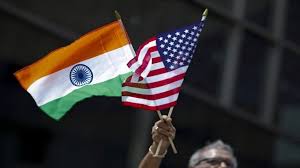
WASHINGTON, Oct 31: US-India relationship has bipartisan support in this country and it will be important to any administration as Americans fundamentally believe that the two nations are strong, more secure and prosperous when they are working together on global challenges like ensuring a free and open Indo-Pacific, a top US official has said ahead of the presidential election.
In an interview to PTI, State Department spokesperson Morgan Ortagus said the US recognises that it cannot address the global challenges alone and needs partnership with countries like India to tackle them.
“For the first time in a while, I think that the world is really confronting, what it’s like whenever other great powers have values that are counter to ours. You know, democracy isn’t perfect by any means, but it does involve accountability, involves transparency,” she said.
“We know that in order to face the global challenges that we will face in the next five to 10 years, the US can’t do it alone. We have to work with our partners. We know that as it relates to a myriad of challenges on the world stage, our global partnership with India is going to be so important because it’s really all about the United States and India confronting these global challenges together,” she said.
Ortagus said the relationship between the US and India is definitely strong and it will remain so in the future.
The US-India relationship “crosses across political party lines, and will be important to any administration,” she said, ahead of the November 3 presidential election where incumbent President Donald Trump, a Republican, is being challenged by former US vice president Joe Biden, a Democrat.
“The reason is because we know that fundamentally Americans believe that the United States and India are stronger, more secure, more prosperous, when we’re working together towards things like a free and open Indo-Pacific, and more importantly, I think what’s been really exciting for many Americans to watch is India’s increased leadership role in the region and in the world,” she said, days after the conclusion of the third 2+2 ministerial between India and the US.
The evolving situation in the Indo-Pacific region in the wake of China’s increasing military muscle-flexing has become a major talking point among leading global powers. During the Indo-US dialogue held in New Delhi, the two sides deliberated prominently upon the Sino-India border row and situation in the Indo-Pacific region.
US Secretary of State Mike Pompeo and Defence Secretary Mark Esper had travelled to New Delhi for the ministerial with the External Affairs Minister S Jaishankar and Defence Minister Rajnath Singh.
Observing that the world’s oldest and largest democracies share common values, she underscored that these values are critical to the security and prosperity of the two countries.
Responding to a question, Ortagus said the historic ‘Howdy Modi’ rally in Houston last year “was such a cool visual representation” of the US-India ties.
“Obviously there’s much more to it than just that, but, President (Donald) Trump has had a very successful relationship and partnership with Prime Minister (Narendra) Modi,” she said.
While the focus remains on defence and security cooperation, the two countries are working even more together on things like COVID-19 and increasing economic ties, Ortagus noted.
“One of the things that I think is unique about the US-India bilateral relationships is our people-to-people ties. Indian culture has really permeated and become part of the American culture in so many ways. What’s fascinating about being an American is having a good Indian restaurant in your neighbourhood is just as much a staple now is having a good pizza joint,” she said.
“I think that’s really cool to show how far our cultural and people to people ties have come and how much Indian diaspora has been fully integrated culturally into American society,” said the State Department spokesperson.
Ortagus said one of the most important things that the US is going to continue to focus on is free and open Indo-Pacific, freedom of navigation, freedom of the seas, and like-minded democracy standing up for their values.
India and the US, she said, have expanded the interoperability of their forces through joint military exercises. “We are also pleased that Australia is going to join the 2020 Malabar Naval exercise that will be with the United States, India, Japan,” she said.
India on October 19 announced Australia’s participation in the upcoming Malabar exercise, effectively making it the first military-level engagement between the four-member nation grouping — the Quad.
In November 2017, India, Japan, the US and Australia gave shape to the long-pending proposal of setting up the “Quad” to develop a new strategy to keep the critical sea routes in the Indo-Pacific free of any influence. The US has been favouring making Quad a security architecture to check China’s growing assertiveness.
Ortagus said India-US defence trade has increased significantly over the past two decades. The US has authorised over USD 20 billion in defence sales to India which is an incredibly significant number, she said. (PTI)
MUMBAI, Oct 31: Actors Saif Ali Khan, Arjun Kapoor, Jacqueline Fernandez and Yami Gautam on Saturday left for Dalhousie to start the filming of their upcoming movie “Bhoot Police”.
The principal star cast, along with producers Ramesh Taurani and Akshai Puri, left for Himachal Pradesh in a charterd flight to begin the schedule.
The team will also shoot across multiple locations in Dharamshala and Palampur.
The horror comedy is produced by Tips and 12th Street Entertainment Production. Pavan Kirpalani, best known for his psychological thriller “Phobia” and horror movie “Ragini MMS”, is directing the movie. (PTI)