NEW DELHI, Apr 29: In a boost to India’s maritime strike capabilities, the Defence Research and Development Organisation (DRDO) and the Indian Navy on Wednesday successfully conducted the maiden salvo launch of the short-range naval anti-ship missile system.
The salvo launch was carried out from the Navy’s helicopter platform off the coast of the Bay of Bengal in Odisha.
Defence Minister Rajnath Singh complimented the DRDO, the Navy, the Indian Air Force and industry partners involved in the project for the successful trial of the Naval Anti-ship Missile-Short Range (NASM-SR).
“During the trial, two missiles were launched in quick succession from the same helicopter, making it the first salvo launch of an advanced air-launched anti-ship missile system,” the defence ministry said.
It said all test objectives were fully met as per the data captured using various range tracking instruments like radar, electro-optical system and telemetry deployed by the Integrated Test Range (ITR), Chandipur.
“Along with proving the salvo launch capability, the missiles demonstrated the waterline hit capability. The test launches were witnessed by senior scientists from DRDO, users’ representatives from the Indian Navy and the Indian Air Force and Development-cum-Production Partners (DcPP),” the ministry said.
The NASM-SR missile uses a solid propulsion booster and long-burn sustainer.
The ministry said all critical subsystems like the seeker, integrated avionics module, advanced navigation and guidance using fibre-optic gyroscope-based inertial navigation system and guidance algorithm were developed indigenously by different laboratories of DRDO and Indian industries.
The missile system has been developed by Hyderabad-based Research Center Imarat in collaboration with several other DRDO laboratories. (PTI)
JAMMU, Apr 29: Jammu and Kashmir Government has issued fresh directions to expedite the installation of pre-paid smart electricity meters across all Government establishments, public sector undertakings (PSUs), corporations, and other state-run institutions.
According to a circular issued today by the Budget Division of the Finance Department, all administrative departments have been asked to ensure the early installation of pre-paid smart meters in Government office buildings as well as residential quarters owned by the Government and its affiliated bodies.
The circular reiterates earlier instructions and emphasizes strict compliance to ensure a smooth transition from the conventional billing system to a pre-paid metering mechanism. Departments have been directed to coordinate closely with the Power Development Department and its distribution companies for timely execution.
As part of the transition process, all outstanding electricity dues are to be cleared using available funds after proper reconciliation of pending bills. The Finance Department noted that 50 percent of the required funds under the designated electricity charges head have already been released to facilitate this process.
Following the installation of pre-paid smart meters, all future electricity payments are to be made in advance by Drawing and Disbursing Officers (DDOs) from the allocated budget, similar to payments made for other essential services such as telephone and internet.
Departments have also been instructed to closely monitor electricity consumption to ensure it remains within the sanctioned budget. However, provisions have been made for departments delivering essential or critical services to seek additional funds, subject to proper justification and actual requirements.
After an initial implementation period of one to two months, departments may submit estimates for any additional financial requirements to the Finance Department for consideration.
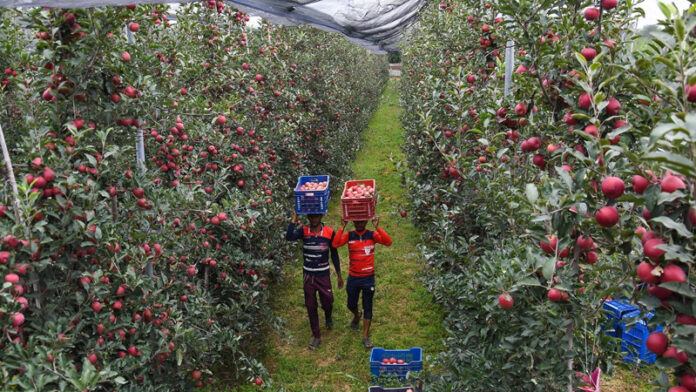
Srinagar, Apr 29: A major umbrella body of fruit growers in Kashmir has urged the Centre to impose import duty of over 100% on American and European apples, warning that reduced tariffs under trade agreements are hurting the livelihoods of more than seven lakh families dependent on the horticulture sector.
In a memorandum submitted to Union Agriculture Minister Shivraj Singh Chouhan, the Kashmir Valley Fruit Growers-cum-Dealers Union raised a series of long-pending issues, including crop losses, lack of insurance, inadequate storage infrastructure and rising input costs.
The memorandum follows a fresh round of discussions with the minister and builds on assurances made during his visit to the SKUAST convocation last year.
Describing horticulture as the backbone of J&K’s economy, the Union said the reduction of import duty on foreign apples from 50% to 25% under Free Trade Agreements has failed to protect local growers.
It urged the Centre to raise the duty to over 100% to safeguard incomes, noting that the Valley-widely known as the “Land of Fruits”-depends heavily on apple cultivation for livelihoods, education and healthcare.
Highlighting structural losses, the Union said over 40% of apple produce each season falls under Grade C or consists of fallen fruit, pushing growers into financial distress.
It called for the revival of the Market Intervention Scheme, under which such produce was earlier procured by the government at fixed rates, but which has remained discontinued for several years.
The growers also pointed out that a Crop Insurance Scheme for horticulture, though announced, has yet to be implemented. Terming it a lifeline for marginal farmers, especially during natural disasters, they sought its immediate rollout on the lines of the agriculture sector.
The memorandum called for the establishment of at least 200 Controlled Atmosphere (CA) cold stores across north and south Kashmir with subsidy support, restoration of the top-up subsidy scheme for CA stores in Pulwama and Shopian, and creation of a separate horticulture estate with single-window clearance for processing units such as cold stores, juice plants and canning factories.
The Union warned that inadequate storage infrastructure leads to distress sales and post-harvest losses, particularly with the expansion of high-density plantations in south Kashmir.
Among other demands, the growers urged the Centre to allocate funds for the Clean Plant Programme at Wadoora in Sopore, for which land has already been acquired, establish a Krishi Vigyan Kendra in Baramulla to strengthen farmer training and technology access, and set up a dedicated horticulture university in north Kashmir.
They also sought clarity on the status of the disease-free plantation initiative announced earlier.
The memorandum flagged skyrocketing prices of pesticides and fertilisers, stating that high MRPs have made them unaffordable for marginal growers, and urged Government intervention to regulate prices. It also sought classification of tree spray oil as an agricultural product.
With the fruit season approaching, the Union demanded priority movement for fruit-laden trucks on the Srinagar-Jammu National Highway, even during convoy restrictions, to prevent spoilage of perishable produce such as cherry, plum, pear and early apple varieties.
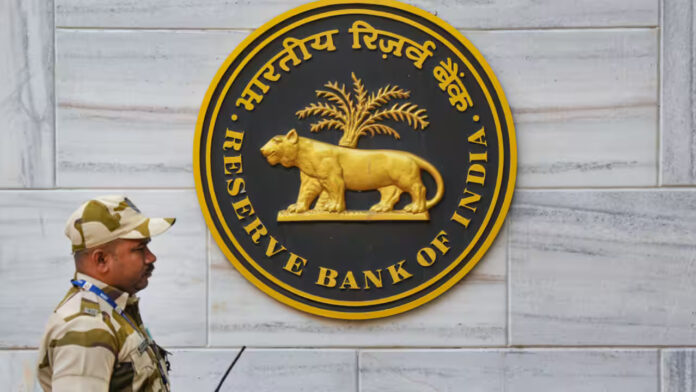
MUMBAI, Apr 29: Banks are allowed to extend relief measures to all borrowers without waiting for their requests, according to the Reserve Bank’s revised guidelines for calamity-affected areas, which take effect from July 1.
Following stakeholders’ feedback on draft directions on relief measures, the central bank on Wednesday issued a series of directions for commercial banks, small finance banks, local area banks, cooperative banks, NBFCs, and All India Financial Institutions. Besides, two repeal directions have also been issued.
The guidelines will come into force from July 1, 2026.
“Lenders are permitted to extend the relief measures to all borrowers without waiting for a request from them, with an opt-out clause for such borrowers who desire to opt out at any point till the end of 135 days from the date of declaration of natural calamity,” the RBI said while issuing the directions.
One of the directions said that a bank may operate its calamity-affected branches from temporary premises under advice to the concerned regional office of the RBI.
Also, it should make arrangements to render banking services in the affected areas by setting up satellite offices, extension counters or mobile banking facilities under intimation to the Reserve Bank.
“A bank shall take immediate action for the restoration of ATM services at the earliest. During the period, it shall provide alternative arrangements to address the immediate cash requirements of the affected areas,” it said.
A bank, at its discretion, can provide relief measures such as a waiver /
reduction of various fees and charges in respect of customers in the areas where a calamity has been declared for a period not exceeding one year.
Borrowers will be eligible for resolution whose accounts are classified as ‘Standard’, but which are not in default for more than 30 days with the bank as on the date of occurrence of the calamity.
“Borrower accounts, which may have slipped into NPA between the date of occurrence of the calamity and implementation of the resolution plan, shall be upgraded as ‘Standard’, upon implementation of the resolution plan,” it said.
The central bank has also mandated that a bank should make an additional specific provision of 5 per cent of the outstanding debt in respect of borrowers for whom a resolution plan has been implemented.
The additional specific provisions shall be over and above the applicable prudential provisions, subject to a ceiling of 100 per cent.
In January, the central bank issued draft directions on relief measures in areas affected by natural calamities for stakeholder feedback.
One of the suggestions the RBI received was regarding relaxing the eligibility criterion to include all ‘Standard’ borrowers, including those overdue up to 89 days.
To this, the central bank said the objective is to provide relief to borrowers impacted by the natural calamity, but who are not stressed otherwise.
“In any case, the revised framework is more relaxed than the extant norms,” it added.
Stakeholders had suggested reducing the additional provisioning to nil or capping it at 2 per cent instead of 5 per cent per event of restructuring, but the RBI did not accept it, saying the additional provision balances the heightened risk in such accounts while not subjecting them to higher provisioning applicable to a regular restructured account.
In June 2023, the RBI had proposed to issue guidelines rationalising the extant prudential norms for implementation of resolution plans in respect of exposures affected by natural calamities, inter alia, harmonising the regulatory instructions applicable to different Regulated Entities (REs). (PTI)
Nitin Kohli and Atul Abrol launching Volkswagen Taigun in Jammu.
Excelsior Correspondent
JAMMU, Apr 29: Volkswagen unveiled the new Taigun, a premium SUV crafted for customers who value driving dynamics, safety and purposeful design, in a function held here today.
The vehicle was launched by Volkswagen Passenger Cars India, Brand Director Nitin Kohli and Atul Abrol (Director WOC automobiles Pvt Ltd).
Speaking on the occasion, Nitin Kohli said, “The Taigun has been a key pillar of our India portfolio. Since its introduction, it has played a significant role in our SUVW journey, contributing to the brand’s growth with its robust build quality, strong safety credentials and fun-to-drive performance. The new Taigun builds on this strong foundation with a sharper design and meaningful enhancements across key pillars. With this introduction, we are reining forcing our commitment to bringing aspirational, well-engineered products that strengthen our SUVW portfolio and make German engineering even more accessible to Indian customers.”
With its compelling blend of design, technology, comfort, safety and performance, the new Taigun is poised to further strengthen Volkswagen’s position in India’s competitive SUV segment, catering to customers who seek a dynamic, safe and feature rich driving experience.
JAMMU, Apr 29: The Jammu Chamber of Commerce & Industry (JCCI) president, Arun Gupta has said that the sluggish pace of underground wiring and technical failures of smart meters are serious concern that are clearly taking toll on the business community and residents of Jammu.
Talking to media-persons here today, the JCCI president said when infrastructure projects stall, the costs escalates, and it creates a double, squeezing the general consumers. He said the slow progress of underground cabling is a major technical hurdle. Without a stabilized underground network, smart meters are frequently exposed to the high voltage fluctuation, common in overhead lines, he said.
Gupta said the frequent voltage spikes are physically damaging the internal circuit of the new smart meters, leading to malfunctions or burnouts. There are widespread reports of erratic hopping in unit consumption. Consumers often find that even with reduced usage, the digital readings jump disproportionately, leading to bills that feel disconnected from reality.
Many are seeing bills jump from monthly fixed rates to more than the usage based bills both exceeding upto double the amount which is a massive shock to households and small traders.
Gupta further said that hundreds of smart meters have been damaged and are non-functional due to which the concerned consumers are being charged flat rates.
He demanded that the company responsible for installing and maintenance of smart meters should be asked to immediately replace all the non-functional and faulty smart meters so that the consumers are relieved of paying the excess bills.
Excelsior Correspondent
RAJOURI, Apr 29: Four teachers have been placed under suspension in district Rajouri for remaining absent from duty in a Govt Middle School.
Official sources said that during inspection, Chief Education Officer (CEO) Rajouri, Mohd Hafiz found four teachers of Govt Middle School, Namblan (Zone Rajouri), unauthorisedly absent from duty. He placed all the four employees under suspension.
Those placed under suspension are- Mushtaq Ahmed, Vikram Bali, Ayaz Ahmed and Mohd Jehangeer.
It was also found that out of the total enrollment of 123 students, only 28 were present in the school, indicating very poor performance. Only one teacher- Abdul Shakoor was present during the inspection in the school.
Excelsior Correspondent
JAMMU, Apr 29: The Government of Union Territory of Jammu and Kashmir today assigned the additional charge to the two Superintending Engineers (SEs) of the Hyd Circles, in the Jal Shakti Department.
Sanjay Badhan, SE, Hydraulic Circle Jammu has been assigned the additional charge of the post of Superintending Engineer, PHE, Mech (Urban) Circle, Jammu, while, Anbreena Anjum, SE Hyd Circle, Srinagar/ Ganderbal, has been given the additional charge of the post of SE, I&FC Mech Circle, Srinagar with effect from May Ist, 2026, after the retirement of the present incumbent.
Meanwhile, Shakeel Aijaz Fazli, I/C SE (Mech), awaiting orders of posting, has been placed as SE PHE, Mech Circle (North), Srinagar. He will resume duty on May Ist, 2026.
BEIJING, Apr 29 : China will expand zero-tariff treatment to all African countries that have diplomatic ties with Beijing, starting May 1, an official announcement said.
The announcement specified that for products under tariff quotas, only the in-quota tariff rate will be reduced to zero, while the out-of-quota tariff rate will remain unchanged.
From May 1, 2026, to April 30, 2028, China will grant zero-tariff treatment, in the form of a preferential tariff rate, to 20 African countries that have established diplomatic ties with China and are not classified as the least developed countries, the Customs Tariff Commission of the State Council, China’s central cabinet, said.
During the two-year implementation period, China will continue to promote the negotiation and signing of the agreement of China-Africa Economic Partnership for Shared Development with relevant African countries, it said.
China’s zero-tariff policy applies to 53 African countries, Chinese Foreign Ministry spokesperson Lin Jian told a media briefing here.
“China will continue to negotiate and sign economic partnership agreements for common development with relevant African countries”, Lin said.
“At the same time, it will upgrade the green channel for the export of agricultural products from Africa to China and steadily enhance trade facilitation between China and Africa,” he said.
China’s latest move to apply zero-tariff treatment to an additional 20 African nations came after it had granted zero-tariff treatment on 100 per cent of tariff lines since Dec. 1, 2024, for 33 least developed African countries with which it maintains diplomatic relations.
Ties between China and African countries have grown rapidly over the past few decades, becoming one of the most significant geopolitical and economic partnerships in the world.
The total trade between China and Africa touched USD 348 billion in 2025., of which China’s exports amounted to USD 225 billion, while Africa’s exports to China totalled USD 123 billion. (PTI)
Jammu, April 29: Aaditabh Gupta, an 18-year-old national athlete, continues to make India proud with his remarkable achievements across multiple sports disciplines. Beginning his journey at just two and a half years of age, he has excelled in figure ice skating, roller skating, and Tang Soo Do, consistently earning accolades at the national level through dedication, discipline, and perseverance.
Expanding his sporting horizons, Aaditabh recently stepped into Taekwondo and delivered an outstanding debut performance by securing a medal at the Jaguar Cup 2.0 Open National Taekwondo Championship held in Delhi on April 26, 2026. This achievement highlights his versatility and ability to adapt and excel across diverse arenas.
Beyond sports, Aaditabh gained national recognition through his participation in Pariksha Pe Charcha 2022, where he had the honour of directly asking a question to Narendra Modi, showcasing his confidence and communication skills.
His success is strongly backed by his parents, Tara and Deepak Gupta, whose unwavering support and guidance have been instrumental in shaping his success, inspiring young athletes nationwide.