

Tuesday, April 28, 2026
E-Paper
Home Blog Page 18

LG Manoj Sinha Dedicates Indoor Stadiums To The Youth Of Marh And Jourian
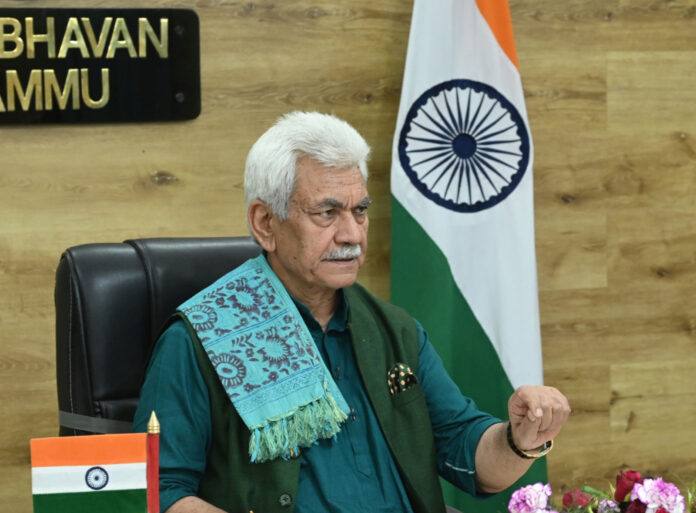
Jammu, Apr 27: Lieutenant Governor Manoj Sinha on Monday inaugurated the state-of-the-art Baba Jitto Indoor Stadium at Marh and Indoor Sports Stadium at Jourian, Akhnoor.
Dedicating the sports facilities to the youth, the Lieutenant Governor said that new indoor Sports Stadiums, equipped with modern shooting ranges and versatile indoor courts, are designed to inspire excellence and cultivate the champions of tomorrow.
The Lieutenant Governor highlighted that under the leadership of Prime Minister Narendra Modi, Jammu & Kashmir is emerging as a sports powerhouse where world-class facilities are no longer restricted to major cities but are reaching the grassroots.
He also interacted with the youth of Marh and Akhnoor through virtual medium and reiterated his commitment to ensure inclusivity in sports development and encourage greater participation among young aspirants.
The Lieutenant Governor also called upon all sections of society, particularly women and the youth to lead the movement for a ‘Nasha Mukt Jammu Kashmir’.
The Lieutenant Governor urged citizens to report substance abuse and actively support the rehabilitation of victims. He said the police and civil administration are working tirelessly to dismantle the drug smuggling network.
The indoor sports stadiums, developed by District Administration Jammu in collaboration with HDFC Bank under its CSR initiative, are equipped with world-class amenities. These includes a modern rifle shooting range, top-quality badminton and table tennis courts, dedicated rooms for indoor games such as carrom and chess, and a well-furnished reading room for the youth and locals.
Dr Mandeep K. Bhandari, Principal Secretary to Lieutenant Governor; Ramesh Kumar, Divisional Commissioner, Jammu; Dr Rakesh Minhas, Deputy Commissioner Jammu; Vidhu Shekar, Additional Deputy Commissioner Jammu and representatives of HDFC Bank attended the inaugural ceremony at Lok Bhavan.
Surinder Bhagat, Member of Legislative Assembly Marh; Mohan Lal Bhagat, Member of Legislative Assembly Akhnoor, senior officials, prominent citizens and locals from Marh and Jourian also joined through virtual mode.

Want Increase In Frequency, Capacity Of Trains: CM Abdullah On Vande Bharat Extension
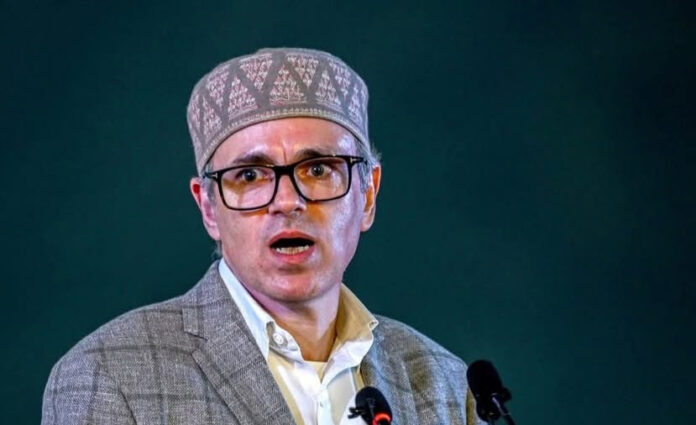
Jammu, Apr 27: Jammu and Kashmir Chief Minister Omar Abdullah on Monday said that the upcoming train service from Jammu Terminal to Srinagar, scheduled to begin on Thursday, will significantly boost the tourism sector in the Union Territory.
In a major boost to rail connectivity in Jammu and Kashmir, a specially designed Vande Bharat Express will operate between the twin capital cities of Jammu and Srinagar from April 30, officials said.
The premium train service, which has been running between Shri Mata Vaishno Devi Katra and Srinagar for over nine months, will now be extended up to Jammu Tawi.
Reacting to the development, Abdullah said that the enhanced capacity of the train service would allow more passengers to travel, thereby improving connectivity and supporting tourism.
“It will definitely give a boost (to the tourism sector). You may recall that I have repeatedly pointed out that the train’s capacity has been limited so far. Only an eight-coach train was running between Katra and Srinagar. Now, it will be a twenty-coach train, which means more passengers will be able to travel,” he told reporters here.
Abdullah further said that such services should continue, and we want both the frequency and capacity of trains to increase.
The chief minister added that any additional issues or suggestions regarding the service would be raised during the official function on April 30 in the presence of the minister concerned.
On the startup ecosystem in Jammu and Kashmir, Abdullah, while acknowledging that his state lags behind many states that started their startup initiatives earlier, said, “We can learn from their experiences, and the mistakes they made do not need to be repeated by us.”
He noted that the startup policy announced in 2024 has laid the foundation for growth, with budgetary provisions now in place to support funding and development.
“We are trying to build an ecosystem for startups here,” he said, adding that during his recent visit to the Government College of Engineering and Technology, a demand was raised for setting up an incubation centre.
“We will work on establishing an incubation centre there this year,” Abdullah said.
He also inaugurated the School of Architecture (SoA) building on Monday at the college in Jammu, marking a significant step towards strengthening technical education infrastructure in the state.
Minister Sakina Itoo and MLA Nagrota Devyani Rana were present on the occasion. The new facility is expected to enhance academic capacity and provide improved learning opportunities for students in the region.

J&K Govt Forms Panel To Finalise Water Meters For Commercial Units

JAMMU, Apr 27: The Jammu and Kashmir Government has constituted a 6-member committee in the Jal Shakti Department for finalisation of water meters for commercial establishments and institutions across the Union Territory.

See Order Copy Click Here…..

High Court Transfers 2 Judicial Officers In J&K

JAMMU, Apr 27: The High Court of Jammu & Kashmir and Ladakh has ordered the transfer and posting of two judicial staff members following recent promotions in the District Judiciary of the Union Territory.
According to an order issued by the Chief Justice’s Secretariat, Muzaffar Beig, Section Officer in the Court of Special Judge (Anti-Corruption-CBI Cases), Jammu, has been promoted as Chief Administrative Officer and posted in the Court of Principal District and Sessions Judge, Udhampur.
The order further said that Rajinder Kumar, Head Assistant in the Court of Special Judge (Anti-Corruption Cases), Jammu, has been promoted as Section Officer and posted in the Court of Principal District and Sessions Judge, Jammu.

See Order Copy Click Here…..

35 IAS, JKAS Officers Assigned To Vibrant Villages Programme-II In J&K
JAMMU, Apr 27: The Jammu and Kashmir Government has assigned 35 IAS and JKAS officers to oversee implementation of the Vibrant Villages Programme-II (VVP-II) in villages located along the Line of Control and International Border during May and June 2026.

See Order Copy Click Here…..

India To Be Second Country To Operate Commercial ‘Fast Breeder Nuclear Reactor’: Dr Jitendra
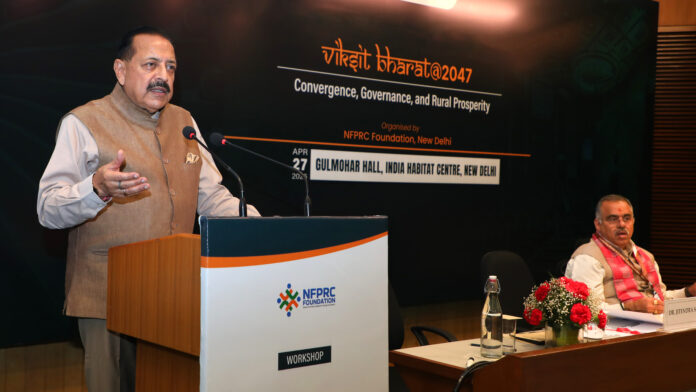
NEW DELHI, Apr 27 : Union Minister Dr Jitendra Singh today said that after Russia, India will be the second country in the world operating a commercial-level fast breeder reactor.
Delivering keynote address at a workshop of MPs and MLAs, on “Small Modular Reactors” the Minister elaborated that India has achieved a significant milestone by developing an indigenously designed 500 MWe Prototype Fast Breeder Reactor (PFBR) at Kalpakkam, Tamil Nadu, which achieved first criticality on April 6, 2026. Developed by the Indira Gandhi Centre for Atomic Research (IGCAR) and built by BHAVINI, this reactor marks the start of the second stage of India’s three-stage nuclear power program, using uranium-plutonium mixed oxide fuel to produce more fuel than it consumes. With this achievement, India moves toward leveraging its vast thorium reserves in the third stage of its nuclear strategy. Once fully operational, India will be the second country in the world after Russia operating a commercial-level fast breeder reactor, he added.
The workshop was organised by National General Secretary BJP, Tarun Chugh.
Dr Jitendra Singh further explained that the significance of this achievement lies in the fact that with this, India moves toward leveraging its vast thorium reserves in the third stage of its nuclear strategy. Once fully operational, India will be the second country in the world after Russia operating a commercial-level fast breeder reactor.
Currently, Russia is the only country operating commercial Fast Breeder Reactors (FBRs), with India in the advanced stage of commissioning its own. While several nations have historically developed or operated experimental fast reactors—specifically the USA, UK, France, Japan, Germany, and China—most of these programs are currently shut down.
Referring to recent developments in India’s three-stage nuclear programme, Dr Jitendra Singh said that the successful establishment of the Prototype Fast Breeder Reactor marks a significant step towards the second stage of the programme, enabling more efficient utilisation of nuclear fuel and paving the way for future use of India’s vast thorium reserves.
The Minister emphasized that only a limited number of countries have made advancements in Fast Breeder Reactor technology, placing India in a distinguished global position in advanced nuclear capability.
The Minister further stated that nuclear energy will play a crucial role in India’s clean energy transition and long-term sustainability goals, particularly in achieving the target of 100 GW nuclear power capacity by 2047.
Highlighting emerging requirements, Dr. Jitendra Singh said that sectors such as Artificial Intelligence, data infrastructure and advanced manufacturing will increasingly depend on reliable and continuous sources of clean energy, where nuclear power will be indispensable.
The Minister also underlined the importance of initiatives such as Small Modular Reactors (SMRs), policy support, and SHANTI Act enabling greater participation of the private sector in scaling up India’s nuclear energy capacity. He said, under the recently launched “Nuclear Mission” , with an allocation of Rs 20,000 cr, five SMRs are planned by 2033.
SMRs, the Minister said, will be useful for captive power generation, particularly in Industry, dense population zones, remote areas lacking grid connection, repurposing thermal plants etc
Reiterating the government’s vision, the Minister said that a balanced energy mix, combining nuclear, renewable and other clean energy sources, will be key to achieving the goal of Net Zero by 2070.

Suspected pirates seize vessel carrying cement  off Somalia, second hijacking incident in days
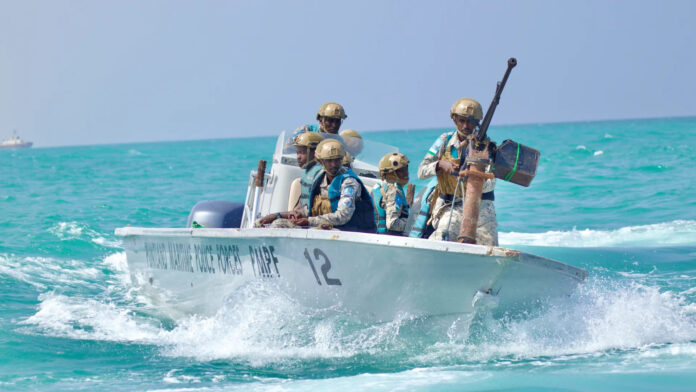
Mogadishu(Somalia), Apr 27:  A cargo vessel carrying cement and flying the flag of St Kitts and Nevis has been hijacked off Somalia’s coast, a local maritime security official said Monday.
The ship was seized off the coastal town of Garacad in the Somali region of Puntland, according to an operations officer from the Puntland Maritime Police Force, who spoke on condition of anonymity because he was not authorized to brief the media.
The incident also was reported by the United Kingdom Maritime Trade Operations, which cited a hijacking incident six nautical miles northeast of Garacad.
The vessel had departed from Egypt and was heading to the Kenyan port city of Mombasa. It was not possible to verify how many people were on board the vessel. The Puntland official said nine pirates boarded and took control of the vessel.
This is the second incident in less than a week; on Wednesday an oil tanker was seized in waters off Puntland.(AP)

Trump’s many upcoming large, public events may  present fresh security challenges after latest attack
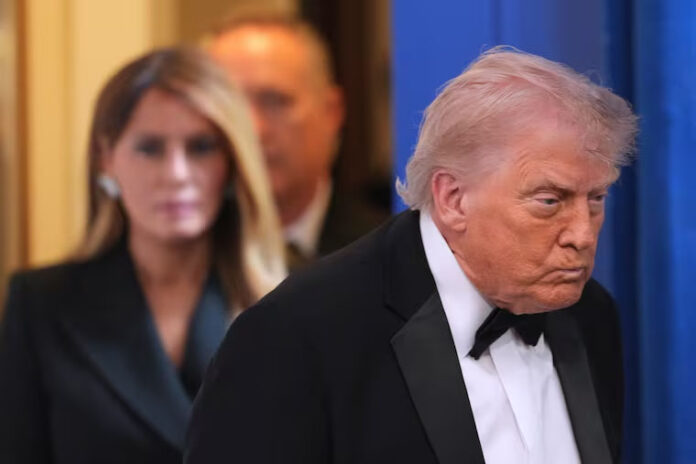
WASHINGTON, Apr 27:  Federal law enforcement officials are evaluating how to proceed with a number of high-profile public events featuring President Donald Trump after the attack at the White House Correspondents’ Dinner.
The third violent assault in the vicinity of Trump in less than two years is renewing the central tension confronting the Republican president’s defenders: how to accommodate the public-facing demands of the presidency while minimizing the risk of an attack.
Saturday’s episode, in which a man armed with guns and knives tried to storm the Washington hotel ballroom where the president was set to address the White House Correspondents’ Association, comes ahead of Trump’s expected participation in an unusual stretch of large, high-profile events indoors and outdoors in the months ahead.
Among them, he’s set to mark the nation’s 250th anniversary, oversee the US co-hosting the World Cup and lead rallies meant to galvanise support for Republicans ahead of November’s midterm elections.
A person familiar with the matter said the US Secret Service was already reevaluating its security footing for the upcoming events. The agency’s posture was already elevated due the extraordinary number of threats facing Trump – including two back-to-back assassination attempts in 2024 – and the realities of recent events such as the US-Iran war.
“I can’t imagine that there’s any profession that is more dangerous,” Trump said of the presidency Saturday night from the White House.
Inside the Secret Service, agents on protective intelligence and threat assessment teams are also reexamining threats made against Trump in recent months. Copycat violence can follow high-profile attacks, according to the person, who spoke on the condition of anonymity to discuss sensitive security planning.
The White House and Buckingham Palace said King Charles and Queen Camilla’s state visit Monday is going ahead as planned. Still, organising around large-scale events deeper in the future – including the UFC bout on the White House lawn marking Trump’s 80th birthday in June, World Cup matches and the IndyCar race past the White House – could get more complicated.
An inherent tension in presidential protection is exposed
===============================
Lawmakers, event attendees and some allies of the president saw fault in the correspondents’ dinner security planning, questioning why someone like the shooter could reserve a room at the hotel to sneak in weapons around the outermost layer of security.
Republican Texas Rep. Michael McCaul, chairman emeritus of the House Homeland Security Committee, said security protocols for Trump and Vice President JD Vance may need altering.
“I think the Secret Service needs to reconsider having both the president and vice president together at something like that,” McCaul told CNN’s “State of the Union.”
Kari Lake, a former unsuccessful Republican gubernatorial candidate in Arizona and Trump’s pick to lead the US Agency for Global Media, complained about not having to show a photo ID to match her ticket to the event when entering the hotel for the correspondents’ dinner. “I can’t believe how lax the security was,” Lake wrote on X.
The Secret Service is charged only with the safety of its protectees, not of the event itself, and the agency immediately celebrated its response, drawing a high-profile endorsement from Trump himself.
“Our multilayered protection works,” director Sean Curran said Saturday.
“Those guys did a good job last night. They did a really good job,” echoed Trump on Sunday in an interview with CBS News’ “60 Minutes.”
Garrett Graff, author of “Raven Rock: The Story of the US Government’s Secret Plan to Save Itself – While the Rest of Us Die,” wrote in an analysis of the multiple layers of security around Trump during the dinner, “Seems like the system basically working as designed, amid the always necessary trade-offs of security in a free society”.
Retired Secret Service Agent Thomas D. Quinn, who helped pioneer Secret Service counterassault teams, posted on X that “the Secret Service security plan for the WHCD worked and the assailant was stopped”.
He continued, “As long as we are a free people in a freedom loving Nation, the Secret Service responsibilities will continue to be immense.”
More security changes ahead
===============
Ronald Kessler, author of “In the President’s Secret Service: Behind the Scenes with Agents in the Line of Fire and the Presidents They Protect,” said authorities are likely to consider placing bulletproof glass around where Trump speaks outside and inside – not unlike after the Butler, Pennsylvania, assassination attempt during the heat of the 2024 presidential campaign.
Attendees, Kessler said, will likely be more thoroughly screened going forward – exacerbating lines at entrances that can already take hours to clear. An example of what might happen came last fall, when Trump attended the men’s final of the US Open tennis tournament and triggered massive security lines.
Such events underscore the complicated security questions surrounding presidential protection in a country where citizens expect their leaders to move through public spaces, hold rallies, attend events and appear before crowds.
“Presidents don’t like to have too much protection,” Kessler said. “I think, by their nature, they’re very outgoing. They want to meet people. They don’t want to be accused of being prisoners of the White House. And so, they’ll try to get around some of these improvements.”
Presidents can have love-hate relationships with security details
========================================
The Secret Service took over full-time responsibility for protecting the president during the administration of President Theodore Roosevelt, who came to office after an assassin killed William McKinley in 1901. Roosevelt found the constant security presence tiresome, however, and would sometimes slip away for unprotected hikes or horseback rides in Washington’s Rock Creek Park, according to the White House Historical Association.
Security personnel wanted President Ronald Reagan to exit the building where Saturday night’s shooting occurred, the Washington Hilton, through a covered garage in 1981, Kessler said. Reagan’s staff worried the optics would be bad, however, and the president was shot as he left an open-air exit, ultimately surviving.
After shots were fired Saturday, Secret Service agents surrounded Trump, who appeared to slip slightly as he was whisked away. Another team moved Vance so quickly it seemed as if it might haul him out while still seated in a banquet chair.
Trump told “60 Minutes” on Sunday that he “wasn’t making it easy” for the Secret Service by being “a little bit me”.
“I wanted to see what was happening,” the president said Sunday. “And by that time we started to realise maybe it was a bad problem – different kind of a problem – bad one.”
“I probably made them act a little bit more slowly. I said: Wait a minute, wait a minute. Lemme see. Wait a minute,” Trump said. He said he started walking out but: “They said, ‘Please go down. Please go down on the floor.’ So I went down, and the first lady went down also.”
Trump repeatedly praised the Secret Service and his detail, and he has pushed the correspondents’ association to reschedule the dinner. He said it would have “even more security”.
“And they’ll have bigger perimeter security,” he said. “It’ll be fine.” (AP)

Dr Nikhil Tandon to serve as interim AIIMS Delhi director
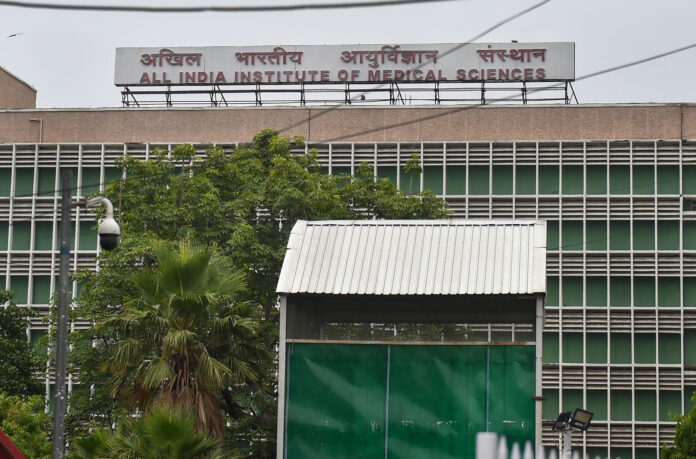
FILE PHOTO- All India Institute of Medical Sciences (AIIMS)

NEW DELHI, Apr 27: AIIMS, Delhi on Monday said senior endocrinologist and its Dean (Academic) Dr Nikhil Tandon has been assigned to look after the functions of director of the institute, following Dr M Srinivas’s move to NITI Aayog as a full-time member.
According to an office memorandum issued by AIIMS, the arrangement has been made under Rule 9(4) of the AIIMS Rules, 2019.
“The president, AIIMS, Delhi has been pleased to order that Dr Nikhil Tandon, professor and head, Department of Endocrinology and Metabolism and dean (academic), AIIMS, Delhi, will look after the functions of the director, AIIMS, New Delhi, in addition to his own official duties…,” the memorandum said. (Agenciese)

One-third of animal habitats could experience extreme events by 2085 under continued warming: Study
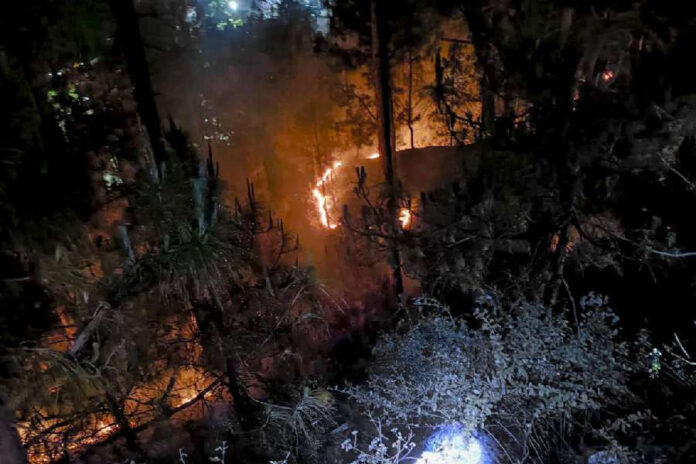
NEW DELHI, Apr 27: Under continued global warming, over one-third of animal habitats on land could face climate-driven extreme events, such as heatwaves or forest fires, by 2085, according to a new study.
Published in the journal Nature Ecology and Evolution, the findings also adds that rapidly cutting emissions to net zero could largely avert these impacts.
Researchers, led by those from the Potsdam Institute for Climate Impact Research in Germany, analysed climate projections and species data, including those from the International Union for Conservation of Nature (IUCN) Red List of Threatened Species.
They found that in a scenario in which warming starts to reverse in the latter part of the century, only nine per cent of land animals’ habitat could be expected to experience extreme events by 2085.
“I think climate change, and in particular extreme events, are still really being underestimated when it comes to conservation planning. It’s not just going to be a gradual shift of temperature over many years,” lead author Stefanie Heinicke, a postdoctoral researcher at the Potsdam Institute for Climate Impact Research, said.
Multiple extreme events can have compounding effects and create “synergistic” threats to biodiversity.
For example, a study on the 2019-2020 Australian fire showed a 27-40 per cent greater decline across plant and animal species when the fire was preceded by a drought, the researchers said.
The team predicted changes in exposure to droughts, heatwaves, river floods and wildfires for 33,936 terrestrial vertebrate species and 794 ecoregions (ecological regions).
“By 2050, under a medium-high emission scenario, on average 74 per cent of the area within species’ current geographic ranges are projected to be exposed to heatwaves, 16 per cent to wildfires, eight per cent to droughts and three per cent to river floods,” the authors wrote.
Species-rich areas, including those in the Amazon basin, Africa and Southeast Asia, could be affected, they said.
The researchers also projected that by 2050, 22 ecoregions, primarily in mid-latitudes, could be estimated to have at least 50 per cent of their area exposed to two or more types of extreme events, increasing to 236 ecoregions by 2085.
“By 2085, 36 per cent of the area within species’ ranges are projected to be exposed to multiple event types,” the authors wrote.
The findings highlight the need for further research into species’ sensitivity and adaptive capacity to extreme events, and for conservation strategies that address the impacts of multiple extreme events, they said. (PTI)