

Jammu, May 11: Reiterating his vision to establish Ladakh as a global hub for the finest pashmina, Lieutenant Governor Vinai Kumar Saxena on Monday stressed the need to ensure greater recognition and economic benefits for the nomadic herders and pastoral communities of Changthang engaged in pashmina production.
Saxena highlighted that by strengthening local processing, improving quality standards, and promoting value addition within Ladakh, the livelihoods of pashmina growers could be significantly enhanced while preserving the region’s traditional heritage.
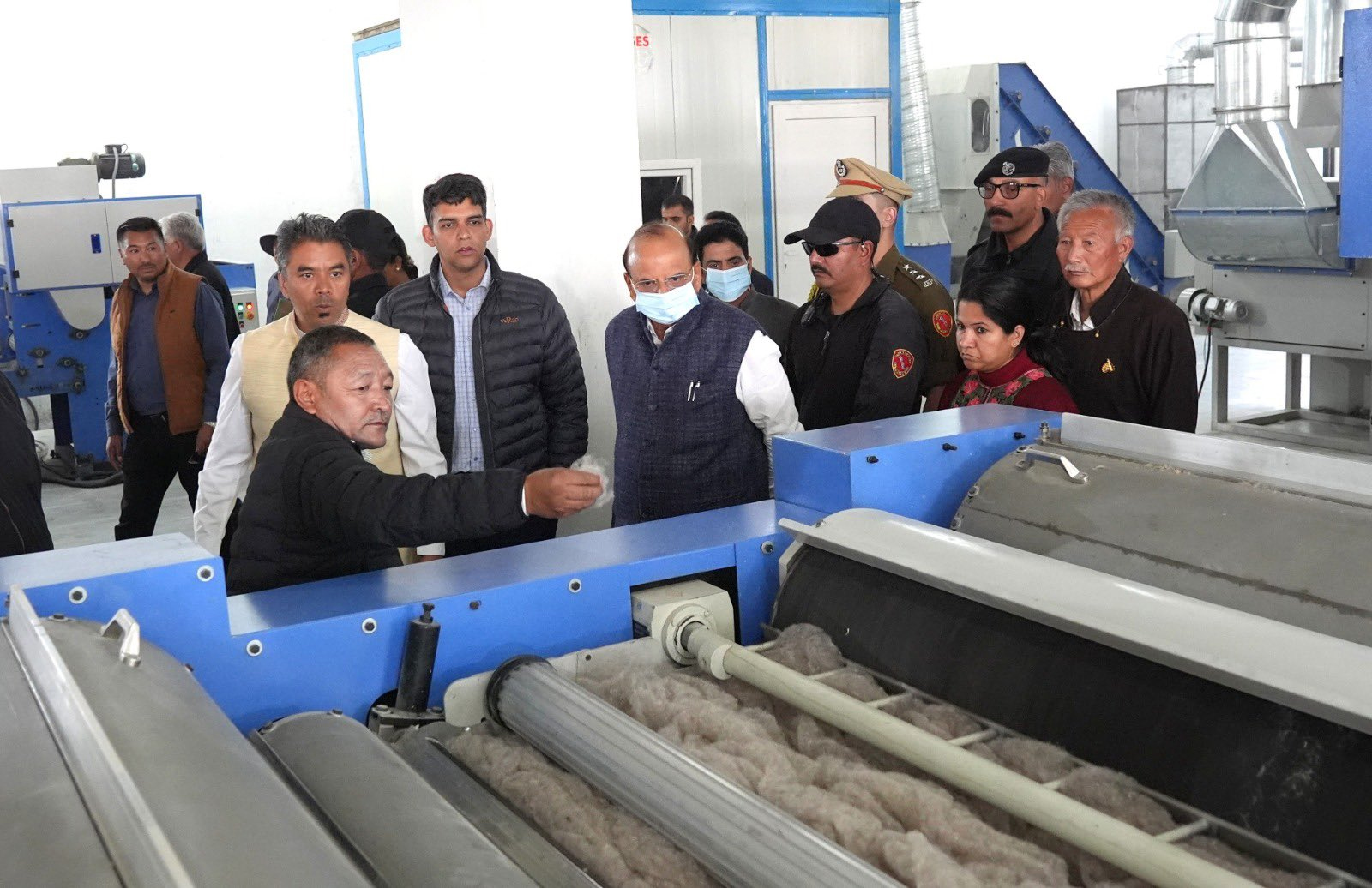
During his visit, Saxena inspected the pashmina dehairing plant in Leh’s industrial area and reviewed its operations and the various stages involved in processing the raw pashmina fibre sourced from Changthang.
“It is our vision to establish Ladakh as a global hub for the finest pashmina. The need to ensure greater recognition and economic benefits for the nomadic herders and pastoral communities of Changthang engaged in pashmina production,” he said.
Officials informed the lieutenant governor that only around 24 per cent of the pashmina fibre produced in Ladakh is utilised locally. They also shared that trial interventions for spinning pashmina fibre at centres in Bengaluru and Delhi have yielded encouraging results.
Additionally, they mentioned that Ladakh’s raw pashmina fibre has already received a Geographical Indication (GI) tag, and efforts are underway to secure GI tagging for hand-spun pashmina as well.
During his inspection, officials briefed Saxena on the plant’s functioning and the processes involved in converting raw pashmina into high-quality dehaired fibre.
The officials told him that raw pashmina fibre sheared from Changthang goats contains dust, mud, grease and other impurities accumulated during grazing in high-altitude pastures.
The fibre undergoes multiple stages of cleaning, washing, rinsing, drying and conditioning before the dehairing process separates the fine pashmina fibre from coarse fibre, they said.
Saxena directed the officials to explore the potential for utilising coarse fibre to manufacture products such as rugs and carpets, noting that these items have significant market demand and could generate additional livelihood opportunities for local communities.
He also instructed the relevant departments to focus on spinning and yarn production of pashmina fibre and to provide training for entrepreneurs to build local capacity.
The lieutenant governor observed that the dehairing facility forms an important part of the UT administration’s broader efforts to develop a sustainable and globally competitive pashmina ecosystem in Ladakh by modernising infrastructure, enhancing local employment opportunities and promoting indigenous products in national and international markets.
Furthermore, he directed the concerned departments to ensure the optimal utilisation of modern infrastructure to improve production efficiency and maintain global quality standards.
 Follow our WhatsApp channel
