

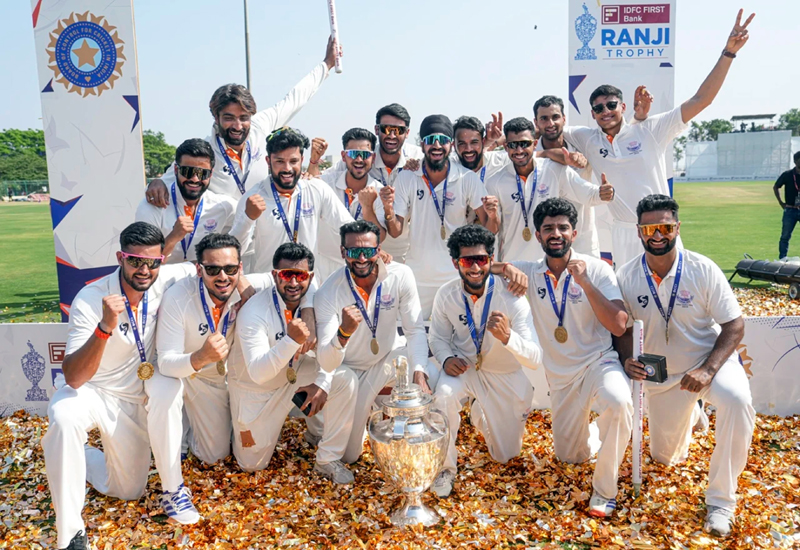
After 67 long years of competing in India’s most prestigious domestic competition, the Ranji Trophy, Jammu & Kashmir have finally scripted one of the most remarkable chapters in the history. What was once a distant dream has now become a tangible reality, as J&K has lifted their maiden Ranji title in the 2025-26 season. This isn’t just a trophy; it’s the culmination of years of hard work, belief, collective excellence, discipline, and unrelenting resilience that has seen a team from the fringes challenge and outplay some of the strongest sides in the country. J&K is only the ninth team to win the Ranji Trophy on its maiden appearance in the final. From the quarter-finals against Madhya Pradesh to neutralising the traditional powerhouses, two-time champion Bengal in the semi-finals and eight-time champion Karnataka in the final, the J&K journey has been nothing short of historic.
The final at the KSCA Stadium in Hubli was effectively put beyond doubt by Jammu & Kashmir right from the first innings. J&K posted a massive 584 before being bowled out-a total built on a foundation of collective effort. Six batters scored 50 or more, with Shubham Pundir’s gritty century (121) anchoring the innings, while other notable contributors included Yawer Hassan with 88, captain Paras Dogra with 70, Abdul Samad with 61, Kanhaiya Wadhawan with 70, and solid lower-order runs from others. This depth in batting showcased their ability to construct a mammoth total against quality bowling attacks. Karnataka, despite boasting experienced bowlers like Prasidh Krishna (5/98), was simply unable to cope with J&K’s disciplined approach and batting depth. Their mammoth first-innings total effectively reduced the title decider to a one-innings affair and swung the psychological pendulum firmly in favour of the newcomers.
When Karnataka batted, they were bundled out for just 293 runs, giving J&K a massive 291-run lead-an advantage that not only defined the match but, under Ranji Trophy final rules, virtually sealed the title. In the Ranji final context, if the match ends in a draw, the team with the first-inning lead is declared the winner-a nuance of the competition that greatly favours J&K after their dominant initial performance. The bowling effort that dislodged Karnataka was led by Auqib Nabi, whose 5 for 54 in the first innings was his seventh five-wicket haul of the season, bringing his tally to 60 wickets in 10 matches-a figure that not only makes him the leading wicket-taker of the 2025-26 Ranji season but also one of the most prolific bowlers in the tournament’s long history. He became only the third pacer in Ranji Trophy history to cross the 60-wicket mark in a single campaign, a testament to his consistency, endurance, and match-winning ability.
What makes Nabi’s journey even more compelling is his background-hailing from Baramulla, where he cut his teeth in tennis-ball cricket and once reportedly attended trials without even proper sporting shoes. His rise from those humble beginnings to dominating India’s foremost domestic competition and now knocking at the door of national selection exemplifies the very essence of the sport’s aspirational power. If Nabi led the bowling attack, J&K’s batting in the second innings solidified their control, with Qamran Iqbal’s and Sahil’s majestic centuries playing a pivotal role. What makes Qamran’s performance almost cinematic is the context: he reached the Hubli ground from Delhi just minutes before the toss after a teammate was injured and went on to play a defining role in the team’s title push.
Captain Paras Dogra has been the emotional and tactical heartbeat of the team. At over 41 years of age, his longevity and hunger have redefined standards for professional excellence. He now joins an elite company as one of the few cricketers to cross the landmark of 10,000 runs in Ranji Trophy history, only the second player after Wasim Jaffer to achieve this milestone, and that too at a record pace. Dogra’s ability to marshal resources, trust his bowlers, and play context-aware cricket has made him one of the most influential captains in this campaign. His leadership was bold yet measured, allowing bowlers like Nabi the freedom to attack and batters like Iqbal to express themselves. While there were moments of intensity, the focus of this team remained on performance and results.
What made this campaign truly extraordinary is how every player in the squad contributed under different circumstances. Throughout the season, there was no shortage of challenges, but what set this team apart was their collective mentality. They didn’t merely participate; they dominated. This included disciplined fielding, strategic bowling plans, and an unshakeable belief that they could beat any opponent on their day. Behind the scenes, the transformative influence of chief coach Ajay Sharma and the support of administrative leadership played a crucial role. Sharma’s emphasis on discipline, fitness, and psychological readiness ensured the team approached each match with tactical clarity. The commitment extended beyond the playing XI-it was a coordinated effort involving trainers, physiotherapists, strategists, and support staff collectively invested in the pursuit of excellence. Once, Ranji Trophy’s dominance was restricted to a handful of traditional powerhouses, but teams like Gujarat, Vidarbha, Madhya Pradesh, and now Jammu & Kashmir have demonstrated that cricketing excellence can emerge from anywhere. Such stories expand the competitive fabric of domestic cricket and inspire young cricketers from underrepresented regions to dream big.
Despite the historic achievement, the question now turns to what comes next. While the Ranji Trophy remains the cornerstone of Indian domestic cricket, national selections have not always been aligned with domestic performance-something many fans and experts have pointed out with disappointment. The achievements of Nabi, Iqbal, Pundir, Samad, Sahil and other standout performers this season provide compelling cases for national consideration. The upcoming IPL season will offer another platform to showcase talent, but the pathway from domestic dominance to international representation must be more meritocratic. With figures like Mithun Manhas at the helm of the Board of Control for Cricket in India and supporting voices advocating for domestic stars, there is cause for optimism.
With CM Omar Abdullah turning up to cheer the team, it signified the symbolic importance of this victory for J&K’s youth and sporting culture. With this achievement, young athletes across the region now have real role models, inspiring generations to come. From humble beginnings to commanding dominance on the national stage, this champion team has redefined what is possible. While the rousing reception is due, the larger task now is to build on this momentum-invest in infrastructure, hosting opportunities, and pathways for players to progress to international cricket. For now, however, J&K celebrates our champions, a new story, and a new hope.
 Follow our WhatsApp channel
