

Unplanned expansion, weak enforcement and eroding civic norms are pushing the beautiful city towards irreversible mutation
Sameer Rekhi
rekhi7sameer@gmail.com
Jammu was never meant to be this way.
Less than three decades ago, it was a town that had the charm of simplicity and brotherhood -an austere place of modest means, steady rhythms, and an instinctive pluralism. Hindus, Muslims, Sikhs, Christians and Buddhists lived alongside one another without much friction. The “City of Temples” had always absorbed difference without anxiety. That Jammu is steadily slipping away.
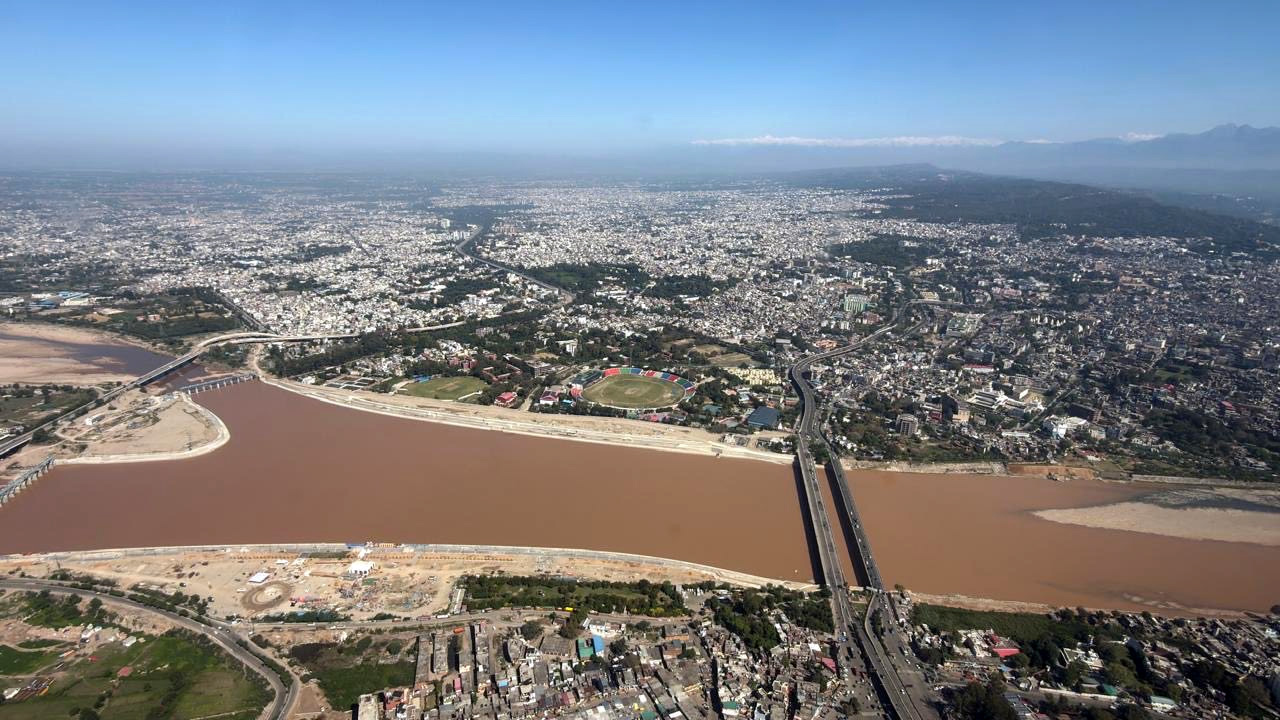
What stands in its place in 2026 is a city swollen beyond its limits and governed only on paper. Its population has more than doubled since the early 1990s, driven by migration, displacement and economic pull. Growth in a city of such geography is inevitable. Disorder is not.
For years, expansion was permitted without discipline. Successive administrations-first state, now Union Territory-allowed the city to stretch without strengthening its core. Master plans remained aspirational documents while illegal colonies multiplied, roads narrowed under encroachment, and civic infrastructure lagged far behind demand. Jammu was left to grow unchecked.
The consequences are now part of daily life. Traffic is no longer a problem to be solved; it is a condition to be endured. Key roads function as bottlenecks rather than arteries. Enforcement has been reduced to a farce, more as a source of additional income than a public service. VIP culture and its toll on enforcement and traffic control is a colossal problem.
Waste management remains inconsistent, public spaces continue to shrink, and basic services struggle to keep pace with a city they were never designed to serve. This is not merely administrative fatigue; it is a governance failure.
Frequent reshuffles have weakened continuity. Flagship programmes have created islands of visibility in an ocean of neglect. In a city of potholes, the proposed lake on river Tawi adds insult to injury. The distance between official claims and reality on ground has widened to the point where citizens have become inured to their haplessness.
And where governance shrinks , civic behaviour begins to spiral downwards.
In the absence of sincere and consistent enforcement, rules become negotiable, law is circumvented, encroachment becomes routine, and shortcuts become the norm. What begins as minor aberration at the margins soon spreads across the system. The erosion is gradual but unmistakable: of how roads are used, how public spaces are treated, and how laws are respected.
This is how cities lose their civic soul-not through sudden collapse, but through the steady normalisation of disorder.
Jammu’s pluralism has not broken down, but it is under palpable strain. Communities are beginning to cluster, not always out of choice but out of distrust and polarisation. Economic pressure accentuates popular perception and opinion. Migrants-essential to the city’s labour and growth-are perceived as a cultural and societal threat. Even as locals are losing out on competition with the outsiders, who work hard, they invariably blame lack of opportunity to find work. Yet, it is a fact that the cultural quietude of Jammu has been lost significantly as a result of some negative aspects of unchecked ingress from the mainland.
These tensions are not accidental. They are the predictable outcome of unmanaged urbanisation. Diversity cannot sustain in the absence of a legal and rule-based framework, requisite infrastructure and credible enforcement. Without these, coexistence gives way, gradually, to unease.
There is also an internal fraying. The Dogra identity that once gave Jammu cultural cohesion has weakened-fragmented by caste, class and uneven access to opportunity. In the absence of effective governance and credible leadership , identity issues have hardened, thus lending further boost to polarisation and politics of hatred and opportunism.
This is Jammu’s real crisis: not growth, but the absence of control over it. Cities rarely collapse suddenly. They decline incrementally-through tolerated illegality, deferred decisions and the steady normalisation of abnormal. Jammu is now well along that path. What was once a city of austerity has become a city of superfluity. Everything that could go wrong is going wrong. “Excess” is the ruling planet of this place, now. Excess of vehicles, shops, horns, accidents, paper andolans and official apathy.
Reversal is still possible, but only with intent that has so far been missing. Planning laws must be enforced without exception. Encroachments must be addressed with consistency, not selectivity. Investment in transport and waste systems must be scaled to reality, not optics. Most importantly, the administration must evolve a framework that integrates the city’s expanding population into a shared civic biosphere rather than leaving it to compete in an unregulated urban scramble.
It pains to see such a beautiful city with quality air and ample water to get defaced and ruined. The Suryaputri Tawi, that blesses this city, is a witness and victim of unplanned urbanisation and ghettoisation.
Jammu’s story is not one of urban evolution, but of a city slowly unmaking itself.
(The author is a retired IPS officer)
 Follow our WhatsApp channel
