

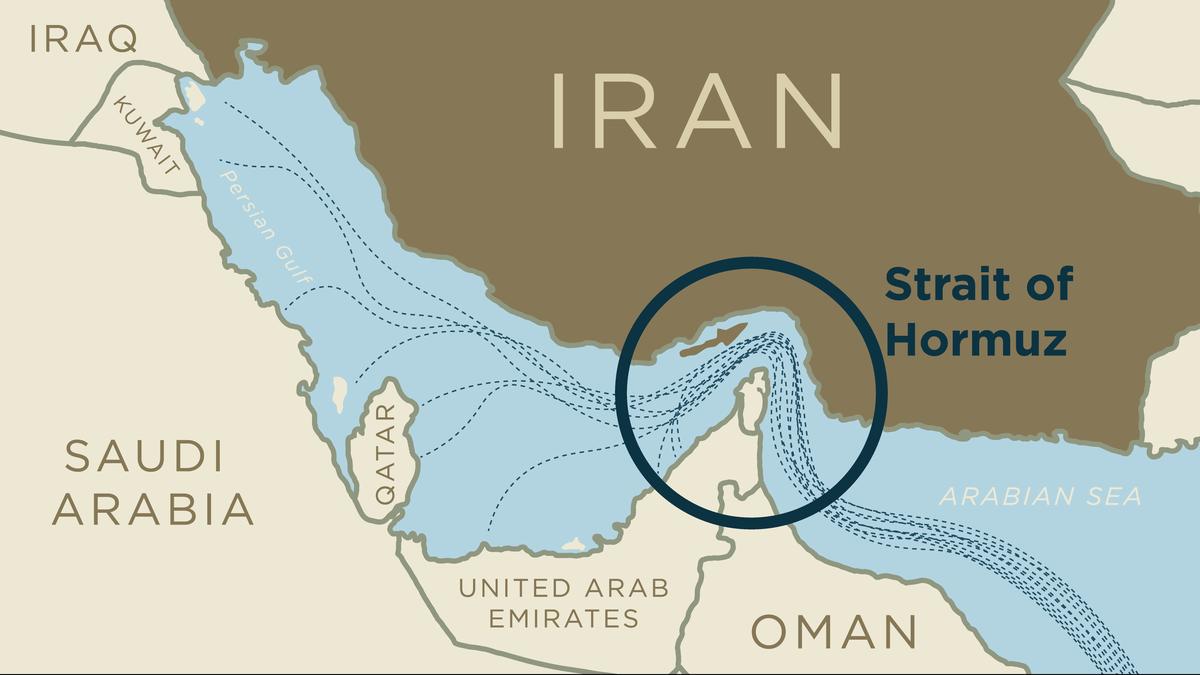
TEHRAN, May 3: Outlining their plans to further tighten their control over the Strait of Hormuz, Iranian lawmakers have said that Israeli vessels would be permanently barred from traversing the critical water corridor, while US ships can use the Strait only after they have paid all the war damages.
Ali Nikzad, first deputy speaker of parliament, said a draft 12-point plan would prevent Israeli ships from transiting the Strait “at any time”. He further said that vessels from what Iran describes as “hostile countries” would only be allowed passage if they paid compensation for damage caused during the war.
While he did not name specific countries beyond Israel, Iranian officials have previously used similar language to refer to Washington and some of its regional allies, especially the Gulf countries.
Two months into the Washington-Jerusalem war with Tehran, the maritime route, which is responsible for roughly 20 per cent of the total global oil flows remains closed, choking off a fifth of total crude supplies.
For non-hostile nations, the Islamic Republic is preparing to impose a toll based system, under which ships would be required to obtain prior permission from Tehran before entering the Strait.
According to Nikzad, the policy would be implemented in line with international law, while making clear that Iran would not revert the Strait’s condition to pre-war arrangements.
“We will not give up our rights in the Strait of Hormuz,” he said, adding that shipping “will not be the same as before”, describing Iran’s proposed new control over Hormuz as comparable in importance to the nationalization of the oil industry in 1951.
Mohammadreza Rezaei, head of the Iranian parliament’s Construction Commission, said vessels seeking passage would also be required to use the term “Persian Gulf” in official documentation.
Outlining revenue collection, he said that 30 pc of the dues from ships would be allocated to strengthening military infrastructure, while 70 pc would go to economic development and public welfare.
“Managing the Strait of Hormuz is more important than acquiring nuclear weapons,” Rezaei said.
Iranian officials have suggested the plan could help offset economic losses from the war, but the proposal faces significant international pushback. Washington has already warned that any companies or governments complying with Iranian-imposed transit fees could face sanctions, raising further uncertainty over whether such a system could be implemented in practice.
(UNI)
 Follow our WhatsApp channel
