

Excelsior Correspondent
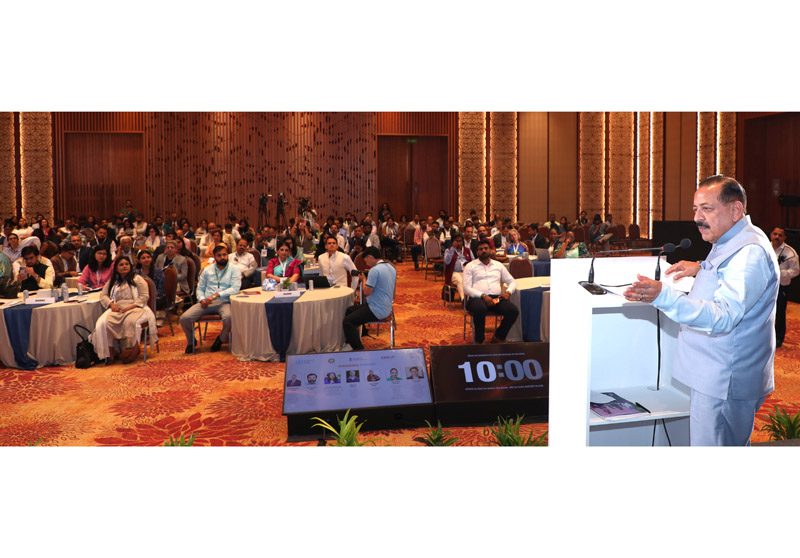
NEW DELHI, Apr 20: India is strengthening its commitment to sustainable cooling and climate resilience through the implementation of the “India Cooling Action Plan” which is already implemented in over 250 cities across the country, Union Minister of State (Independent Charge) for Science & Technology, Earth Sciences, and MoS PMO, Personnel, Public Grievances, Pensions, Atomic Energy and Space, Dr. Jitendra Singh said today, adding that global warming poses threat to health, environment, and overall economy, across the world.
Addressing the Global Heat and Cooling Forum, the Minister emphasised that rising temperatures are not only an environmental concern but also directly linked to increasing health risks, including both communicable and non-communicable diseases. He stressed the need for India-specific research and solutions, noting that heat stress is impacting conditions ranging from dengue to cardiovascular diseases, making climate response a public health priority as well.
The Minister was speaking at the Inaugural Plenary of the Global Heat and Cooling Forum, organised with the participation of the Department of Science & Technology (DST), National Disaster Management Authority (NDMA), Coalition for Disaster Resilient Infrastructure (CDRI), Natural Resources Defense Council (NRDC), and other stakeholders. The session brought together key experts including Dr. Krishna Vatsa, Dr. Nisha Mendiratta, Manish Bapna, Dipa Singh Bagai, Dr. Adelle Thomas and Dr. Radhika Khosla, among others, representing leading national and international institutions working in climate, disaster resilience and sustainable development.
Dr. Jitendra Singh said that climate change-induced heat is a global phenomenon affecting every region, but India faces a unique situation due to its diverse climatic conditions, simultaneously experiencing extreme heat and extreme cold across different geographies. He pointed out that this diversity demands customised strategies rather than adopting uniform global models.
Referring to changing disease patterns, the Minister noted that India today is dealing with both tropical diseases and lifestyle-related non-communicable diseases at the same time. Rising temperatures are aggravating both categories, increasing vulnerability among populations, especially those with conditions such as heart disease and diabetes. He called for integrated research that connects climate science with healthcare systems.
The Minister also drew attention to changing human adaptability, stating that increased dependence on modern cooling systems has altered natural tolerance levels. He highlighted the importance of balancing access to cooling with sustainability, cautioning against excessive use of air conditioning, which increases energy consumption and places additional stress on the environment and economy.
The Minister stressed that equitable access to cooling solutions must be ensured, as disparities in access can deepen social inequalities. At the same time, he called for responsible consumption practices, noting that optimal temperature settings can significantly reduce energy demand and contribute to national resource savings.
Dr. Jitendra Singh highlighted that India, with its population of over 1.4 billion, holds a critical position in global climate action. He said that the country’s approach to managing heat and cooling will have implications not only domestically but also globally.cc
 Follow our WhatsApp channel
