

O P Sharma Vidyarthi
opsfrijik@gmail.com
Himalayas have remained abode of sages and saints who explored different locations in search of solace,tranquility and gathered understanding about natural bioresources ,alpine glaciers and melting snow ,birch forests with medicinal herbs of different kinds, devdar and fir forests,oak and Rhododendron forests, subtropical temperate and alpine flora, coining names after gods and godesses, sages and saints before scientific understanding and modern approaches towards forestry management. With large scale exploitation of resources,large scale deforestation, unstainable commercial resource utilization ,delicate balance between nature and humans got disrupted causing landslides in the fragile habitats, early warming & defiecient rainfall leading to unprecedented forest fires, indiscriminate use of agrochemicals, insecticides & pesticides, soil s got impoverished, invasive alien species got foothold thereby depleting indigenous medicinal and plants. Nature has engineered food webs and anthropogenic pressures led to ecological imbalance causing erosion of resources ,soils got eroded, invasive species proliferated,droughts and floods caused unprecedented havoc as we witnessed during 2014 september deluge and 2025 monsoon fury that took toll of human lives at pilgrimage locations like Chashoti on way to Machail in J & K in particular and west Himalayas in general.Biodiversity builds resilience of ecosystems,many herbivores are food for carnivores, coexistence as practised since ages stand shattered causing man animal conflict and disconnect with nature.With a view to understand traditional use of forest plants ,we need to know neighbourhood wild edible relatives of spices,millets, fruits, vegetables, grains as whatever we cultivate,market and use as food, it has background linkages to wild crop relatives and wild edible plants are needed by plant breeders to improve quality of cultivated crops, so documenting traditional edible plants becomes a priority for sustainable forest management,food and health security as per national and international agreements on Biodiversity conservation,sustainable development and eradication of poverty,malnutrition as per sustainable development goals 2030.
Forests & farmlands around villages of Jammu & Kashmir have not only enchanting verdant green landscapes for tourists, pilgrims,mountaineers,nature lovers ,wilderness explorers but offer interesting lesser known cuisines, beverages, teas, sauces, snacks, porridges, pickles derived from diverse tubers, fruits, roots, shoots, springtime leafy buds ,seeds and rhizomes that are not only organic, healthy, nutritional but have a potential to earn livelihoods, promote indigenous culture, revive interest in forgotten foods, conserve wild edible plant relatives and ensure food security during unprecedented flood fury, blockade of roads,famines,drought periods,failure of crops and war like situations in the backdrop of climate change and wider scale use of pesticides and plastics that harm not only environment but also human health.
Important wild edible plants that are consumed in different villages of Jammu & Kashmir since ages and still used by ethnic communities in remote hilly and mountainous villages are detailed as under :
Edible tubers, rhizomes, corms and roots
Jammuites are familiar with edible yam known to locals as Tarad that finds demand even in cities is creeper that is linked to Mahashivratri celebrations in Uttrakhand ,Tarad cuisine with longer rhizomes look like tresses of Lord Shiva and made into cuisines on shivratri day.In Jammu hills several similar tubers like Seyaadu,Kitthi are also harvested for food as different species of Dioscorea. Special curd cuisine called Keyaaloo Aasra is developed from bulbs of Lady Tulip in Udhampur & Ramnagar villages.Another interesting tuber called Bidd Badaar (Vidarikand) is harvested for developing curry as well as kheer in Jammu shivaliks,first time developed by Food craft Institute of Jammu,material sourced from Udhampur,large climber grows in Saruinsar & Mansar wildlife sanctuaries as well but harvest is recommended from community lands.Roots of sohanjana ,Moringa roots are used as pickle, it is cultivated in Kanhachak area and finds market in Jammu city.Tubers of Kala zeera consumed by locals in Padder Kishtwar and Gurez Kashmir.Radish rooted Catmint is another aromatic herb that yields edible swollen roots and consumed in Warwan Marwa mountains as revealed by Dr Muzaffar Rathar, local name is Mujj Gogul.
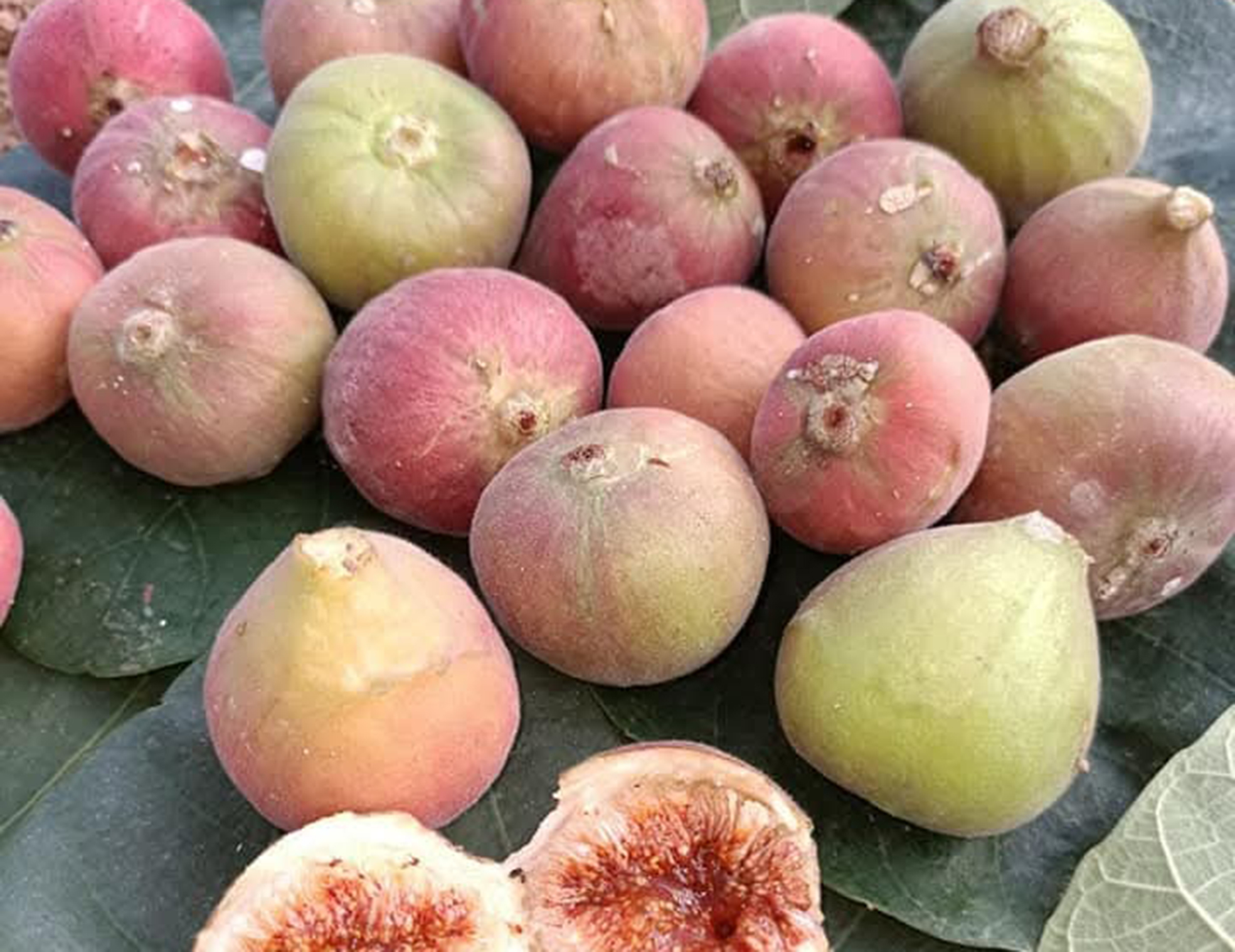
Edible figs and fig leaves :
Jammu hills have dozen species of wild figs that are not only edible to locals but different recipes,snacks and chillas are developed in villages.Fig trees are held sacred as they are worshipped since ages,they act as keystone species for different insect & bird and primate life.Tender shoots,fruits of Punjab fig called Phagwara or Phakada is cooked with curd as delicious curry in early spring,fruits are edible & fondly consumed in summer.Other unique fig named as Eve’s apron fig or Roxburgh’s fig or Elephant ear fig known to Dogras as Trimbal is seen growing not only in tourist hill destinations like Pancheri,Laatti,Dudu,Sukrala ,Chauntra Devi but even in Jammu city along Ranbir canal and in the campus of J&K Academy of art,culture & Languages ,tender figs eaten as vegetable,Dahi rayta ,snacks,even tender leaves are cooked as pot herb and honey rich ripened fruits are offered to guests as seasonal figs of summer.Likewise lesser known Oleander leaved fig known to Rajouri Reasi people as Dodhla ,springtime foliage is cooked as vegetable.Around Jhiri Kanhachak and Gajansoo area ,it is common practice to harvest tender leafy buds of another sacred Fig Pilkhan Palaakhi ,buds are pickled ,added to rice pulav,made into pakoudis as told by Purushotam Lal Dubey Shastri ji who displayed Palakhi Pulav first time during Van Paryavaran mela organized in Environment Park Raika.Prop roots of Banyan fig are used to develop herbal tea decoction in Akhnoor area and tender foliage of Peepal harvested to develop seasonal snacks in Kandi area of Jammu.Lesser known Nepal fig that climbs on other trees is seen in Baba Dhansar forest ,tender leaves cooked as vegetable and ripe figs eaten by humans under the name Van Phakaadi or Van Dumri.
Edible shoots, leaves and spring foliage
Villagers as per traditional wisdom of elders have passed on edible plant knowledge through oral traditions ,herbal preparations and folklore. On visit to Tahli Mata mandir on Baisakhi day,I found edible Silly ash Koda tree with fragrant flowering that reminded of childhood Dogra dahi dish prepared from tender coppery red toothed foliage of tree known to Dogras as Punney da saag (Named after Hindi name Puniya) in hills,it is related to Chamrode and Lasooda trees and finds family affinity to Ratanjot Ghaahjubaan.Sohanjna leaves,flowers and tender pods are storehouse of nutritional elements and consumed in different preparations.Curry patta known to Dogras as Daraunkal (Meethi neem) is another Shivalik shrub that is used in cuisine making & beverage development.Interestingly tender shoots of forest climber known to locals in Ramban Batote belt as Pathoran di bel,identified Botanically as Bosia amherstiana from Amaranth family is consumed as seasonal vegetable in spring season.Tender foliage of onion related Hoal saag seen growing in Trikuta mountains is sold at Tikri market ,its botanical identity is Eremurus persicus ,name persicus means it is present even in persian region.Another more familiar perennial herb seen growing on mountain slopes of Paddar,Margan,Synthan,Gurez,Pahalgam,Sonamarg and known to locals as Kaahlu in Kishtwar,Prezdar in Kashmir, Bulkat in Gurez is sold in the market as vegetable,its harvest is done in early spring as tender leaves are cooked.Author introduced this plant in Botanical garden but it perished after scorching summer.Different other herbs consumed by Dogras include Tandalak (Sorrel),Chhura (Commelina),Itt sitt (Punarnava),koku (starwort),Indu saag (Venus comb),Lolru phofru (Takla ,Bladder campion),Kunaanh (Chenopodium murale),Saddar Soi (nettle),Handri (Dandelion),Wopalhaak (Tassel),Saridi Maina (Medick clover) etc.
Edible forest & farmland flowers:
Wilderness spaces get painted with blossoms of various kinds,many wild flowers are harvested by Dogras to develop traditional sauces,teas,beverages and sherbats.One familiar flower seen growing in Shivaliks is Banafsha that finds mention in Dogri poetry as well,”Banakshey de phull chuni jaa” song resonates with hearts of locals. More fascinating red flower bunches that attract attention of tourists visiting shrines like Shahdra Shrief,Budha Amarnath,Sukrala Devi,Vasuki nag Dudu,Budd Vasak Bhaderwah is Chiu flower named Lal Burans in Hindi & Rhododendron arboreum in Botany,its sour petals are used in making Holi colour,chiu chatni,Chiu chai and chiu pakaudi.Familiar flower buds of Kachnar (Katryiaad,Kaliyaad in Dogri) sold in March April,useful against blood & thyroid related ailments is consumed as delicious curd vegetable and also buds are pickled in Dogra homes.Adusa flowers known to Dogras as Brhainkad are innovated as Gulukand ,herbal tea for treatment of respiratory troubles.Flowers of Also related wikd winter Flax known as Baal Basant or Piyoli in Uttrakhand is edible flower that is adored in folklore and used in Phooldei celebrations.Edible flowers of Flame of the forest known in Hindi as Tesu and Tattuye in Dogri used not only as Holi ka gulaal but consumed as refreshing health drink during scorching summer,it has several health benefits especially against urinary troubles,skin problems and blood related abnormalities,flower is medicinal,decorative as well as edible to locals.Semal flower buds are developed into a very interesting Simbal da Ambal (Semal ka khatta) in early spring before buds open into elegant blood red blossoms that allure birds of several kinds & colours .Interesting find of Yellow flowering Semal by herbal innovator Pooja Kapoor got into newspaper headlines & social media this year.
Wild Forest fruits for forest food feast
City markets & fruit mandis are flooded with several fruits like Kiwi,Persimmon,Amlook,Raspberry,Grapes but wilderness too provides lesser known wild fruits known to few.One lesser known fruit is Kaafal ,May berry ,nitrogen fixing tree grows in few forest locations like Chor motu Ramkot hills ,Shivkhori Sangar hill top,Kardoh nala Bani hills,fruit has considerable popularity as medicinal fruit of Uttrakhand but SKUAST Jammu has not done to cultivate this forest fruit tree that is good against heart ailments and aging problems.Changol fruit known to Botanists as Hovenia acerba need to be included in Forest nurseries as edible forest food tree of Jammu hills not known to many.Gauri kund area of Sudhmahadev has familiar presence of Yellow Raspberry known to locals as Peeley Aakhey or Aakhrey that connects Dogras to Short winged Himalayan cuckoo known to Dogras Piyoke bhejo as fruit availability is around Baisakhi festival and as per legend girl who got married in Punjab always pleaded for maternal house visit but never got permission to visit piyoka due to wheat harvest season and whenever she visited Aakhrey had got vanished,same woman got transformed into bird that utters sad notes repeating her grief as – aakhey paakey mai neyi chaakhey ,piyoke bhejo piyoke bhejo,Zoological bird is identified as Cuculus microoterus not to be confused with Papeeha Hierococcyx varius that is Brain fever bird and has different musical notes known to Dogras as Paihr Dhyaada Paihr Dhyada –. Wild pear Kainth (Pyrus pashia),Daruhardra Kaimblu (Berberis lycium) ,Rhea bush fruits Sansaaru (Dabregeasia hypoleuca ),Ban kanak Oleaster (Elaeagnus umbelkata) ,Paindaak Hawthorn (Crategus songarica),Thaangi Urmuni Hazelnut (Corylus jacquemontii) are other forest fruits that are familiar to locals in Jammu hills and need inclusion in Forest Food parks of Jammu.
Department of forest,Horticulture,Floriculture,Agriculture,Tourism,Rural development under the cooperation and active participation of Biodiversity management committees constituted as per guidelines of Indian Biodiversity act 2002 need to take initiatives to encourage herbal growers,cuisine and beverage innovators,farmers and unemployed youth to take steps to start innovative forest food startups as part of ongoing Viksit Bharat programmes as well as Biodiversity conservation priorities reflected in Kunming – Montreal Global Biodiversity Framework and Sustainable Development Goals 2030.
(The author is Member J&K Biodiversity council Tree Talk founder & field Botanist)
 Follow our WhatsApp channel
