

Arjavi Indraneesh
Missile and drone strikes linked to the widening confrontation around Iran have forced Gulf governments to confront a reality long considered unlikely: the region’s economic hubs, energy infrastructure and aviation networks can no longer assume insulation from large-scale conflict.
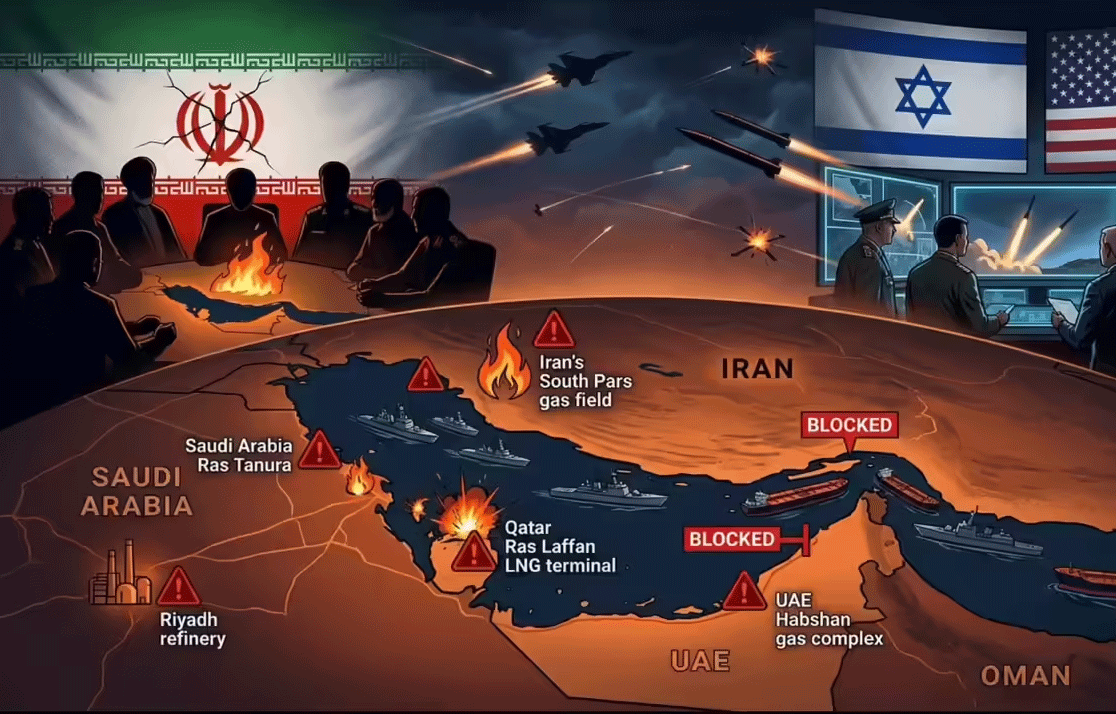
Airports, oil terminals and urban centres across the Gulf have experienced disruptions as Iranian projectiles and drones targeted sites tied to military or logistical support for Western forces. Civil aviation was temporarily halted at one of the world’s busiest travel hubs after a drone strike ignited a fuel tank, while energy operations at a major export terminal on the Gulf of Oman were interrupted following another attack.
Those incidents underline a broader strategic shock. For decades, Gulf monarchies invested heavily in projecting stability and economic openness, building global financial centres, tourism industries and logistics hubs. Missile attacks that have penetrated air defences and struck symbolic economic targets have raised questions about the sustainability of that model during prolonged geopolitical confrontation.
Strategists and regional officials argue that the psychological impact of the conflict could be as consequential as the military damage itself. Cities such as Dubai, Abu Dhabi, Manama and Doha have cultivated reputations as safe gateways between East and West. The appearance of missile alerts, air-raid sirens and flight suspensions has shaken that perception and forced policymakers to rethink national security priorities.
Data compiled by security analysts show that hundreds of missiles and thousands of drones have been launched during the broader conflict, with Gulf states intercepting the majority but still facing disruption to airports, oil installations and diplomatic compounds.
Even limited physical damage has had outsized economic consequences. Cargo routes across the Middle East have been diverted, insurance costs for shipping through the Gulf have surged and air freight prices have climbed sharply as airlines rerouted flights away from conflict zones.
Energy markets have also felt the shock. Iran’s ability to threaten the Strait of Hormuz, the narrow waterway through which a large share of global oil and liquefied natural gas flows, has revived fears about supply disruptions that once dominated geopolitical risk calculations.
Security experts say these developments will accelerate a strategic reassessment already under way across the Gulf Cooperation Council. Governments that had prioritised economic diversification, tourism and foreign investment may now devote greater resources to missile defence systems, cyber security and intelligence cooperation.
Military planners are studying how a new generation of drones and ballistic missiles can bypass traditional defence structures. Interceptor systems supplied by Western allies have succeeded in destroying most incoming projectiles, yet the scale and persistence of attacks have demonstrated that even a high interception rate does not eliminate disruption.
Regional analysts note that Gulf states built their security architecture around the expectation that the presence of United States military bases would deter attacks by Iran. Tehran’s decision to target locations across the region despite those installations has complicated that assumption and prompted renewed debate over defence arrangements.
Some governments may respond by deepening cooperation with Washington and European partners, expanding integrated missile defence networks and intelligence sharing. Others could pursue a more diversified security approach, strengthening ties with emerging powers or investing in domestic defence industries.
Diplomatic strategy may shift as well. Several Gulf states had attempted to maintain cautious engagement with Tehran while avoiding direct involvement in regional conflicts. Missile strikes on economic infrastructure have made that balancing act more difficult, pushing governments closer to choosing explicit security alignments.
Analysts warn that Iranian attacks risk turning previously neutral states into determined adversaries if Gulf leaders conclude that mediation or diplomatic distance offers little protection from retaliation.
At the same time, the conflict has revealed the limits of military responses. Even when attacks are intercepted, the economic ripple effects—from closed airspace to halted energy exports—can spread far beyond the battlefield.
Regional economies that depend on uninterrupted connectivity are particularly exposed. International airlines rely heavily on Gulf hubs linking Asia, Europe and Africa, while global energy markets depend on reliable shipping routes through the Arabian Peninsula’s maritime chokepoints.
Urban populations are also experiencing a new sense of vulnerability. A missile strike that killed a civilian motorist in Abu Dhabi demonstrated how quickly geopolitical tensions can intrude into everyday life, prompting authorities to raise security alerts and advise residents to remain vigilant.
Public sentiment across the region reflects a mixture of anxiety and resilience. Gulf societies have long observed conflicts unfolding elsewhere in the Middle East while maintaining domestic stability. Direct exposure to missile threats has altered that perspective, placing national security considerations at the forefront of public debate.
Economic planners are therefore examining how to shield key industries from geopolitical shocks. Discussions include expanding redundancy in energy export routes, strengthening port security and dispersing strategic infrastructure to reduce vulnerability.
Financial markets are watching closely. Sovereign wealth funds and state investment vehicles manage trillions of dollars in assets worldwide. A prolonged security crisis could influence decisions about overseas investments, defence spending and infrastructure development.
Political leaders across the Gulf face a delicate calculation: preserving economic openness while demonstrating that their states can defend critical assets against emerging threats. The trajectory of the wider conflict with Iran will shape how those choices unfold, but the strategic lessons are already evident. (IPA Service)
 Follow our WhatsApp channel
