

Weak geological formations along NH lead to slides: Dr Pandita
Avtar Bhat
JAMMU, Apr 13: In view of last year’s flash floods, cloudbursts and landslides, Government is taking various measures to strengthen weather forecasting and enhance disaster preparedness in Jammu and Kashmir Union Territory, so that the losses of such magnitude which occurred during previous year are averted.
Follow the Daily Excelsior channel on WhatsApp
The Government in this regard has already installed one automated weather forecasting stations each at Banihal, Ramban, Udhampur while two such stations have been installed in Kishtwar district where heavy damage was caused due to cloudburst at Chasoti in Padder tehsil which is a base camp to holy Machail Mata yatra.
Besides, seismological earthquake monitoring system is also being installed in Kishtwar and land for the same is being identified.
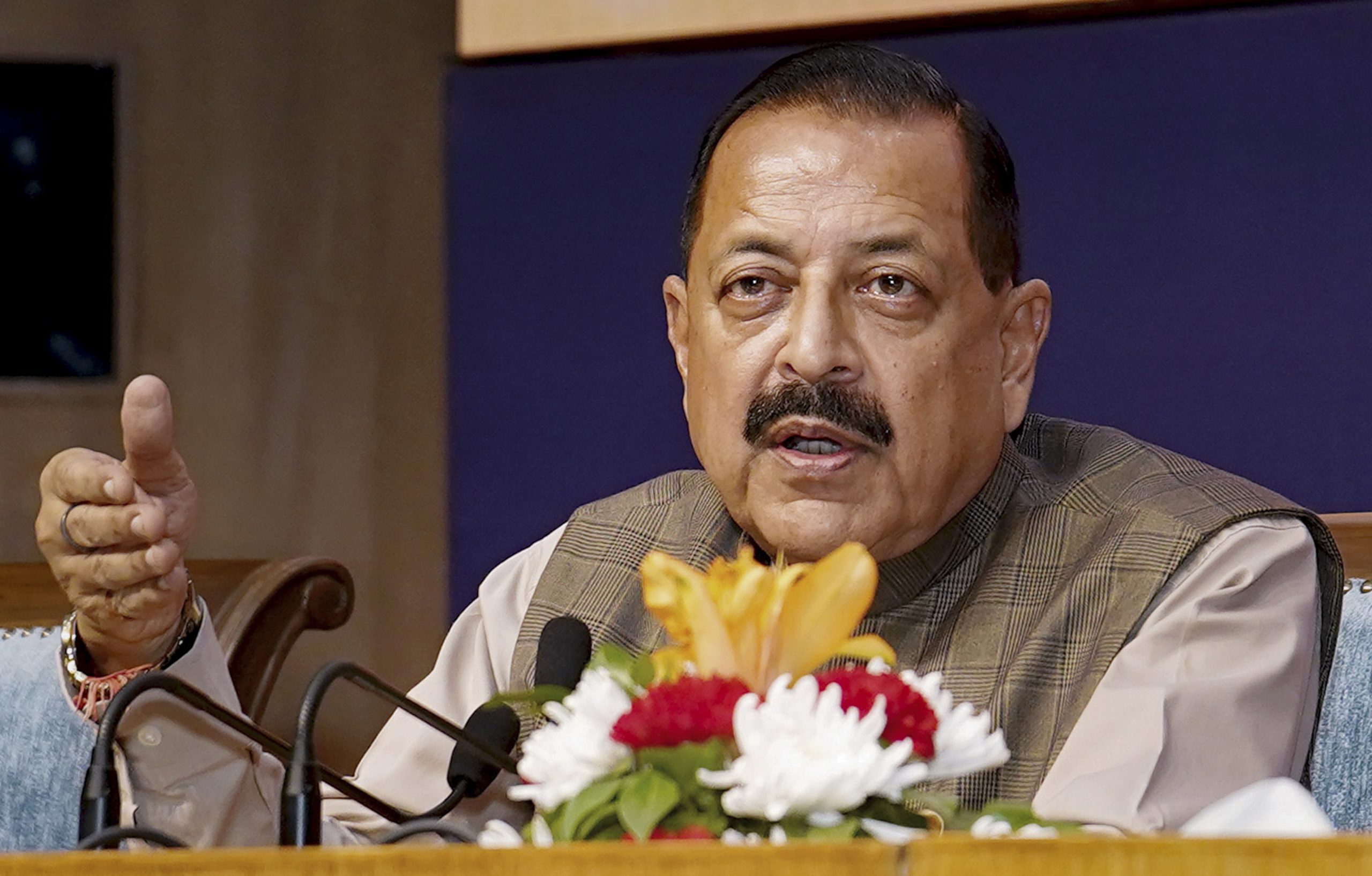
This information was given by Union Minister in PMO, with independent charge of Science & Technology and Earth Sciences Ministries, Dr Jitendra Singh while talking to Excelsior today.
He said in addition to make the disaster management system robust in the UT, the automated Indian Metrological Department (IMD) Centre at Jammu is being developed as the Regional Centre which can monitor the weather forecasting in Jammu, Samba , Kathua as well as Rajouri, Poonch and Reasi districts.
He said in Kashmir Valley one Regional IMD Centre already exists for making weather forecasting in the Valley.
Dr Jitendra Singh said, while the cause of last year’s tragedy in Chasoti and Ramban was due to cloudburst and flash floods, the cause of tragedy in some parts of Kathua was due to heavy rain fall and flash floods caused due to unauthorised encroachment of nallahs and other water bodies besides illegal mining in rivers.
He said that the flash floods during last Monsoon hit Kathua as well as neighbouring Pathankot district in Punjab and the main cause of the same was encroachments of nullahs, rivers and other water bodies at vulnerable points.
He said the flash floods resulted in damage to the residential houses, other property besides washing away of border security posts. This happened despite a weather forecasting was already made by the Department, he added.
Dr Jitendra Singh said that people also have to share their responsibility and for making their future secure and avert such tragedies, they should refrain from encroaching rivers, water bodies and nullahs. Moreover, one more cause of flash floods is illegal mining, he added.
He said five spans of a bridge on Jammu -Pathankot National Highway on a river near Vijaypur got eroded last year because of illegal mining near the bridge and National Highway Authorities of India (NHAI) also pointed out the same. Besides, the authorities the public also needs to share their responsibility in this regard, he added.
He said when chocked water in nullahs could not get an outlet due to encroachments and during heavy rains it took a critical shape triggering flash floods and washing away everything that came into its way.
Prof Sundeep Pandita, Director Disaster Management, University of Jammu said PMO is monitoring the National Disaster Management in J&K and regular meetings are being held in this regard. He said the Disaster Management activities have already been started in the UT but it is yet in preliminary stage.
He said there is best mechanism of weather forecasting in India. But cloudburst forecasting is difficult as it needs automated weather stations which are very costly. However, the IMD has best mechanism of weather forecasting in the country, he added.
He held the encroachments of water bodies and rivers as one of the cause of flash floods saying that main cause of floods in Kashmir during 2014 was encroachment of embankments of river Jehlum that led to a lot of devastation. Same happened in Tawi which too has been encroached. Besides, natural water bodies, which were outlets for rain water have also been encroached that leads to flash floods during Monsoon.
Dr Pandita ruled out any threat from melting of glaciers in J&K saying that bursting of glacier lakes is not prevalent in J&K.
Regarding landslides on Jammu -Srinagar National Highway, he said the hilly belt along NH is of weak geological formations and water enters these formations and they become lose especially from Udhampur to Ramban belt with the result the landslides take place.
Meanwhile, BJP MLA from Jasrota, Rajiv Jasrotia has called for robust contingency planning, identification of vulnerable zones and real time public alert system to avert last year type catastrophe. He urged the Government to immediately gear up for the forthcoming Monsoon season, stressing the need for taking decisive and proactive measures to avoid recurrence of disasters in the UT.
 Follow our WhatsApp channel
