

NEW DELHI, April 21: The Government on Tuesday said essential services and supply chains across the country remain stable and fully functional despite the ongoing crisis in West Asia, with milk supply, fuel availability, and maritime operations continuing without disruption.
At an inter-ministerial media briefing held at the National Media Centre, officials from key ministries, including Petroleum and Natural Gas, External Affairs, Ports, Shipping and Waterways, and Animal Husbandry and Dairying, outlined a series of coordinated measures to maintain stability in critical sectors.
The Department of Animal Husbandry and Dairying (DAHD) confirmed that milk procurement, processing, and distribution have remained uninterrupted across the country. Prices of milk and dairy products are stable, and payments to farmers are continuing without delays.
To ensure real-time monitoring, a dedicated digital portal connecting all State Milk Federations and Milk Unions has been operational since March 30, enabling daily tracking of milk availability, fuel supply, and packaging materials.
Officials said fuel supply to dairy plants has been safeguarded, with 70 per cent of pre-crisis LPG allocation ensured for critical industries.
Simultaneously, dairy units have been encouraged to transition to piped natural gas (PNG) wherever feasible. Issues related to packaging materials have also been resolved, with assured supply of key inputs like LDPE, polypropylene, and polystyrene.
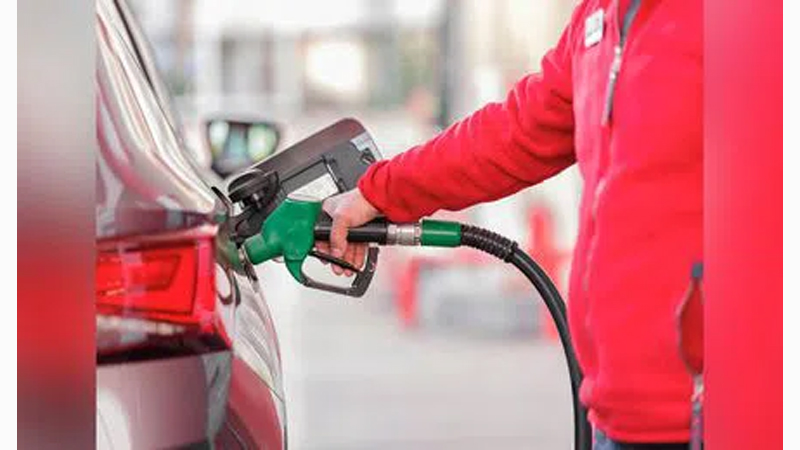
The Ministry of Petroleum and Natural Gas stressed that there is no shortage of fuel in the country and urged citizens to avoid panic buying. Supply of LPG to domestic households has been prioritised, and no “dry-outs” have been reported at distributorships.
The government has maintained 100 per cent supply to domestic LPG, PNG, and CNG segments, while commercial LPG supply has been rationalised and prioritised for essential sectors such as healthcare, education, and agriculture.
Enforcement drives to curb hoarding and black marketing have intensified, with over 2,200 raids conducted recently. Public sector oil marketing companies have penalised 274 LPG distributorships, while 67 have been suspended.
Officials added that digital adoption has improved transparency, with nearly 98 per cent of LPG bookings now made online and about 92 per cent of deliveries authenticated through Delivery Authentication Codes (DAC).
The government is accelerating the transition towards cleaner fuels, with over 5.01 lakh PNG connections already activated since March 2026 and more than 5.68 lakh new registrations recorded. Around 39,400 consumers have voluntarily surrendered LPG connections in favour of PNG.
Despite tensions in the Persian Gulf, maritime operations remain stable. Since February 28, a total of nine LPG vessels and one crude oil tanker have safely transited the Strait of Hormuz.
Indian ports are operating normally with no congestion, and cargo movement has improved significantly. Yard occupancy has reduced to around 60 per cent, indicating easing pressure on port infrastructure.
Authorities confirmed that all Indian seafarers in the region are safe, with no recent incidents involving Indian-flagged vessels. More than 2,590 Indian seafarers have been repatriated so far.
The Ministry of External Affairs said it is closely monitoring the situation and has activated dedicated control rooms to assist Indian nationals in the region. Indian missions are operating round-the-clock helplines and coordinating evacuation and travel assistance.
Since late February, over 11.61 lakh passengers have travelled from West Asia to India. While some airspaces remain partially restricted, flights continue to operate from several Gulf countries through alternative routes.
In a recent development, 12 Indian seafarers stranded in Iraq safely returned to Mumbai with assistance from the Indian Mission in Baghdad.
(UNI)
 Follow our WhatsApp channel
