

Harsha Kakar
kakarharsha@gmail.com
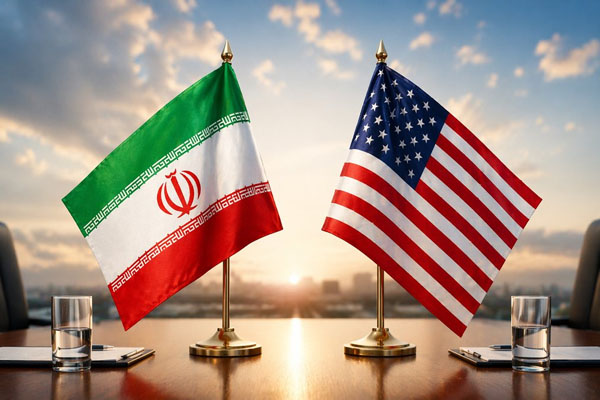
Entering a conflict without a defined end state, away from the homeland, consuming reserves of munitions beyond levels of production, while facing falling popularity at home can be difficult for any head of state. Trump is going through this phase since initiating the Iran conflict with Netanyahu, against the advice of his generals. He was promised victory in days, which has now extended into weeks. His delusions of victory, a puppet regime installed and control over Iranian oil have all come to naught, as Iran fights back, countering the US with asymmetric warfare.
Today, it is the US which is seeking a ceasefire, pushing terrorist state Pakistan to negotiate on its behalf, demanding Iran stop supporting terrorist proxies. Imagine what advice could one terrorist state give another. Munir and Shehbaz run from one state to another, acting as messengers, desperate to show their usefulness to Trump.
Trump insulted everyone who condemned his illegal war as also refused to join, whether it be his European or Asian allies or even the Pope. Most of his criticism tweets emanated post-midnight including AI generated images of himself as the messiah. He is currently in a bind and cannot find a way out, unless Iran comes close to accepting some conditions which his team has laid down. Most of his demands are a repeat of the Feb dialogue in Geneva, which Tehran had almost accepted, but currently holds out, aware it holds the cards.
To convince Iran to resume dialogue Trump went as far as pushing Netanyahu into a 10-day ceasefire with Lebanon, banning Israel from further strikes, a message he announced to the world, claiming credit as expected, despite Israel’s hesitation and even before it was approved by their cabinet. Whether it will hold is another aspect. What Trump failed to mention was that this was done to placate Iran and draw them to the negotiation table. In response Iran opened Hormuz, with some restrictions. The ceasefire was an unnegotiable demand of Tehran. Iran won this round.
The US stands alone in the conflict. Not a single European or NATO ally is willing to join them. For Europe, this ‘is not their war, not their problem.’ While they claim they were not consulted, they fear that Trump may resort to war crimes by targeting civilian infrastructure and drag them into it, in case Iran continues to resist. Netanyahu is already facing an International Criminal Court warrant for war crimes and crimes against humanity. European nations are willing to face financial burdens due to rising oil prices but not join Trump in this illegal war. Trump’s accusations, criticism and threats, including occupying Greenland, have pushed even closest allies away.
The damage that Trump and his close aides have caused to US military reputation has been immense. The US military is no longer invincible and those whom the US targets only need to stand firm. Cuba which is being threatened regularly would be studying this conflict and preparing accordingly, after all it is next. The man who had stated in his victory speech, ‘I’m not going to start a war. I’m going to stop wars,’ is engaging in a series of wars.
While Trump continues to mention that he stopped umpteen wars, quoting number of aircraft downed by both sides in Operation Sindoor, he hides the fact that US losses in the current conflict are far more including almost 20 aircraft, an equal number of costly UAVs, major radars as also severe damages to its bases in the Middle East. He has realized that without support, the pressure on US forces is immense. He has yet to accept that the US is seeking help from all Iranian allies to push them for talks.
Attacking Iran twice when talks were in progress damaged US’s global standing as a negotiator. It did so because Iran has yet to possess nuclear weapons but cannot repeat it against North Korea because it possesses one. Iran’s desperation to obtain nuclear weapons will only increase and for this, the US is to be blamed.
This was not a war of compulsion but one of choice, sold to him by Netanyahu. The businessman in him saw control of oil as the goal and he ventured in. He never realized that entering a conflict is easy, extraction difficult. High Representative Kaja Kallas of the EU had stated rightly, ‘Starting war is like a love affair – it’s easy to get in and difficult to get out.’ Trump is now desperately seeking a way out. He had criticized Biden’s 2021 withdrawal from Afghanistan as a ‘shameful defeat.’ He cannot be doing the same now. He needs a face-saving and this is where Pakistan comes in.
Pakistan is the go-between the US and Iran. To goad the Pak leadership into convincing Iran for talks, Trump went as far as promising to visit Islamabad when the peace deal is inked. While many in Pakistan would consider this a diplomatic coup, the reality is that it signals Trump’s acceptance of defeat, something he cannot mention, but known to the world. Mediation is a thankless job with few days of limelight and forgotten later. The Pak government has yet to clear bills of last talks, wonder what would the next round would cost, if held.
India has rightly stayed away from the conflict as also mediation. Trump has spoken twice to the Indian PM in recent days, sketchy details of which are only available. India in all probability would one of the nations’ working quietly to convince Iran to open the straits. It would have point-blank refused to get militarily involved in the Hormuz Straits. India is managing its oil, fertilizer and gas shortfalls by enhancing its import base and must not fall for Trump’s threats of sanctions on Iranian and Russian oil. It is preferable to face additional sanctions than be forced to follow Trump’s illogical diktats and place the population in jeopardy. It is better to watch the drama of war and mediation from the sidelines, offer praise and support, when essential, rather than be involved and subsequently accused when things turn bad. Once the deal is done and normalcy restored, the nations involved in negotiation are forgotten till the next conflict.
What a fall for the US, from demanding ‘unconditional surrender’ to negotiations on the terms of Iran.
The author is Major General (Retd)
 Follow our WhatsApp channel
