

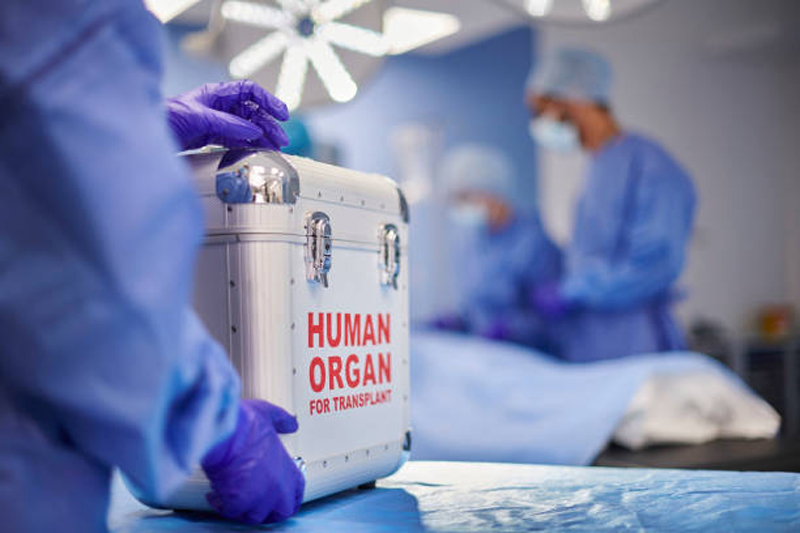
The gradual strengthening of organ transplant infrastructure in Jammu and Kashmir marks an important shift in the region’s public health landscape. The establishment of the State Organ and Tissue Transplant Organisation in 2019 has clearly expanded the institutional framework for organ transplantation, bringing multiple hospitals into a system that was once extremely limited in scope. Until a few years ago, kidney transplantation in the Union Territory was largely confined to the Sher-i-Kashmir Institute of Medical Sciences. Today, centres such as GMC Jammu and GMC Srinagar have also joined the network, reflecting a meaningful expansion of critical medical services. This widening of facilities is a welcome development for thousands of patients struggling with organ failure. Chronic kidney disease, for instance, often forces patients to depend on repeated dialysis sessions, which are not only physically exhausting but also financially draining. For many families, long-term dialysis or treatment in private hospitals becomes nearly impossible to sustain. In such circumstances, the availability of transplant centres within the UT offers a lifeline that was previously accessible only outside the region.
The development of organ transplant and retrieval facilities in institutions like Command Hospital Northern Command and other authorised centres demonstrates that the institutional groundwork has been laid with seriousness. Awareness drives conducted by SOTTO across the region also deserve recognition for attempting to familiarise the public with the concept of organ donation. Yet the expansion of infrastructure has not translated into a proportional rise in organ transplants. The number of successful procedures remains modest, largely due to the ongoing shortage of donors. Despite the presence of retrieval centres and transplant facilities, organ donation after brain death is still rare. This gap between medical capability and donor availability is now the most pressing challenge facing the transplant ecosystem in Jammu and Kashmir.
The reluctance to donate organs is rooted largely in social hesitation, lack of awareness and lingering misconceptions about posthumous donation. Unless these barriers are addressed, even the best-equipped hospitals will remain underutilised. A sustained public engagement campaign-led jointly by the Government, medical institutions and civil society-is essential to encourage voluntary pledges for organ donation. The modern transplant infrastructure is ready. The next phase, however, depends on society itself. Facilities are now in place; what is needed is a collective willingness to embrace organ donation as a humane act that can transform tragedy into renewed life for others.
 Follow our WhatsApp channel
