

Excelsior Correspondent
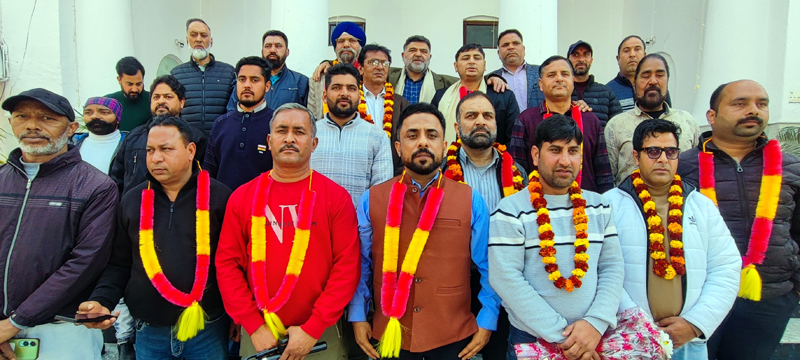
JAMMU, Feb 8: The Jammu & Kashmir Employees Joint Action Committee (EJAC) convened a significant provincial meeting at the Tourist Reception Centre (TRC), Jammu, bringing together representatives of numerous affiliated associations from across the Jammu region.
The session marked the formal welcome of the newly elected State President, Wajahat Hussain Durrani, and served as a platform for comprehensive deliberations on a broad spectrum of service and welfare matters affecting Government employees throughout the Union Territory.
Presiding over the gathering, Wajahat Durrani thanked the employees’ fraternity for the trust placed in the leadership. He underscored that cohesion, organizational discipline, and sustained collective engagement remain essential to securing long-awaited justice in pending matters. Reiterating EJAC’s commitment, he affirmed that the organization will continue to function as a representative, credible, and resolute voice dedicated to protecting the rights, dignity, and legitimate aspirations of employees in every sector.
In a demonstration of unanimity and shared purpose, the Jammu Provincial body was constituted with consensus approval. Mohammed Ashraf Sheikh was elected Provincial president (Jammu) unopposed. Onkar Singh assumed the office of general secretary, Tarun Gupta was elected senior vice president, Amar Mooman as vice president, Qamar Din as chief organizer, and . Balraj Khokhar as Executive Member. Participants extended warm felicitations to the office bearers and pledged full cooperation in advancing employees’ concerns.
The house undertook extensive discussions on issues that continue to generate deep concern among various categories of staff. Foremost among them was the regularization of daily wagers, many of whom have rendered decades of indispensable service while remaining outside the ambit of job security and social safeguards.
EJAC strongly urged the government to introduce a clear, compassionate, and time-bound regularization framework.
Deliberations also focused on the transfer policy for teachers, with members observing that frequent and non-transparent transfers disrupt both professional stability and academic continuity. The meeting witnessed the participation of heads of various employees’ association units and District Presidents of Jammu Province.
 Follow our WhatsApp channel
