

NEW DELHI, Apr 21 : The popularity of Prime Minister’s Awards for Excellence has risen sharply across over 750 districts, and the competitive participation has shown a corresponding rise with entries increasing from 1,216 in 2023 to 1,588 in 2024 and 2,035 in 2025. The iGOTKarmayogi platform has boarded more than 88 lakh officials who have accessed over 2,000 courses. Grievance redressal through CPGRAMS has expanded from around 2 lakh complaints annually in 2014 to 25–30 lakh at present, with over 95% of cases disposed of and average resolution time reduced from 60 days to about 12 days. In pension reforms, over 40 lakh pensioners used face recognition-based digital life certificates in 2024 alone, while cumulative usage across systems has reached significant scale.
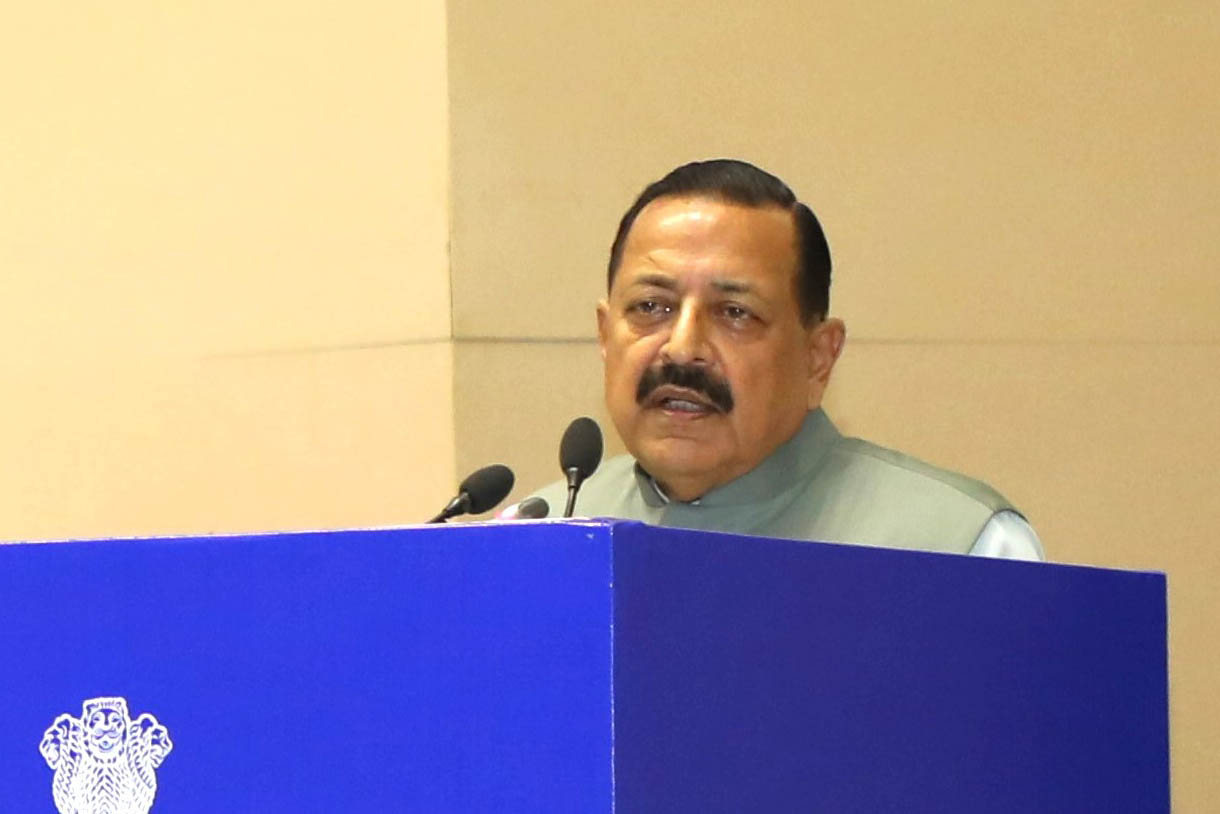
These interesting figures were cited by Union Minister Incharge DoPT, Personnel, Public Grievances and Pensions, Dr. Jitendra Singh while addressing the 18 Civil Services Day here, as he highlighted a shift towards “citizen-centric, institutionalised governance”, underlined reforms in service delivery and announced continued expansion of capacity-building initiatives such as Mission Karmayogi and its newer components, alongside a reoriented framework for evaluating administrative performance through competitive, programme-based benchmarks rather than individual profiling.
The Minister emphasised structural shifts in governance, including a move “from individual delivery to institutionalised delivery” and from “rule-based” to “role-based” administration. He pointed to the removal of nearly 2,000 obsolete rules, abolition of interviews for certain recruitment processes, and the redesign of Civil Services Day into a more knowledge-driven platform. The evaluation framework for excellence awards has been restructured to focus on flagship programme outcomes rather than individual officer profiles. Institutional innovations such as the Assistant Secretary programme, digital governance systems covering nearly 90% of government operations, and international collaborations, including hosting global administrative forums, were also highlighted.
Looking ahead, Dr. Jitendra Singh indicated expansion of training and governance reforms through initiatives like Mission Karmayogi and “Karmayogi Prarambh,” with a focus on preparing civil servants for emerging governance challenges. He also pointed to increasing global interest in Indian administrative models, with countries such as Maldives, Mauritius, Bangladesh and South Africa studying systems like CPGRAMS. The broader push, he said, aligns with the theme of “Viksit Bharat: Citizen-Centric Governance and Development at the Last Mile,” aimed at equipping the next generation of civil servants for India’s centenary of independence in 2047.
“The shift is from administration-centric governance to citizen-centric governance,” Dr. Jitendra Singh said, adding that reforms are intended to ensure “maximum transparency, maximum accountability and timeline discipline.” He also noted that increased grievance filings reflect improved trust in redressal systems rather than rising dissatisfaction.
The developments underscore an ongoing transition in India’s administrative framework towards data-driven evaluation, digital governance, and large-scale capacity building as central pillars of public service reform.
Vice President Shri C. P. Radhakrishnan presided over the function as the Chief Guest. The function was attended by senior members of the government’s top administrative leadership. Also present on the dais were Principal Secretary to the Prime Minister P. K. Mishra, Principal Secretary to the Prime Minister Shaktikanta Das, Cabinet Secretary T. V. Somanathan, and Secretary, DARPG Ms. Nivedita Shukla Verma reflecting the high-level institutional presence at the annual civil services gathering.
 Follow our WhatsApp channel
