

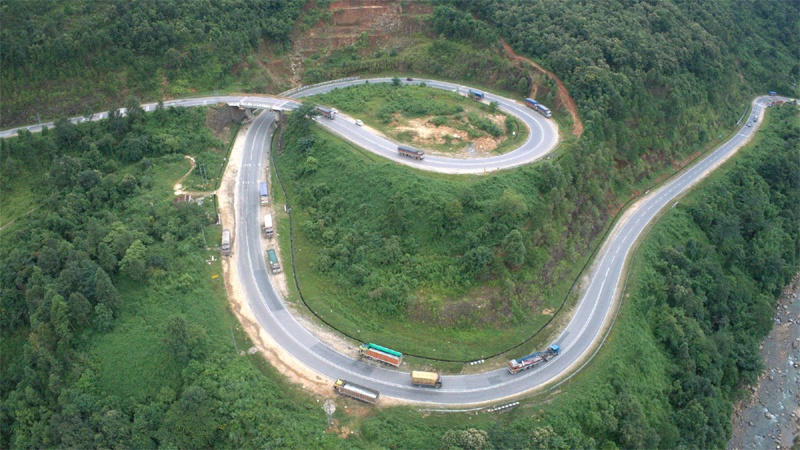
Union Finance Minister Nirmala Sitharaman’s recent remarks in Shillong have rightly reignited a deeply important national conversation-how to strike the delicate balance between ecological preservation and the aspirations of development. Her message, delivered from the heart of one of India’s most environmentally sensitive regions, is both timely and urgent. The Northeastern states and the Himalayan belt are not just biodiversity hotspots; they are also fragile ecosystems that serve as natural buffers against climate extremes. However, the increasing frequency of flash floods, erratic rainfall, and land subsidence-now affecting even centuries-old settlements-shows that we are already witnessing the consequences of unchecked and poorly planned development. Rainfalls, which once occurred over months, are now happening in a matter of hours, with rivulets turning into raging torrents that destroy everything in their path. This is not a warning-it is a reality unfolding before our eyes.
FM’s caution against imposing top-down developmental blueprints without local consultation is well-founded. Development cannot be meaningful if it disregards the socio-cultural and ecological fabric of the region. The residents of these regions must not be passive recipients but active partners in shaping the course of progress. Their age-old knowledge systems, eco-friendly practices, and deep understanding of the land offer invaluable guidance for crafting sustainable models of development. City planners and policymakers must break free from the outdated “one-size-fits-all” approach. The Himalayas and Northeast cannot afford the cost of blind urbanisation or the mad rush for mass tourism. The price of convenience today cannot be a catastrophe tomorrow.
Development is indeed necessary-to provide connectivity, better livelihoods, and opportunities for the local youth. However such development must be rooted in the principles of sustainability. Infrastructure projects must be aligned with ecological safeguards. Regional aspirations should be supported by Government policies that prioritise green technologies, promote low-impact tourism, and enhance local capacity. It is time India adopts a new development model for eco-sensitive zones. The Finance Minister’s words are a reminder that in a warming world, every choice we make about the environment will echo through generations. The choice should not be convenience at the cost of survival.
 Follow our WhatsApp channel
