

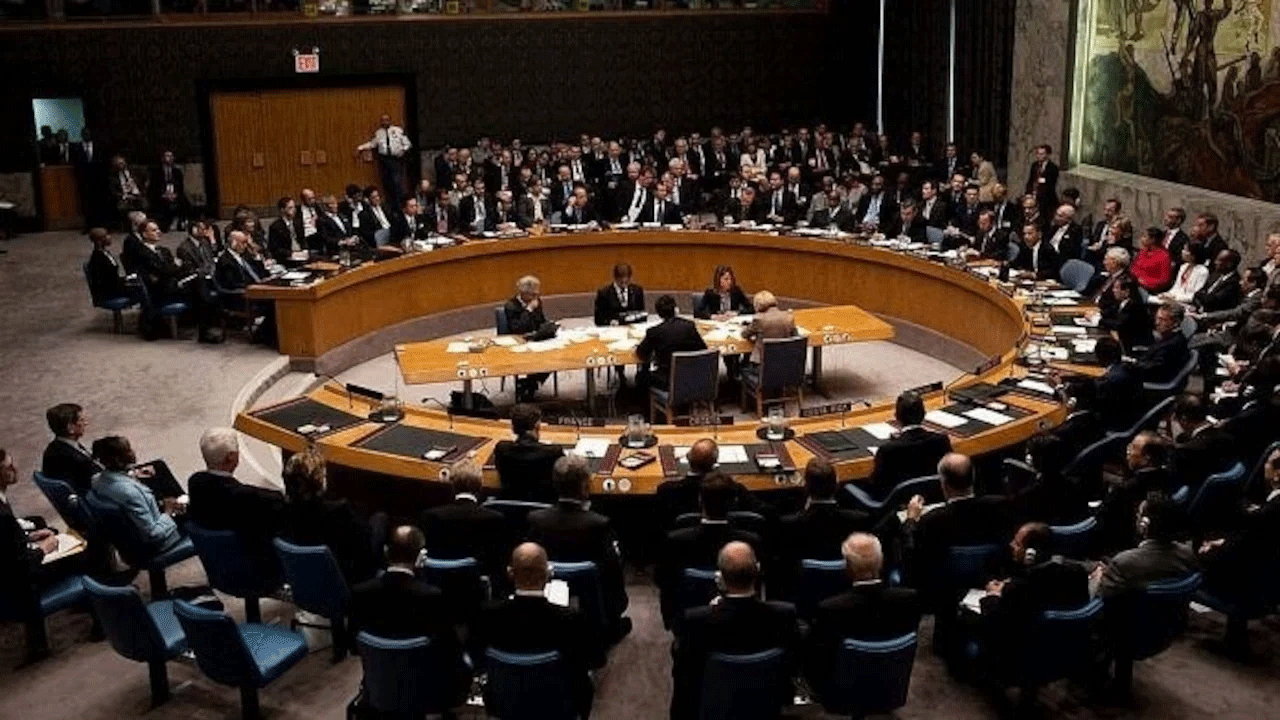
India’s renewed push at the United Nations to have The Resistance Front formally designated as a terrorist organisation is not merely a diplomatic formality. It is a moral imperative. That the monitoring team of the UN Security Council is still “considering” the matter, long after the Pahalgam terror attack that shook the nation, exposes a deeply troubling truth: the world’s foremost multilateral body moves at a pace that terrorists exploited long ago. The TRF is no obscure militant faction. It is a calculated rebranding exercise by Pakistan-based Lashkar-e-Taiba – a proscribed organisation – designed specifically to evade international scrutiny. This is a pattern that has repeated itself with alarming regularity. When one terror outfit is cornered by global pressure, its handlers in Rawalpindi and Islamabad engineer a name change, shuffle the leadership, and resume operations under a fresh banner. The consequence is measured not in diplomatic cables, but in innocent lives.
It can take years – sometimes decades – to secure a terror listing at the UN. During that time, Pakistan-sponsored proxy outfits continue to recruit, fund, and strike. India’s security apparatus has long borne the economic and human cost of this institutional tardiness. The drain on national resources diverted towards counter-terror operations, border security, and intelligence-gathering represents a staggering opportunity cost for a developing economy. Terrorism, in this very tangible sense, is an act of economic sabotage as much as it is one of violence.
This reality reinforces India’s principled and long-standing demand for reform of the UN Security Council. The five permanent members wield veto powers that have, time and again, shielded state sponsors of terrorism from accountability. Geopolitical interests – arms sales, trade dependencies, strategic alliances – routinely override the moral clarity that a body tasked with global peace and security ought to embody.
History offers a sobering lesson that no nation has chosen to learn swiftly enough: terrorism does not respect borders. The attacks on New York, London, Madrid, Mumbai, Paris, and Nairobi all testify to the same fundamental truth – an unchecked terror network is a threat to all of humanity, not merely to its immediate victims. What is urgently needed is a collective, unequivocal declaration of war – not of arms alone, but of political will – against terrorism in all its forms. The listing of the TRF at the UN must be treated not as a bilateral India-Pakistan matter but as a test of the international community’s resolve.
 Follow our WhatsApp channel
