

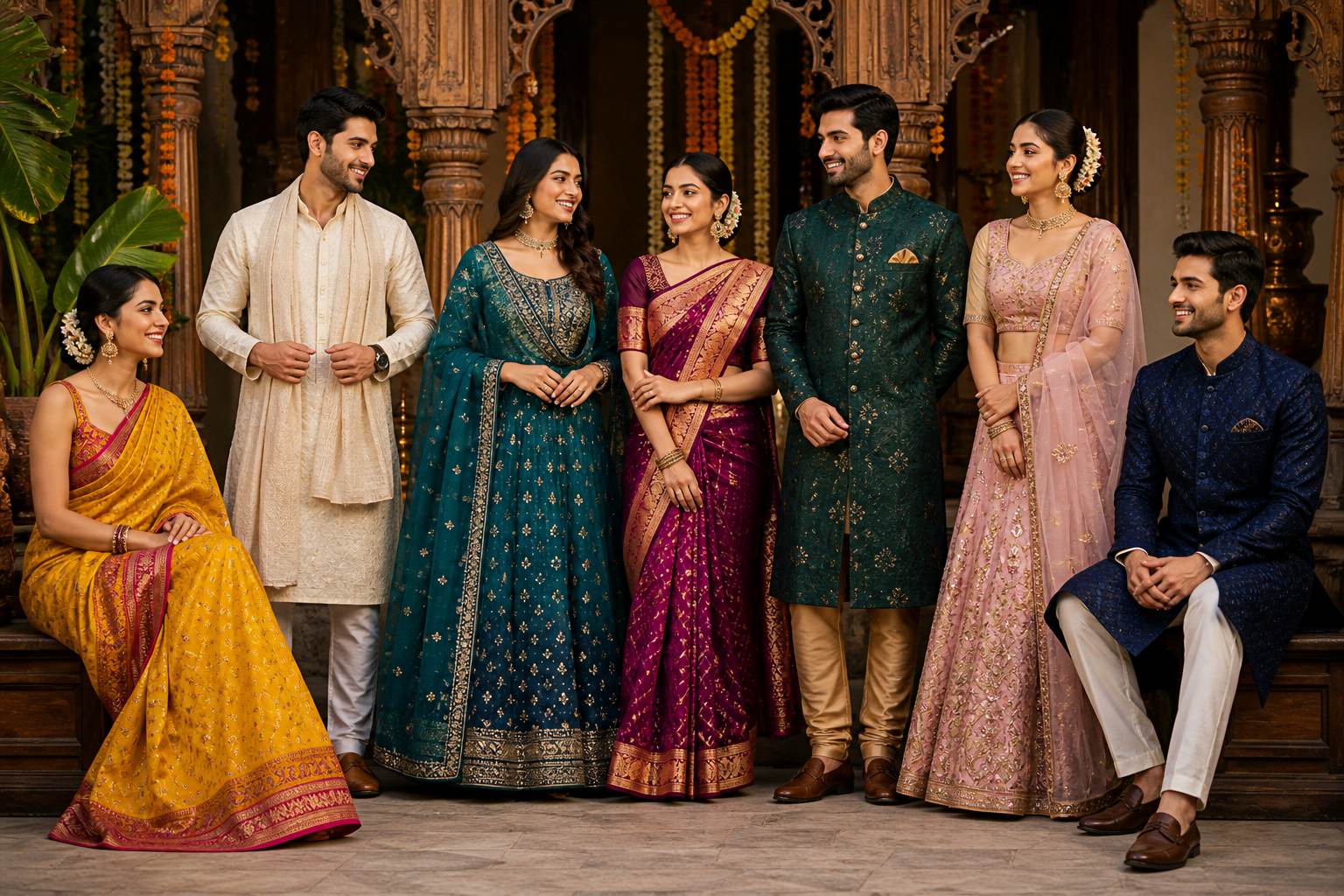
Indian festivals bring structure and meaning to the calendar. Each celebration follows its own pace, shaped by customs, family gatherings, and shared rituals. From morning prayers to evening get-togethers, every moment carries significance. Clothing becomes part of this rhythm, helping set the tone for the day.
Choosing the right men’s ethnic attire comes down to dressing in a way that suits the occasion and feels respectful to its setting. What you wear often influences how comfortable you feel moving through rituals, conversations, and celebrations with family and friends.
Understanding the Nature of Each Festival
Festivals in India differ widely in mood and purpose. Some are rooted in prayer and reflection, while others focus on community, music, and celebration. These differences naturally shape how people dress.
Diwali, for example, brings together rituals at home and social gatherings later in the day. A neatly tailored kurta in shades such as ivory, maroon, or muted gold fits well into this flow. It feels festive without appearing overdone.
On occasions like Holi, where activity and movement are central, comfort becomes more important. Outfits made from lighter fabrics and simple silhouettes allow freedom of movement and help you stay at ease throughout the day.
The Kurta as a Festive Essential
Among traditional garments, the ethnic wear kurta continues to hold a central place in festive dressing. Its versatility makes it suitable for a range of occasions, from small family events to larger celebrations.
For daytime gatherings, a plain kurta paired with churidar or straight trousers creates a composed and neat appearance. For evenings or more formal settings, adding a bundi or jacket brings in structure and polish. This adaptability allows the same kurta to work across different moments of the festival.
Its lasting appeal lies in its ease. A kurta feels familiar, comfortable, and appropriate, which is why it remains a dependable festive choice.
Choosing Colours with Intention
Colour plays an important role in festive attire, influencing how an outfit feels within its setting. Lighter shades such as off-white, beige, and soft pastels are commonly chosen for daytime rituals, where the atmosphere is calmer and more restrained.
Darker and richer hues such as emerald, navy, mustard, or wine tend to suit evening gatherings better. These colours carry more presence and align well with celebratory environments. Thoughtful colour selection helps an outfit feel in tune with the occasion rather than standing apart from it.
Dressing Appropriately for Smaller Gatherings
Many festivals include moments that are quiet and personal. These may involve prayers at home, visits to elders, or rituals shared with close family members. For such occasions, understated dressing feels most natural.
A well-fitted kurta with minimal detailing works well here. It offers comfort for long hours while maintaining a sense of respect for the occasion. Keeping the look simple allows attention to remain on the rituals and the people involved.
Adding Structure for Formal Celebrations
Larger family functions and evening events often invite a more put-together look. Introducing a structured layer such as a bundi or jacket adds form without making the outfit feel heavy.
This approach creates a refined appearance while keeping the base outfit traditional. Adjusting layers based on the scale of the event makes it easier to dress appropriately without changing the entire ensemble.
Completing the Look with Thoughtful Elements
Footwear and accessories help bring the outfit together. Traditional jootis pair well with most festive outfits and maintain a cohesive look. Accessories are best kept minimal. A classic watch or a simple brooch can add character without drawing unnecessary attention.
Each detail should feel considered, supporting the outfit rather than distracting from it.
Tradition as a Guiding Influence
What you wear during festivals often reflects how closely you connect with tradition. Choosing suitable silhouettes, colours, and layers shows awareness of the occasion and consideration for those around you.
Over time, these choices become part of how traditions are carried forward, passed on through shared celebrations and family gatherings.
Building a Versatile Festive Wardrobe
Festive outfits are often worn across different celebrations over the years. Selecting garments that adapt easily helps build a wardrobe that feels relevant beyond a single occasion. Comfortable fabrics, balanced designs, and quality craftsmanship make these pieces dependable in the long run.
Brands such as ETHNIX BY RAYMOND focus on creating garments that combine thoughtful design with reliable construction. Their collections are made to suit a variety of festive settings while remaining rooted in tradition.
Conclusion
Dressing for festivals is about feeling comfortable, prepared, and in step with the occasion. When chosen carefully, men’s ethnic attire supports the flow of the celebration and allows you to move through the day with ease.
The kurta continues to serve as a foundation of festive dressing, offering flexibility and familiarity across settings. With mindful choices, it becomes more than just an outfit, fitting naturally into the moments that make each festival meaningful.
 Follow our WhatsApp channel
